2024-2025: An 82% Decrease In Loss Of Consciousness Cases
Skopje EYOF 2025
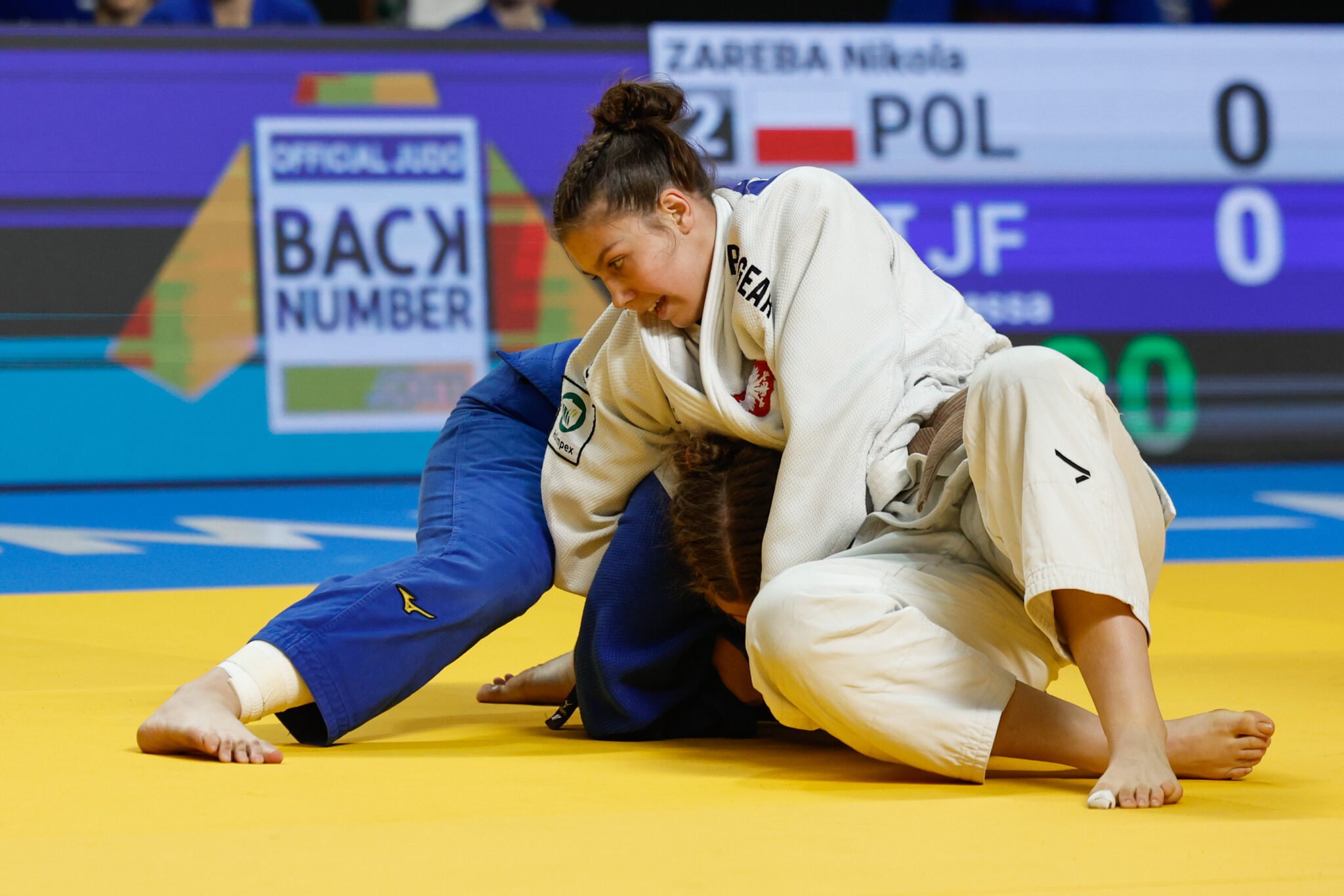
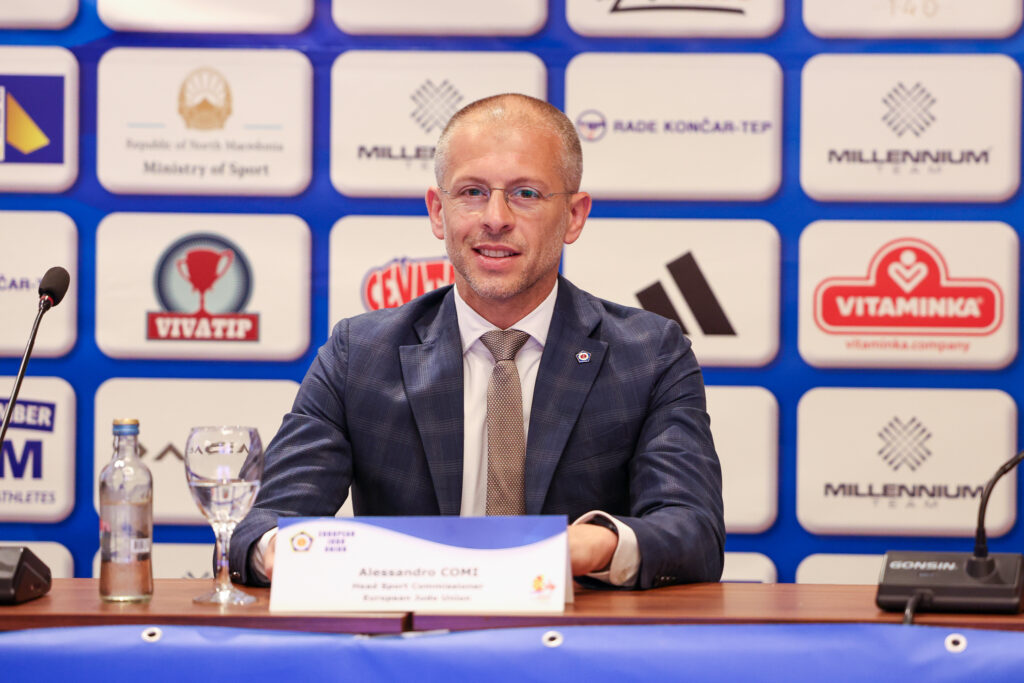
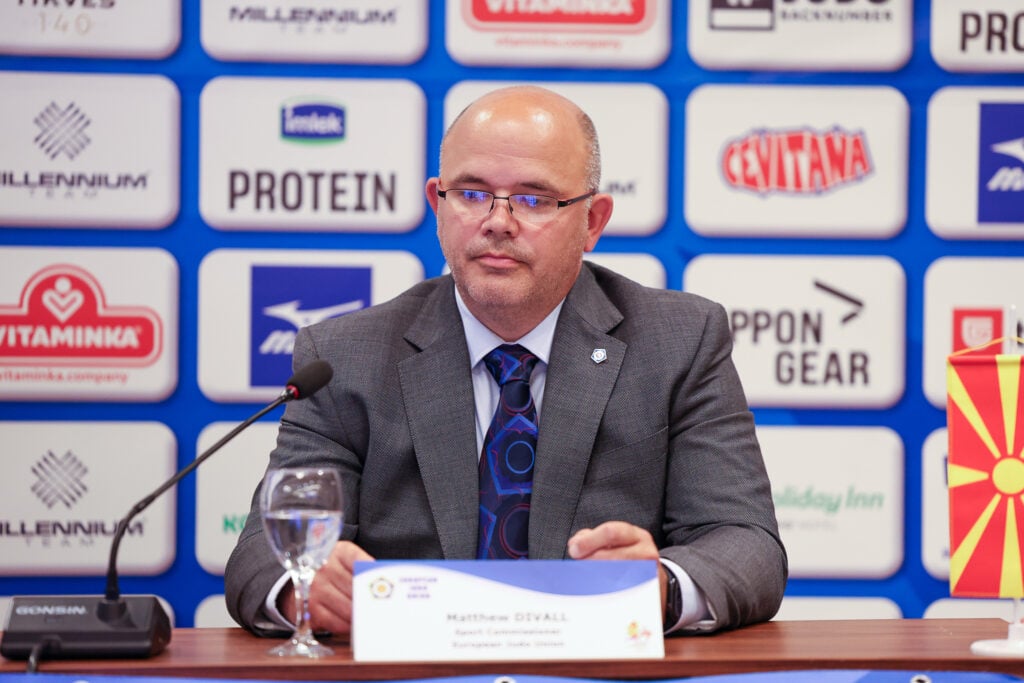
The Cadet European Championships in Skopje, North Macedonia, set the precedence for the upcoming European Youth Olympic Festival in the same location next week. It was one of the goals of the European Judo Union sport sector, led by Vice President, Catarina RODRIGUES. Commission members, Matthew DIVALL and Alessandro COMI gave short presentations during the draw of the Cadet European Championships, highlighting to the delegations, the concern surrounding conduct as well as the execution of shime waza and the dangers it can pose.
Comi took the lead on presenting findings on cases regarding shime waza and the loss of consciousness,
The main idea is that shime-waza are an important part of our heritage as judoka, are safe and can be really effective, if well managed. That’s why education comes first: judoka, especially young judoka and their coaches, must know what they are dealing with. In my opinion it’s like when you drive a car that can go fast: you have to know how to drive it, respect the rules, protect yourself and others.
To reach the goal I tried to mix my experiences as a Neuropsychologist – I’ve a PhD in neuroscience and I used to work in a hospital even if at the moment I’m busier with judo – and judo coach to summarise the main points both under the medical and judo perspectives. As mentioned the number of cases of loss of consciousness substantially decreased from 2024 to 2025: 11 vs 2 is less 82%. I don’t think that this is the immediate result of our focus but for sure it made some difference: I was surprised when a few athletes came and asked questions about what we spoke about on the topic: it means they listened. I trust adolescents and their ability to improve one day to the other.
It is clear that judoka want to be learning continuously, and to practice in a safe way which aligns with the sporting values. This subject will continue to be monitored as we move in the European Youth Olympic Festival starting on the 22nd of July and the EJU implore coaches to continue their great work, driving home the potential risks of shime waza and the appropriate conduct and execution so that the percentage can be reduced even further.
Divall explained that the European Judo Union Code of Conduct is not simply a set of rules written down, but is the ‘backbone and framework of a safe, respectful and developmental environment for athletes.’
By setting clear expectations around respect, safety and integrity we can nurture not just potential for performance, but character. Long-term athlete development thrives in cultures where ethical foundations and standards are laid early and upheld consistently – because without them, we risk compromising what judo, and sport in general, is meant to teach: integrity, humility and shared growth.
Though we are currently focussing on the cadet level tournaments, this Code of Conduct is being addressed at the European Hopes Tournament as well, hoping to have a real impact on the future generation of athletes and coaches. Divall continues,
Coaches are more than tacticians—they are moral compasses. True leadership is not measured by victory, but by the dignity they model in defeat. It should never be about ego; it’s about guiding athletes through values that outlast medals – winning both on and off the tatami. Every gesture at the matside, every reaction to refereeing decisions and every posture speaks louder than words—because younger judoka mirror what they see. Respect is not taught through lectures, but through living examples.
We use cookies on our website to give you the most relevant experience by remembering your preferences and repeat visits. By clicking “Accept”, you consent to the use of ALL the cookies.
This website uses cookies to improve your experience while you navigate through the website. Out of these cookies, the cookies that are categorized as necessary are stored on your browser as they are essential for the working of basic functionalities of the website. We also use third-party cookies that help us analyze and understand how you use this website. These cookies will be stored in your browser only with your consent. You also have the option to opt-out of these cookies. But opting out of some of these cookies may have an effect on your browsing experience.
Necessary cookies are absolutely essential for the website to function properly. This category only includes cookies that ensures basic functionalities and security features of the website. These cookies do not store any personal information.
Any cookies that may not be particularly necessary for the website to function and is used specifically to collect user personal data via analytics, ads, other embedded contents are termed as non-necessary cookies. It is mandatory to procure user consent prior to running these cookies on your website.