





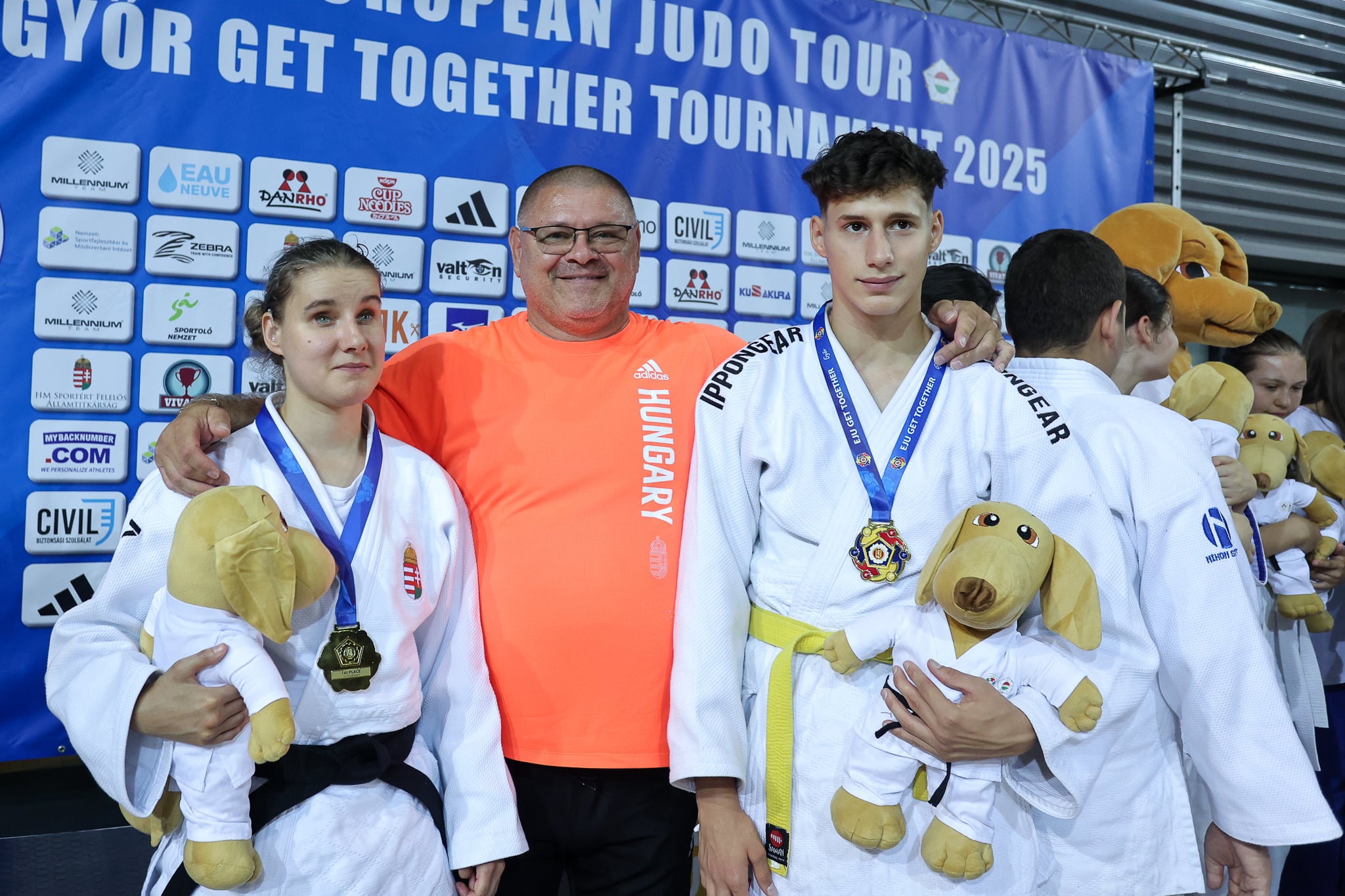
Hajtos Bertalan, or Berci as everyone calls him, is the 1992 Barcelona Olympic silver medallist. Generally, athletes of such calibre tend to focus on building future elite champions. Berci followed that path too, yet in 2007 his life took a new direction after his first encounter with visually impaired judoka. Where did this journey begin, and where has it taken him?

What was your first experience?
“Well, at first I was really surprised by the whole thing, because I hadn’t been involved in this before. I had only worked with non-disabled athletes, only competed among them. I had to learn everything, how to explain, how to show the steps, how to guide them by the leg. Of course, I had a coach myself, Keserű József. He was my national team coach, my club coach, everything back in the day. When he stopped working with able-bodied athletes, he took over coaching visually impaired judoka and worked with them for years. By 2009, he asked me to help him in Debrecen at the European Championships, and that’s how I got involved, gradually from the background. That’s also where I met Flóra too, a double Paralympian.”
You were an elite athlete yourself, an Olympic medallist, and it’s not very common for top-level athletes to turn towards para judo or adapted judo. How did your relationship to the sport change, if at all?
“When I first helped at the 2009 Europeans in Debrecen, I saw Szabó Nikolett competing, she is also a Paralympic medallist, and when I watched how she fought, I was honestly moved to tears. Even now, when I think back, it gets me emotional. That moment really touched me and convinced me that these kids, these individuals, are worth working for. They want it. They balance training with jobs, they aren’t full-time professionals. They go to work 4–6–8 hours a day, then head to training. Nikolett, for example, would wake up at 5, train at 6, then go to work afterwards. They give so much, but unfortunately they don’t receive nearly the same financial recognition as able-bodied athletes. That still saddens me deeply.”
What impressed you most when you first saw para judoka?
“The incredible effort and dedication. They work so hard, they are diligent, and they never skip training without a good reason. If they can’t make it, they always send a message to apologise and when they are on the tatami, they give everything, without me ever needing to push them to hurry up or put in more effort. Whatever I ask, they do it with respect and humility.”
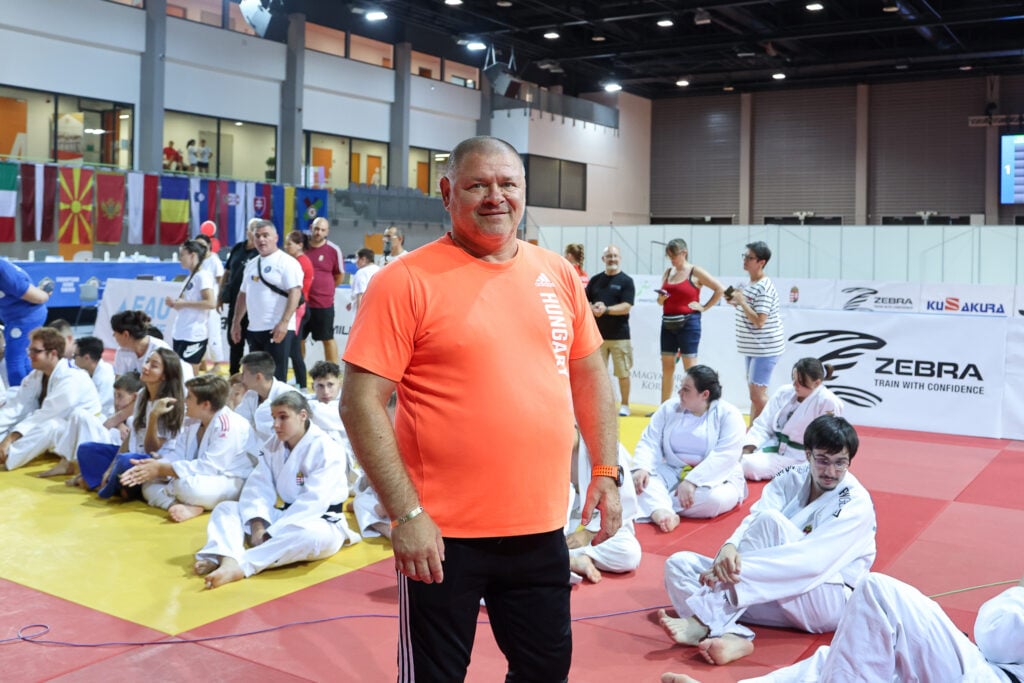
How do you see judo’s development, since it started as more of an educational tool than a sport?
“When I began working with Flóra, I wanted to promote judo among blind people in my district. I went to the local council to ask how many visually impaired people lived there, but they had no records. The Institute for the Blind couldn’t give me answers either. That was shocking, if someone wants to work with these people, it’s hard to even find them. So when initiatives like this competition came about, I was honestly very happy. We are already part of the Paralympic Committee with visual impaired and blind judo, but even watching other Paralympic sports, like swimming at London 2012, I was so touched. It’s hard to describe the emotion. Now, to answer your question, I am very happy to see the development of judo and now with this event [referring to the adapted judo EJU Get Together event], truly everyone in our society is able to put on the judogi and practise judo.”
Has this journey changed you personally?
“Yes, it really has. I realised how valuable it is to support and stand beside these athletes, even though many people unfortunately don’t see it that way.”
What’s the biggest lesson you have learned so far from working with impaired individuals?
“I can’t fully answer yet, because I am still at the beginning of this journey. For now, I only work with Flóra and one other athlete, and both of them are European medallists. The qualifying cycle is starting now, so we will see where it leads but one thing’s for sure: I don’t want to lose them. I truly enjoy working with them, and honestly, sometimes I feel more disappointed by able-bodied athletes, who don’t show the same dedication and humility as these judoka.”
Would you consider working with athletes with different disabilities?
“Honestly, I haven’t worked with people with intellectual disabilities yet, and I think that would be a bigger challenge. With Flóra, I can explain or demonstrate something, and she understands quickly, but with intellectual disabilities, learning is different. I am not sure if I could handle that yet. It’s a very different responsibility, but I must say I am interested in learning about it. So perhaps in the near future, I will embark on that journey too.”
What advice would you give to coaches who want to start working within this field?
“Don’t start alone. Find someone experienced and learn from them. Even as an Olympic medallist, I thought I knew everything, but I quickly realised I didn’t. I took a coaching qualification and that opened my eyes, it’s completely different from competing. You need real expertise, and you must treat disabled athletes as normal athletes, not pity them. That’s the worst mistake, overprotecting them. Humour is also very important. I often joke with Flóra, like telling her off for leaving the lights on in the changing room. Of course she reminds me she can’t see, but we laugh about it. That kind of humour builds trust.”
Your first Get Together event is now behind you. What did you think of this competition?
“This was my first such event, and honestly, it was a great experience. Flóra’s level is already a bit higher, but she could still learn, and there’s always value in these tournaments. I definitely want to come again next time.”
Images: Carlos Ferreira
Author: Szandra Szogedi