





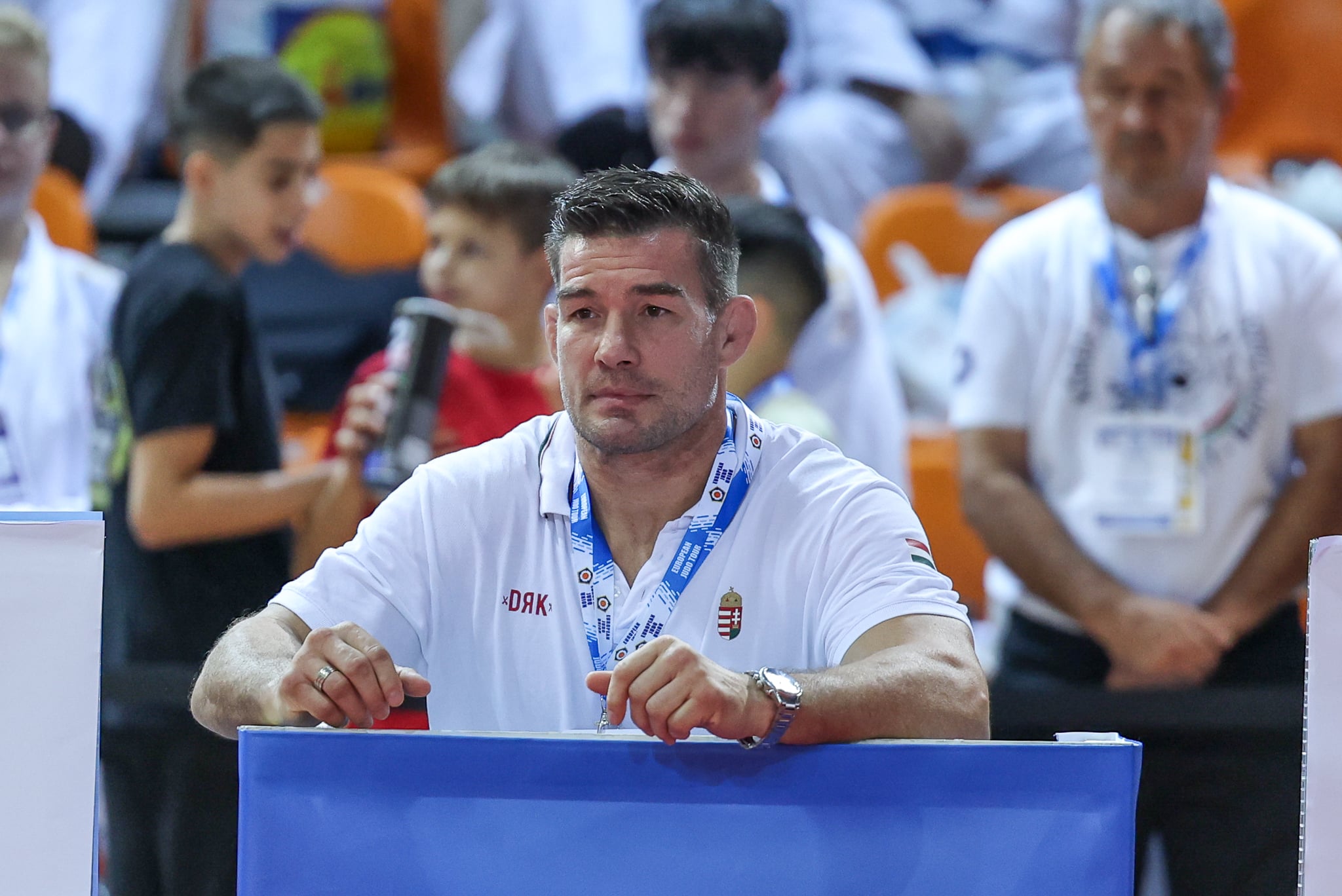
In the world of Hungarian judo, Ledényi Levente has become a steady guiding hand for the youngest talents. Today, as Head Coach of the U15 national team, he stands at the forefront of shaping the next generation, but his own journey began long before this role.

“I started coaching about 20 years ago,” he recalls. “Back then, I was still competing myself, but I was already building my own team. I began the Ledenyi Judo School with just six judoka in a fitness gym. From there, we grew into a club of over 100 students. The Hungarian Judo Association noticed the work I was doing with children, and eventually invited me to lead one of the youngest age group, the U15 national team.”
That was about eight years ago. Since then, he has worked with many promising talents and has watched athletes flourish through the cadet and junior ranks. Levente stands by his teaching method, which places judo values at the forefront, and he finds this especially important for this age group. “The first thing I try to instil is respect. Respect and humility. Respect towards each other as competitors. Of course, when we talk about judo itself, I believe that in this age group, technique is the most important thing. Strength can always come later, but technique, precision, and finding the movements that suit each child, this is what matters most.”
Following on the topic, he brings up an example of how children often look up to world stars, trying to imitate their techniques, like an uchi-mata from Kosei Inoue or other Olympic champions. “Those athletes all began by learning the basic, clean version of the technique. From there, they developed their own style. That’s what I tell my kids: learn the foundation properly, and later you can make it your own.”
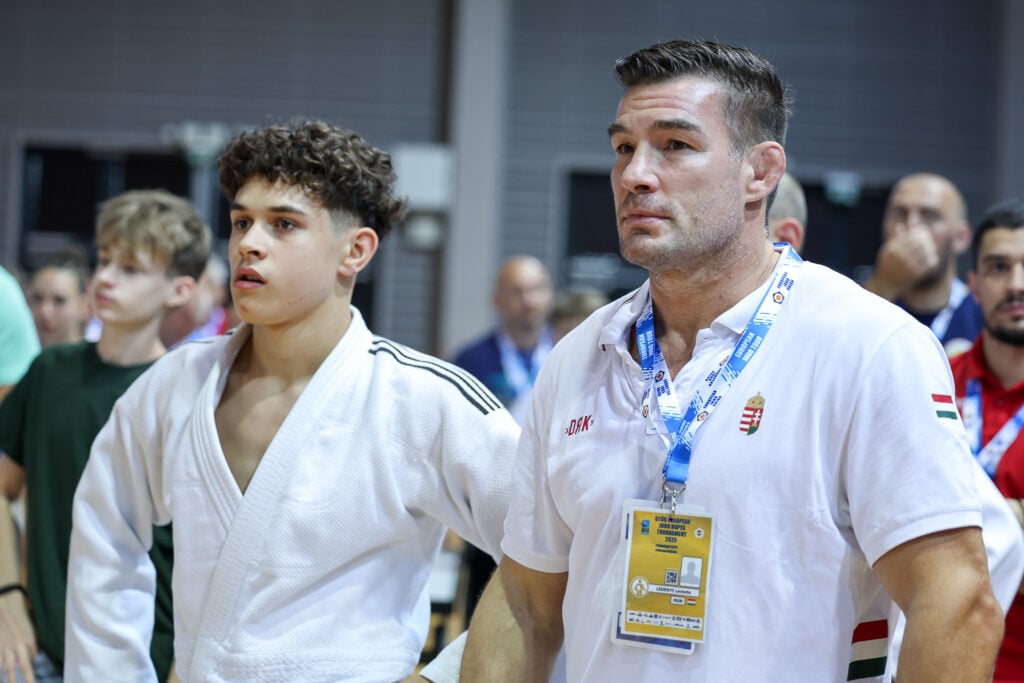
Teaching children in the 2020s is not the same as it was even a decade ago. Technology, is one of sports’ biggest rival. How does Levente tackle the challenges of growing technology, which is far less physically demanding, while keeping children on the mat and engaged in sport?
“This is a very good question,” he says with a smile. “I also have a 13-year-old son, so I see it at home. Phones, gadgets, games, it is incredibly hard to keep their attention and interest. That is why I believe initiatives like the Hopes Tournament and a potential European Championship for this age group are so important. These children need something to prepare for, something to hold them in judo.”
To keep them engaged, Levente uses creativity as well as discipline. “On trips, I take away their phones, on the bus, in the accommodation. Instead, we organise activities together: go-karting, amusement parks, team programmes. If we didn’t, I guarantee they would spend every break glued to their screens, but when they are at training or at seminars, they forget the phones and focus fully on judo. That’s invaluable and this is another reasons these seminars are important during the Hopes Tournament. Otherwise, 75% would be sitting on the tribune watching their phones or other gadgets for sure.”
Levente further praises the Hopes Tournament series.
“These events don’t just build physical skill. They build mental resilience. At this age, children often feel stress deeply. When they reach cadet level, the pressure increases with European Cups, European Championships, World Championships. If they can experience something similar earlier, they learn to handle nerves more calmly. For example, if something goes wrong, a uniform issue, a coach can’t make it on time, they learn not to panic. That is another reason why these competitions are so important. It is also an opportunity for referees and coaches to grow. Everyone gains experience. We can develop together.”
Like many sports, Hungarian judo faces challenges in keeping children engaged as they grow older. “The numbers decrease as they move up,” Levente admits. “You may start with 50 in U15, then perhaps 35 in cadets, 20 in juniors, 15 in seniors, sometimes only five remain. That is why it’s essential to have a big base.” He praises the Hungarian Judo Association for investing in development. “There is a new initiative where U15 training camps don’t just include judo sessions, but also workshops with dieticians, invited Olympic athletes, and even strength trainers showing age-appropriate methods. It is a very important step.”
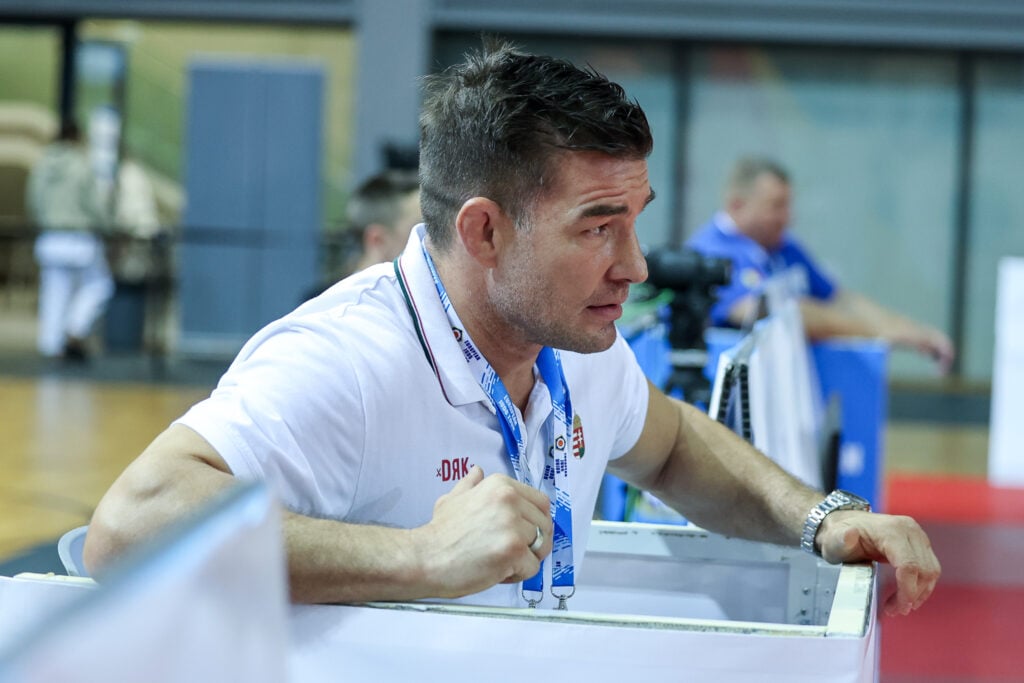
The past decade has been just as much of a learning process for Levente as it has for the team he is working with. Every coach grows next to their athletes and on this topic, Levente speaks with disarming honesty about his own journey. “Over the past eight years, I have learned a lot. At first, I was too quick to be the ‘bad cop,’ pointing out mistakes harshly. I had to learn that whether they win or lose, the first thing a child needs from me is a kind word, a hug, encouragement. No athlete steps on the mat wanting to lose. Sometimes they just need to feel they are not alone.”
He takes a deep breath as he admits another lesson. “Many times, I was asked to leave the coaching chair because I was too passionate, too fiery in defending one of our athletes. I wasn’t even coaching my own student at the time! I have calmed down since then, though I still feel the fire but I have changed: I cheer not only for my own athletes but for any Hungarian. Even for children who once trained with me but now represent another club. That sense of unity is important. and that was another one of my lessons learned these past years.”
And what is the single greatest lesson he has learned as a coach? He pauses before answering.
“That we coaches must grow softer in some ways. The world has changed, nothing is the same as it was when we were this age. Children need guidance, but also care. You cannot always be harsh but judo is still a combat sport, you face an opponent, and sometimes, yes, you must be tough. The art is knowing when to push hard, and when to embrace. That balance, this is what I have learned.”
Levente had to rush off to support the team, so lastly, he shared his goals which are both ambitious and grounded. “Of course, one day I would like to move up, to coach the cadets, the juniors, maybe even the seniors, but for now, in this role, my dream is clear: to grow. If a European Championships is created for U15, I want Hungarian judoka to stand on top of the podium. I want Hungary to be the strongest nation. This weekend again showed that we still have a lot to learn and to work on.”
Images: Carlos Ferreira
Author: Szandra Szogedi