





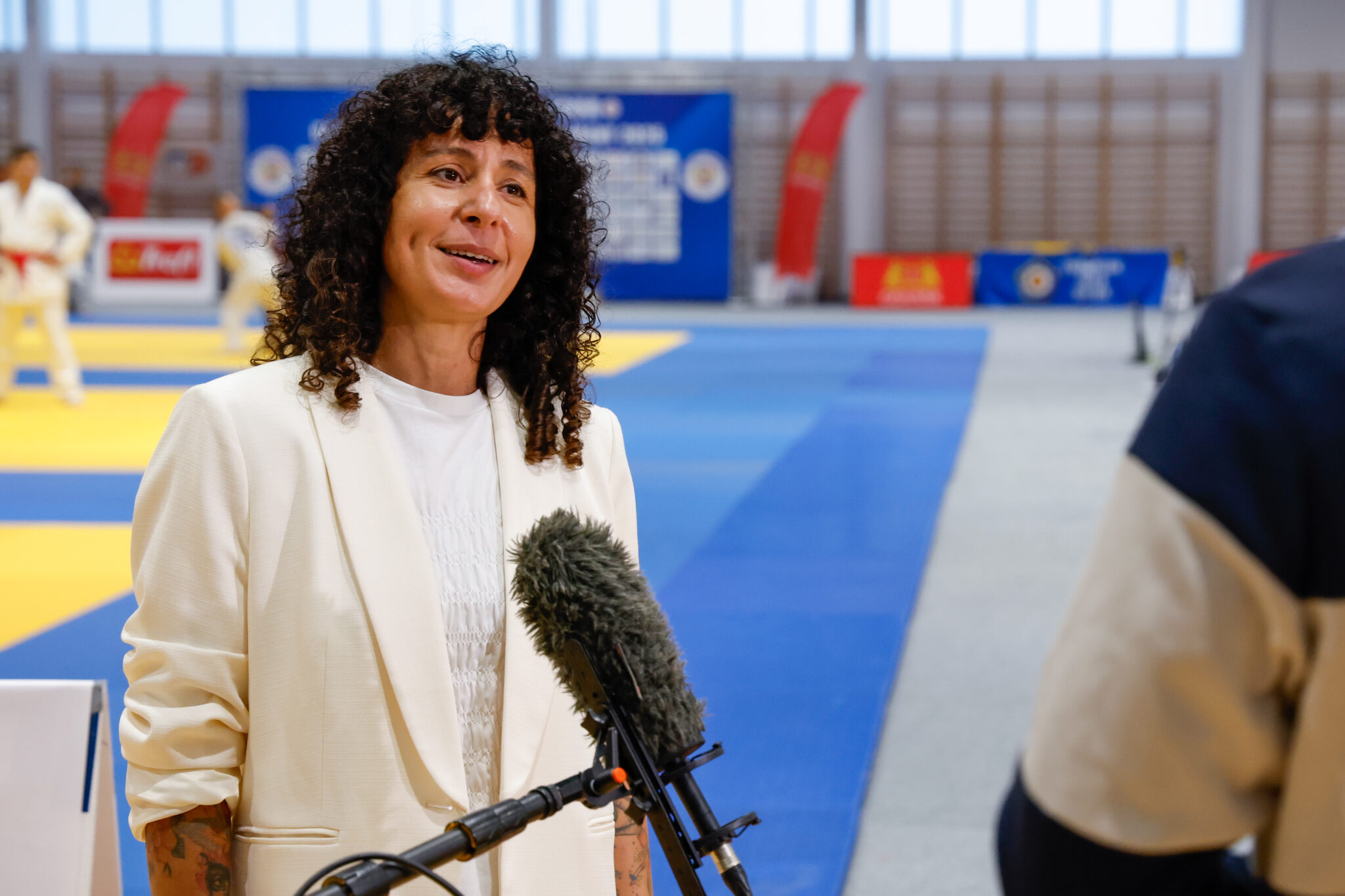
When the Gdańsk Get Together tournament 2025 opened its doors for a second edition, the atmosphere was a mixture of celebration, learning, and community. At the heart of the event stands Adriana Dadci Smolińiec (Ada), head of the Local Organising Committee, who carried both pride and calm determination throughout the weekend.

Reflecting on how this year’s experience compared to the inaugural edition, Ada admitted she felt more at ease: “This year I feel more comfortable because I feel a little bit more part of the team from the EJU. Together, we can make this tournament great for the second time. Maybe that’s why everyone tells me I’m so calm. This is because I feel part of the team.“
The sense of unity seems to have translated into growth. In 2024, the tournament hosted around 110 competitors. This year, that number rose to 150 participants, a sign of increasing interest and recognition. Pulling together an event of this scale requires immense behind-the-scenes effort. Surprisingly, the organisational core is remarkably small.
“My team who organised this tournament, I now tell you, it’s three people: me, Paweł, and Justina. Just three of us made this happen today. So I am very proud of us.”
Support came from the city council, which provided the sports hall, as well as from the Polish Judo Association and a handful of private supporters. Still, it is the dedication of her small team that fuels the success. This year’s edition took place in a different venue, moving from the vast Ergo Arena to a more intimate sports hall. For Ada, each choice carries meaning:
“Last year we were in big Ergo Arena because wanted to show the world that this kind of sport is very important. Maybe in the future we will return there, even host a European championship but what matters most is not the big arena, it’s the people.”
Infrastructure and logistics aside, her deepest focus lies elsewhere as for Ada, adapted judo is not primarily about medals or podium finishes. “I always look at the competitors. The most important thing is that we teach the coaches how to work with people with disabilities. This is the goal for the future. This is not for our medals. This is for the competitors.”
Plans are already being made for seminars to help Polish coaches better understand adapted judo. She sees this as a natural extension of her work as coordinator within the Polish Judo Association. When asked about her own club and their performance, Ada’s response was full of emotion:
“I’m always proud of them, really. It doesn’t matter how many medals they get. They give me a hug, they kiss me, they cry together with me today, that is the most important thing. We are always together on these occasions.”
With regional television covering the event and the European Judo Union showing strong support, awareness of adapted judo continues to grow. “This project must be continued. I’m really happy that we have a big team from the EJU here. Together, as organisers and coaches across Europe, we can bring this project to a higher level.”
Author: Szandra Szogedi