





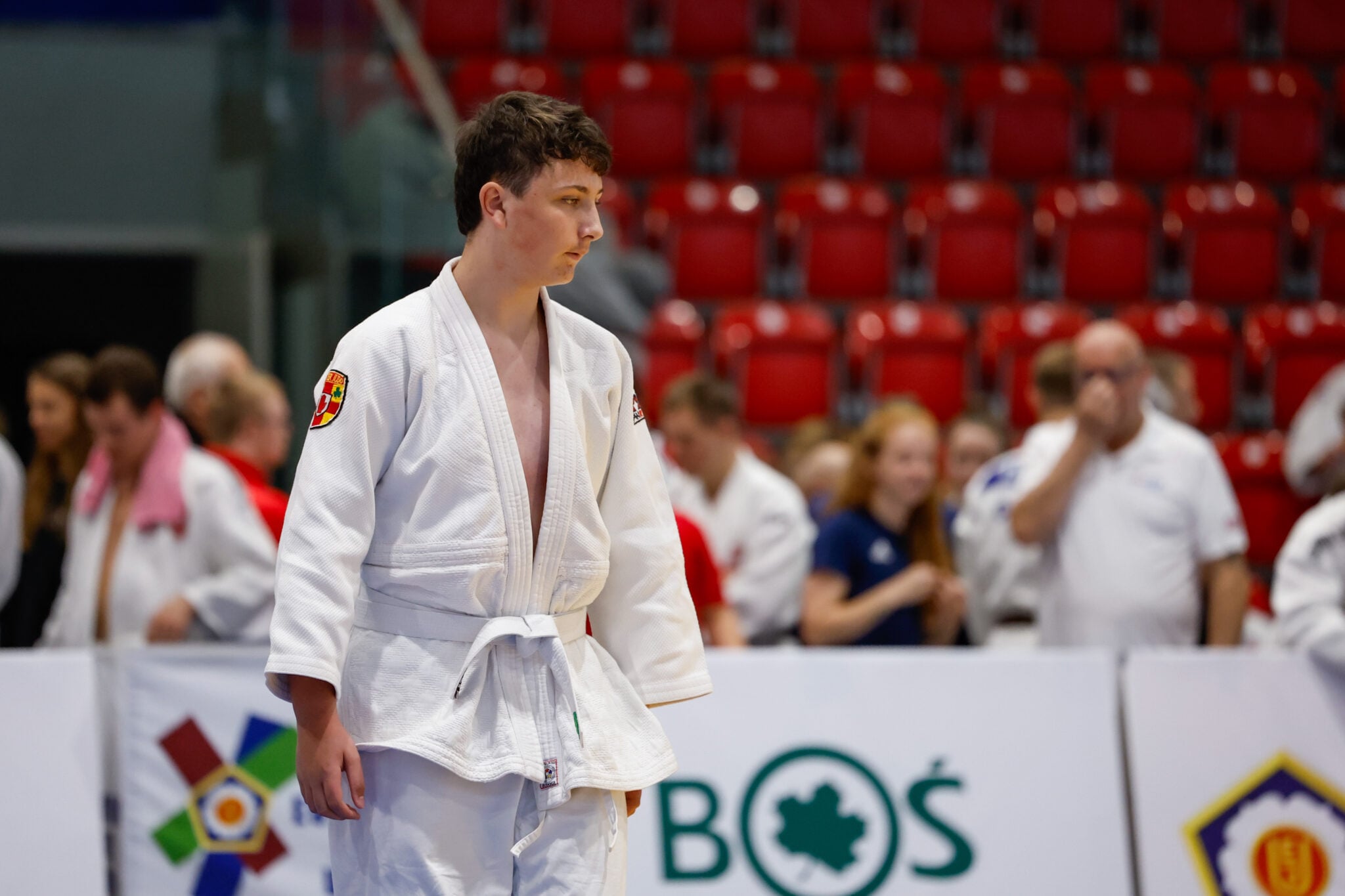
Peggy Magee is a humble yet bubbly Irish woman, judoka at heart, coach by calling, and above all, a devoted mother. For years she has balanced two demanding roles at once: guiding her 13-year-old son Shea, who has autism, through life as his mother, while also leading him on the tatami as his judo coach.

Beneath her ready smile, there are layers of worry, of hard days, of lessons learned the hardest way. She speaks with honesty, her voice both tender and determined:
“When he was diagnosed with autism, I was trying to find a sport for him to fit into and there was no sports anywhere that would cater for a child with needs at all, down where I live. So I contacted Dermot Heslop from Great Britain. He’s my judo daddy. I contacted him and I said, you know, like I wanted to do my coaching start and I wanted to open a club where I live because I felt that there should have been something for kids that have these needs.”
That decision changed everything. Shea now trains both in Peggy’s club and another, but the road has not been smooth.
“It was a hard going at the start because we hadn’t had the full experience of what autism was and I was on a learning curve as well. As a parent at first… with that I know what parents have to go through to get their kids through the door, for example on a bad day. So I kind of look at the parents, and we do this nod and I know whether it’s a good day with that child coming in, or whether it’s a bad day, which I then have to turn into a good day through judo.”
This silent understanding between parents, this shared resilience, has built something far beyond a club. It has built friendships.
“They have made lifelong friends. We are over here [Gdansk], they are great friends and they would never have met unless it was judo. Shea’s made good friends with Luca from Croatia, even though he doesn’t speak English. They still do thumbs up, pats on the back, they still, you know, recognise each other. Their own communication.”
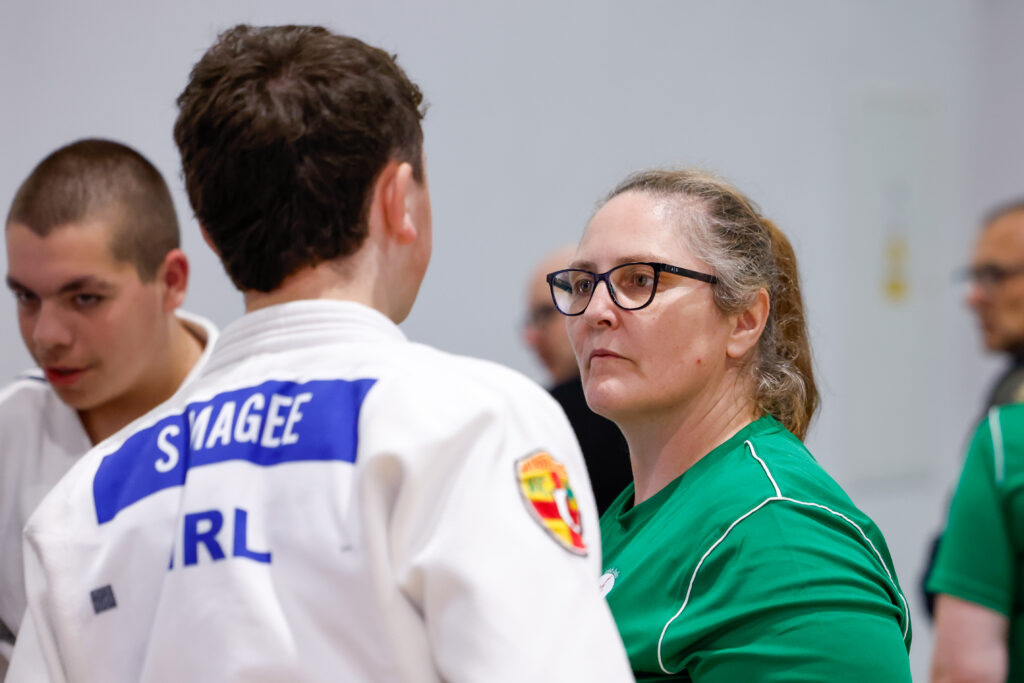
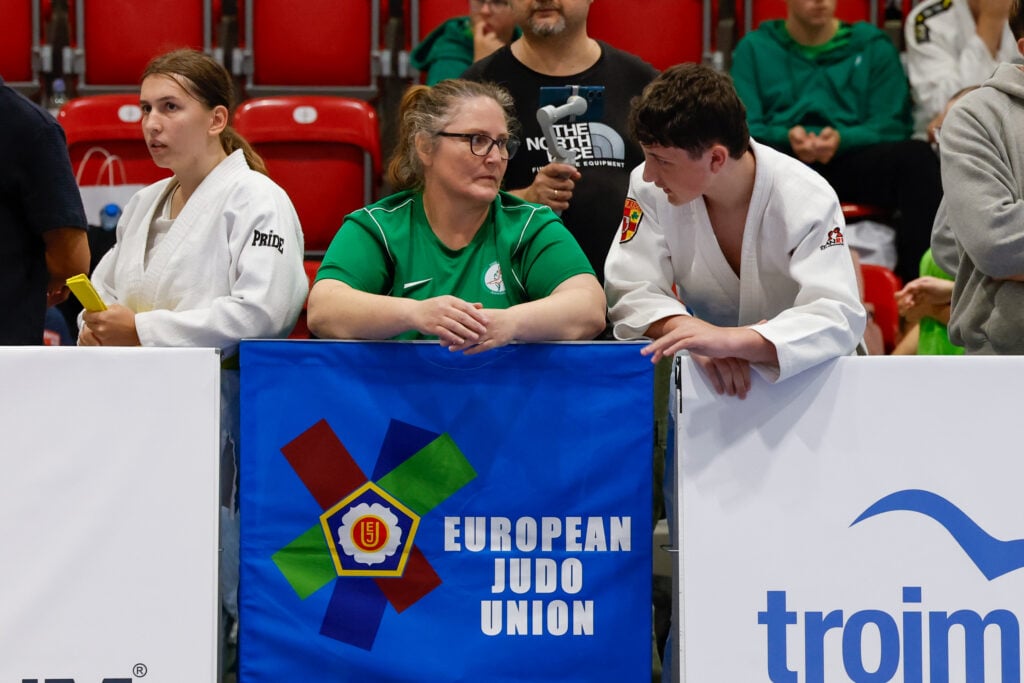
For Peggy, as well as for many others, these international competitions such as the EJU Get Together Event are more than medals and matches.
“I think these competitions are needed, as a parent and as a coach. All the stuff you work for, it’s tough. It’s a lot of dedication but its worth it because in Ireland, adapted judo is very much in the infant stage. So when you are coming here and they are putting in a divisioning session on the mat with these guys, who have more opportunities competing than what our guys do, you can tell that they have had more experience. Still, our guys are training hard. So we are putting up a good fight and hopefully we will get more competitions.”
Then it is Shea’s turn. His words are simple, yet they cut straight to the heart.
“Well, my mom used to do judo when she was younger, so I just want to copy what she did. I was a wee bit of a rude kid when I was younger but I have matured now.”
And why does he love judo? His answer is as honest as any 13-year-old’s could be:
“That I get to throw people.”
He grins but then he digs deeper: “I get to actually be active, because I don’t really work out that much but this actually allows me to go out.”
Most importantly, judo gave him something he never had before.
“I got loads of friends from judo. I don’t have friends in school but this, I got loads of friends from here [judo]. This is just all from judo.”
Peggy joins, teasing: “And the trips away? “
Shea, with the cheeky charm only a teenager can bring, replies: “Yeah I, get to skip school to go on judo trips.”
Author: Szandra Szogedi