





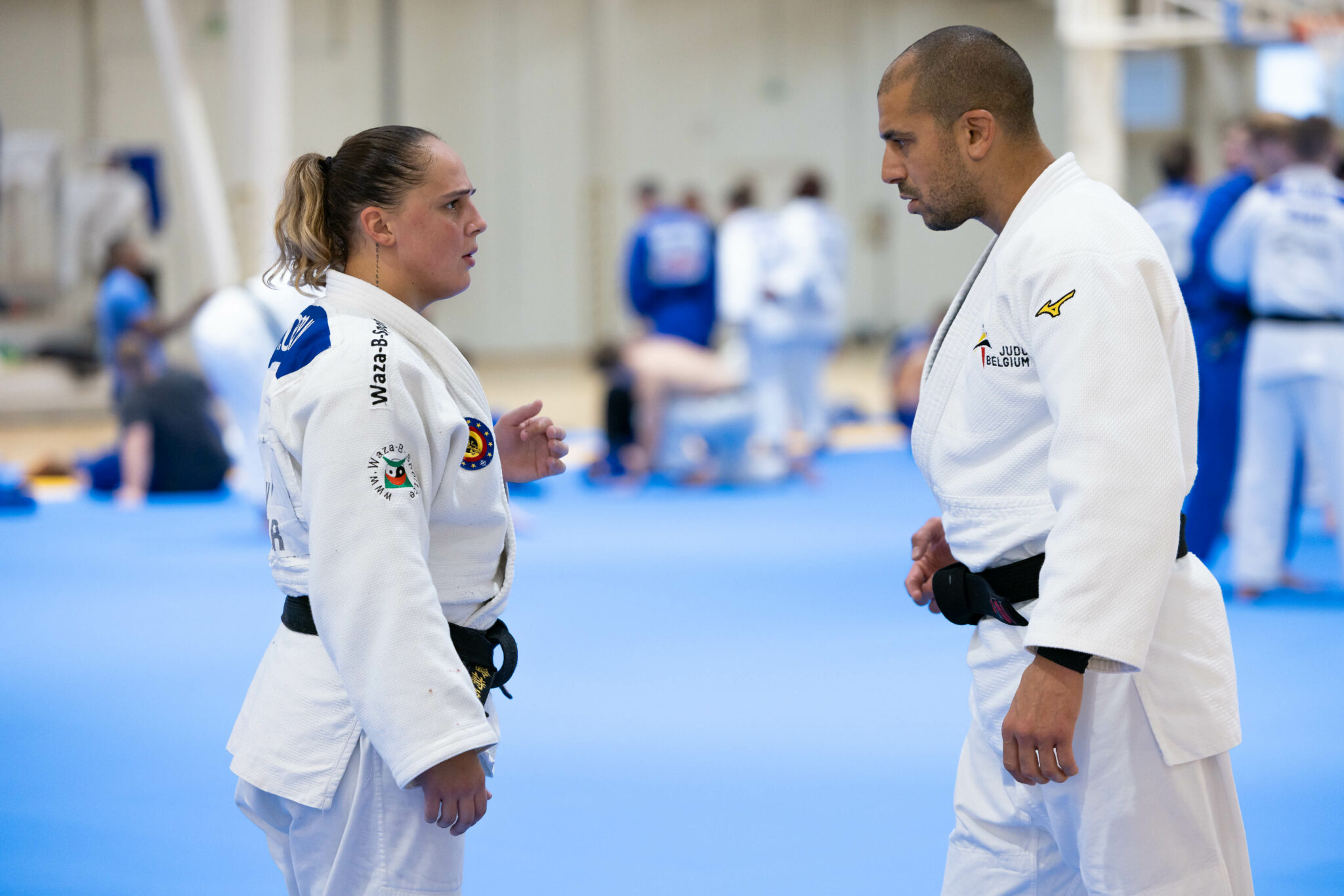
When Brazilian coach Pedro Guedes walks into a Belgian dojo, he brings with him not only decades of experience but also a philosophy forged across continents. The newly appointed head coach of the Walloon Judo Federation will be responsible for guiding Belgium’s senior men and women towards the Los Angeles 2028 and Brisbane 2032 Olympic Games.

“It’s a very exciting challenge,” Guedes tells us. “My main job is to work with the senior players on their development and international performance, while also supporting coaches at cadet and junior level so we can prepare the next generation for senior success.”
For Guedes, who previously served as head coach of Germany’s men’s team, the move to Belgium marks both a professional shift and a personal project. “In Germany, I was responsible for the men’s squad only, and it was a lot of management work across six national centres. Belgium is different: it’s a smaller country, more centralised, and my work here includes both men and women. That makes things easier and allows for closer daily interaction with the athletes.”

A Project with Potential
So why Belgium? Guedes explains that the size of the country and its judo culture appealed to him immediately. “It’s a small country but with a very strong tradition in judo,” he says. “The project that was presented to me was very attractive, it’s long-term, with clear goals and a young squad full of potential. Everything is centralised in one place, which makes the work more focused.”
Belgium’s geography was also a factor. “It’s perfectly located in Europe, so it’s easy to reach different competitions and training camps, but above all, it was the project, the vision, and the possibility to contribute to Olympic goals that made me want to come.”
Two Languages, One Judo Language
In a nation divided linguistically between Dutch-speaking Flanders and French-speaking Wallonia, Guedes is uniquely well-prepared. A self-described “polyglot by necessity,” he speaks English, German, Portuguese and, crucially, French.
“Language has always been important for me,” he says. “When I left Brazil at 29, I only spoke Portuguese but I realised quickly that to integrate, to understand the system you are working in, you must learn the language. Before moving to Canada, I did an intensive French course, and now being able to speak French helps a lot in Belgium. Communication is everything in coaching.”
Belgium’s two federations still train separately, still, Guedes is optimistic about collaboration. “At the moment, the teams are split but we meet once a week, and there is a real willingness to cooperate. The creation of a strong mixed team for international competitions will help bring both sides closer together.”
Belgium on the World Stage
Belgium has a proud Olympic history in judo, winning medals consistently since 1980. Guedes believes that, despite its small size, the country can return to the highest level.
“For its population, Belgium has always punched above its weight,” he says. “Both Flanders and Wallonia have good structures and excellent coaches. Even though the numbers aren’t huge, they have always managed to transition athletes from cadet to junior to senior, and produce results.”
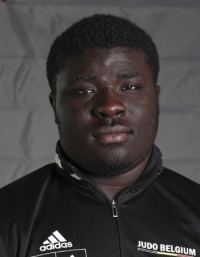
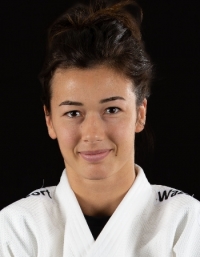
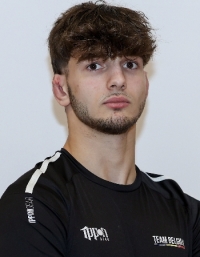
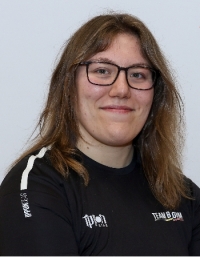
That next generation is already emerging. Alongside Olympic medallist, Gabriella Willems and Olympian, Jorre Verstraeten, Guedes highlights Malik Umayev, who is returning from injury, lightweight Lois Petit, heavyweight Gabriella Bouvier and middleweight Alessia Corrao, and junior world medallist Mouhammad Gazaloev. “These are names to keep an eye on,” he says. “There is real talent in the system.”
Coaching Philosophy: Beyond the Tatami
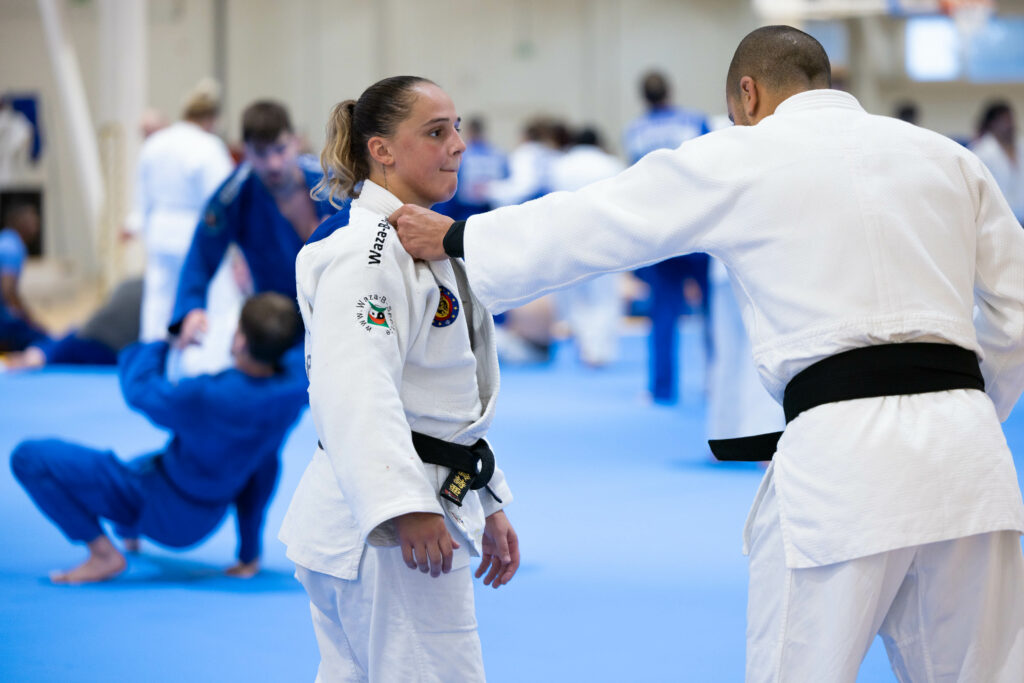
For Guedes, coaching is about much more than medals. “What is so great about being a coach is the ability to inspire people,” he reflects. “It’s about sharing knowledge but also learning constantly. For me, it’s essential to pass on the values of judo; solidarity, respect, friendship, as well as the technical side.”
He draws a sharp contrast with life as an athlete. “As an athlete, you are always thinking about yourself, your needs, your performance but as a coach, you have to think globally, not just about the players but the coaches, the physios, the doctors, the federation, the parents. It’s a team effort. My role is to minimise the barriers for athletes and help them find their best path.”
Brazilian Roots, Global Vision
Born and raised in Brazil, Guedes grew up in a judo culture that blended Japanese tradition with European influences, creating the distinctive Brazilian style: aggressive, attacking, always looking for ippon.
“I want to bring that spirit with me,” he says. “Judo should also have joy in it, it’s not only about winning but about the way you fight.”
But his approach has also been shaped by years abroad. “Working in Slovenia, Canada, Germany, and now Belgium gave me knowledge of different systems. Each country has its own philosophy and strengths. I take pieces from each and create my own work philosophy. Judo is global now, and the exchange of ideas between systems only makes it stronger.”
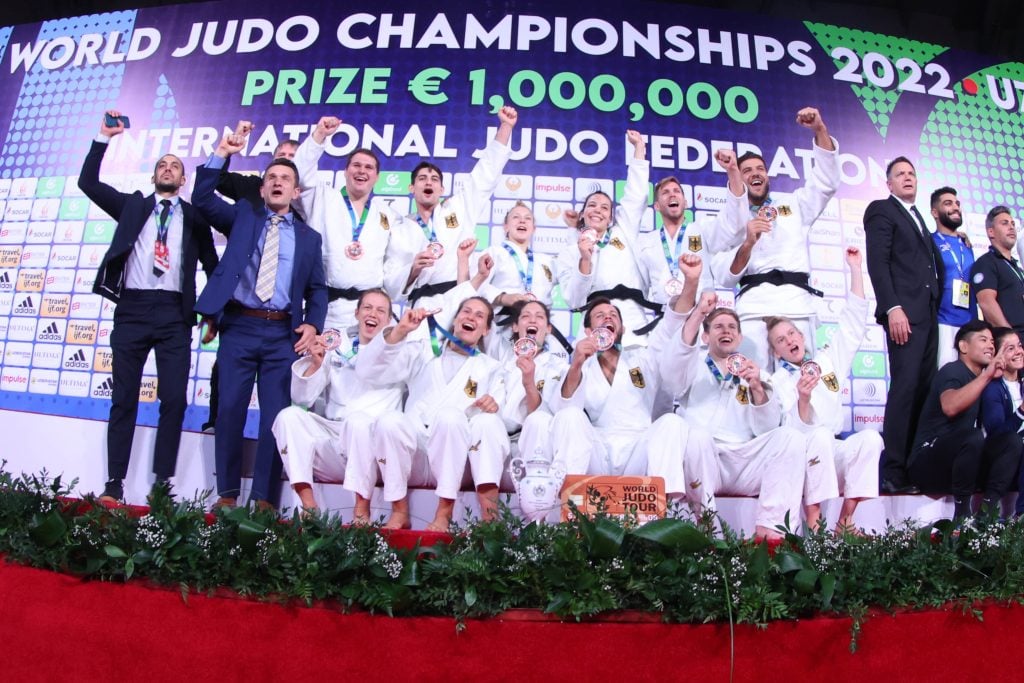
This, he believes, is the future of the sport. “Today, you see coaches moving across countries, bringing knowledge and taking knowledge back home. It’s a win-win situation. Judo has grown a lot over the last two decades, and countries that only recently began building their judo programmes are now producing high-level athletes. The competition is tougher, but that’s positive; it forces everyone to raise their game.”
Action in Motion
Guedes is not wasting any time. His final months of the year are packed: training camps in Slovakia and Italy, competitions in Peru, Mexico, Croatia and Abu Dhabi, and a month of training in Japan to close the year.
“It’s a busy schedule but exactly what we need,” he says. “The timing of this move is perfect. It gives me a chance to understand the athletes, the system, and prepare properly before Olympic qualification begins.”
For Guedes, Belgium is the latest stop on a journey that has taken him from his hometown Belo Horizonte to Europe, via some of the world’s toughest tatami. However, for Belgian judo, his arrival may represent something more, a new vision for the future, blending Brazilian flair, European rigour and global experience.
“Judo is more than a sport,” he concludes. “It’s a family. Everywhere I have worked, I have learned and shared knowledge. Now it’s Belgium’s turn, and I am grateful for the opportunity to be part of this project.”
Judoka

Author: Hans Van Essen