





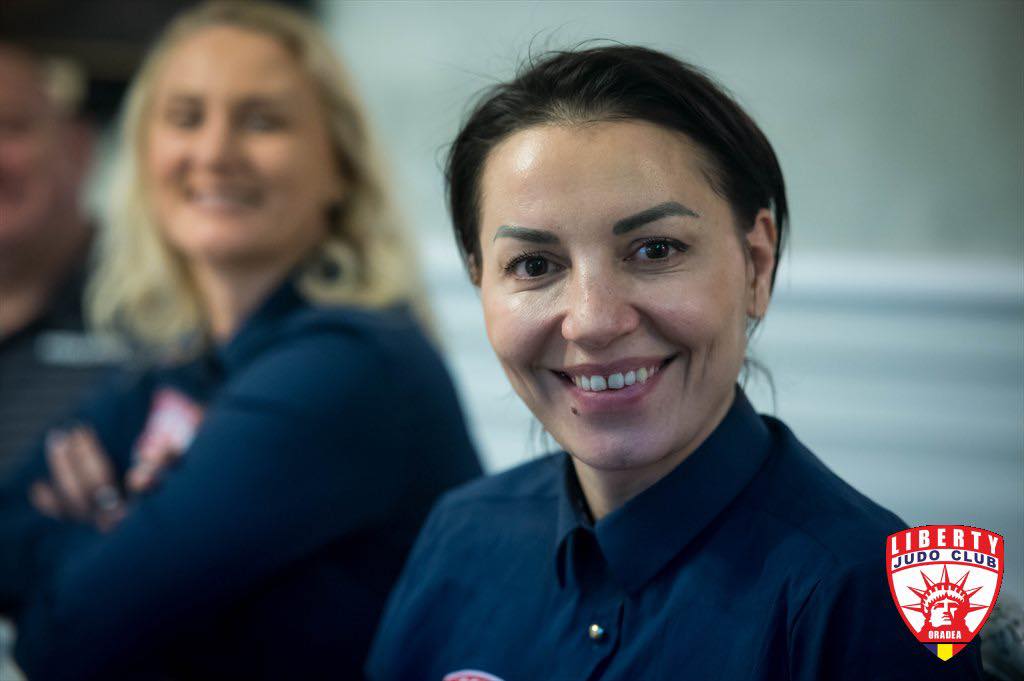
When Loredana Lascău speaks about judo, it’s with the quiet conviction of someone who has lived its values every day since first stepping onto the tatami in 1993. As a 3rd DAN and President of Judo Club Liberty Oradea, she has transformed a historic club into a close-knit family where children, parents, and athletes grow together.

Through international Erasmus+ projects and a deep belief in education through sport, Loredana continues to prove that judo builds far more than champions, it builds character, connection, and the strength to rise after every fall. She joined us for an interview to share more about her journey, her philosophy, and the heart behind Liberty Oradea’s inspiring community.
The Journey
How did your journey in judo begin, and what first inspired you to step onto the tatami?
Loredana Lascău: I began practicing judo in 1993, after first training in swimming. My parents recognised the importance of sport as a vital part of education and supported both me and my brother fully in this direction. From the very first moment, I fell in love with judo, it offered me the perfect way to channel my energy, challenge myself, and express my competitive spirit.
What does judo personally mean to you, beyond being a sport?
LL: For me, judo is much more than a sport, it is a way of life, a philosophy that teaches respect, balance, and resilience. It has shaped my character, guided my choices, and connected me to people from all over the world. Through judo, I have learned how to face challenges with calm and courage, how to grow through both victory and defeat, and how to constantly seek harmony between strength and gentleness.
Over the years, how has your understanding of your philosophy about judo evolved?
LL: In the beginning, judo was about learning techniques, winning competitions, and proving myself. With time and experience, my perspective deepened, I started to see judo not only as a sport but as an educational and human development tool. Today, I view judo as a lifelong journey of self improvement and connection with others. It’s about helping people discover their own potential, building confidence, empathy, and discipline, and creating a sense of community where everyone can grow together on and off the tatami.
What values of judo do you find the most essential to pass on to your students?
LL: The values I consider most essential are respect, courage, perseverance, and modesty. Judo teaches us to respect our partners, our teachers, and ourselves. It gives us the courage to face challenges, the perseverance to keep going when things become difficult, and the modesty to learn from every experience, whether we win or lose. I also emphasise mutual benefit and personal growth, the heart of Jigoro Kano’s philosophy, so that our students understand judo as a way to become better people, not just better athletes.
What are the biggest lessons judo has taught you, both on and off the mat?
LL: Judo has taught me that every fall is an opportunity to rise stronger, on the mat and in life. It showed me the importance of patience, discipline, and adaptability. I learned to listen, to observe, and to find balance even in moments of pressure. Off the mat, judo taught me empathy, teamwork, and the joy of helping others grow. These lessons extend far beyond competition, they shape the way I teach, lead, and live each day with purpose and gratitude.
“Excellence and Evolution”
Can you tell us the story of Judo Club Liberty Oradea, how it started and how it has grown over the years?
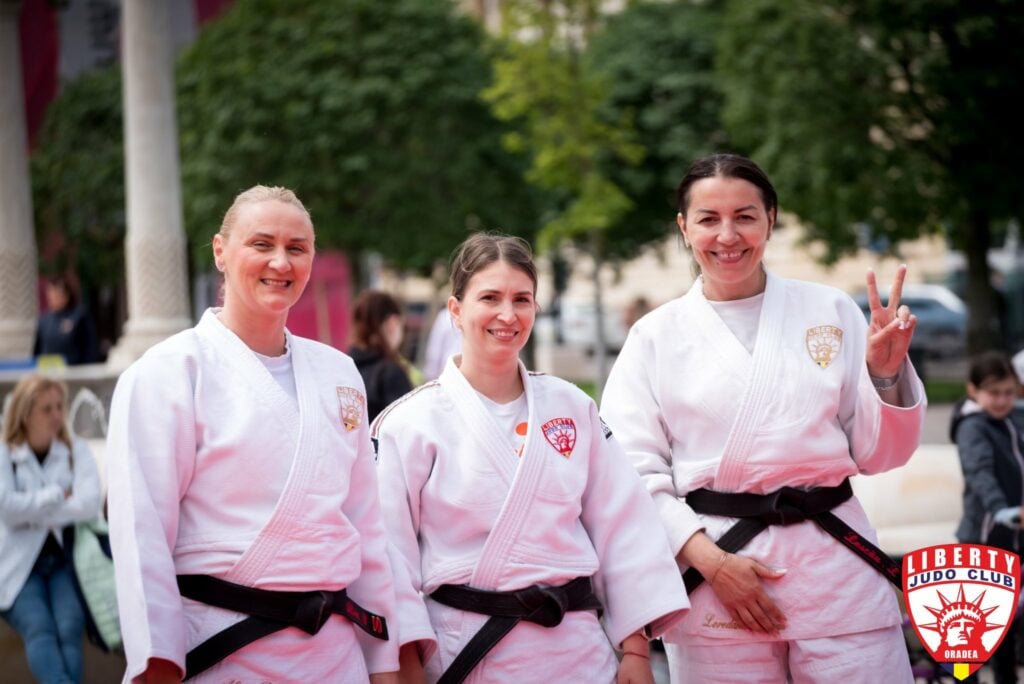
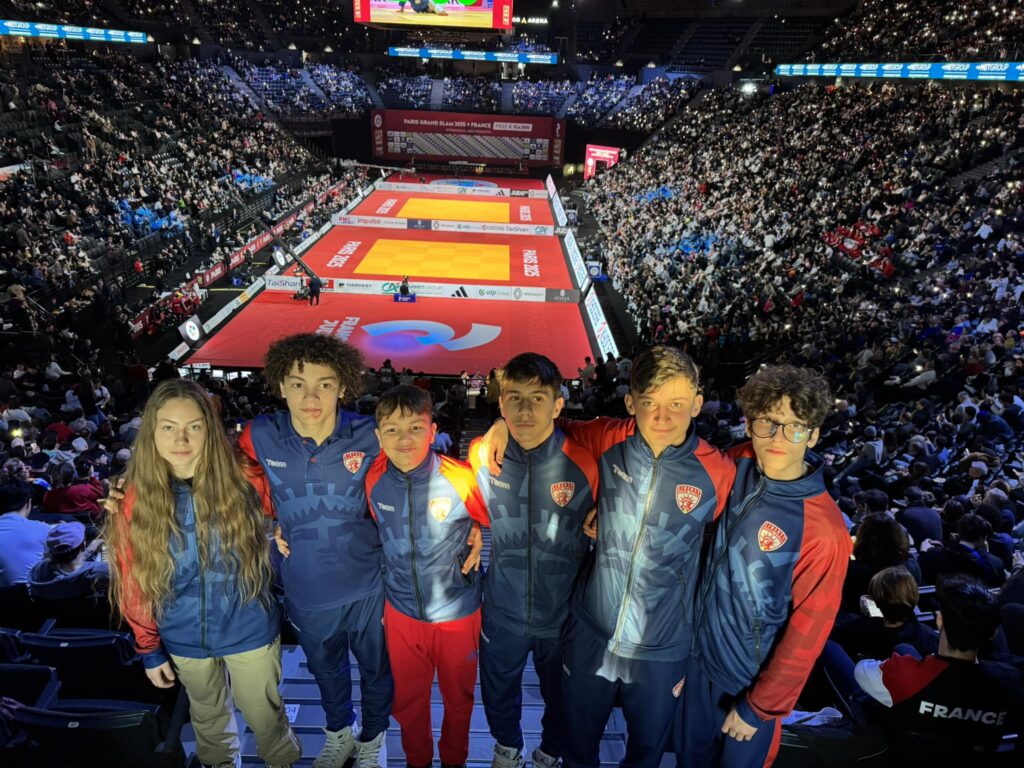
LL: Judo Club Liberty Oradea has a remarkable history that reflects both excellence and evolution. The club was founded and owned by Mr. Marius Vizer, the current President of the International Judo Federation in 1995. It was the first private judo club in Romania and the only Romanian club to ever win the European Club Champions League Cup (1999), a unique achievement that placed Liberty Oradea among the elite of European judo. Today, Judo Club Liberty Oradea combines tradition and innovation, we prepare athletes for performance but also open the tatami to children, adults, families, and schools. It is not only a place of training, but a space of learning, growth, and belonging, where the true spirit of judo, mutual welfare and benefit, continues to thrive. Judo Club Liberty Oradea represents a whole community, our present and past judoka, their families, our friends and partners, and the dedicated team behind every achievement: Loredana Lascau, Alina Borza, Bianca Gavrea, Amado Lazea, and Florin Daniel Lascau.
What is the club’s mission or guiding principle?
LL: Our mission at Judo Club Liberty Oradea is to use judo as a lifelong educational tool that
builds strong, balanced, and kind human beings. We aim to create an environment where everyone, from children to adults, can learn, grow, and find joy in movement and discipline. Our guiding principle follows Jigoro Kano’s philosophy of “Seiryoku Zenyo” (maximum efficient use of energy) and “Jita Kyoei” (mutual welfare and benefit). We believe that success is not only measured by medals, but by the positive transformation of character, confidence, and community spirit.
How would you describe the atmosphere and community at your club?
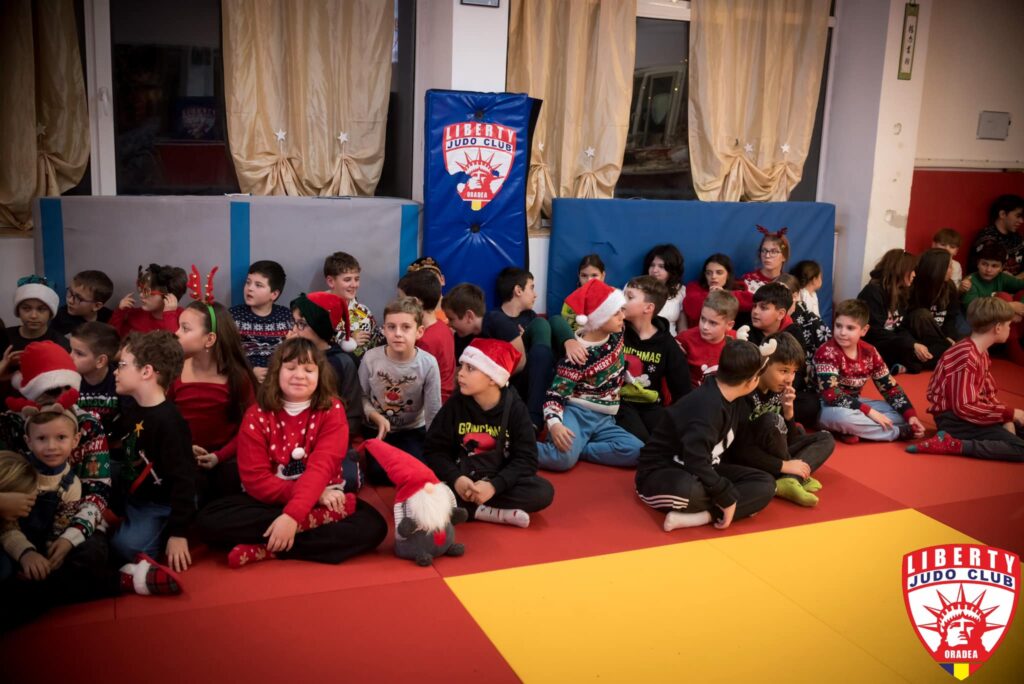
LL: The atmosphere at Liberty Oradea is one of respect, energy, and connection. We like to say that our club feels like a family, a place where everyone, regardless of age or level, is welcomed and valued.
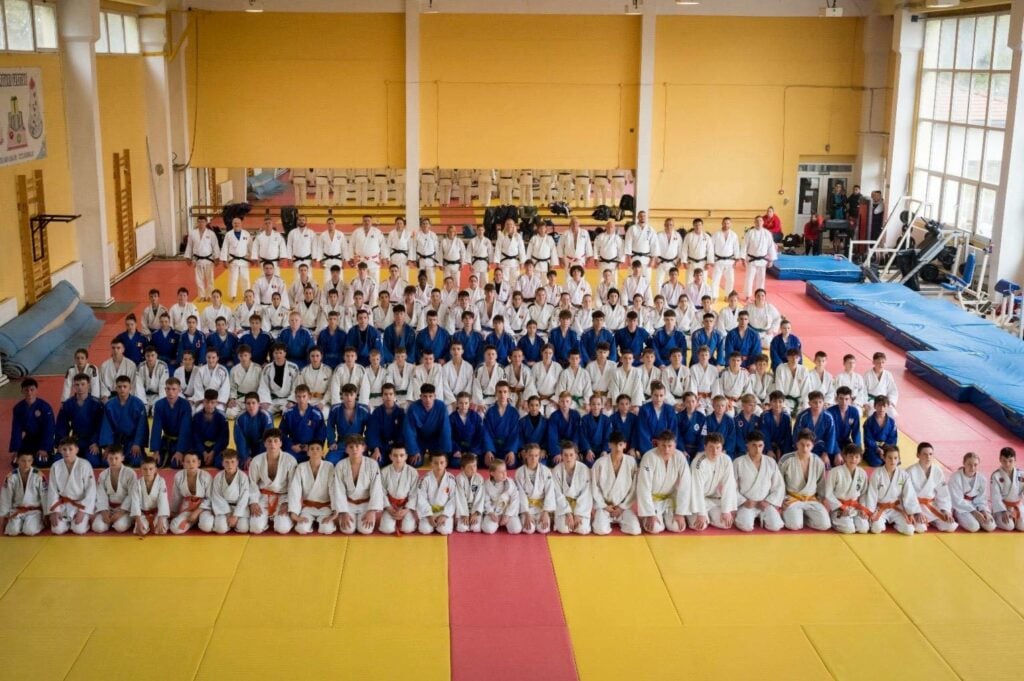
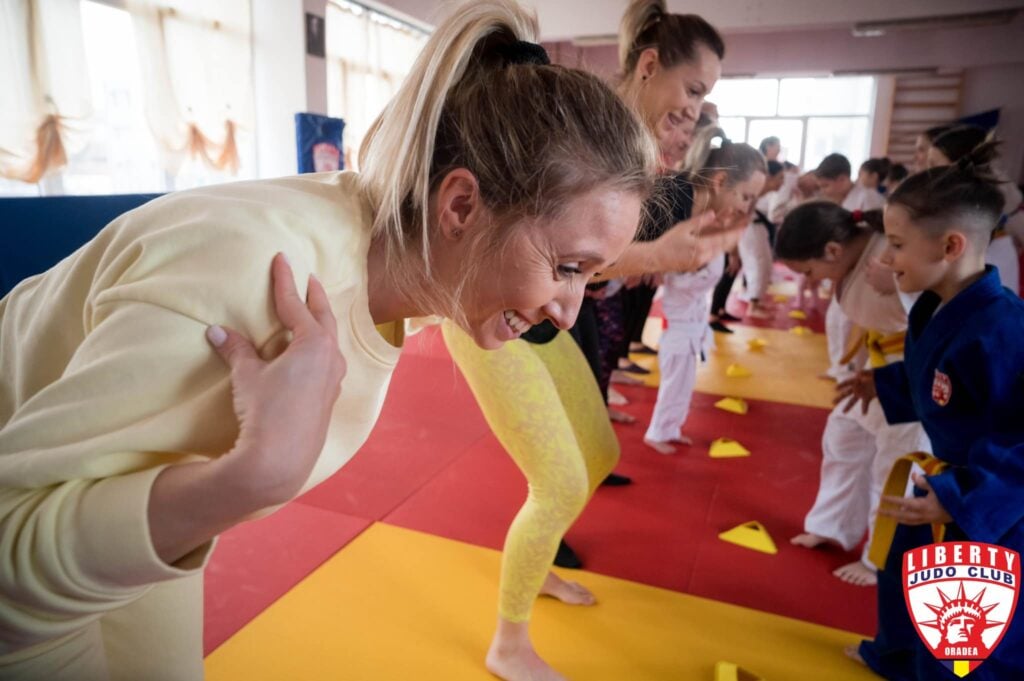
On the tatami, you can see children training next to parents, beginners learning from experienced judoka, and athletes supporting each other in every challenge. There’s laughter, effort, and encouragement, all mixed in a positive rhythm of learning and growth. Our community is built on trust and friendship. We celebrate every small success, help each other rise after every fall, and share the belief that judo is about becoming better together. This spirit of unity is what makes Liberty more than a club, it’s a home for all who love judo.
What are some of your proudest moments or achievements as president of the club?
LL: There are many moments that make us proud but what stands out most is how much Judo Club Liberty Oradea has grown in just a few years. We now have over 150 judoka training with us every year, and our athletes have achieved remarkable results, Ranked No. 1 in Romania at U15 level and No. 4 at U16, a testament to their dedication and our coaches’ hard work. We are very proud of the involvement and enthusiasm of the parents who bring their children to our club starting as early as 3–4 years old.
One of our proudest moments is seeing our young athletes participate in belt examinations, where they work hard to earn their next belt. We hope to see many of them one day earn their black belts and, most importantly, grow into accomplished, fulfilled individuals, no matter the path they choose in life. We are proud that we have built a strong educational and international dimension, being actively involved in seven Erasmus+ Sport projects that promote judo as a tool for learning, inclusion, and community development across Europe. None of this would be possible without our amazing team of coaches, supportive parents, and loyal friends who believe in our mission and stand beside us every step of the way. Together, we have transformed Liberty Oradea into more than a sports club, we have
created a living example of what Jita Kyoei, mutual welfare and benefit, truly means.
What challenges do you face when running a judo club today, and how do you overcome them?
LL: Running a judo club today comes with many challenges, from financial sustainability and access to proper facilities, to motivating young people in a fast-changing world where sports must compete with digital distractions. One of the biggest challenges is maintaining a balance between performance and participation, supporting competitive athletes while also keeping judo open and enjoyable for beginners, families, and adults who train for health and personal growth. We overcome these challenges through teamwork, creativity, and community involvement. Our strength lies in our people, the coaches who dedicate their time and passion, the parents who volunteer and support every event, and the partners who believe in our vision. Through European collaborations, educational projects, and a clear mission, we continue to adapt, innovate, and grow, proving that judo, when led with heart and purpose, can remain a powerful force for good in modern society.
Family and Judo
Judo is deeply connected to your family life as well. How does your family share in this passion?
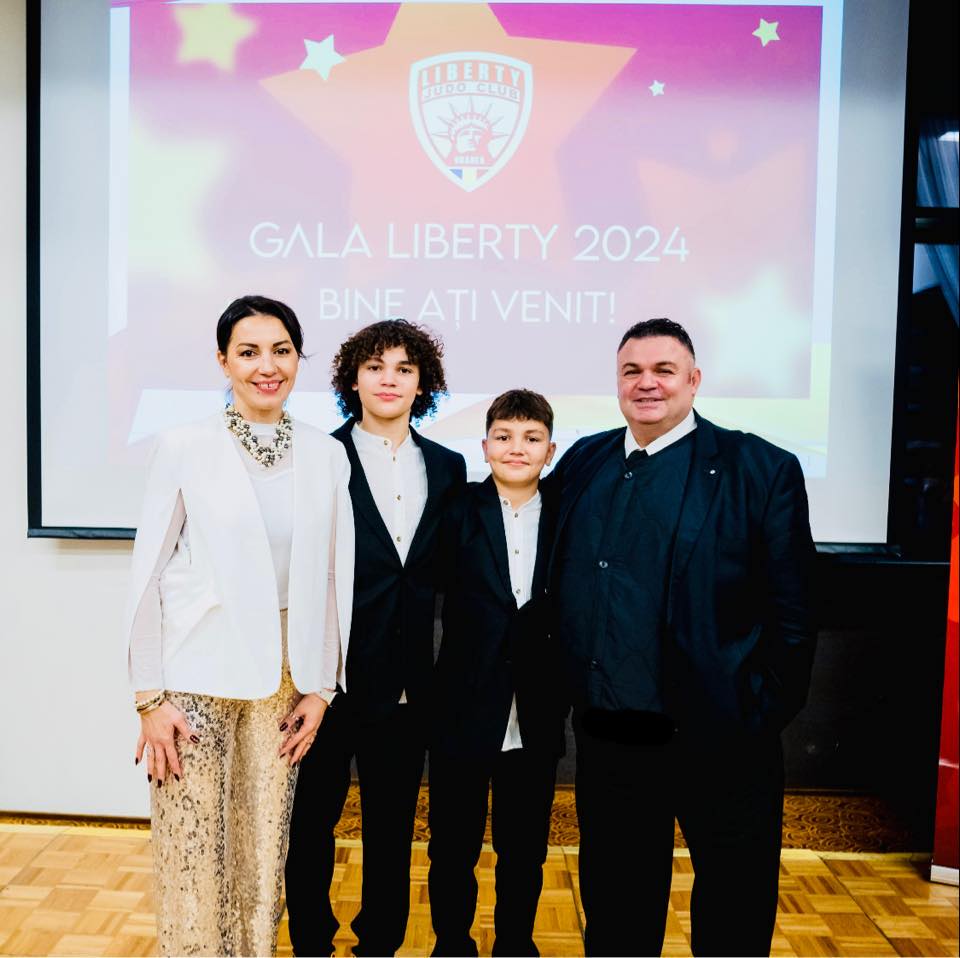
LL: Judo is truly part of our family DNA. My husband and I both dedicated our lives to this sport, and our children have grown up surrounded by tatami, tournaments, and the judo spirit. We don’t just practice judo, we live it every day, through our work, our conversations, and the way we face challenges together. It’s a shared language of respect, effort, and joy that unites us and gives meaning to what we do as a family.
How do you balance your roles as a leader, coach, and family member?
LL: Balance is never easy but judo has taught me how to adapt and stay centred. I try to approach each role with presence and gratitude, when I am on the tatami, I give my full attention to my students; when I am home, I focus on being a mother and partner. My family understands and supports my mission, and we find balance by sharing time, experiences, and even challenges together. In many ways, judo helps me integrate, not separate, my roles, everything I do is guided by the same purpose: to help me and others grow.
What values from judo do you also see reflected in your family life?
LL: All four of us are strong individuals, each with our own opinions and ways of seeing the world. We often think differently but judo has taught us to listen, to reason, and to seek understanding. With the right examples and arguments, we sometimes change our perspectives and find a common middle path, one built on respect and shared purpose. We teach our two children that success comes from effort, that mistakes are opportunities to learn, and that kindness and modesty are forms of strength. At home, just like in the dojo, we practice patience, empathy, and teamwork, learning to lift each other up, even when the path is difficult.
Do you think growing up in a “judo family” changes how children see discipline, respect, and perseverance?
LL: Absolutely. Growing up in a judo family shapes children in a unique way. They learn early that discipline is not punishment but a path to freedom, that respect is something you give before you receive, and that perseverance builds character more than talent does. They see both the effort and the beauty behind every achievement. I believe this environment helps them develop a strong inner compass, one that will guide them not only in sport, but throughout life.
Erasmus+ Projects and International Cooperation
Your club has been very active in Erasmus+ projects. Could you tell us about some of the key initiatives you have been involved in?
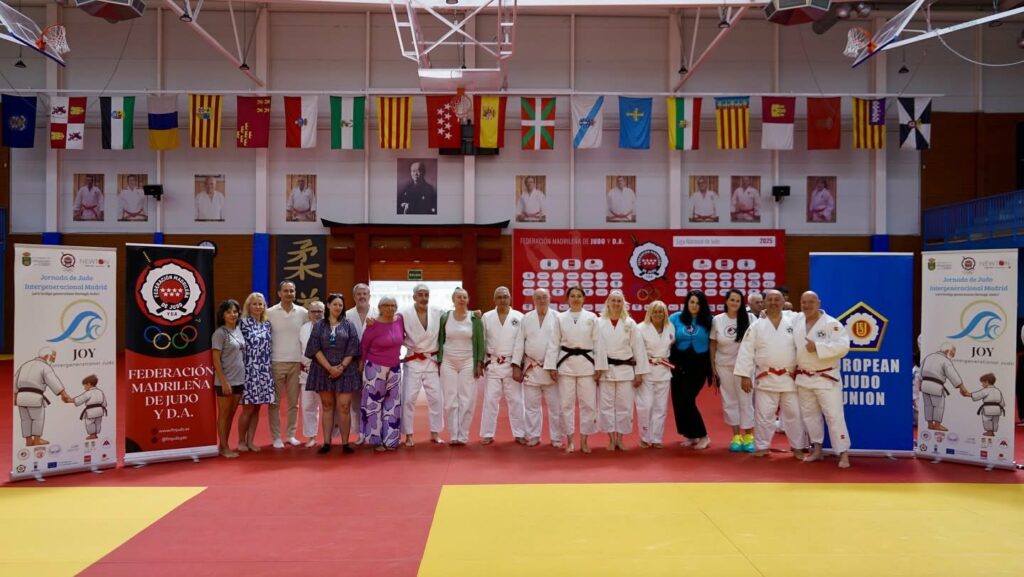
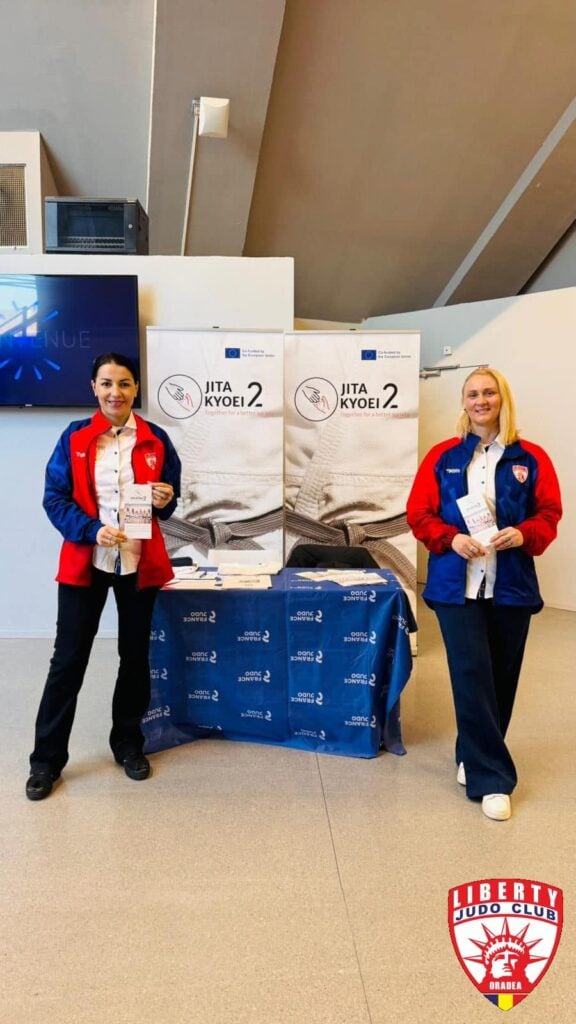
LL: Erasmus+ projects are a vital part of our club’s development strategy and educational mission. They allow us to connect sport, education, and social inclusion while promoting the values of judo across Europe. Over the past years, Judo Club Liberty Oradea has been proudly involved in several international initiatives: Movi-Mente, EDJCO (Education and Judo Coaching), Wonder M. Arts, Judo in Schools, Jita Kyoei 2, and JOY, Intergenerational Judo, with Judo4CO soon to begin. Each project has a distinct focus, from movement and mental health, to creativity, coaching education, and intergenerational learning, but they all share a common goal: to use judo as a tool for personal growth, wellbeing, and community connection. Through these collaborations, we have built strong partnerships with clubs, schools, and universities across Europe. They bring new knowledge and opportunities to our coaches, students, and families, and reinforce our belief that judo can educate, unite, and inspire far beyond the tatami.
How did Judo Club Liberty Oradea first get involved in Erasmus+ programmes?
LL: Our involvement in Erasmus+ began with a strong belief that judo is more than a sport, it is an educational tool capable of connecting people and creating positive change. After taking over the club in 2019, we wanted to expand beyond training and competition, to open new opportunities for learning, inclusion, and international collaboration. We started by joining projects that shared our philosophy, such as Movi-Mente, EDJCO, Judo in Schools and Jita Kyoei 2, which promoted education through sport and community development. These early experiences helped us understand the power of European cooperation, how sharing ideas, teaching methods, and good practices can enrich not only our club but also our local community. Since then, Liberty Oradea has become an active and trusted partner in seven Erasmus+ Sport projects, and this journey continues to inspire us to innovate, connect, and contribute to the wider judo family in Europe.
What do you see as the main goals or benefits of these international projects, for young athletes, coaches, and the wider judo community?
LL: The main goal of these projects is to create learning opportunities through judo that go beyond sport itself. Erasmus+ allows us to connect athletes, coaches, and communities from different countries, helping everyone grow through shared experiences, values, and innovation. For young athletes, these projects open their eyes to the world, they discover new cultures, make international friendships, and learn that judo is a universal language of respect and courage. For coaches, it offers professional development, exposure to diverse teaching methods, and a stronger understanding of how judo can be used as an educational and social tool and for the wider judo community, these collaborations strengthen unity, inspire creativity, and remind us that we all work toward the same goal: using judo to build a healthier, more respectful, and more connected society. Erasmus+ projects truly embody Jita Kyoei, mutual welfare and benefit, in action. They show how cooperation, not competition, can lead to lasting impact and shared growth across generations and borders.
Could you share a memorable experience or success story from one of these projects?
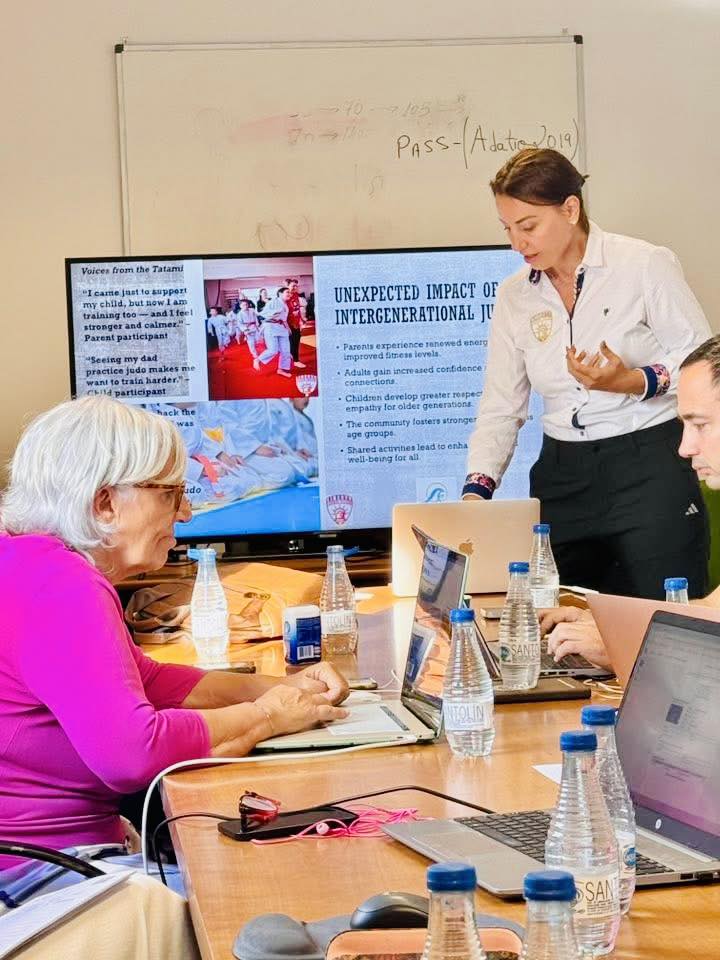
LL: One of the most touching experiences came from the JOY, Intergenerational Judo project. During a family session, we saw parents and children training together for the first time, laughing, helping each other, and discovering judo as a shared experience rather than a sport for one generation. Many of them told us afterward that it changed the way they related to one another at home: more patience, more understanding, more teamwork.
How do such collaborations strengthen both local development and European solidarity through sport?
LL: These collaborations show that sport, and especially judo, can be a powerful connector between people, cultures, and generations. At the local level, they bring new ideas, motivation, and opportunities to our community. Coaches gain knowledge, young athletes discover new horizons, and families become part of something that reaches far beyond the walls of the dojo. At the European level, these projects build a strong sense of solidarity and shared purpose. By working together, we learn to appreciate our differences, to trust, and to support each other’s growth. Every exchange, every workshop, every joint training reminds us that we belong to the same family, united by values like respect, inclusion, and cooperation. Through Erasmus+ and judo, we contribute not only to developing better athletes but also to shaping a more connected and compassionate Europe, one where mutual welfare and benefit are lived, not just taught.
In your opinion, why is Erasmus+ so important for small and medium-sized clubs like yours?
LL: For small and medium-sized clubs, Erasmus+ is a window to the world. It opens doors that would otherwise remain closed, to knowledge, collaboration, and inspiration. These projects allow us to grow not only through competition, but through education, creativity, and exchange. Erasmus+ gives us access to resources, networks, and experiences that strengthen our capacity to make a real impact locally. It helps us train better coaches, motivate young athletes, and develop programs that respond to today’s social and educational needs. For a club like Liberty Oradea, it means being part of something much larger, a European movement that values inclusion, wellbeing, and lifelong learning through sport. It reminds us that even a small club can have a big voice and play a meaningful role in shaping the future of sport and education.
Future Vision
What are your goals for the next few years, for yourself and for Judo Club Liberty Oradea?
LL: In the coming years, our goal is to continue building a strong, modern, and inclusive judo community, one that educates, inspires, and connects people of all ages. For Judo Club Liberty Oradea, I dream of creating a large, bright dojo that reflects the spirit of our club, open, welcoming, and full of life. A space where children, parents, and adults can grow together, and where judo becomes part of the cultural and educational heartbeat of our city. We also aim to expand our educational programs and international collaborations, to keep bringing new ideas and experiences to our athletes and coaches. Personally, I wish to keep learning, teaching, and leading by example, showing that judo is not only about medals, but about building strong minds, kind hearts, and resilient spirits. Every project, every partnership, and every training session brings us one step closer to this vision: a community where the power of judo truly meets the power of humanity.
Finally, what message would you like to share with young judoka who are just starting their journey?
LL: Be patient, be humble, and never give up. Every fall is a lesson. Judo is not just about fighting others, it’s about discovering yourself. Respect the tatami, your sensei, your opponent, and most importantly, respect your own journey.
Images: Judo Club Liberty Oradea
Author: Szandra Szogedi