





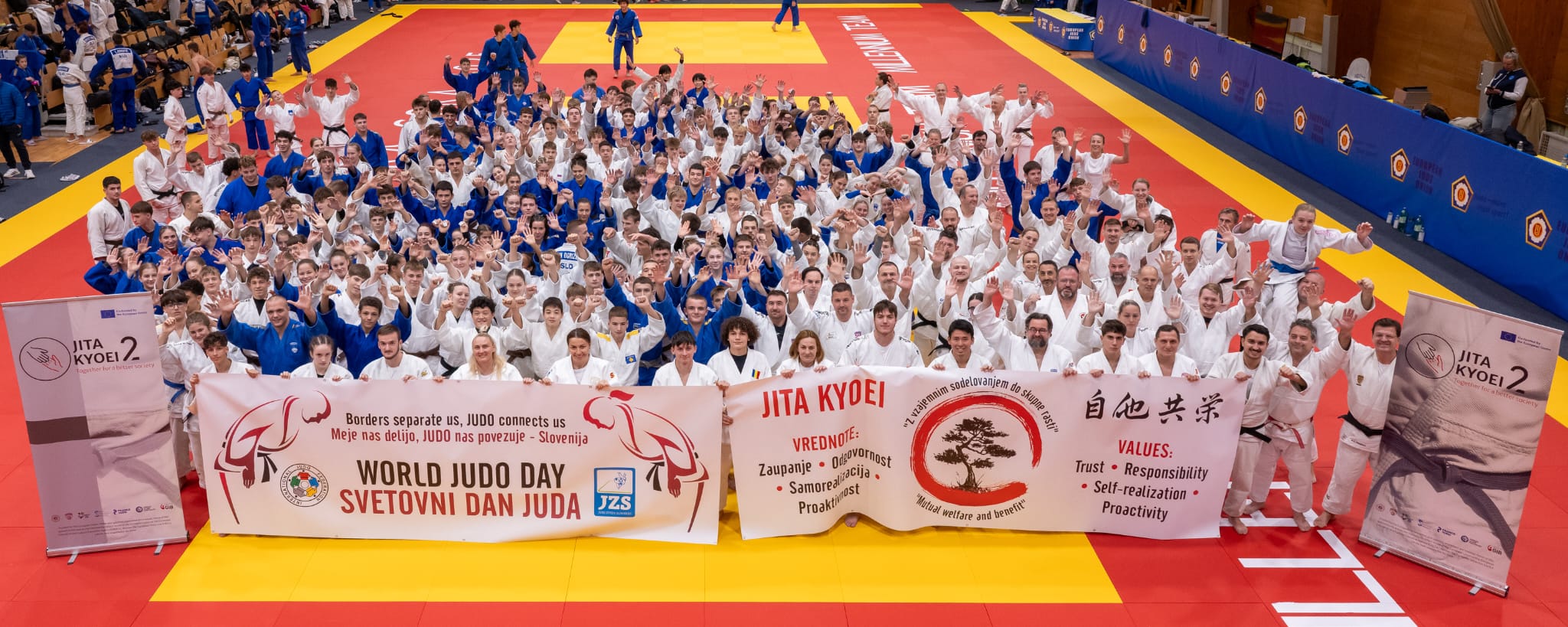
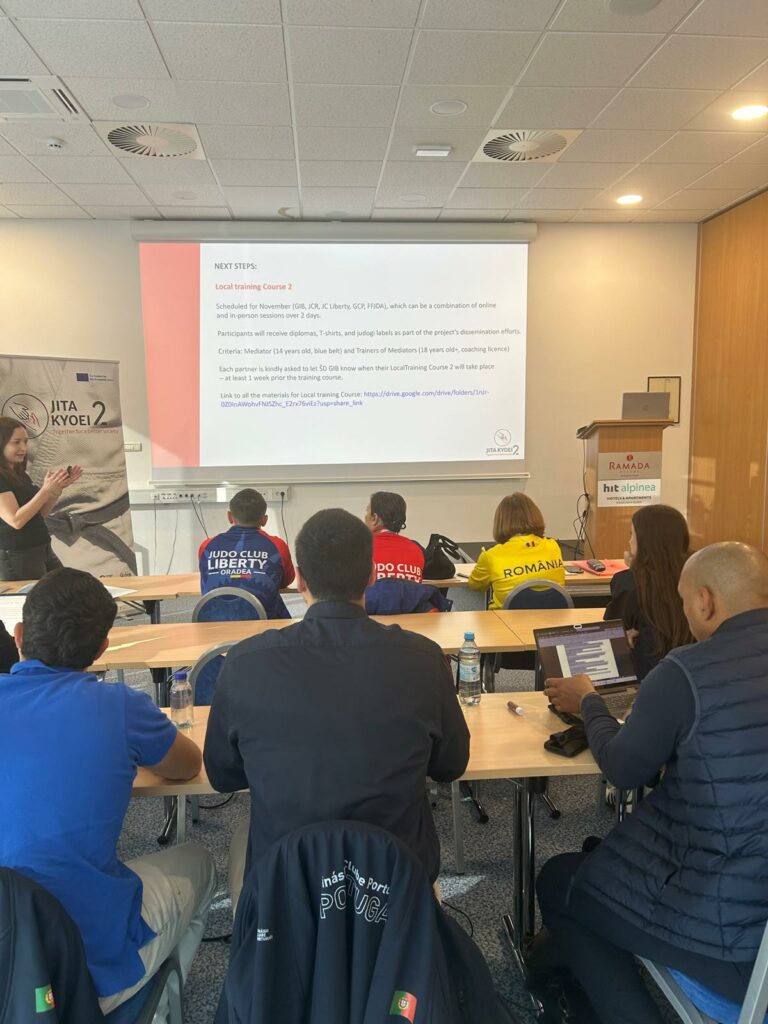
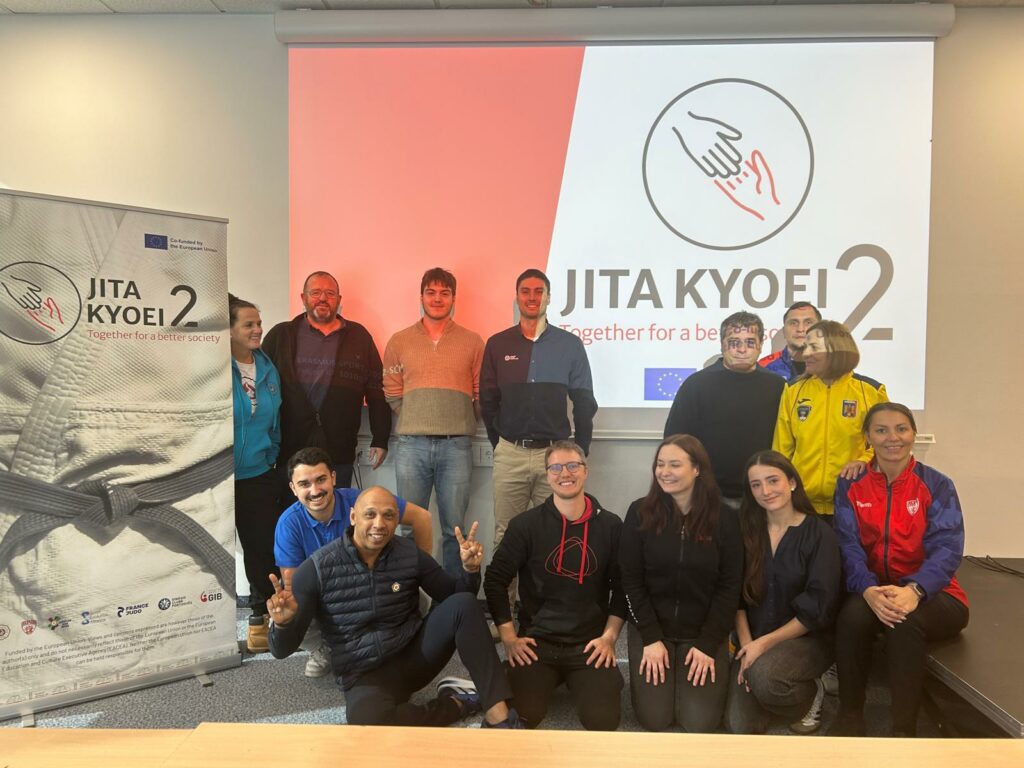
After three years of collaboration, learning, and shared passion for judo values, the Erasmus+ Project Jita Kyoei 2 has reached its successful conclusion. The final conference took place in the scenic town of Kranjska Gora, Slovenia, from 25–27 October, marking the end of a journey that brought together a remarkable network of partners from across Europe.

The project united a wide range of stakeholders from the European Judo Union (EJU) and the Fédération Française de Judo (FFJDA) to grassroots clubs and associations including Športno društvo GIB (Slovenia), Ginásio Clube Português (Portugal), Judo Club Rijeka (Croatia), Judo Club Liberty Oradea (Romania), and the NGO Sport Evolution Alliance (Portugal). Each partner contributed its unique expertise, demonstrating how diverse experiences can come together under the shared spirit of Jita Kyoei, “mutual welfare and benefit.”
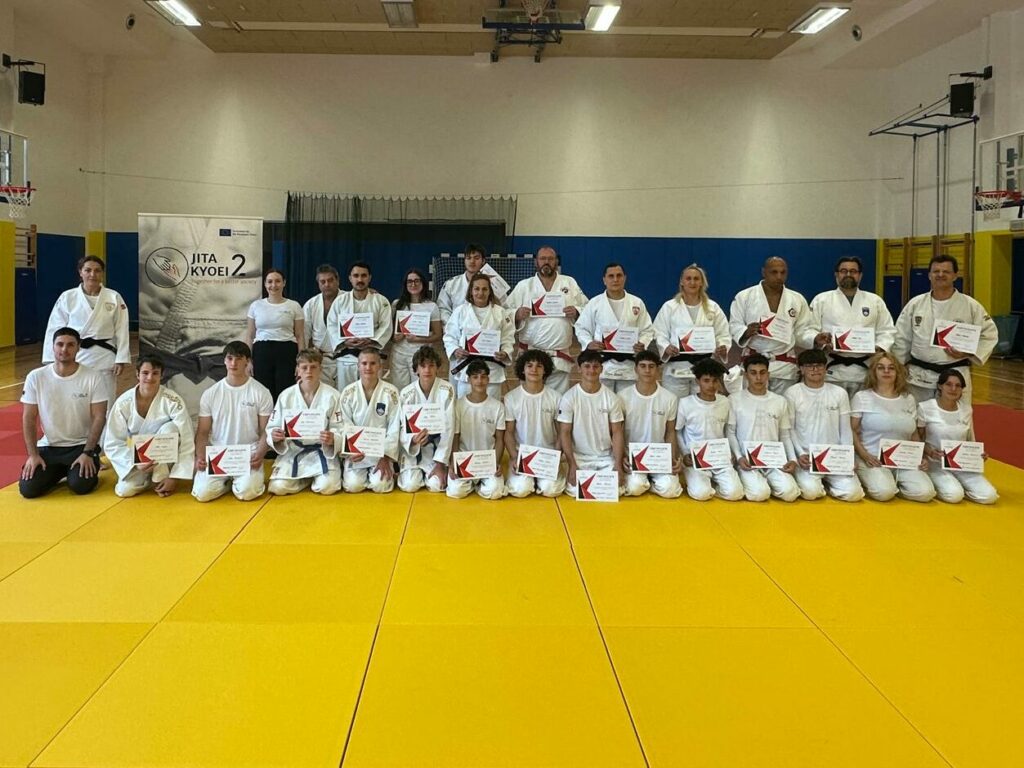
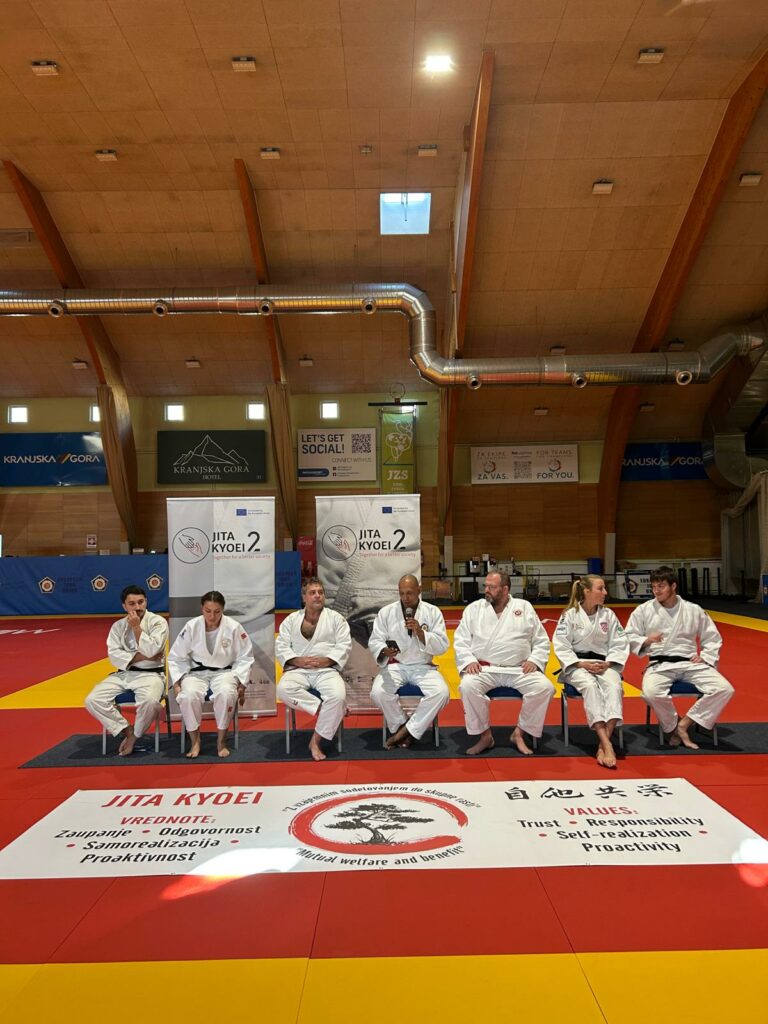
The final event in Kranjska Gora encapsulated this spirit perfectly. Over three days, partners gathered for meetings, three hands-on workshops for young athletes, and a final conference reflecting on the achievements and legacy of the project. The workshops, led by experts Mojmir Kovač (GIB), Philippe Hameon (FFJDA), and Nuno Delgado (EJU), offered young judoka an inspiring opportunity to experience the practical power of values-based training.
Nuno Delgado, representing the EJU, captured the energy of the event:
“This week in Kranjska Gora, the Education and Sport Department of the EJU united forces for the final conference and workshops of Jita Kyoei II, a pioneering project that has uplifted the Judo community for the past five years.”
He continued:
“The program culminated in a magical moment on the tatami during the European Cadet Cup training camp, where Olympians joined young judoka to promote the values of true champions, all to the powerful rhythm of Tina Turner’s ‘Simply the Best.’ Inspired by this energy, the cadets carried the spirit beyond the mat, cleaning the sports hall with the same commitment and intensity as their randoris. A simple gesture, yet one that builds champions for life.”
The principle of Jita Kyoei, to progress together and contribute to society, was felt deeply by all participants. Juliane Robra, Olympian and Project Manager at Sport Evolution Alliance, reflected on the unity that defined the event:
“I came to Kranjska Gora for the final conference of Jita Kyoei. Seeing different generations, athletes, coaches, referees, officials, and even those who have never practised judo, come together was, for me, the true realisation of judo and the principle of Jita Kyoei. All united for the same purpose: to foster this fundamental principle and the values of judo, to thrive together and contribute to society.
“At Sport Evolution Alliance, we look forward to the future impact of Jita Kyoei 2, which provides a methodology, course, and label to further implement this core principle and its values in our daily practice and lives. We will continue to support and disseminate Jita Kyoei and are available for future collaborations that help embed its values across sport and society.
“I left Kranjska Gora filled with positive energy, inspired by the spirit of sharing, the joy of reconnecting with people from my competition years and the gesture of receiving a judogi from the Croatian team, as I had come without mine. A tangible reminder of the true essence of judo.”
For many, this project was not just a professional journey but a personal evolution. Borna Rošić of Judo Club Rijeka shared his perspective as both, project member and coach:
“Last weekend in Kranjska Gora, we had the final conference of Jita Kyoei 2. We reflected on the project, what we have achieved in the past few years, and what lies ahead of us. We used the opportunity to share the message with the youngsters who attended the European Cadet Cup. This being the last conference doesn’t mean that it’s the end of the story. As pioneers of this project, we plan to continue sharing the values and principles of Jita Kyoei even after the official end.
“As a judoka and a judo coach myself, I believe that the message of the project is not just the way judoka should act and behave but a guide for the whole community itself. Mutual welfare and benefit are the essence of the message we are trying to spread. Through training judo, we do not only learn how to become better judoka and athletes but how to become better people. In today’s age, we are slowly losing the main focus of judo and are giving the spotlight to competition. Jita Kyoei is a spark trying to fully bring back the essence of judo, which is more than sport!
“My journey in this project began a few years ago with its prequel, Jita Kyoei. At that time, I was still competing as a cadet, and my club coaches brought me to Pordenone to attend a workshop focused on values. It was the very first workshop, and through it, I became one of the first mediators.
Over the years, I have worked on various tasks related to this project under the guidance of my coaches and role models. Not long ago, I joined Jita Kyoei 2 as a coach rather than as a student, and I had the privilege of working alongside experienced coaches who helped me grow, not only as a judoka but also as a person.
“When I arrived in Kranjska Gora, it was not only as a coach but also as a member of the project team, which was a great honour and another opportunity for personal and professional growth. Now, it’s my responsibility to continue the legacy of this wonderful project and to help young judoka grow into great people, just as others have helped me.”
As one of the first Erasmus+ initiatives involving the European Judo Union, Jita Kyoei 2 paved the way for future cooperation and innovation. Today, the EJU proudly participates in six Erasmus+ projects, continuing to promote judo’s unique educational and social dimension across Europe.
Three years of work, partnership, and shared purpose have now come full circle but as every judoka knows, an ending is only the beginning of the next step. The principles of Jita Kyoei live on through every athlete, coach, and community touched by this project, a legacy that will keep building “champions for life.”
Author: Szandra Szogedi