





By showcasing the fundamental values of judo and the concept of Jita Kyoei, the European Judo Union continues its monthly series that underscores the importance of these principles beyond the tatami. This initiative seeks to weave judo’s philosophy into everyday life, fostering a stronger sense of community and shared purpose. It highlights that judo is far more than just a sport, it is a meaningful educational path.

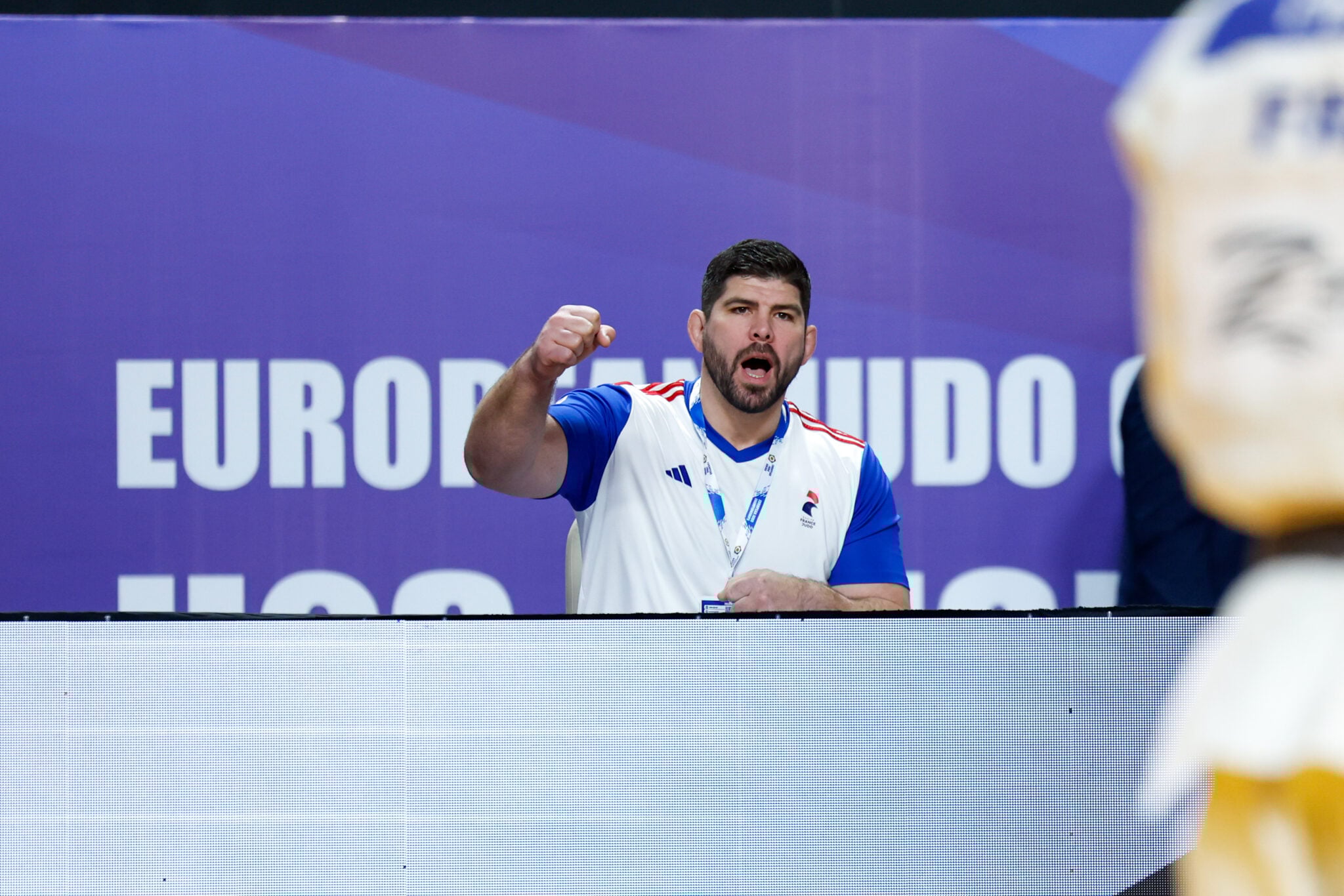
Each month, one of judo’s values is brought to life through a chosen ambassador, and in November, the focus is on COURAGE, represented by Rio 2016 Olympic bronze medallist, Cyrille Maret.
“Courtesy for me, it is already something very important, since the word is part of the judo moral code. In France, we have a moral code with 8 key values that help to educate children on the tatami through the values of judo but also outside the dojo where these ideas of education and moral values are truly present. These education and moral principles are very important for judoka on and off the mat” said Maret.
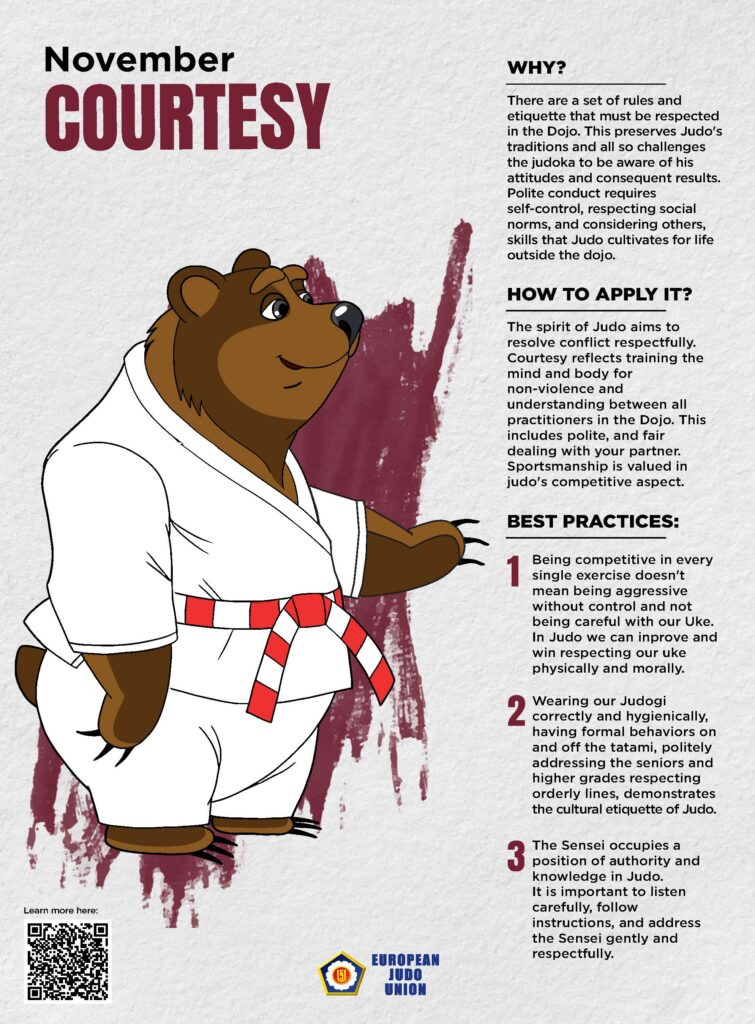
Courtesy, or rei, lies at the heart of judo and is expressed in every interaction, before, during, and after practice or competition. It begins with the bow, a universal gesture of respect that acknowledges both one’s partner and the shared journey of learning. Participants show courtesy by maintaining proper etiquette on the tatami, listening attentively to instructors, and treating training partners with care, regardless of rank or ability. This spirit ensures a safe and supportive environment where everyone can grow, fostering humility and mutual respect as essential components of personal development.
Beyond the dojo, courtesy in judo extends into daily life. The discipline teaches practitioners to approach others with empathy, patience, and consideration, even in challenging situations. It encourages gratitude toward teachers, opponents, and teammates who contribute to one’s progress. By practicing courtesy, judoka embody the deeper philosophy of judo, building harmony and understanding between people. In this way, rei is not merely a ritual but a lifelong attitude that strengthens both individual character and the broader community.
Author: EJU Media