





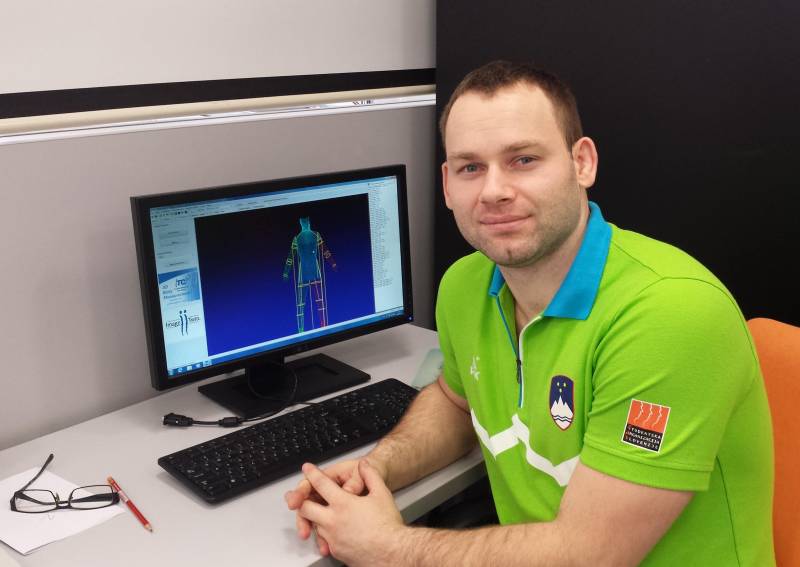
Between 12-13 the Judo Conference, Applicable Research in Judo is held in Zagreb. One of the attendees is Slovenian researcher Jožef Šimenko who is looking forward to engage with a diverse range of topics and listening to presentations that address current challenges in judo research and practice. Šimenko is Assist. Prof. at Faculty of Sport at the University of Ljubljana. He was a former Slovenian Judo champion himself and won various medals in all age groups at national level. He competed at Junior European Championships in 2005 in Zagreb, the place where the conference is held.

The congress provides a valuable opportunity to meet other judo researchers and professionals, exchange ideas, and discuss strategies for tackling emerging issues in the sport. Šimenko begins: ”I am also particularly interested in supporting and encouraging young researchers, discussing their work, and helping them integrate into the wider scientific and professional judo community.”
How does science fit into a sport like judo?
Šimenko: ”Science plays a fundamental role in modern judo. At the elite level, where performance margins are increasingly narrow and the competitive calendar is exceptionally dense, scientific support is indispensable. Fields such as strength and conditioning, recovery science, nutrition, performance analysis, psychology, and rehabilitation are all integral to optimising an athlete’s performance and well-being. Evidence-based approaches help coaches and athletes make informed decisions, minimise injury risk, and enhance long-term athletic development/career.“
What is your personal focus in research?
Šimenko: ”My research is a wide variety on Coaching, Elite athletes, Combat Sports and Martial arts, Judo, Strength & Conditioning, Soccer, Goalkeeper training, Sports rehabilitation, Isokinetic testing as well as Research in Military and Police personnel, Youth Athlete Development, 3D Body Scanning with Morphological and Functional (a)symmetries.“
How has the conference evolved since its first edition, in terms of topics, participants, or scope?
Šimenko: ”The conference has shown steady growth and increasing professionalisation over the years. It has a consistent organisation has attracted a growing number of judo professionals and academics, as well as a larger cohort of young researchers. This trend is crucial for the sustainable development of judo science, as it fosters intergenerational knowledge exchange and strengthens the global research network dedicated to advancing the sport.”
Do you see particular trends in judo, both outside the tatami and within the scientific field?
Šimenko: ”Several noteworthy trends have emerged in recent years. There is a growing body of scientific literature addressing rapid weight loss, which remains a major concern, particularly among youth judoka. Additionally, frequent changes in judo rules continue to attract significant research interest due to their implications for performance and strategy. Another positive trend is the increasing attention to adapted judo, reflecting the sport’s expanding inclusivity and its potential as a tool for social integration and physical rehabilitation.“
What was the most surprising insight you have seen presented at the conference over the years?
Šimenko: ”Over the years, the conference has featured many insightful presentations. Among the most notable have been studies introducing innovative teaching methodologies for technical skill development, detailed analyses of competition dynamics, and the creation of new judo-specific testing protocols. These contributions are helping to bridge the gap between research and applied practice in judo.“
How do you balance the academic research side with the needs of coaches and athletes?
Šimenko: ”Balancing scientific research with the practical needs of coaches and athletes is increasingly challenging, especially given the expanding International Judo Federation (IJF) competition calendar across all age categories. Athletes spend a considerable amount of time traveling for competitions and training camps, which leaves limited room for systematic scientific monitoring. Addressing this challenge requires coordinated efforts from the scientific, medical, and coaching commissions of both the European Judo Union (EJU) and IJF to ensure that scientific knowledge is effectively translated into daily training and competition contexts.“
Do you have any partnerships with universities, sports institutes, or judo federations?
Šimenko: ”At the institutional level, our university does not currently hold formal partnerships specifically dedicated to judo. However, each researcher actively maintains international collaborations with colleagues from various universities and research centres working on judo-related projects. So, research-wise, Jiita-Kyoe is working well among the judo scientific community. Moreover, many researchers contribute to national judo associations and serve on committees that address medical, coaching, and educational aspects of the sport in their respective countries.“
What advice would you give to young researchers who want to contribute meaningfully to applied judo research?
Šimenko: ”My advice to young researchers is to persist and remain curious. Judo continues to evolve, and its physical, psychological, and socio-economic dimensions offer abundant opportunities for meaningful research. It is essential that young scholars pursue rigorous, applied work that bridges science and practice. At the same time, organisations such as the IJF and EJU should consider creating grant opportunities and support structures for early- career researchers, as securing funding in the early stages of a scientific career in judo remains particularly challenging.“
Author: Hans Van Essen