





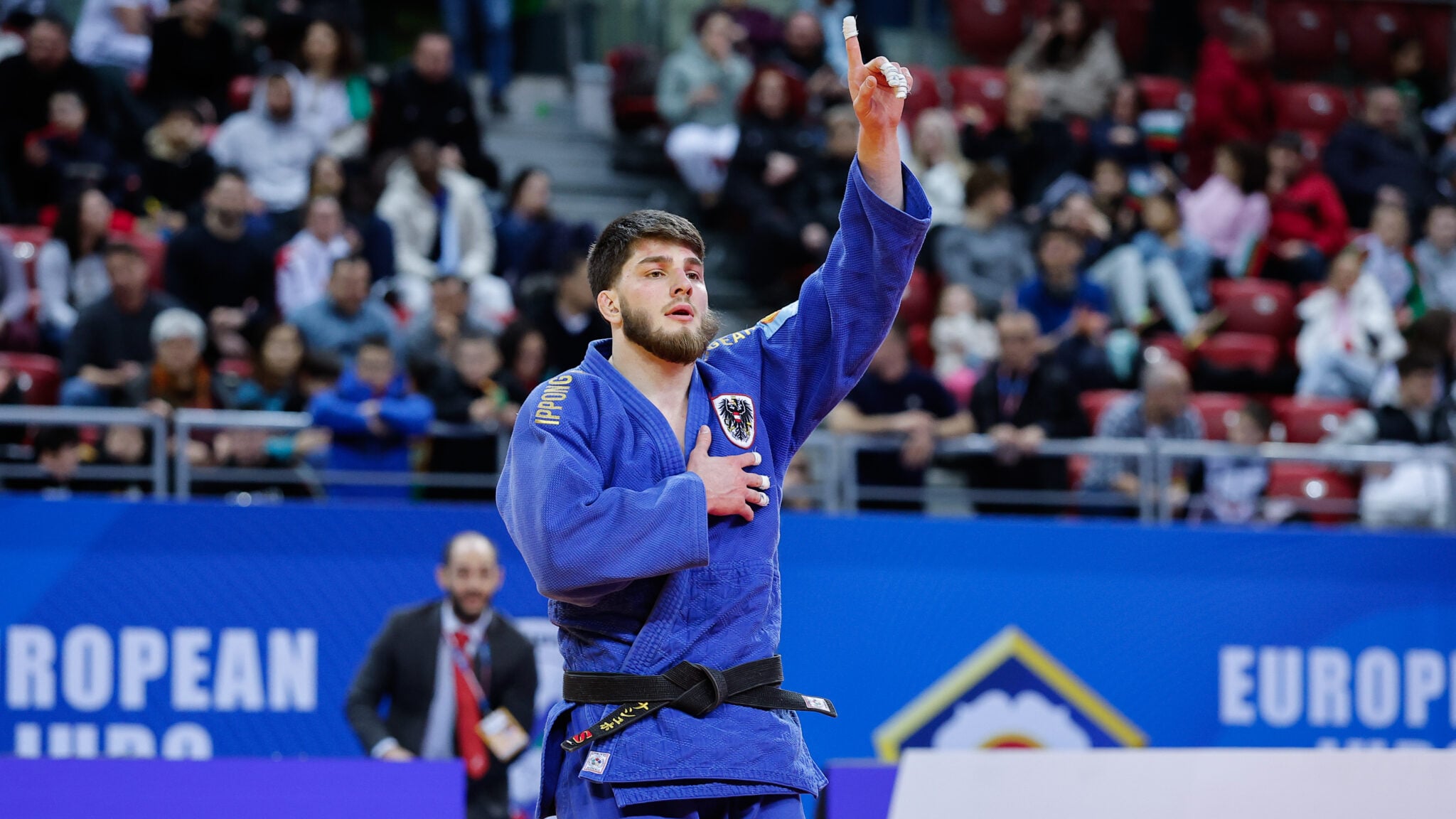
Issa Naschcho, ranked 345th in the world this morning, the Austrian judoka entered the -90kg category at the Sofia European Judo Open as an afterthought in a competitive draw. By the evening, he stood atop the podium, gold medal around his neck, having dismantled higher-ranked opponents and overcome the toughest test of all, facing a teammate in the semi-finals.

“This medal is very important for me because it was my first time I had a medal in the seniors,” Naschcho said, the significance of the achievement still settling in. “I think it is a good start to the new season.”
A good start barely captures it. Naschcho’s path to gold included defeating opponents with decorated resumes and controlling every bout through with both, tachi-waza and ne-waza excellency. Yet, when asked about the key moment that made the biggest difference, Naschcho didn’t mention his final victory or any particular throw. He identified the semi-final, the contest where his opponent wasn’t just another competitor.
“It was in the semi-final against my teammate, when I didn’t stay focused,” he admitted, the challenge clear in his voice. Facing training partners in competition tests more than technique. It examines mental discipline, the ability to separate friendship from combat, to compartmentalise relationships when medals are at stake. Naschcho navigated that minefield and emerged victorious but the moment stuck with him, not the triumph but the difficulty of maintaining focus when facing someone you train beside daily.
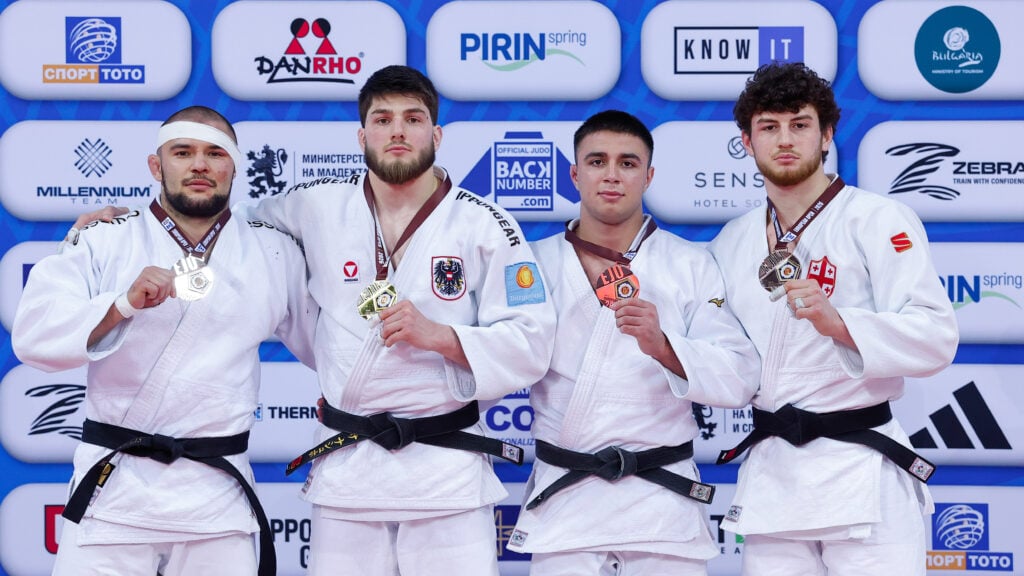
When offered the chance to thank those who made his breakthrough possible, Naschcho’s response reflected judo’s collaborative nature. “I would like to thank my club, my cousin’s club Bon Chili Combat Center and all my coaches, those who are here and those I train with at home.”
Multiple clubs. Multiple coaches. A network of support spanning training venues and family connections. Elite judo isn’t built in isolation, it is constructed through partnerships, shared knowledge and communities that invest in athletes long before medals arrive.
The immediate future is already mapped. Ljubljana European Open awaits next, followed by a return home for competition. The calendar keeps moving, opportunities keep presenting themselves and Naschcho now carries the confidence of a European Open champion rather than world number 345.
Author: Szandra Szogedi