






Not every training camp needs to be about the elite. In Lommel, between 13–15 March, the balance was just right as the city became a space where ambition, accessibility and development converged, as the Ilse Heylen Academy, this year in collaboration with the European Judo Union, hosted its annual youth training camp. Among the many clubs in attendance was Switzerland’s Judo Club Cortaillod-Neuchâtel, led by head coach Désirée Gabriel, experiencing the camp for the very first time.

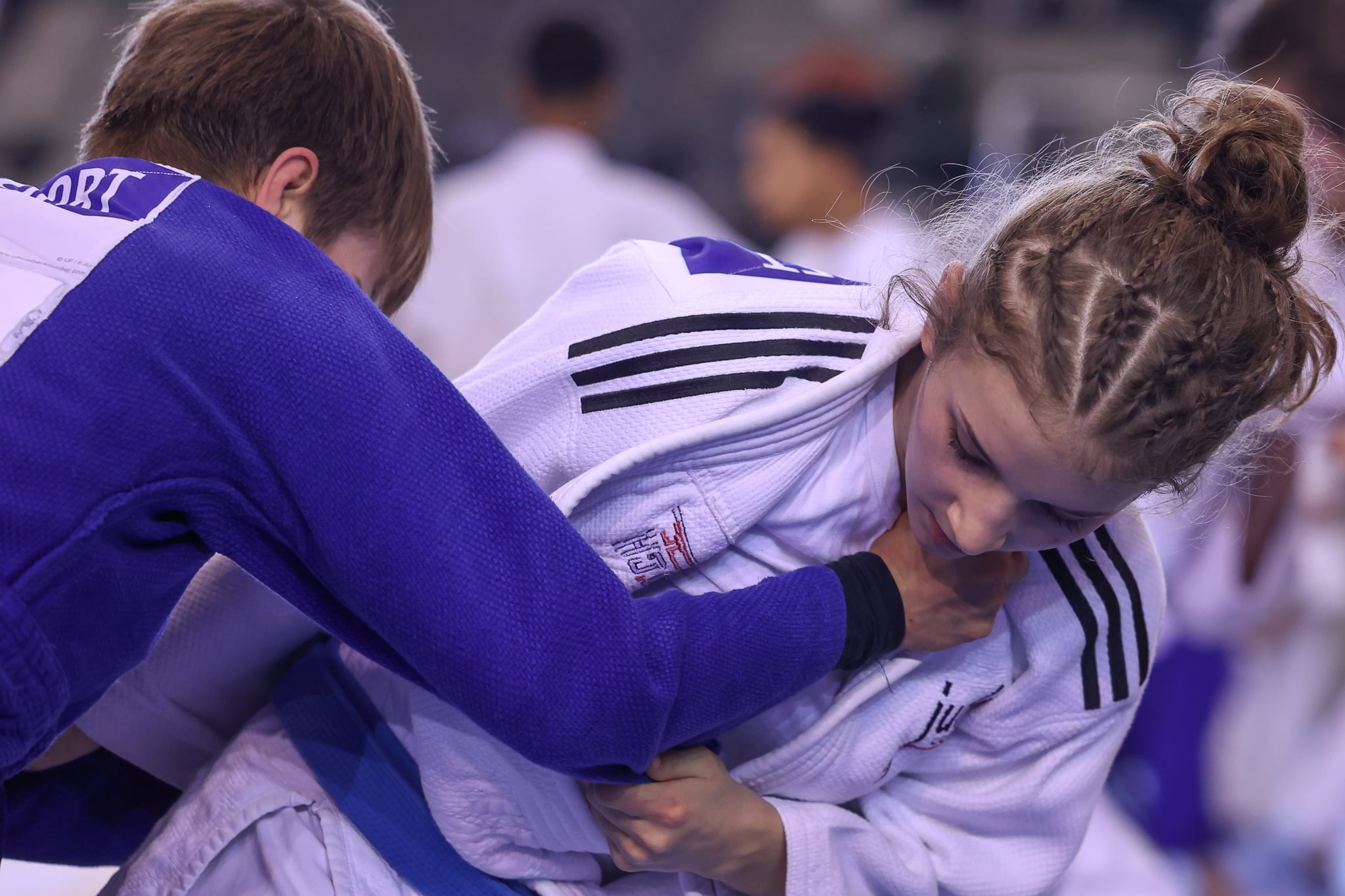
Their journey to Lommel began with something simple: timing. “We actually received an email about this camp and the dates were perfect for us,” she explained. “I had been looking for a training camp for this period of the year and when the email arrived it was exactly the right moment.”
Yet it was not only convenience that drew her in. “What interested me most was that the camp was not only designed for top-level athletes but also for younger athletes and those with a bit less experience. As a club coach, that is exactly the level I was looking for.”
Gabriel arrived in Belgium with a carefully selected group. “I went with a small group of our U18 athletes from Judo Club Cortaillod-Neuchâtel. For this year I decided to come with only one group to see how the camp works and how it fits our athletes.”
What followed exceeded expectations.
“Very positive!” Gabriel smiled. “The organisation has been very good. Communication before the camp was easy, responses were quick and the location works very well. For example, we could rent bikes and easily ride from Center Parcs to the training venue.”
The verdict was clear.
“Based on our experience, I am quite sure we will add this camp to our club calendar for next year, hopefully with a larger group and maybe also with some U15 athletes.”
The conversation soon turned to the broader role of the European Judo Union and its growing presence within club-level initiatives.
“Normally, national federations are the main structures involved in supporting club-based camps,” Gabriel reflected. “However, if we think a bit further, I believe it could also be very interesting for the EJU to become more involved at this level.”
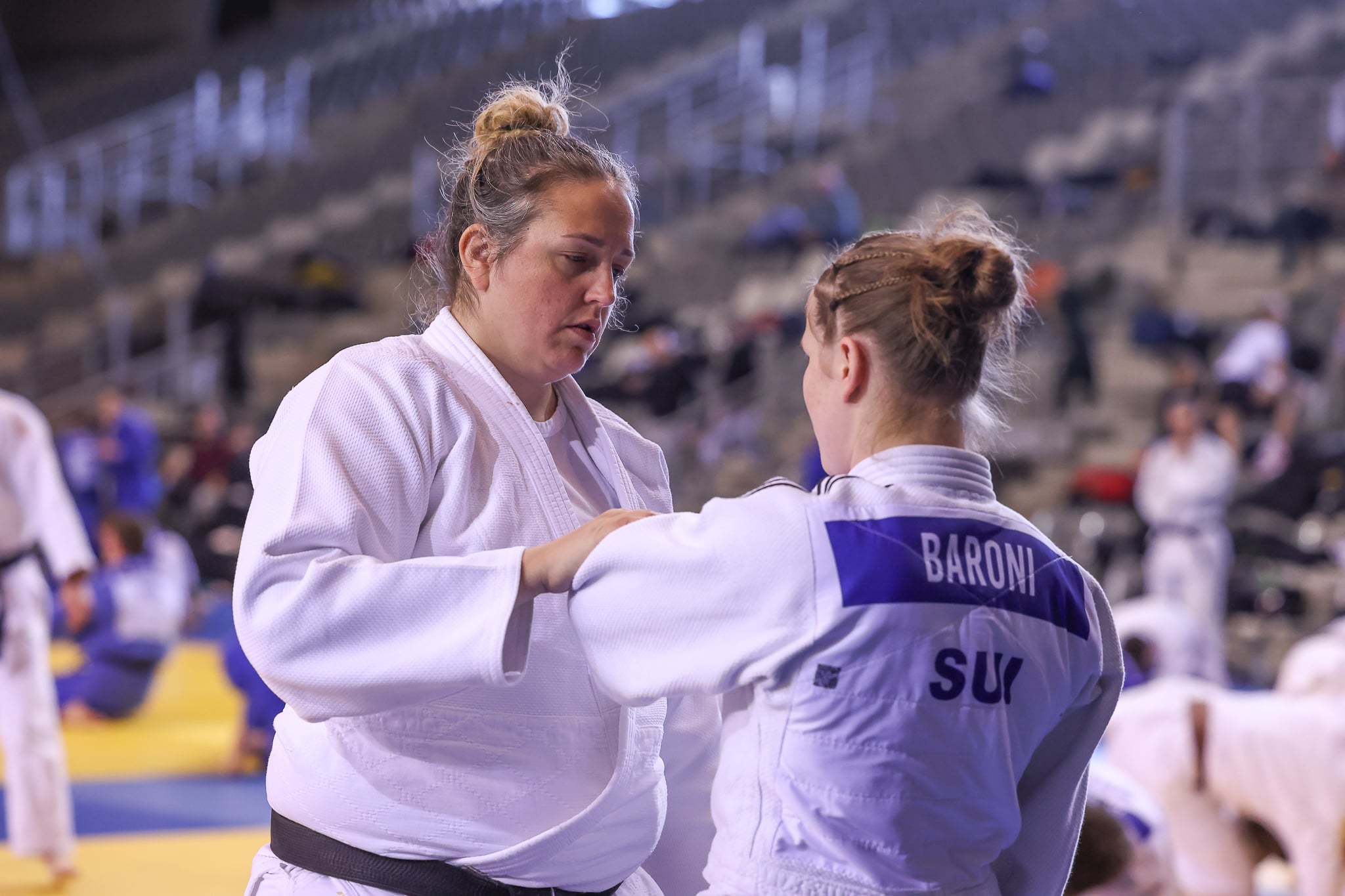
Her vision is one of connection and continuity.
“For example, it could be great to have something like a tour of camps, where clubs could participate in practical training sessions and exchanges. It could motivate more clubs and federations to organise and participate in these kinds of events.”
At its core, her message is simple yet powerful: the strength of judo lies in its foundation.
“Every club and every federation needs a strong base of judoka for the future. Of course we all dream of developing the next Olympic champion but in reality, judo also needs people who will practise judo for life, who will later become coaches, volunteers, or board members.”
The importance of such camps is best understood through the lens of her own athletes.
“To give you a more tangible example. One of the girls has recently been selected for regional and national team activities, including possible participation in U18 European Cups. The others are not currently selected. Yet, all of them are motivated. They want to improve and they want to progress in judo. As the head coach, it is my responsibility to give them the right opportunities to develop and this is it.
“They train well in Switzerland but sometimes it becomes a bit of a routine because they always train with the same partners. They need new challenges.”
However, pushing too far, too soon, carries its own risks.
“If I brought all of them to a European Cup training camp, the level would be too high for some of them and the risk of discouragement or injury would also increase. This is where camps like Lommel find their true value.”
Images: Carlos Ferreira
Author: Szandra Szogedi