





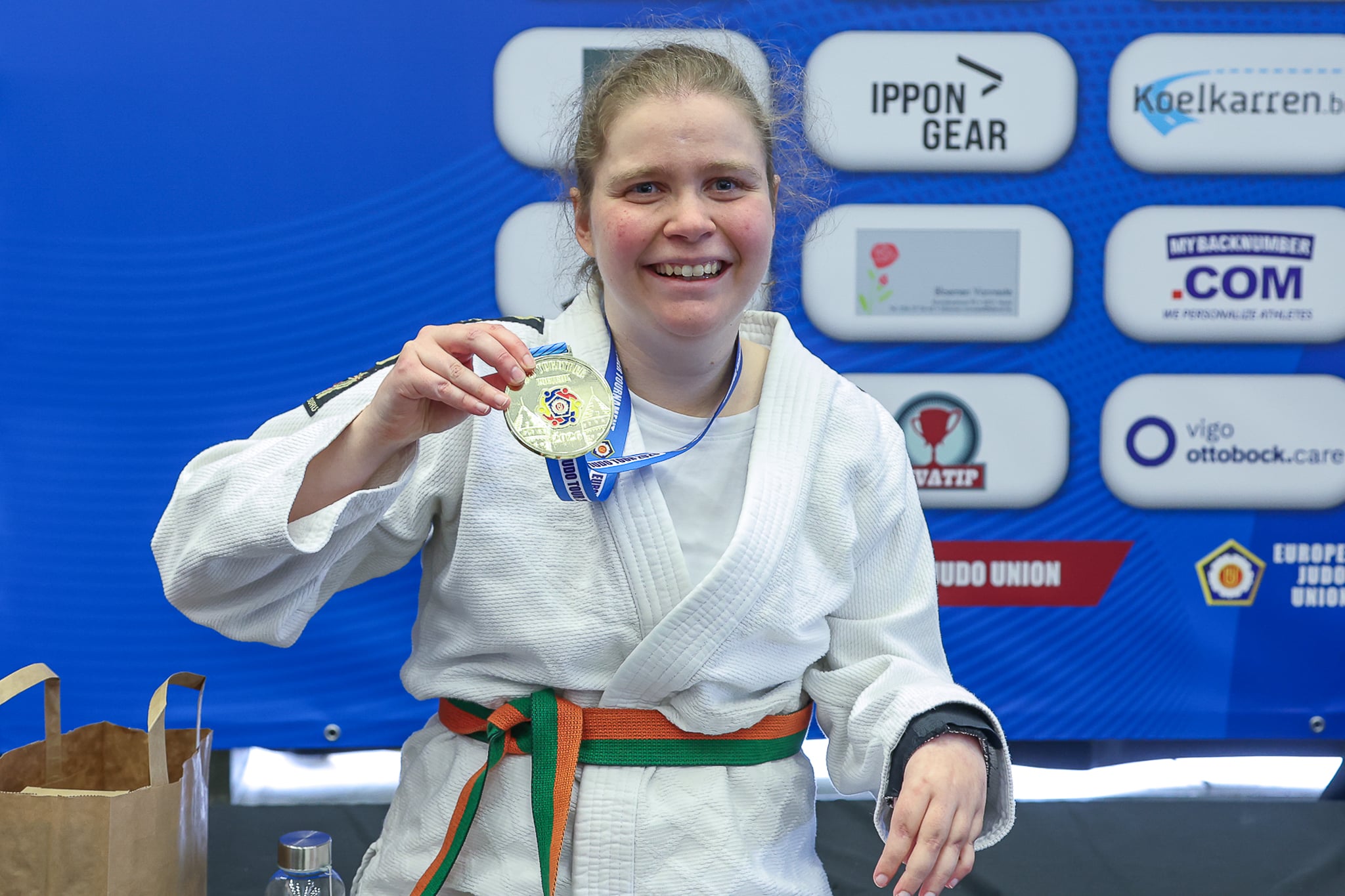
Being a parent of a child with disabilities comes with challenges that reshape everyday life in ways few truly understand. It brings uncertainty, sleepless nights, profound strength and perspective, constant adaptation and several invisible battles. It is a journey that demands endless flexibility within a rigid structure. It is, in many ways, a world within a world, one that only those who live it truly understand, not briefly but as a permanent reality. Meet Laura and her mother, Katja, who share their deeply personal journey. Laura went from being a perfectly healthy child up to the age of eight to becoming a wheelchair-dependent individual. Together, they speak openly about that difficult reality and how, within it, they found a rare source of light. That light is called…judo.

At 24 years old, Laura introduces herself with a quiet personality, that does little to reveal the scale of her journey. “I have a hemiplegia,” she explains. “I do everything with one arm and one leg… and I fight also with one arm and one leg.”
Across from her on the tatami stand opponents with twice the physical tools. Yet Laura does not dwell on that imbalance. “It’s sometimes very difficult,” she admits, “but I’m glad to be here.”
That simple sentence carries years behind it. At the age of eight, Laura’s life changed without warning. What began as epilepsy escalated into something far more severe. For 18 months, doctors at University Hospital Leuven exhausted every possible option. Surgery followed, then another. Nothing worked.
In the end, there was only one choice left: a hemispherectomy, disconnecting one half of her brain in order to save her life.
Katja remembers that period not in fragments but in absolutes. There was a moment when she was told to prepare for the worst. She arranged the final sacrament. She made the unimaginable decision to take her daughter home, wanting her to pass peacefully in her arms rather than alone in a hospital room.
Yet, Laura had other plans…
“She is a fighter,” Katja says.
Laura survived but survival came with a cost. The left-handed child who once danced, swam and skipped rope competitively had to relearn everything, movement, balance, coordination, now with only one functioning side. Two years of rehabilitation followed. As a matter of fact, she has had therapy every single day since. Even sleep required adaptation; even daily routines carried risk…, and yet, slowly, life began again.
Judo entered that life almost by chance. Watching her brothers train, Laura made a simple request: she asked her mum to try. There were no expectations. No long-term vision. Just curiosity and figuring out the ‘how’.
What she found was something far greater. “I wanted to learn new things,” she says, smiling. “It’s a nice sport… you can learn movements, techniques… and to defend yourself.” As the years passed by, judo became more than a sport. It became a statement of possibility.
The tatami does not erase her challenges, far from it. Processing speed, physical limitation, fatigue, these remain constant companions. Every competition requires vigilance. Every session demands adaptation but within that space, something shifts.
“She never looks at what she cannot do,” Katja says. “She looks at what she can.” It is a philosophy that has reshaped not only Laura’s life but her mother’s as well.
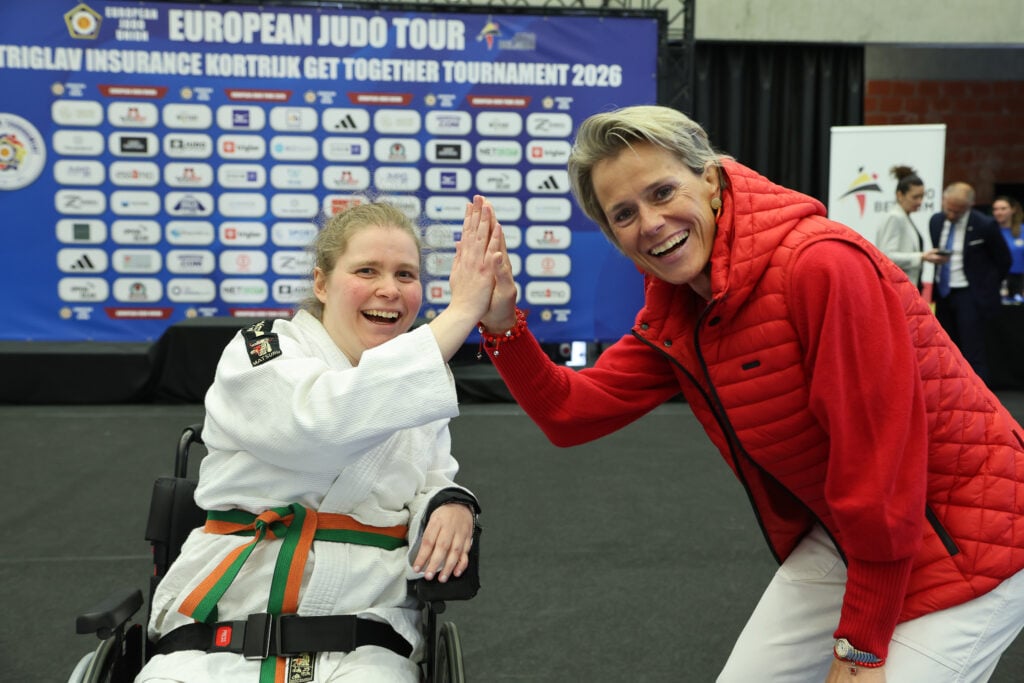
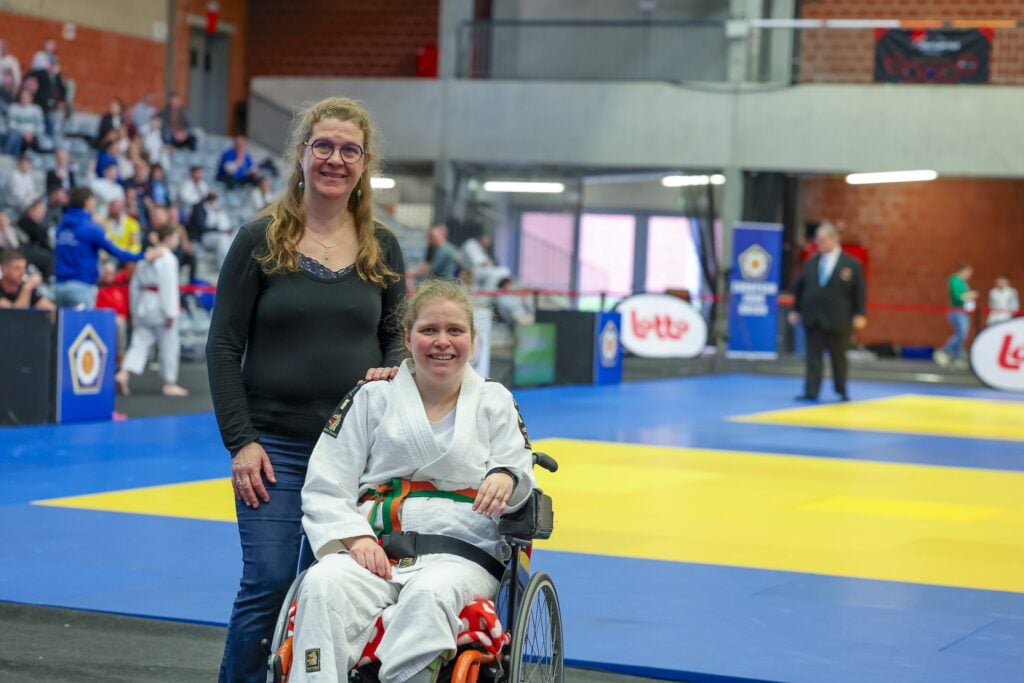
Katja, once a teacher, stepped away from her profession to become something else entirely, carer, advocate, organiser, constant presence. “Everything changed,” she says. The structure of family life was rebuilt around Laura’s needs. Roles shifted. Priorities sharpened.
“It was very hard. It still is.”
Still, within that reality, judo offered something unexpected: confidence.
For a young woman [Laura] who describes herself as shy, stepping onto the tatami is an act of courage. Learning to engage, to grip, to defend, it is not just physical. It is deeply personal.
“It gives her the feeling that she can defend herself,” Katja explains. “And confidence…, for me, this is the most important part we gained from judo.”
There are still difficult days. There are still moments when the outside world feels out of reach, when differences become barriers but inside the judo community, those barriers soften. Laura embraces that fully. She trains, she competes, she sings, she builds Lego, she plays card games with her grandparents. She lives, in every sense of the word, with intention.
“Never give up,” she says, when asked what judo has taught her. “Do your best… and it’s okay to lose too.”
Today, Laura continues to find her independence step by step, supported but determined and Katja, who once fought to keep her daughter alive, is now learning to let her grow beyond her.
Still, there is a level of disbelief in her voice. “I never imagined she would do sport,” she admits. “Let alone compete.”
Now, Laura does more than compete. She inspires. At the end of our conversation, she offers one final thought, simple and deeply telling: “My mum was my inspiration to fight.”
This is the story of Laura and Katja. Not just of survival but of a shared strength. Not just of struggle but of resilience. Not just of judo but of a light found in the most unlikely of places and held onto, together.
Author: Szandra Szogedi