





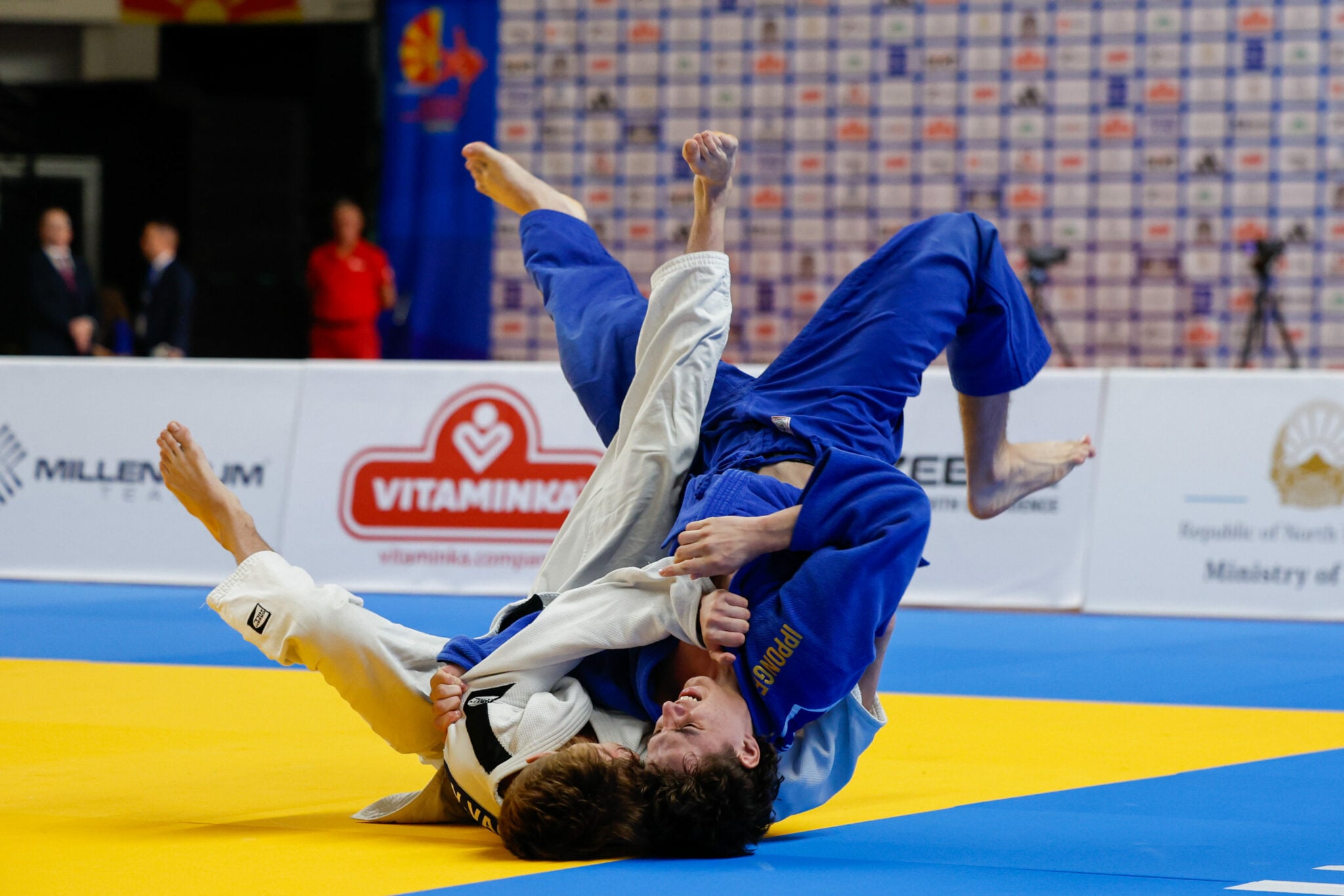
This weekend on 25–26 April 2026, Berlin once again becomes a stage for international cadet judo. According to the current entry list, 774 judoka from 36 nations are set to compete at the Berlin “Millennium Team” European Cadet Cup 2026 at the Sportforum Berlin. The largest delegation comes from host nation Germany with 149 athletes, followed by Israel (67) and Spain (49).

Over two competition days, athletes will fight for medals and valuable international experience, with an eye on qualification for upcoming continental and world championships. The field includes several proven performers: four medallists from the Cadet World Championships Sofia 2025 and eleven from the Cadet European Championships Skopje 2025.
Defending Champions Return
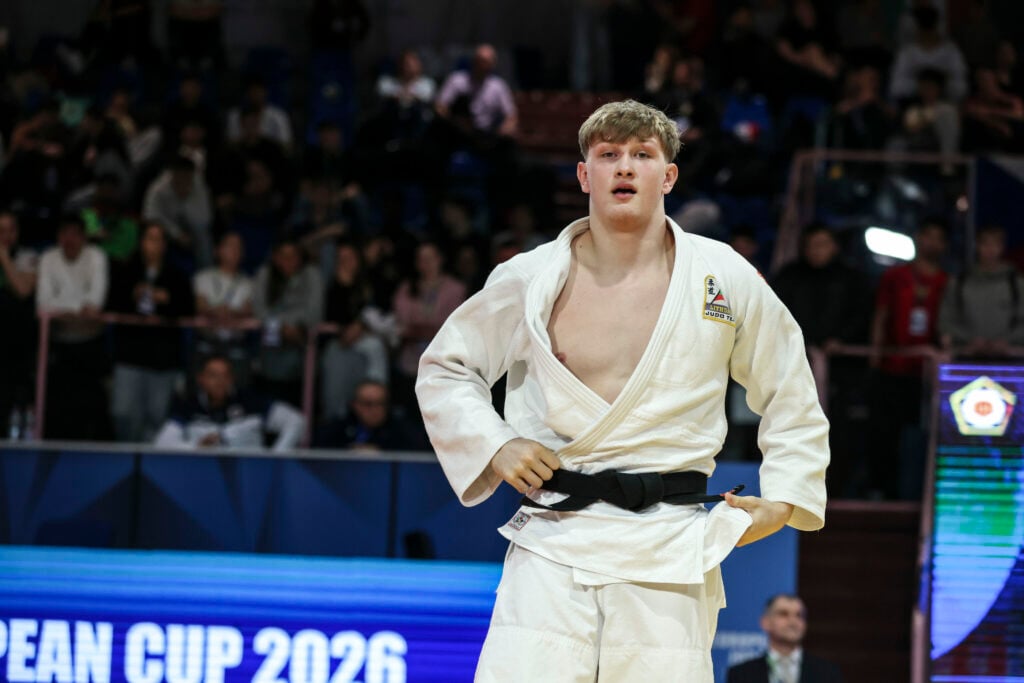
Among the returning champions are two defending titleholders from Berlin 2025. Elif Kilic (TUR, −57 kg) and Tajus Babaicenko (LTU) will both be top-seeded in their respective weight categories on Sunday. Kilic backed up her Berlin victory with a silver medal at the Cadet European Championships in Skopje. Babaicenko, who claimed bronze at both the European and World Cadet Championships last year at −81 kg, has since moved up to −90 kg. He wasted no time making his mark, winning European Cadet Cups in both Rome and Samorin this season, and arrives in Berlin as one of the favourites in his new weight class.
One to Watch: Saturday’s −44 kg Showdown
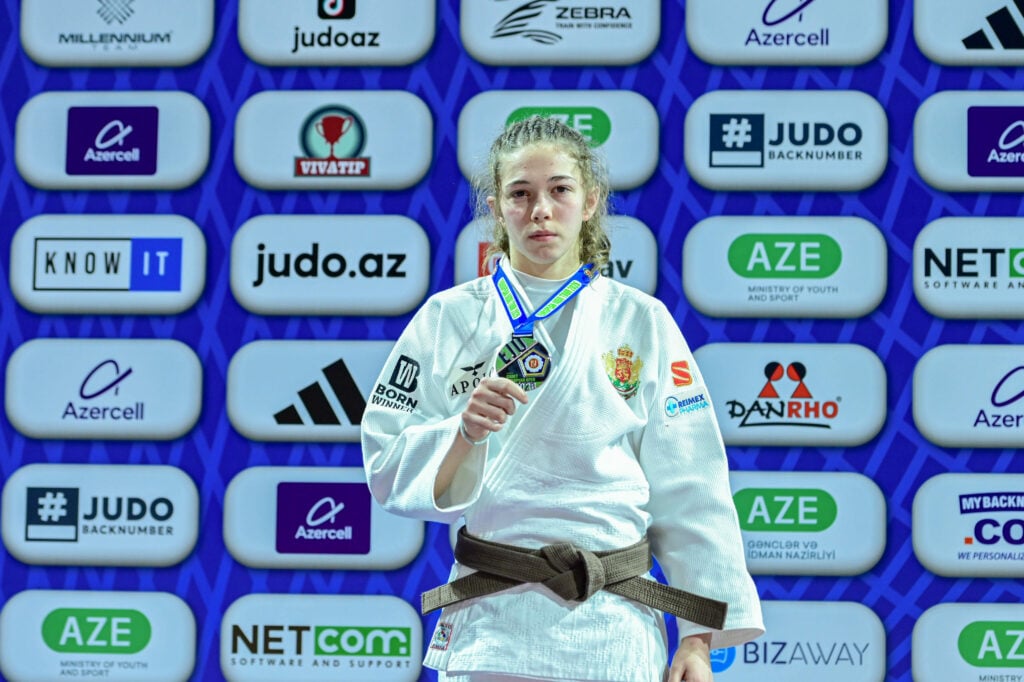
Saturday’s −44 kg category promises to be one of the weekend’s most compelling contests. Sofia Mavrova (BUL) has been in form on the Millennium Team European Cadet Tour 2026, collecting two gold medals (Antalya, Rome) and a silver (Ganja). Yagmur Yilmaztürk (TUR) arrives with back-to-back victories in Teplice and Ganja, while Sofia Longo (ITA) has twice reached the podium this season with bronze in both Rome and Porec. Into this three-way contest step two judoka moving up from −40 kg: World Cadet Champion Dilafruz Boltaboeva (UZB) and World Cadet bronze medallist Fenne Peeters (BEL). Both looking to establish themselves in their new weight class.
Germany: Developing New Top Talents
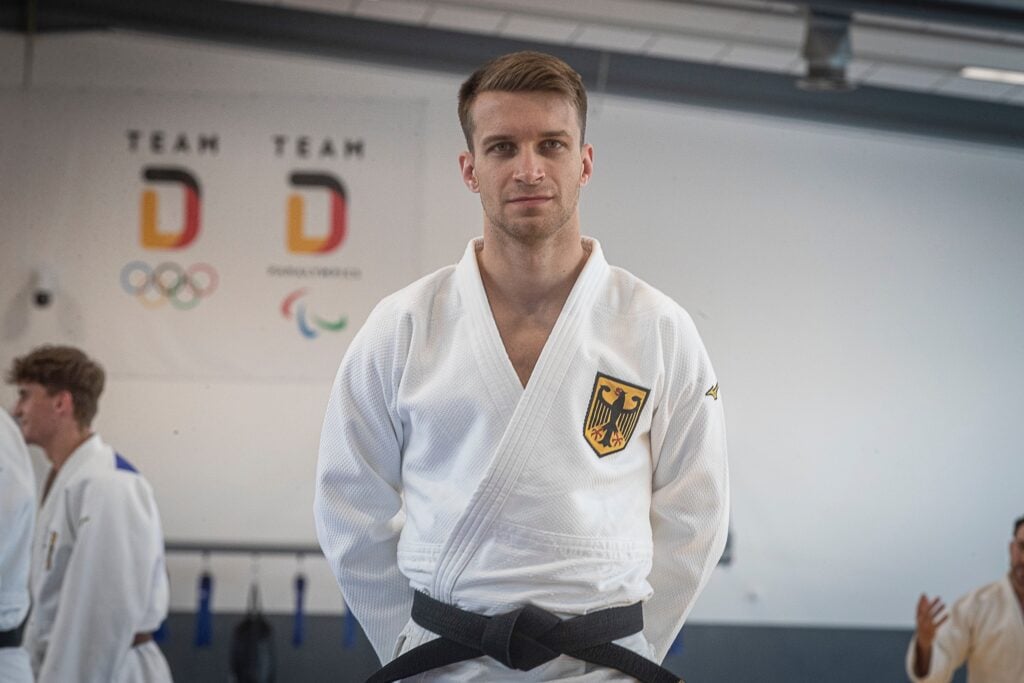
For the German team, the event carries particular significance. “The European Cadet Cup in Berlin is very important for us,” says Jens Malewany, U18 national coach of the German Judo Federation. “It’s a home event with a lot of tradition. The athletes compete in front of family and friends. That makes it special for everyone.”
Since February 2026, Malewany has shared responsibility for both the male and female U18 squads alongside Juan Ignacio Cuneo. The 29-year-old previously worked as a state coach at the Olympic Training Center in Cologne with athletes from U15 to U21 level. Some of whom already claimed medals at cadet and junior highlight events. His first months in the new role have been largely exploratory. “So far it has mainly been about scouting. I haven’t run my own training camp yet, and I haven’t really been able to work with the athletes properly. That makes it difficult to assess things right now.”
A first benchmark came at the European Cadet Cup in Teplice, where the German team performed solidly with two gold, three silber and four bronze medals. The goal is to build on that in Berlin, though Malewany is cautious about expectations. The entry numbers are high and many strong nations are represented. In the women’s squad, injuries have added to the uncertainty. Jolina Reinhold, a favourite and last year’s EYOF winner will be absent. As will Hannah Glauner, who won the Berlin European Cadet Cup in 2025. “That hurts, of course but I’m curious to see what’s possible.”
For the German team Berlin is also the third of four qualification tournaments ahead of the European Cadet Championships, with initial nominations potentially following this weekend. Yet for Malewany, results are only part of the picture. “What matters to us is the athletes’ development from tournament to tournament: a versatile game, a clear contest structure, adapting to the rules and clean transitions into groundwork.“
Malewany and his staff will be watching closely to see which German athletes can step up at this year’s Berlin edition.
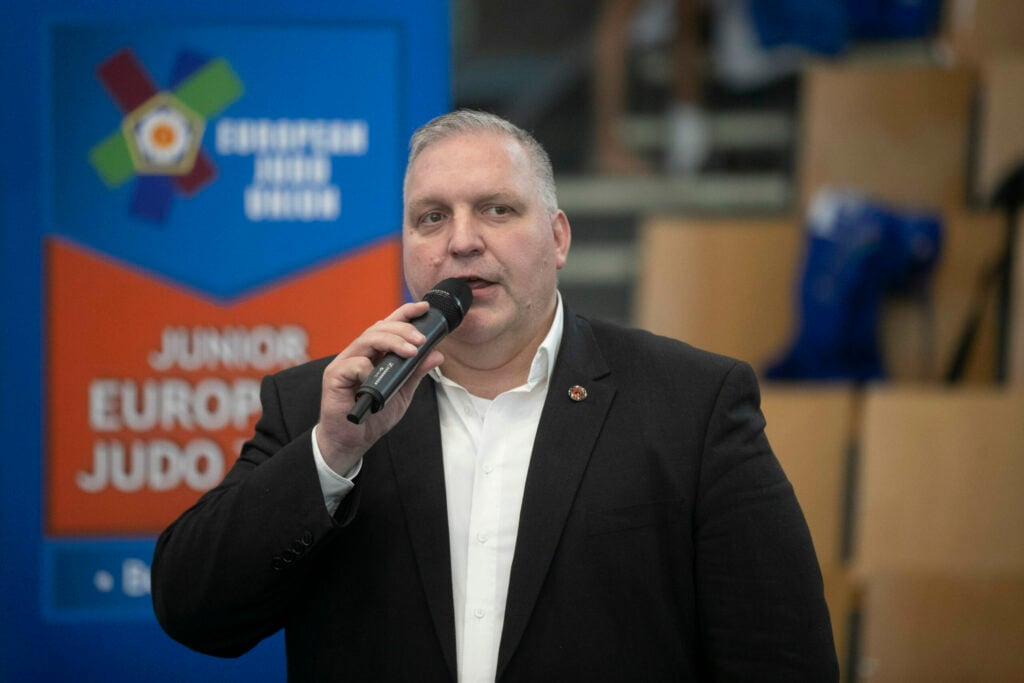
Berlin: The Man Behind the Mat
Someone else knows that mat better than most. Thomas Jüttner is usually the one keeping order on the tatami. As an IJF referee, he reads the flow of a contest from the inside. This weekend, however, his role is different. Because he knows the venue at Berlin Sportforum very well. Instead of guiding athletes, he is coordinating an entire operation as President of the Berlin Judo Association, Vice-President of the German Judo Federation, and co-organiser of the event.
Jüttner is proud of what the tournament has become. “It’s one of the largest European Cups in this age category and yet the organisation runs smoothly and efficiently.” A packed programm means long competition days, which makes well-rehearsed routines and a reliable team essential. This year, a construction site at the venue is adding an extra layer of complexity. But Jüttner is confident his team will handle it.
On the sporting side, his hopes are straightforward: Berlin and German medals, and ideally a few renditions of the national anthem. “But above all, I want to see the athletes compete, deliver their level, and present themselves well.”
And his personal highlight of the weekend? Jüttner doesn’t hesitate. “Probably the moment when it’s all over and everything has gone well. Then I’ll be satisfied.”
The final preparations are underway. The stage is set for the Berlin „Millennium Team“ European Cadet Cup 2026. Follow the event live at JudoTV.
Schedule
Friday, 25 April 2026: 19:30 Draw (online)
Saturday, 25 April 2026: 09:00 Preliminaries
– Women: −40 kg, −44 kg, −48 kg, −52 kg / Men: −50 kg, −55 kg, −60 kg, −66 kg
Sunday, 26 April 2026: 09:00 Preliminaries
– Women: −57 kg, −63 kg, −70 kg, +70 kg / Men: −73 kg, −81 kg, −90 kg, +90 kg
Author: Iljana Marzok
Author: EJU Media