





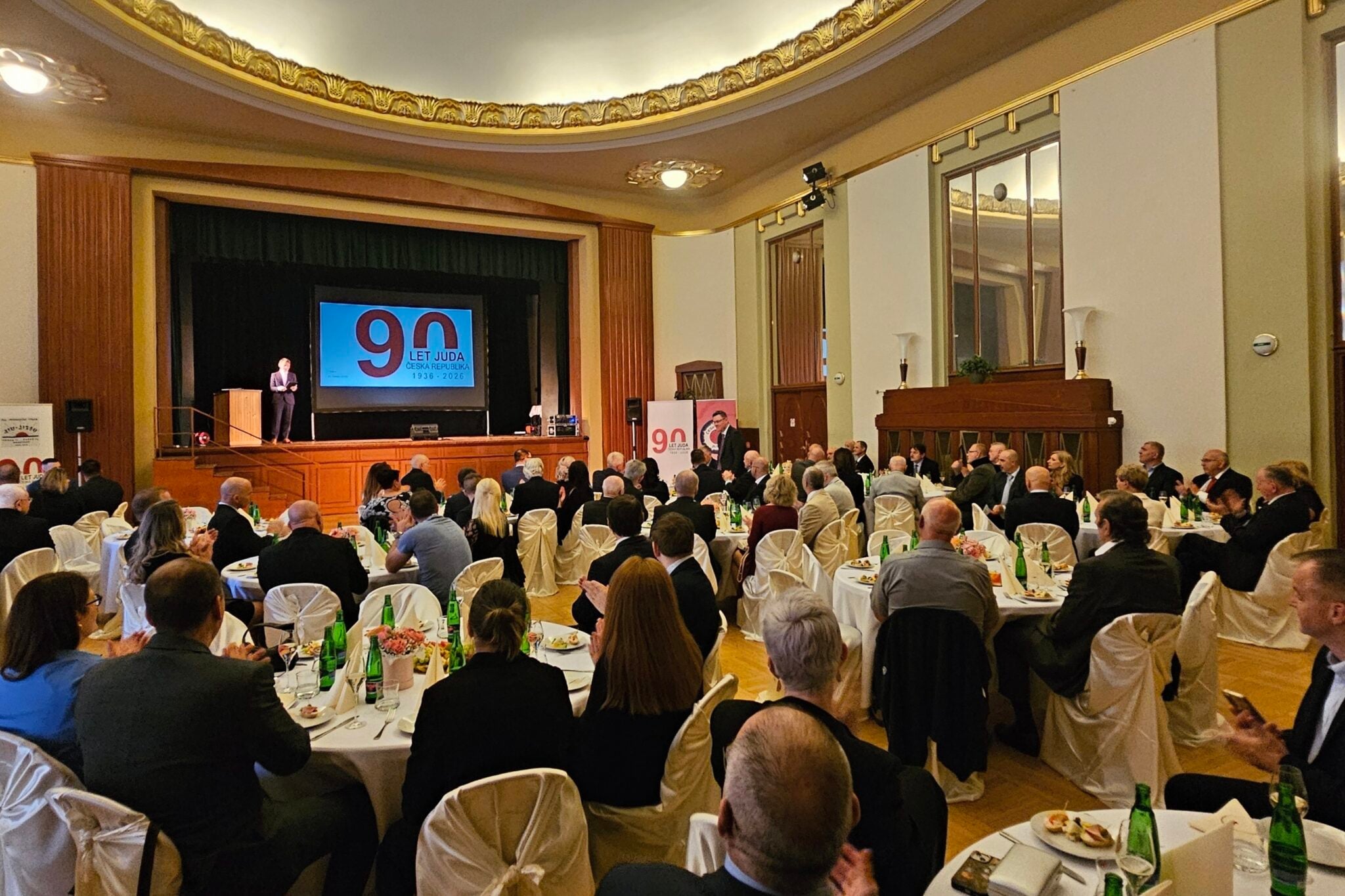
On 25 April, the Czech Judo Federation marked a historic milestone as it celebrated its 90th anniversary at the Krušnohorské Theatre in Teplice, an occasion that brought together 120 prominent athletes, coaches, and leading figures from across the national and international judo community. Representing the European Judo Union, Secretary General Dr Martin Poiger joined a distinguished gathering that included Libor Varhaník, Vladimír Bárta, Michal Vachun, former federation president Jiří Dolejš, current president Pavel Volek, alongside vice presidents Martin Prokeš and Libor Štěpánek.

The event programme was structured into six distinct time periods, each reflecting a key phase in development. The first phase, from 1936 to 1955, marked the nation’s integration into both the European Judo Union and the International Judo Federation. This was followed by the period from 1955 to 1972, which saw the emergence of the first Olympian.
Between 1972 and 1992, attention shifted to success on the world stage, highlighted by the achievement of world championship medals. The years from 1993 to 2011 then brought a historic milestone, with the first women’s medal at the World Championships. From 2012 to 2021, the era was defined by the achievements of Lukáš Krpálek, while the period from 2022 onwards looks ahead, focusing on the future and the next generation of talent.
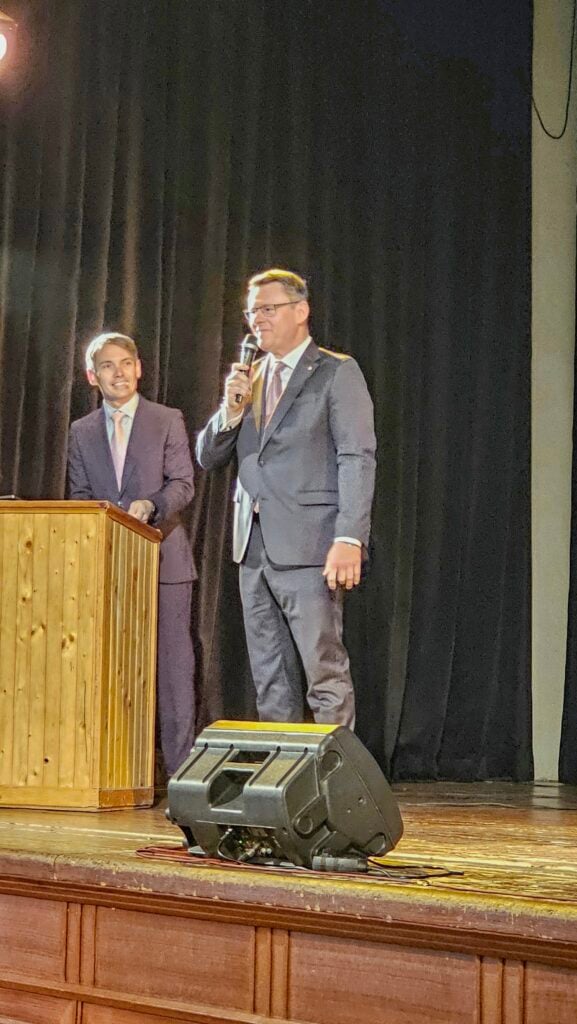
The ceremony opened with a series of formal addresses, reflecting both the pride of the host nation and the wider recognition of Czech judo’s enduring contribution to the sport. In his speech, Dr Poiger conveyed congratulations on behalf of Dr László Tóth and the entire European judo family, commending the federation not only for its longevity but for the depth of its achievements over nine decades. His words captured the essence of a federation that has consistently balanced tradition with progression, shaping both elite performance and the broader development of judo across Europe.
Czech judo’s story is one rooted in resilience and steady evolution, dating back to the 1930s when the discipline first began to establish itself within the country. Despite the disruptions of the Second World War and the political complexities of the post-war era, the sport endured, gradually building a strong domestic structure and international presence. Over the decades, Czech judoka have carved out a respected position on the continental and global stage, supported by a federation that has prioritised technical excellence, education, and organisational strength. This legacy has not only produced world-class athletes but has also ensured that Czech representatives have played influential roles within international governing bodies, contributing to the sport’s modernisation and global reach.
Reflecting on high-performance success, Dr Poiger paid tribute to the exceptional career of Lukáš Krpálek, whose rare achievement of securing European, World and Olympic titles across two weight categories stands as a defining chapter in Czech sporting history. His accomplishments were presented not merely as individual triumphs but as a symbol of the federation’s long-standing commitment to excellence. The address further highlighted the importance of international leadership, with particular recognition given to Vladimír Bárta for his transformative work alongside Marius Vizer in shaping modern judo over the past two decades, as well as to Michal Vachun, whose enduring service within the European Judo Union continues to leave a lasting institutional impact.
Emphasising the strength of collaboration, Dr Poiger expressed his sincere appreciation to Pavel Volek and the Czech Judo Federation for their continued partnership, noting that their consistent organisation of high-level European events has made them a cornerstone of the continental circuit. This enduring cooperation reflects a shared vision between the federation and the European Judo Union, one that continues to elevate standards both on and off the tatami. He concluded by extending his best wishes for continued success in the decades ahead, underlining the confidence placed in Czech judo’s future trajectory.
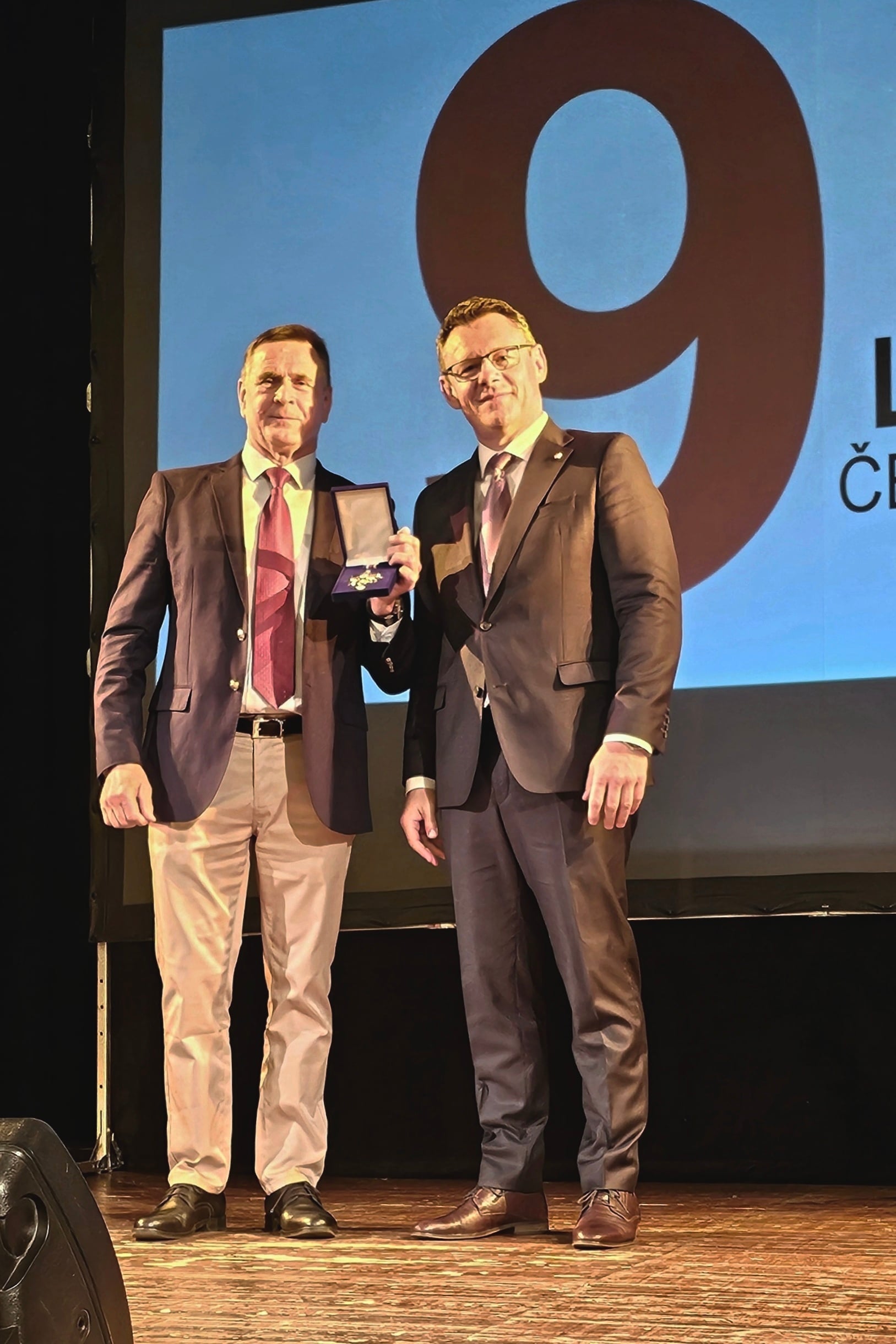
The evening also served as a moment of recognition and celebration, with the European Judo Union presenting honours to individuals who have made significant contributions to the sport. Jiří Sosna, the 1988 European Champion and a member of the federation’s board, received the EJU Judo Hero Award, while Vladimír Bárta and Pavel Volek were both distinguished with the EJU Order of Merit. National recognition followed as Renata Zachová was named Czechia’s Judoka of the Year, further underlining the nation’s continued presence at the forefront of European competition.
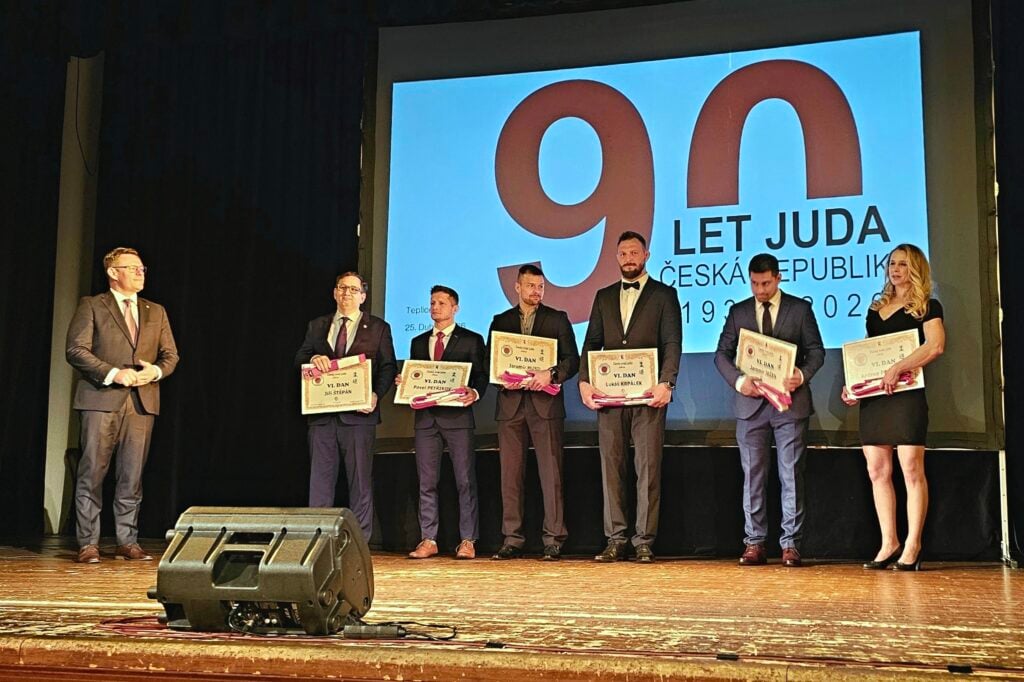
Additional honours highlighted the depth of expertise within Czech judo, with the awarding of 7th Dan to Petr Lacina and 6th Dan distinctions conferred upon several prominent figures, including Lukáš Krpálek, Jaromír Ježek and Pavel Petřikov. Together, these recognitions reflected not only individual achievement but the collective strength of a federation that continues to honour its past while confidently shaping its future.
Author: EJU Media