





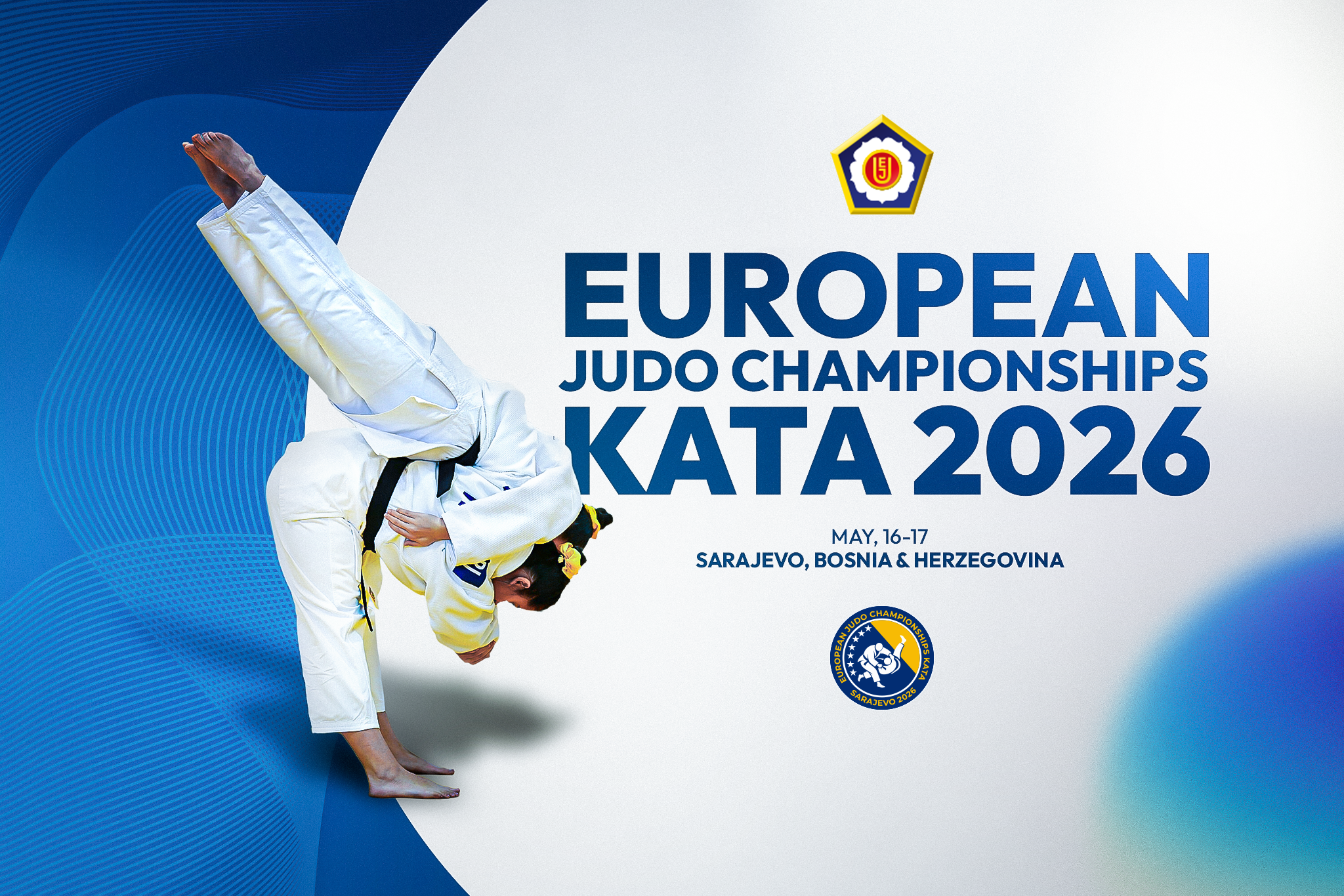
The 2026 European Judo Championships Kata will bring together Europe’s top kata specialists across all ages, from senior, junior and cadet levels on 16 – 17 May 2026, putting on a display of judo’s most technical and traditional brilliance. The word ‘kata’ itself means “form”.

In the senior division, athletes will compete across seven recognised kata, namely Nage-no-Kata, Katame-no-Kata, Ju-no-Kata, Kime-no-Kata, Kodokan Goshin-Jutsu, Koshiki-no-Kata and Itsutsu-no-Kata.
The junior championships will feature three core categories, Nage-no-Kata, Katame-no-Kata and Ju-no-Kata, offering a focused platform for emerging talent to demonstrate precision and harmony.
At cadet level, competition will also take place in three categories, with Nage-no-Kata performed through three sets, Te Waza, Koshi Waza and Ashi Waza, alongside Katame-no-Kata and Ju-no-Kata.
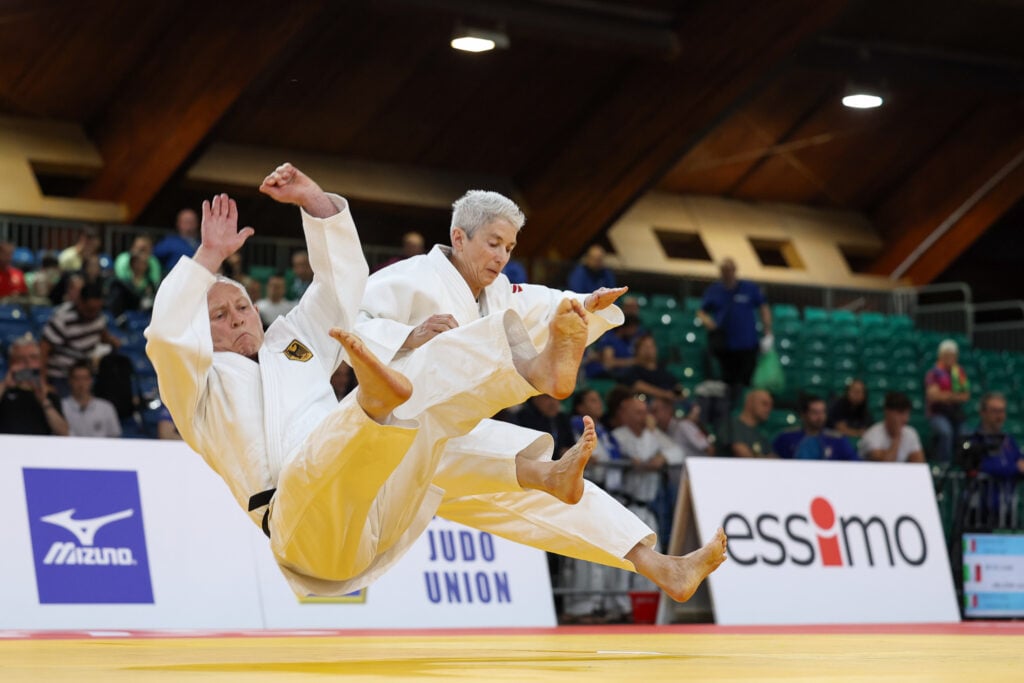
Meanwhile, the Adapted Judo segment will cover the following categories: Nage-no-Kata (first three series), Adapted Nage-no-Kata (first three series), Katame-no-Kata, Ju-no-Kata, Kime-no-Kata and Kodokan-Goshin-Jutsu.
Adapted Nage-no-Kata refers to a performance of Nage-no-Kata in which one or more techniques are modified to accommodate the functional abilities of a judoka with a disability. Any deviation from the standard Kodokan Nage-no-Kata, including adjustments to technique execution, posture, movement, or gripping, constitutes Adapted Nage-no-Kata. Such adaptations must ensure safety while preserving the fundamental principles and structure of the kata. Adapted Nage-no-Kata may be performed in either Tachi-shisei or Ne-shisei, depending on the functional abilities of the participating athlete.
You can follow all of the action on JudoTV.com
What is judo kata?
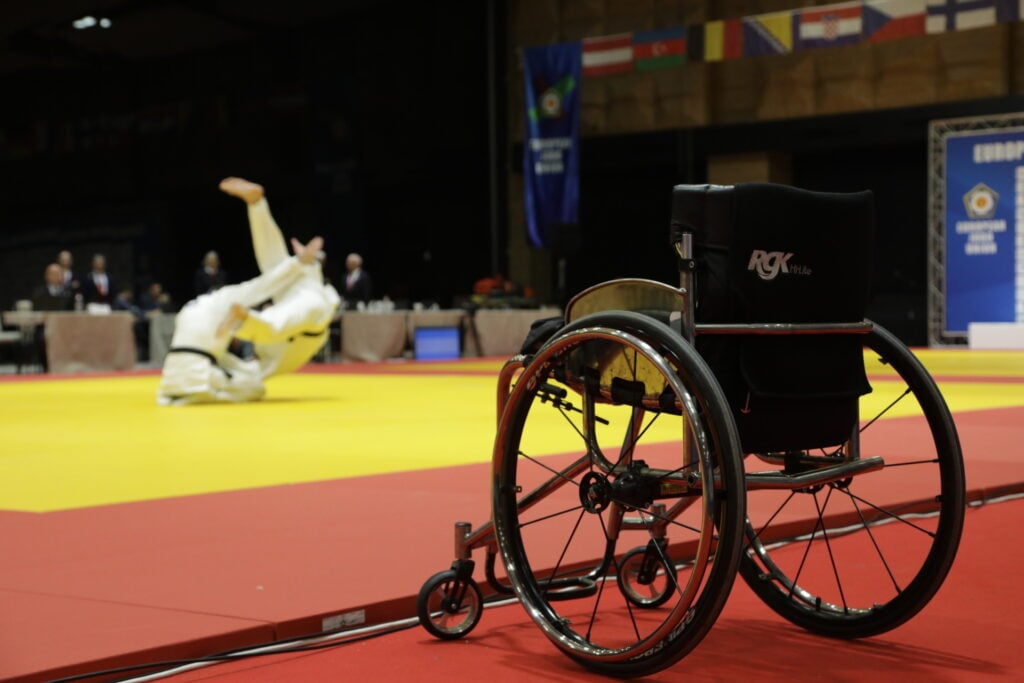
In Judo, kata are carefully choreographed sequences of movements performed by two partners. One person performs the techniques, called tori (the one applying the move), while the other, uke, receives them in a controlled and cooperative way. The two work together as a team.
Instead of fighting to win, like in competition sparring, kata is about demonstrating perfect technique, timing, balance and understanding of the sport.
One can think of it as a sort of “living textbook” of judo. Every movement has a purpose, showing how techniques should be executed in their ideal form.
What do the different kata represent?
Each kata focuses on a different aspect of judo.
Nage-no-Kata This kata shows how to throw an opponent correctly. It includes different types of throws, from hand techniques to hip and foot techniques, all performed with precision and control.
Katame-no-Kata Focused on techniques on the ground, this kata demonstrates grappling, holds, chokeholds and joint locks, showing how to control an opponent safely and effectively.
Ju-no-Kata A slower, more flowing kata that showcases flexibility, balance and harmony rather than force. It reflects the judo principle of using minimal strength for maximum efficiency.
Kime-no-Kata This kata focuses on self-defence situations, including responses to strikes and attacks, performed both kneeling and standing.
Kodokan Goshin-Jutsu A more modern self-defence kata that includes defence against weapons and contemporary attacks, such as knives or sticks.
Koshiki-no-Kata This kata comes from older martial traditions and mimics movements as if the practitioners were wearing armour, giving it a very formal and historical feel.
Itsutsu-no-Kata Representing natural principles like force, flow and balance. It is comprised of five sequences of movements reflecting forces of nature.
How do juniors and cadets differ?
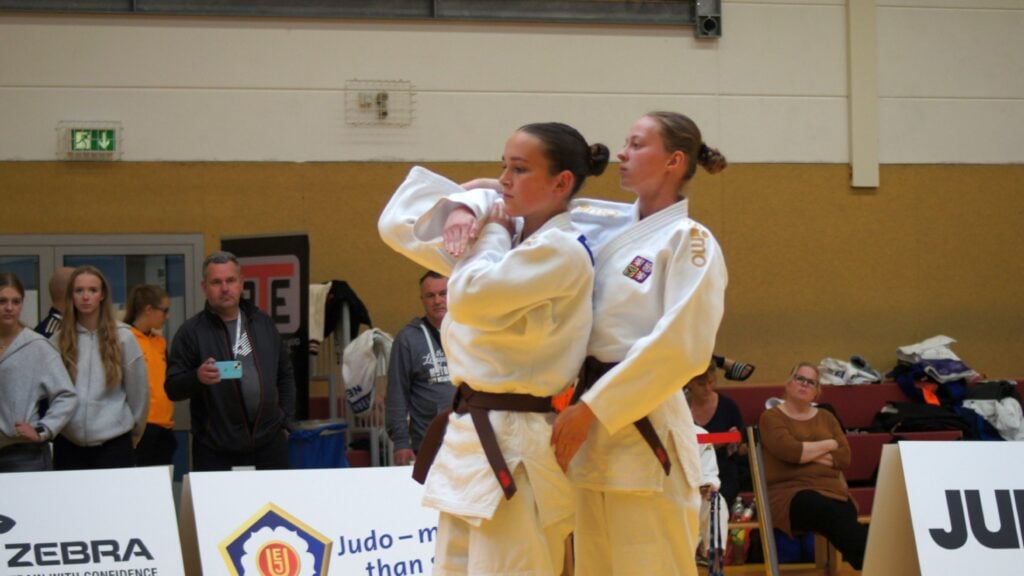
Juniors focus on the three core kata, Nage-no-Kata, Katame-no-Kata and Ju-no-Kata, building strong fundamentals. Cadets also perform these, but with a simplified structure, especially in Nage-no-Kata, where they demonstrate selected groups of throws.
Kata European Judo Championships 2026: Programme
Location: Sarajevo, Hotel Hills
Friday, May 15
- 18:30, Draw for European Championship preliminaries, Hotel Hills
Saturday, May 16
- 09:00, Preliminaries
Nage-no-Kata, Katame-no-Kata, Ju-no-Kata, Kime-no-Kata, Kodokan Goshin-Jutsu - 14:30, ENBU Judo demonstration
- 15:30 – 17:30, Finals
Nage-no-Kata, Katame-no-Kata, Ju-no-Kata, Kime-no-Kata, Kodokan Goshin-Jutsu
Sunday, May 17
- 09:30 – 13:00, Preliminaries
Nage-no-Kata, Katame-no-Kata, Ju-no-Kata, Koshiki-no-Kata, Itsutsu-no-Kata - 14:00 – 14:30, Opening Ceremony
- 14:30, Adapted Judo Kata competition
- 15:00, Finals
Nage-no-Kata, Katame-no-Kata, Ju-no-Kata, Koshiki-no-Kata, Itsutsu-no-Kata
Below is a list of the judges selected for this year’s European Championship:
- FREY Sebastian (GER)
- ANDRUHN Birgit (GER)
- MUSTONEN Hannu (FIN)
- ERLINGER Heinrich (AUT)
- KRASOVEC Darko (SLO)
- SANZ GALAN Carlos (ESP)
- GELABERT MESQUIDA Ponc (ESP)
- VICENS SIQUIER Miguel (ESP)
- PAPARIS Nikolaos (GRE)
- BAERT Johan (BEL)
- PONGOLI Michel (BEL)
- CAMPARO Carlo (ITA)
- MIGNI Marco (ITA)
- VETTURINI Cristina (ITA)
- VAN GEEL Olaf (NED)
- KRADOLFER Mark (NED)
- LANC Marek (CZE)
- FORSBERG Sonny (SWE)
- PADOS Robert (HUN)
Author: Grace Goulding