





Digital transformation in sport is often associated with elite performance, cutting-edge analytics, wearable technology and high-performance tracking. Yet, for the vast majority of grassroots clubs across Europe, the reality looks very different. Administration is still largely manual, communication fragmented, and time is always in short supply.

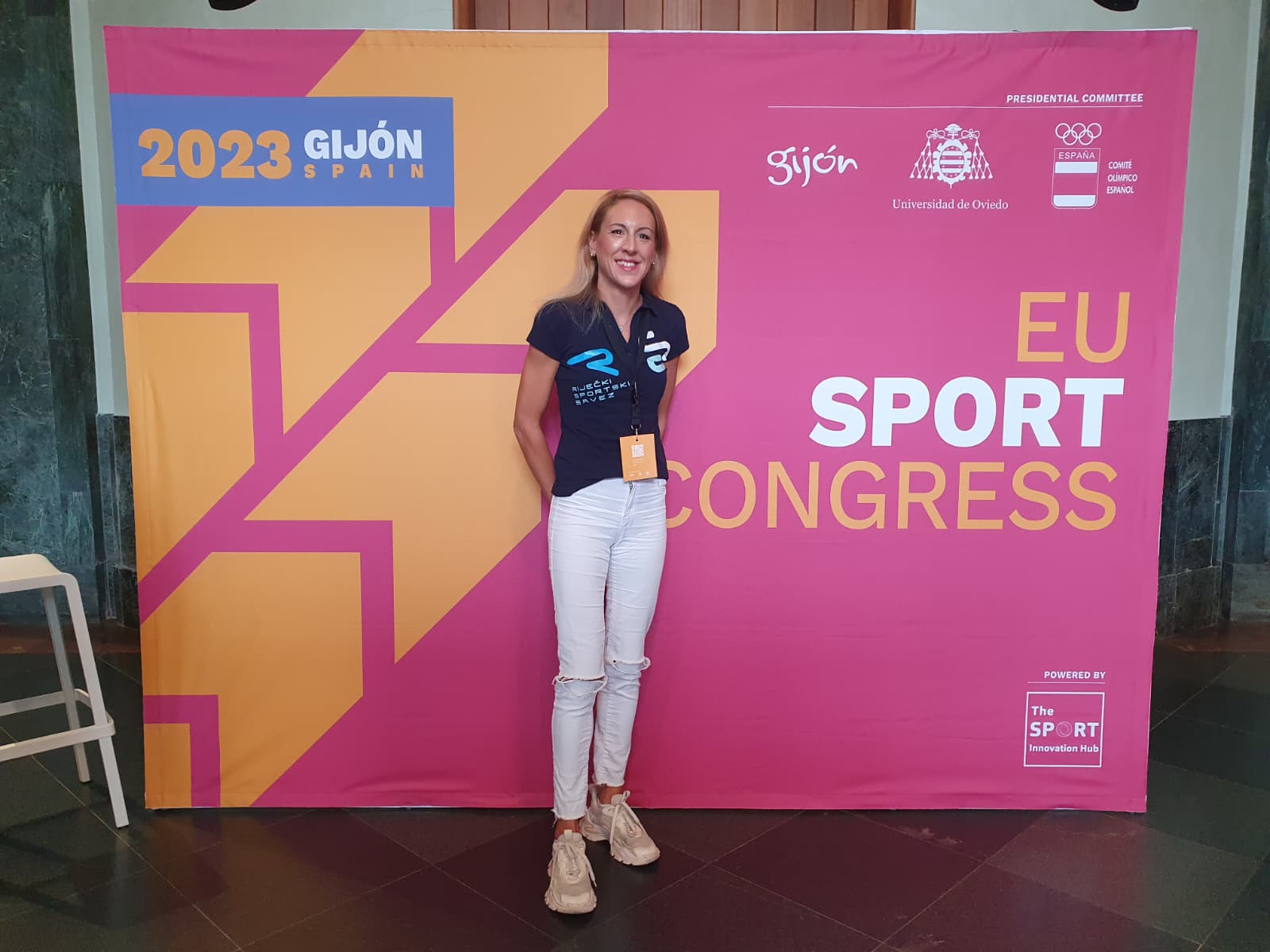
This is precisely where the DATA project, short for Digital Administrative and Training Assistant, steps in. Magda Maraš Berić of the Rijeka Sports Association offered a grounded and insightful look into a project that aims to simplify, not complicate, the daily running of sports organisations.
Built from Experience, Not Theory
Maraš Berić brings a unique perspective. A former professional volleyball player, she has spent the past decade working within the Rijeka Sports Association, gaining first-hand insight into both the sporting and administrative demands of club life. Over the last three years, her work within Erasmus+ Sport projects naturally led her to the DATA initiative, where Rijeka acts as the coordinating partner.
Her role spans implementation, partner coordination and ensuring that the project remains closely aligned with the real needs of clubs, and that, she emphasises, is the foundation of everything. “You cannot develop a good digital solution from an office only. You need to listen to the people who will actually use it.”
The Reality Clubs Face
The challenge is not a lack of effort or willingness to evolve. Quite the opposite.
Across Europe, clubs are busy, committed and often stretched thin. Coaches juggle training sessions with administrative tasks, managers handle membership data and reporting, while communication flows across WhatsApp, emails, spreadsheets and sometimes still paper notes.
The problem is not the absence of information, but its fragmentation.
“All the information exists but it is spread across many different channels,” Maraš Berić explains. “The goal is to make management, communication and monitoring more organised, more efficient, and easier for everyone involved.”
DATA is not about digitalisation for the sake of it. It is about saving time, reducing paperwork and bringing clarity to everyday processes.
Simplicity as the Core Principle
If there is one word that defines the project, it is simplicity.
Through research, workshops and collaboration with partners across different countries and sporting backgrounds, a clear message has emerged: if a tool is too complicated, it simply will not be used.
Grassroots sport relies heavily on volunteers and part-time staff. Time is limited, and digital solutions must adapt to that reality.
“The tool should reduce work, not create more work,” she says. “If a coach enters attendance once, that information should be useful for reports, communication and monitoring, without being repeated in multiple places.”
Crucially, the platform is being designed with different users in mind. Coaches, managers, athletes and parents all interact with clubs in different ways, and their needs are not the same. The DATA project reflects this by creating tailored experiences within a single system.
Supporting the Shift
Introducing new technology inevitably brings resistance, particularly when habits are deeply ingrained. The project team is fully aware of this and has taken a measured, supportive approach.
Rather than imposing change, the focus is on demonstrating value.
“We don’t say, ‘you must use this app’. We show how it can help, how it saves time, improves communication and makes daily tasks easier.”
Education plays a key role. Alongside the digital tool, the project offers an online training course, available via the SportAcademy, as well as workshops and practical demonstrations. The aim is to equip clubs not just with technology, but with the confidence to use it effectively.
From Concept to Practice
After a year and a half of development, the project is now approaching one of its most important milestones: the pilot phase.
For Maraš Berić, this is where the real value will emerge.
“The most exciting part is seeing how clubs react in practice. This is when the project becomes something concrete, something that can actually help in daily work.”
Feedback from this phase will be critical, shaping further improvements and ensuring the final product truly meets the needs it was designed for.
A Year Later
Asked where she hopes the project will be in a year’s time, the answer is clear and refreshingly pragmatic.
Not recognition, not scale…, but usefulness.
“I would like to say that DATA became something that clubs actually use, that it helped them organise better, improve communication and reduce paperwork.”
Perhaps most importantly, she hopes it will change perceptions.
Digital transformation, often seen as complex and overwhelming, can instead become something practical, accessible and genuinely supportive, and if the DATA project succeeds in that mission, it will not just modernise sports administration, it will strengthen the very foundations of grassroots sport across Europe.
Access to FREE Online Courses
Data Management in Sport Basic [English, Croatian, Portuguese]: Course: Data Management in Sport – Basic | Sportacademy
Data Management in Sport Advance: Data Management in Sport – Advanced – Sport Academy
Author: EJU Media