





When speaking about kata in Europe, it is impossible not to mention Italy. Year after year, generation after generation, the Italian team continues to raise the standard across almost every kata discipline, combining tradition, innovation and remarkable consistency on the European stage.

Behind that success is a system built on passion, trust, discipline and constant evolution. Ahead of the European Kata Championships 2026 in Sarajevo, we caught up with Cesare Amorosi to discuss the philosophy behind Italy’s achievements, the mental side of kata, developing future generations and why kata is far more demanding than many people realise.
Ahead of the European Kata Championships in Sarajevo, what does your role involve on a daily basis as part of the Italian kata programme?
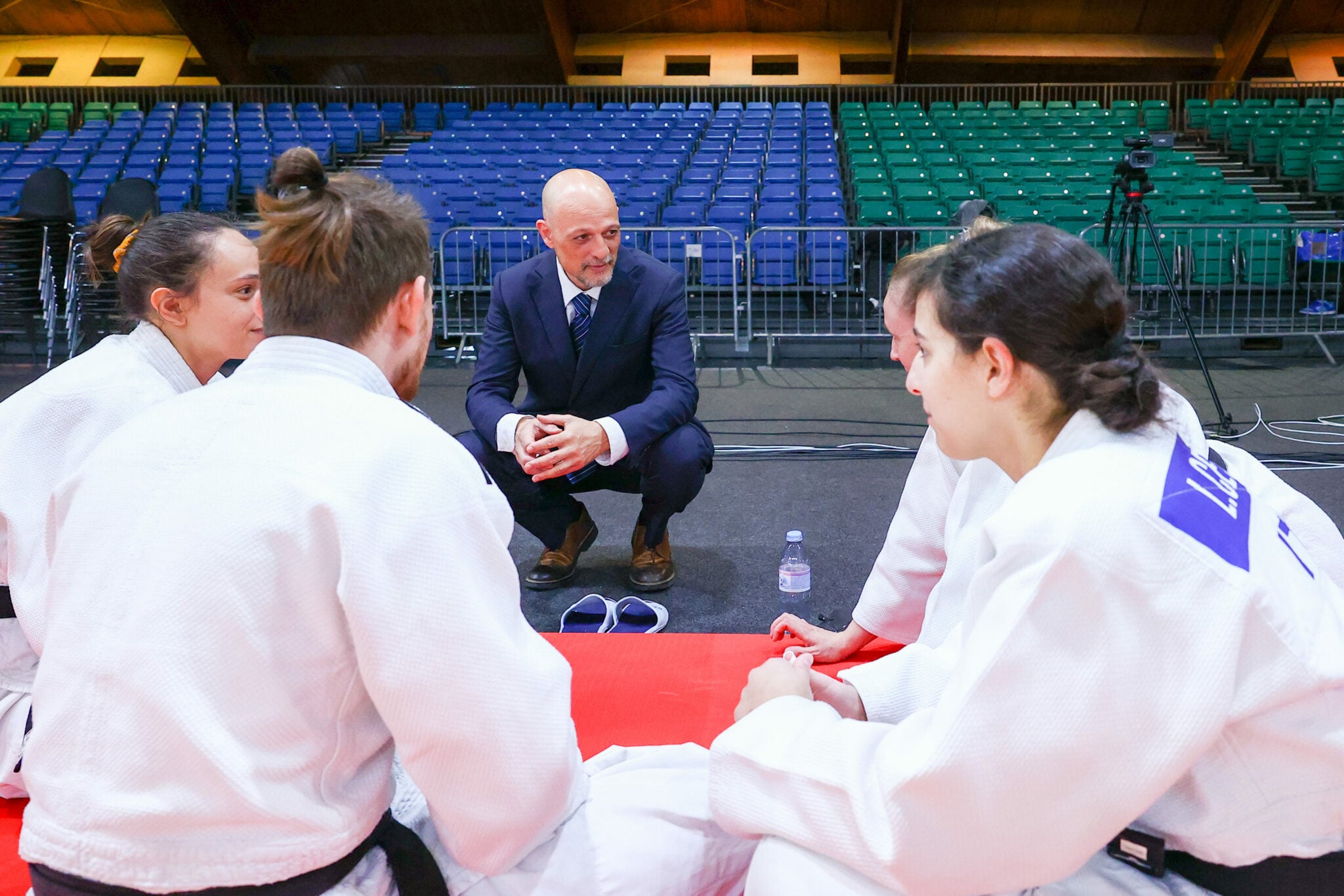
Cesare Amorosi: I am currently President of the National Kata and Masters Commission, which means I am responsible for establishing the annual program of the national kata competition circuit and the training programs for technicians and referees. I also train, together with my collaborators, the athletes who are part of the Italian National Kata Team.
Your coaching journey has covered many different areas of judo. How has your experience shaped your philosophy as a coach and leader?
CA: Beyond the different technical specifics, in my experience it is fundamentally about helping athletes be better than they were before, and to do this, both the coach and the athlete must have mutual trust and believe in the process they establish together, through constant and honest feedback.
You also work closely with the adapted judo programme. From your experience, how does coaching kata athletes differ from coaching adapted judoka, and are there any similarities between the two that stand out to you personally?
CA: I don’t think there are any substantial differences. Every athlete and every couple has different characteristics, needs, and goals; we just need to understand them and jointly develop the most suitable program. The ultimate goal, beyond competition, is to help each other improve in judo and as individuals, as Judo’s founder, Professor Jigoro Kano, has repeatedly written and stated. This is a common factor for everyone, both athletes and coaches and teachers. Seeing adapted athletes train and compete makes this element, if possible, even more important.
Kata requires not only technical precision but also trust and harmony between partners. What qualities do you look for most when developing successful kata pairs?
CA: Fundamentally, training kata is training the mind. If the mind is right, the body moves correctly and the techniques will flow smoothly. If there is mutual trust, right or wrong no longer matters; only the gesture counts. To achieve this, the athletes forming the pair must find the best harmony, have the same goals, and have the same intention in training. Sometimes, a balance must be found, so the athletes must be willing to adapt some of their own methods to meet those of the other. However, each pair has its own characteristics and peculiarities, strengths and weaknesses, mentalities, and specific goals; it is necessary to try to understand which is the best path for each of them.
Italy has built a strong reputation in kata over the years. What do you believe has been the key to maintaining such a high standard on the European stage?
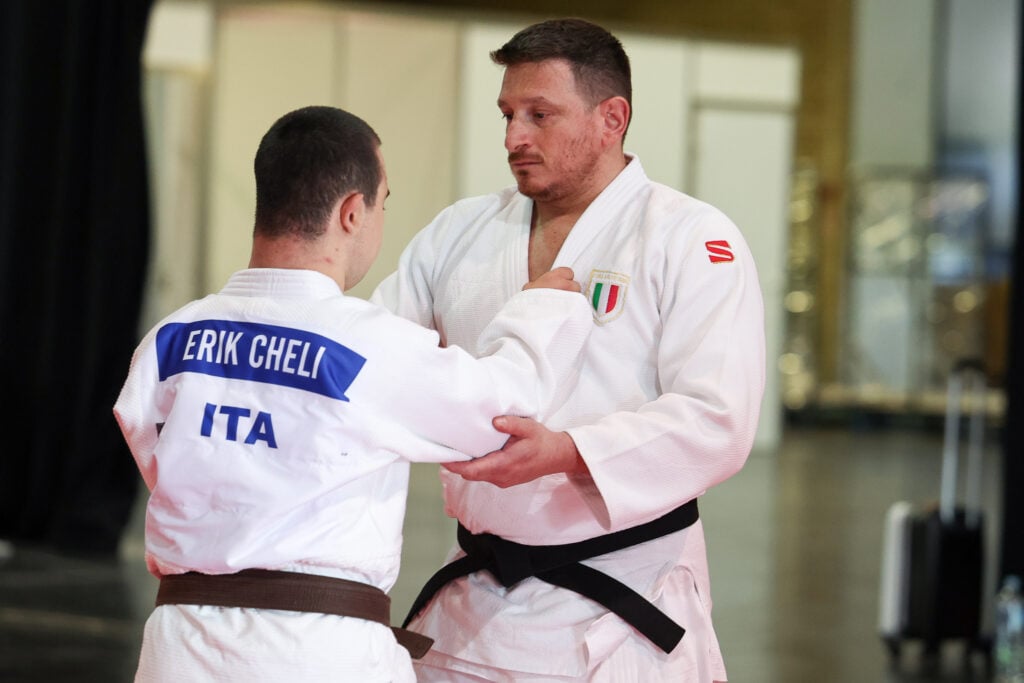
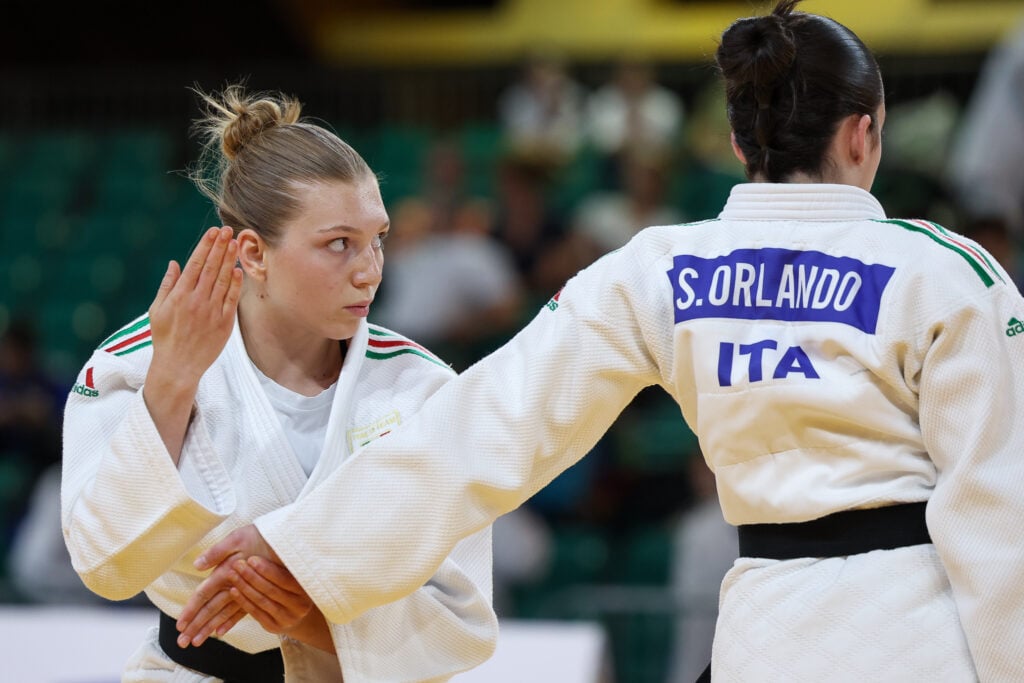
CA: Italy has a long tradition in the study and practice of Kata, thanks to Masters who passionately passed on their knowledge. The first generation of athletes achieved excellent results, and many of them, when they stopped competing, began training new athletes. In the years that followed, when I stopped competing and began to focus on Kata at the regional and then national levels, I believed that this part of judo was not exclusively for experienced practitioners with many years of practice behind them but could also be very useful and appreciated by younger people.
Currently, in Italy we have a large number of juniors, cadets, and seniors under 35 years old participating in competitions, which ensures an increase in the level of practitioners and a more widespread dissemination of knowledge of Kata. I then proposed and introduced a circuit of national competitions that generate a Ranking List for each Kata, which also includes some international competitions such as the EJU Kata Tournament and the IJF Kata World Series. The Italian National Team is thus composed of the pairs at the top of the Ranking List, which is updated competition by competition. We have therefore adopted an objective criterion that has inspired great enthusiasm among the athletes, as each of them knows they can try to qualify for the European and World Championships, all with equal starting opportunities.
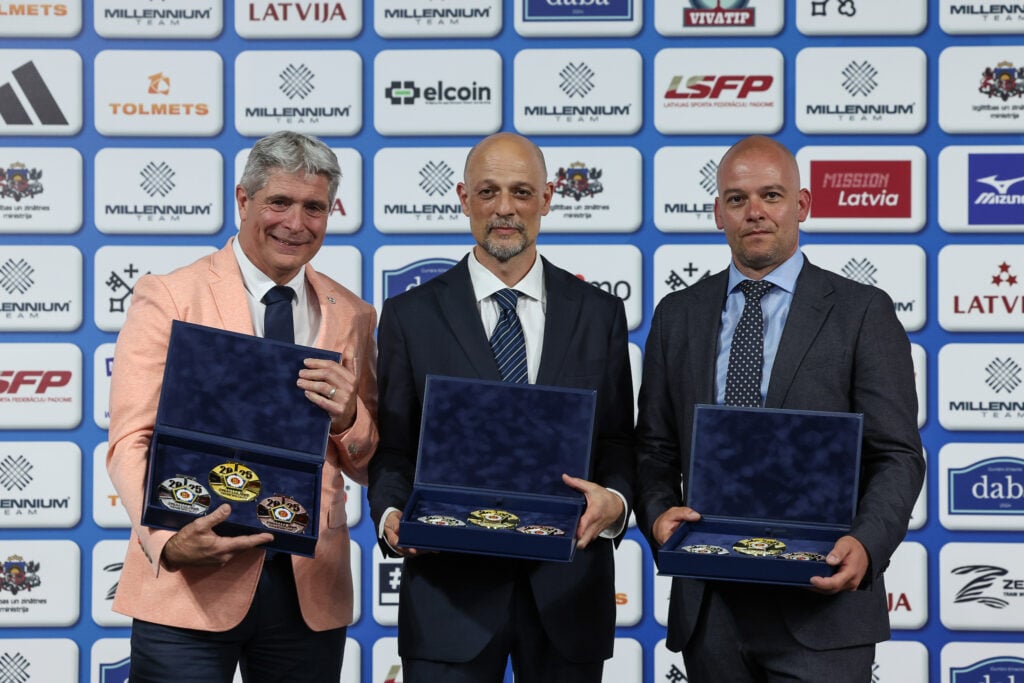
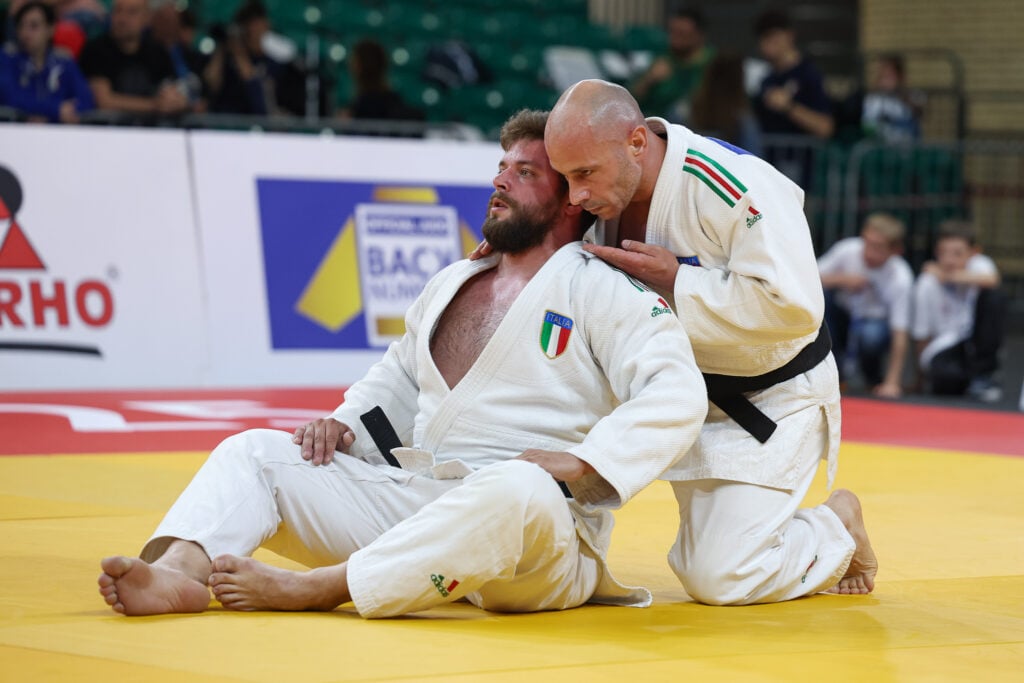
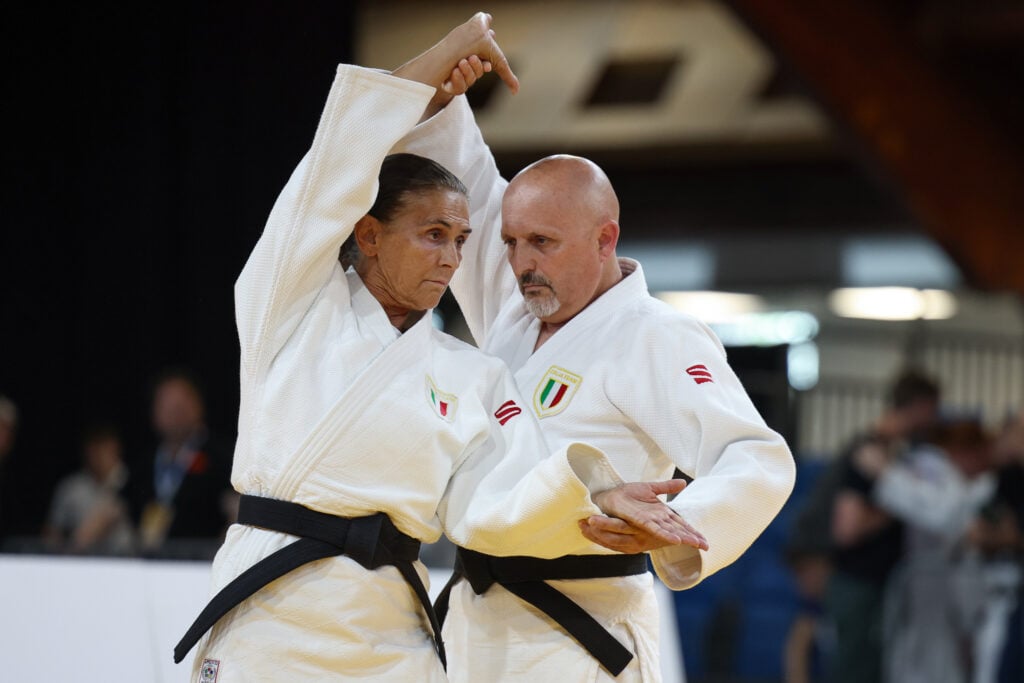
Furthermore, with this system, our most renowned pairs are constantly encouraged to improve so as not to be overtaken and to participate in international competitions, competing against the level of other national teams. As the national average level increases, both in terms of quantity and quality, so does the level of the best. For both younger and more mature athletes, thanks to the valuable work of one of my collaborators, an expert in athletic training and movement analysis, I have developed and introduced athletic training programs specific to kata and role (tori and uke), aimed at preventing potential injuries due to the continuous and intense repetition of a technical move over time, and at improving technique Italian Team at the 2025 Kata Europeans in Rigaand performance. These programs are currently followed by several kata athletes, both from the Italian national team and at a lower level, with excellent results.
For those who may only know kata from competition results, what do you think people often underestimate about the discipline and the level of preparation required behind the scenes?
CA: Perhaps you might think that a technical test without a contest isn’t particularly complex. In my opinion, kata competition requires significant mental effort: striving for unattainable perfection without it becoming an obsession, accepting the referee’s judgment, whatever it may be, and accepting one’s own limitations and those of one’s partner. This particularly involves the emotional aspect, which can be difficult to train. Kata is not distinct from the rest of judo; it is one of its components, and it is impossible to perform a good kata without an excellent technical foundation and solid randori experience, which must be continually practiced alongside kata.
Looking beyond the medals, what would make the European Kata Championships in Sarajevo a successful event for you personally and for the Italian team?
CA: Italy won the most medals at the 2025 European Kata Championships in Riga. In terms of results, we can only match last year’s. Repeating a performance is always very difficult but I am sure we will do our best to succeed. Beyond the results, the most important thing for me is that the athletes, their companions, and their supporting coaches will once again be able to create a positive atmosphere of growth, respect, and continuous improvement, and that we all do our best, each in our own role. Every competition teaches everyone something; the important thing is to grasp the insights, evaluate them, and train them as best we can for the next competition.
Author: Szandra Szogedi