





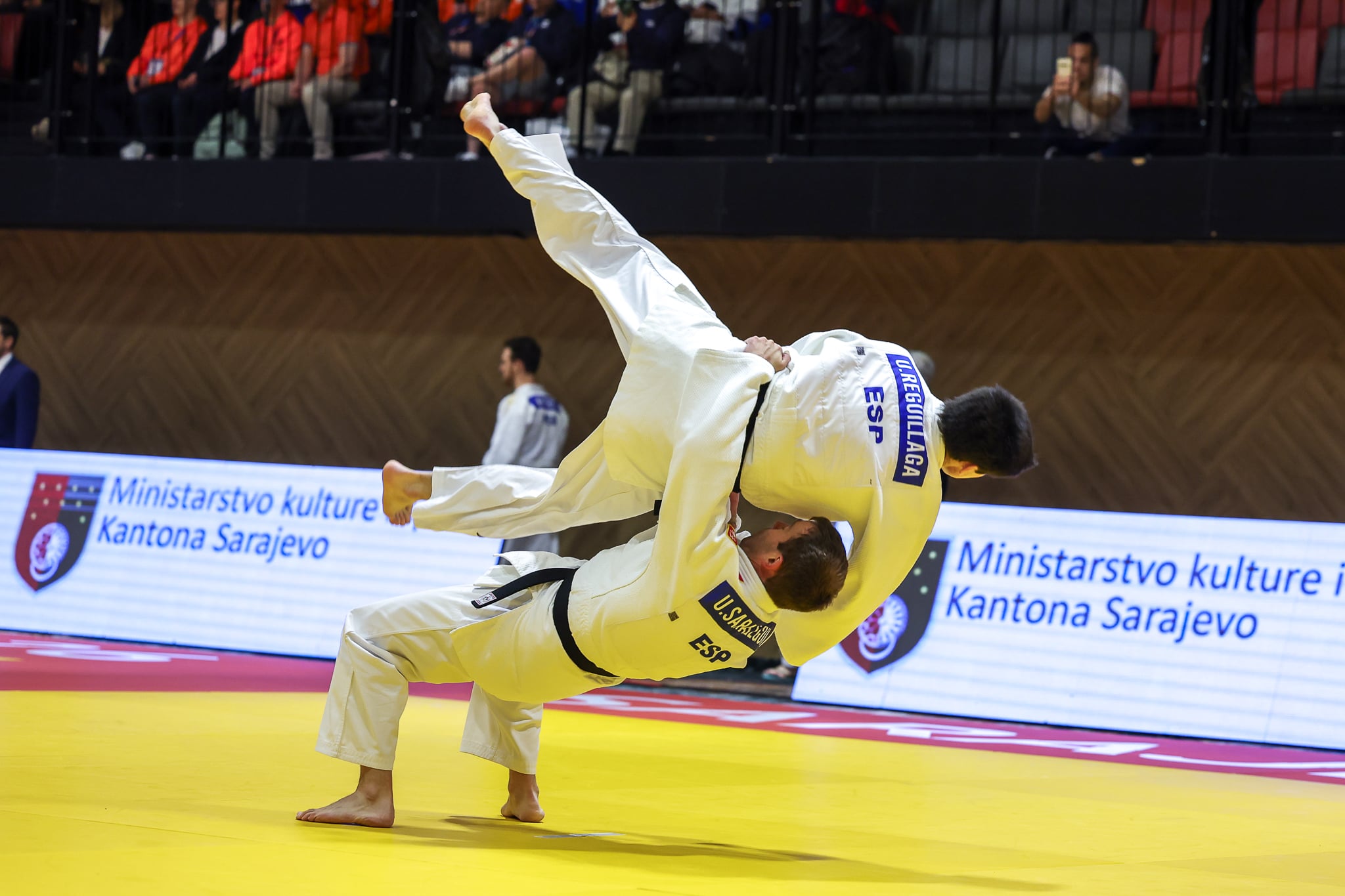
The opening day of the European Judo Championships Kata Sarajevo 2026 delivered emotion, redemption and remarkable performances as six European titles were decided across Nage-no-Kata, Katame-no-Kata, Ju-no-Kata, Kime-no-Kata, Kodokan Goshin Jutsu and ENBU.

With a record 452 participants from 28 nations, the largest edition to date, brought together established champions, rising newcomers and unforgettable comeback stories. Italy closed day one on top of the medal table with three gold and one bronze medal, ahead of Spain and Germany.
Beyond the results, however, the day belonged to the stories behind the medals: athletes speaking about sacrifice, family, pressure, passion and the spirit of judo that continues to unite the kata community.
Here is what the newly crowned European champions had to say in Sarajevo.
Nage-no-Kata
The Nage-no-Kata division proved to be one of the most competitive categories of the day, attracting 31 pairs and requiring three preliminary groups to narrow down the field ahead of the final.
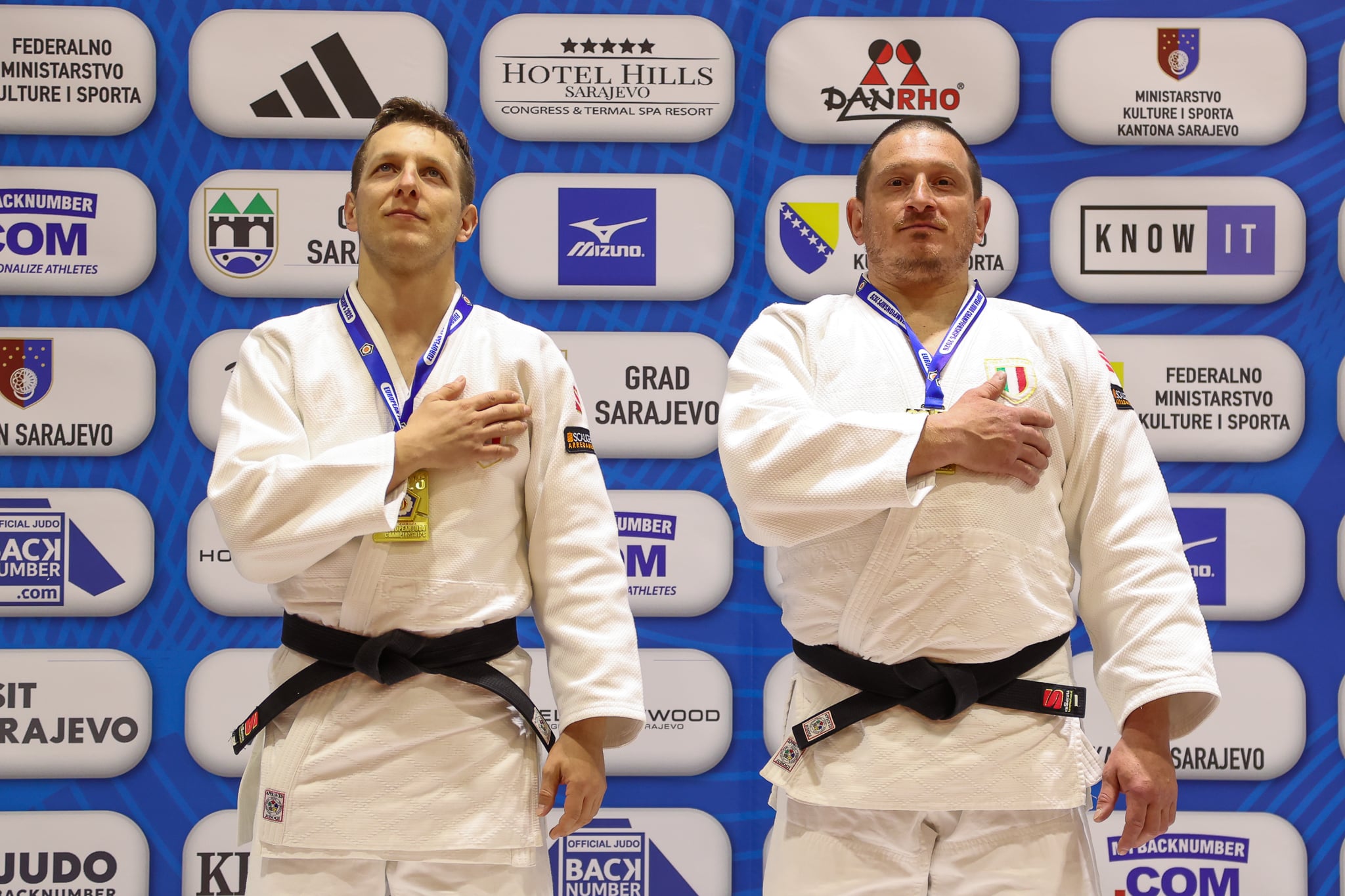
At the end of the preliminaries, the Spanish duo of Saralegui Vallejo Unai and Reguillaga Eizaguirre Unai led the standings but once the final began, the reigning European champions from Italy, Mauro Collini and Tommaso Rondinini, once again demonstrated their class and composure under pressure. The experienced pair reclaimed the top spot to secure the European title with a total of 395 points.
The level of competition was reflected in the incredibly narrow margins separating the medallists. Spain claimed the silver medal with 393.5 points, while Germany’s Immo Schmidt and Hendrik Schmidt completed the podium with bronze on 391.5 points.
Collini and Rondinini shared their thoughts afterwards:
“Every year feels like the first time. We reset everything, look at each other and ask: do we still have the same dream? In kata, there is no room for routine. Every detail matters, every movement must live with precision, and that challenge keeps us hungry, even after five European titles.”
“There are younger pairs coming every year, stronger competition, more pressure, more expectations but perhaps that is why we are still here. We may be the ‘old lions’, but experience teaches you that success is never guaranteed. You must earn it again every single season.”
Katame-no-Kata
In Katame-no-Kata, the famous Gilon brothers of Belgium are traditionally the pair everyone watches closely whenever they step onto the tatami. In Sarajevo, however, they faced a serious challenge from the reigning world champions of Italy, Andrea Fregnan and Pietro Corcioni.
Following the preliminary rounds, only half a point separated the two leading pairs, setting the stage for an intense final where every movement, transition and detail carried enormous weight. Both duos knew there was no room for error.
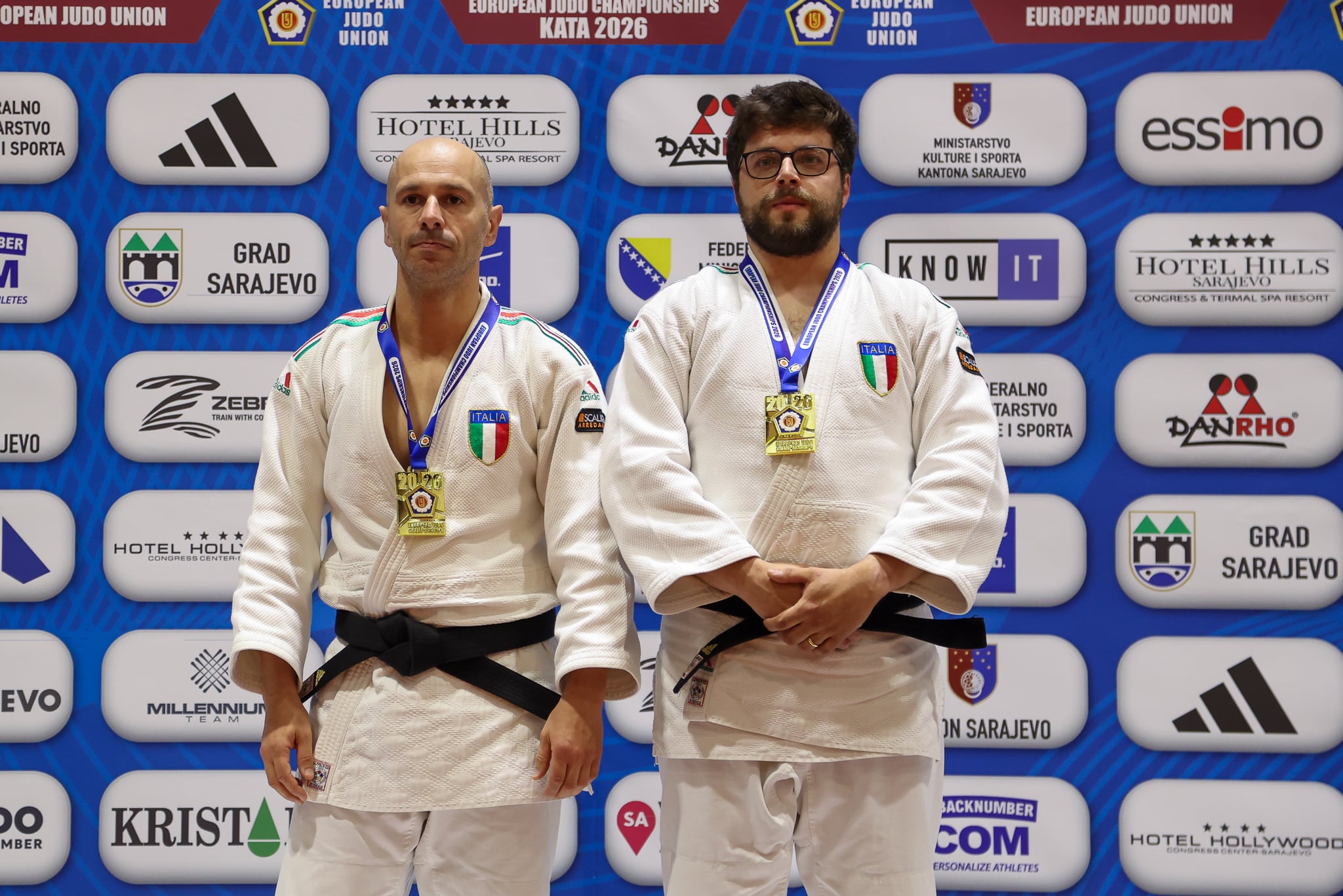
When the final scores appeared on the board, it was the Italian pair who emerged victorious with 390 points, ahead of the Belgian brothers on 386. With that, Italy continued its golden run in Sarajevo, securing yet another European title on the opening day.
Fregnan and Corcioni shared their thoughts afterwards:
“To win the European title together for the first time makes this moment incredibly special, especially because it came against the Gilon brothers, who have dominated the European stage for so many years. We had beaten them before at World Tour events but never at a European Championship. That was the missing piece for us, and today we finally achieved it.
“The level keeps growing every year, more competitors, more pressure, more quality, and that only pushes us to improve further. In the end, the difference today was not only technical ability but attitude, mentality and the determination to fight for every single detail with every inch of our body. When you step onto the tatami with that mindset, victories like this become possible.”
Ju-no-Kata
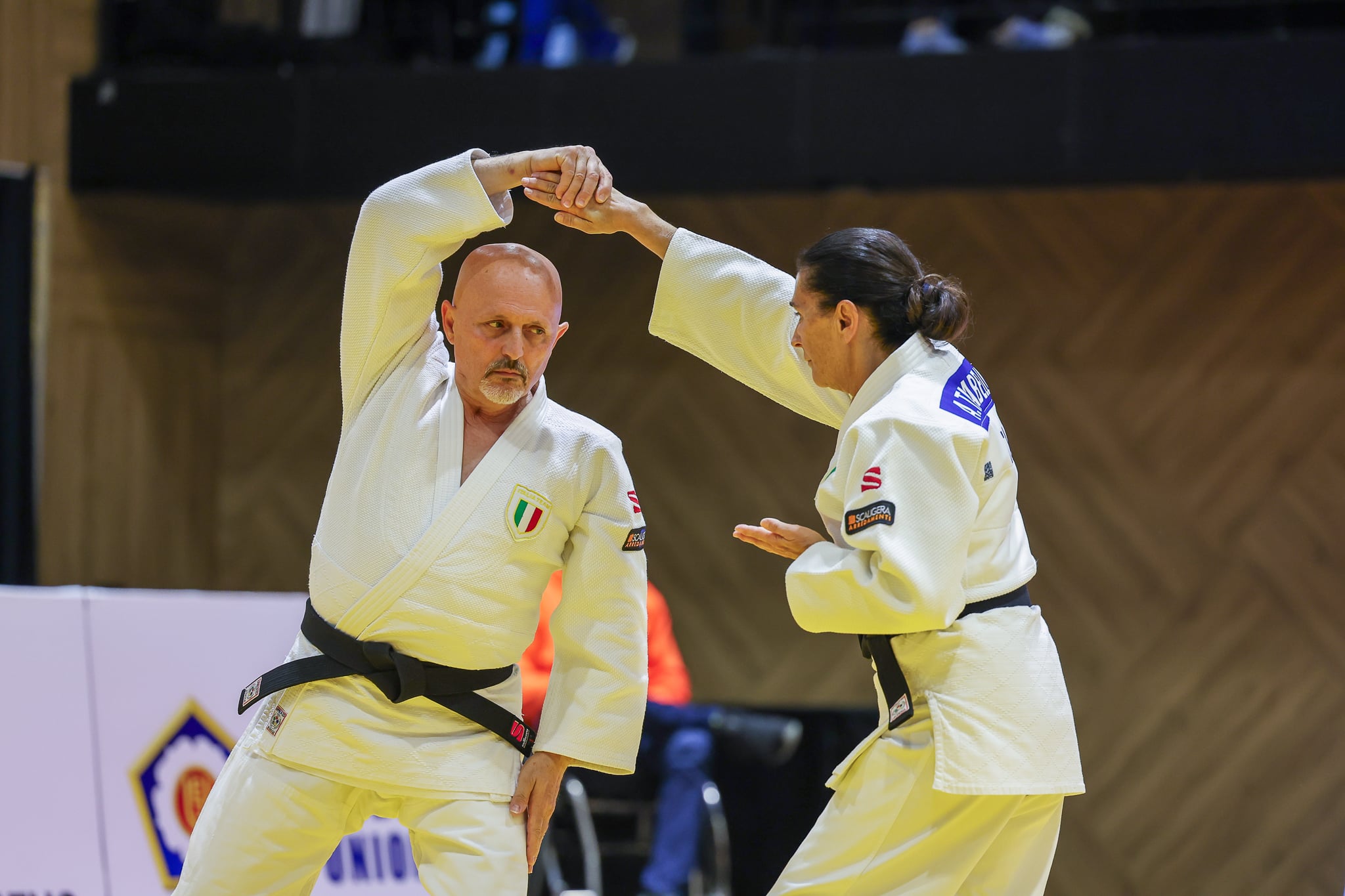
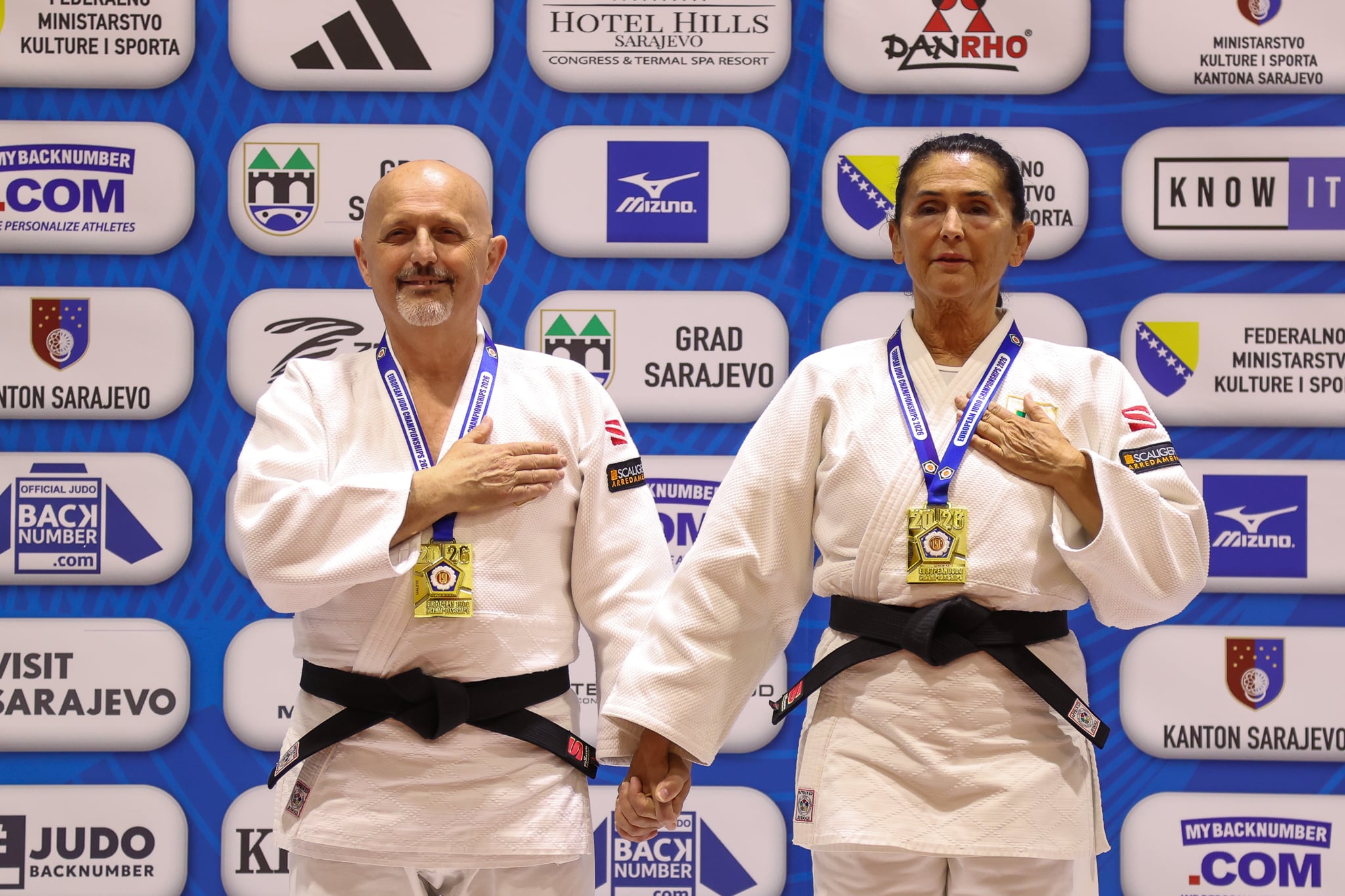
When the Ju-no-Kata results appeared on the scoreboard, one thing had once again become familiar in Sarajevo: the sight of the green, white and red flag rising to the top. Italy claimed yet another European title, but this victory carried far deeper meaning than gold alone.
For Giovanni and Angelica Tarabelli, this triumph marked not only the third European title for the Tarabelli family, but also an emotional dedication to their late parents, who had recently passed away. Their performance was filled with composure, elegance and emotion throughout the day.
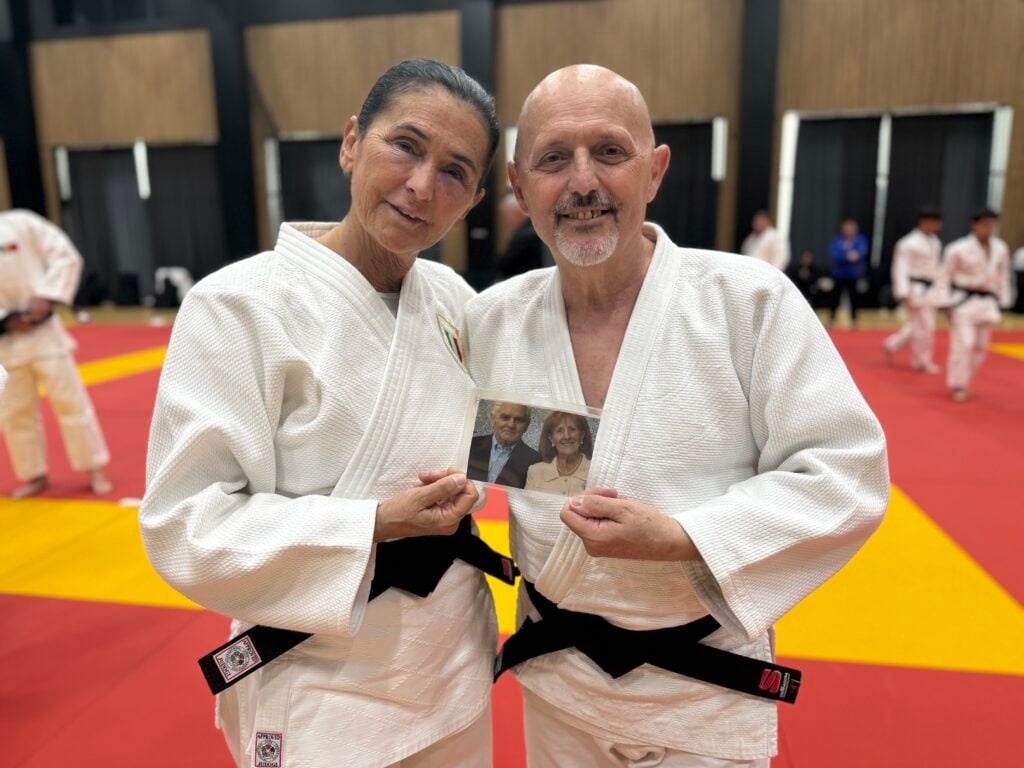
The Italian pair actually finished second following the preliminary rounds, meaning the pressure was firmly on ahead of the final. Regrouping when it mattered most, they delivered a stunning performance to secure the title with 398 points.
Romania’s Alina Zaharia and Alina Cheru, who topped the preliminaries, ultimately earned the silver medal with 392.5 points, while Germany’s mother-and-daughter duo, Helene Weinmann and Birgit Weinmann, completed the podium with bronze on 388 points.
“This medal is far more than a result. In the past few months, we lost both of our parents, the people who shaped not only our judo but our lives. They were always in the corner with us, always part of this journey, and today we carried them in our hearts onto the tatami. This European title is dedicated entirely to them.
“Kata teaches you that true harmony is built through patience, precision and feeling. We are still searching to improve every detail, every phase, every principle of judo. That is why we continue. Not simply to win medals but to honour the values, the family spirit and the love for judo that our parents passed on to us.”
Kime-no-Kata
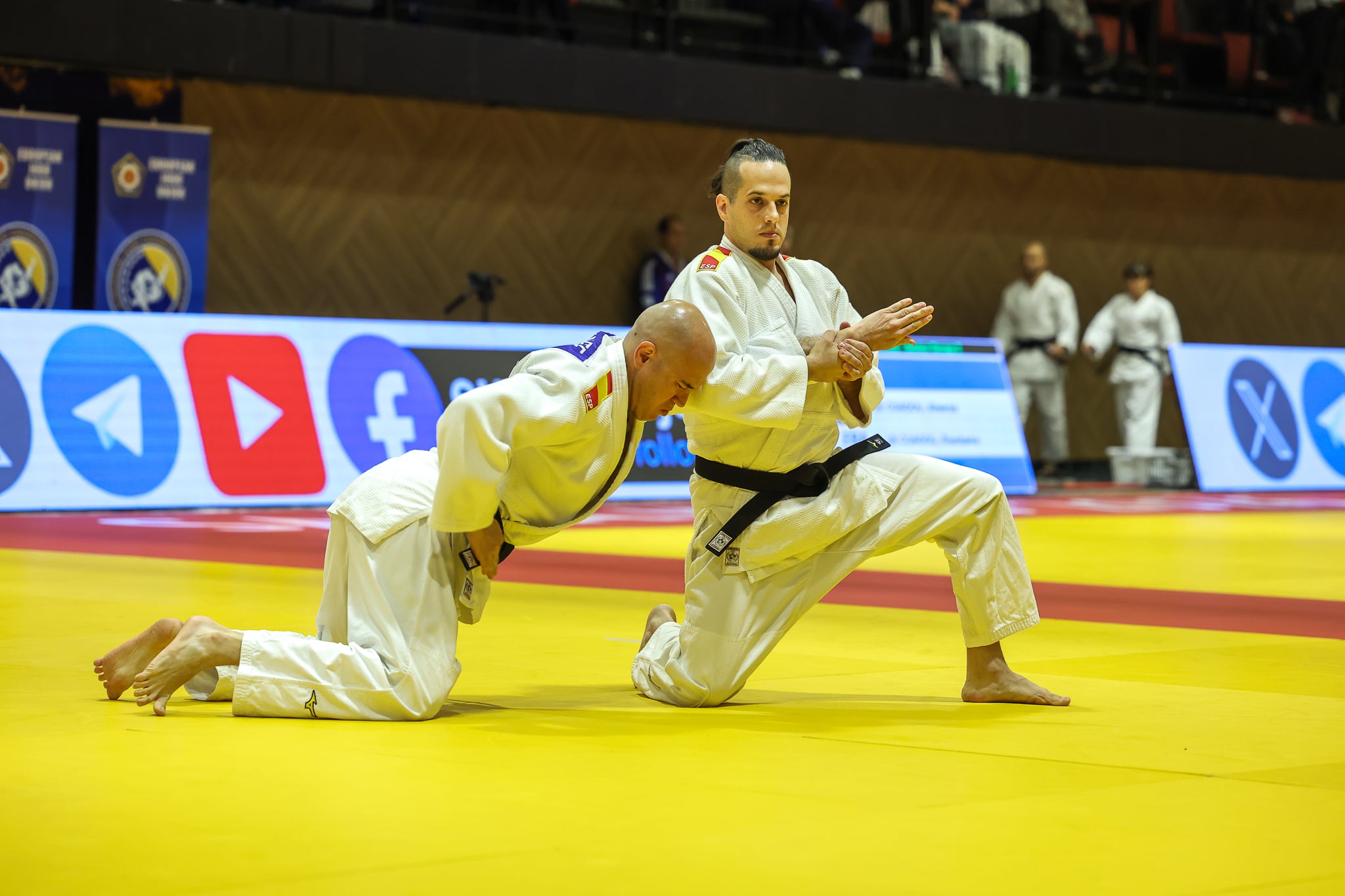
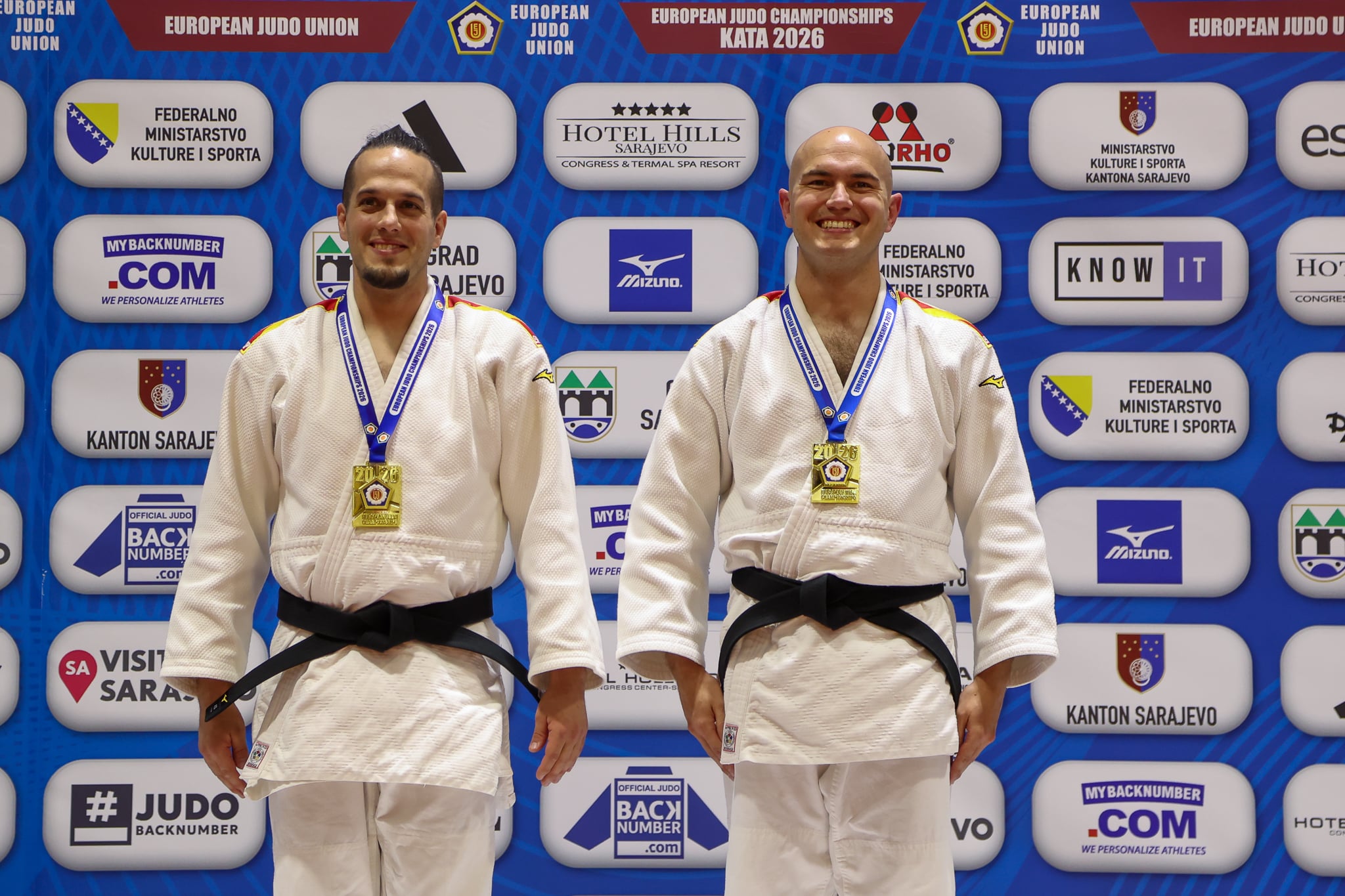
The Kime-no-Kata title belonged to the Spanish duo of Julian Jose Sanchez-Chaparro Montero and Carlos Alberto Navarrete Cerezo, who dominated the category from start to finish in Sarajevo. After taking the lead in the preliminary round, the pair held their nerve in the final to secure European gold with a total of 508.5 points.
When speaking afterwards, the newly crowned champions were still visibly overwhelmed by the result. After finishing with bronze in 2025, this victory marked a true breakthrough moment for the Spanish pair, especially as they overcame the reigning European champions from France, Stephane Bega and Gregory Marques, who finished just behind them on 505 points.
The incredibly narrow margins once again highlighted the exceptional level of competition, with Italy’s Enrico Tommasi and Yuri Ferretti taking bronze on 503 points.
“We still can’t quite believe it. This gold medal is the result of years of work, sacrifice and passion but what makes it truly special is sharing it with the entire kata family. At the end of the day, whether you finish first or second, we celebrate together because that spirit is what makes kata unique.
“Every competition is different. Sometimes one couple makes a mistake, sometimes another shines, and today it happened to be our day. Of course hard work matters but you also need courage, trust and the ability to enjoy the moment. Today we won the gold, next time it may be someone else but the most important thing is that we continue to grow together” shared the Spanish duo.
Kodokan Goshin Jutsu
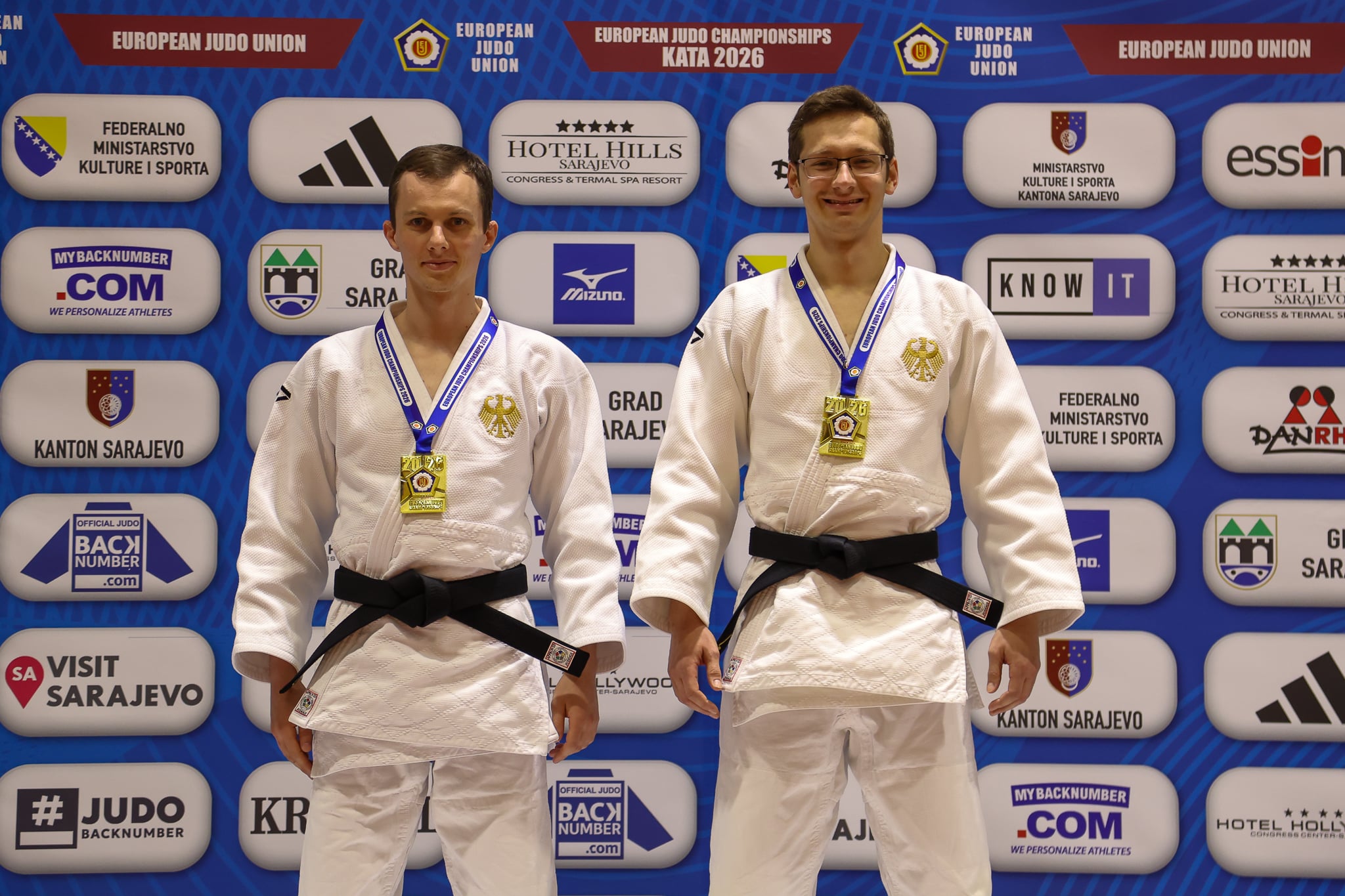
There was a notable shake-up in the final podium standings of Kodokan Goshin Jutsu compared to the 2025 edition. The only pair to return to the podium were Germany’s Andreas Freimuth and Eike Alexander Schmidt, and they did far more than simply maintain their position. After taking bronze last year, the German duo delivered a commanding performance worth 518.5 points to secure the European title in Sarajevo, leaving them almost speechless afterwards.
Spain’s Juana Maria Puigserver Sanso and Llorenc Gaya Puigserver claimed silver with 513 points, while France’s Claude Jaume and Brice Benard completed the podium on 505 points.
“After finishing third last year, we came into this championship wanting more, and now it still feels almost impossible to believe that we are European champions. Every hour of training, every correction and every difficult session suddenly feels worth it. We focused heavily on timing, expression and making every movement feel more connected, more alive.”
“What helps us grow is the environment around us. In Germany, there is strong and friendly competition within the kata programme, and that constantly pushes everyone to improve. There is respect between all the pairs but also motivation to keep raising the level together. Now there is no break, the focus already turns towards the World Championships” said the German pair.
ENBU Judo
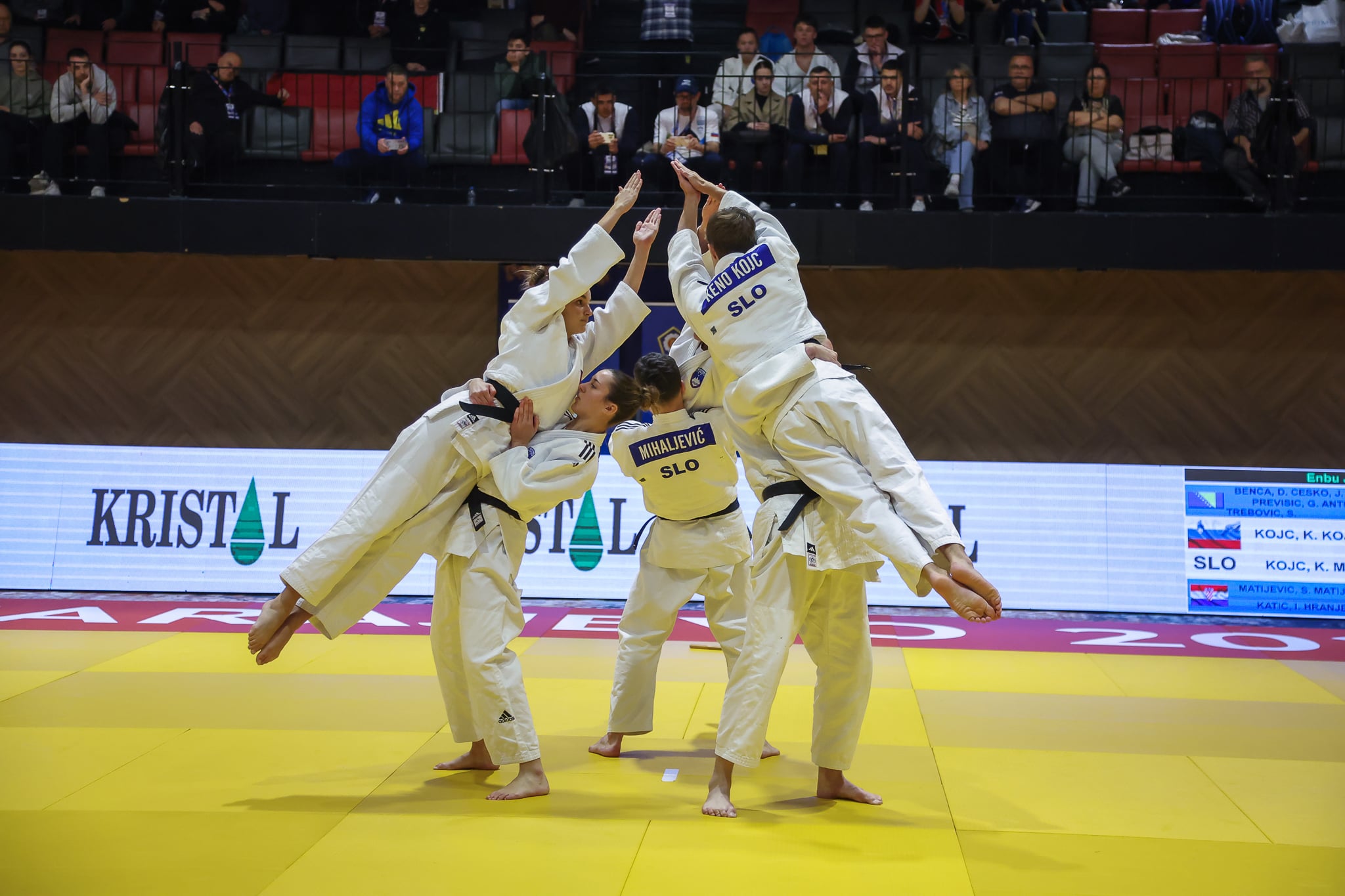
ENBU Judo has experienced a true revival in recent years and, for the first time in several editions, enough teams were entered to officially stage the competition category, with a minimum of three teams required. In Sarajevo, the performances may have differed in style and interpretation but they were united by the same passion, creativity and dedication to the spirit of judo.
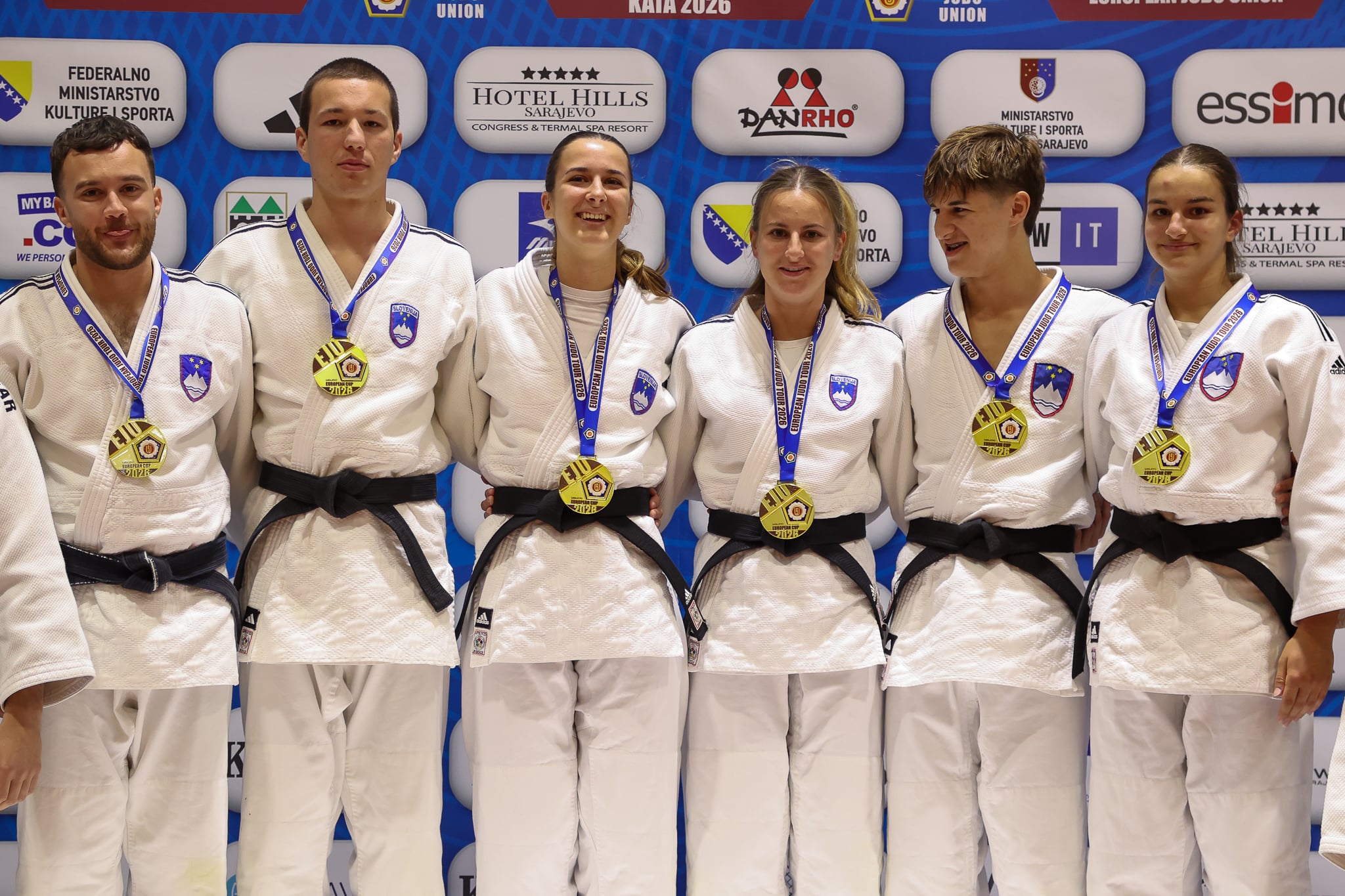
At the end of the competition, it was Slovenia who claimed the European title with a total of 183.0 points. The winning team, made up of Kora Kojc, Keno Kojc, Kara Kojc, Kira Kojc, Tomo Mihaljević and Tito Karanjac Kroflič, impressed with a dynamic and harmonious performance throughout. Croatia secured the silver medal with 159 points, while Bosnia & Herzegovina completed the podium on 132 points.
Coach of the Slovenian team, Robert Kojc, shared his thoughts afterwards:
“ENBU is much more than a competition category, it is a way to show that judo can still evolve, inspire and bring people together through creativity. For many years it was almost forgotten, but now we are seeing a real rebirth. Different nations, different interpretations, different emotions, all connected through the spirit of judo. That is what makes it so powerful.
“What makes me happiest is not only winning the gold medal but seeing younger generations becoming excited about kata again. ENBU allows freedom, expression, music, movement, self-defence, even adapted judo, all living together in one performance. It reminds us that judo is not only about fighting or results but about culture, beauty, education and connection. Judo is much more than a sport, it is something that helps good people grow together.”
Results – Saturday, 16 May
Author: Szandra Szogedi