





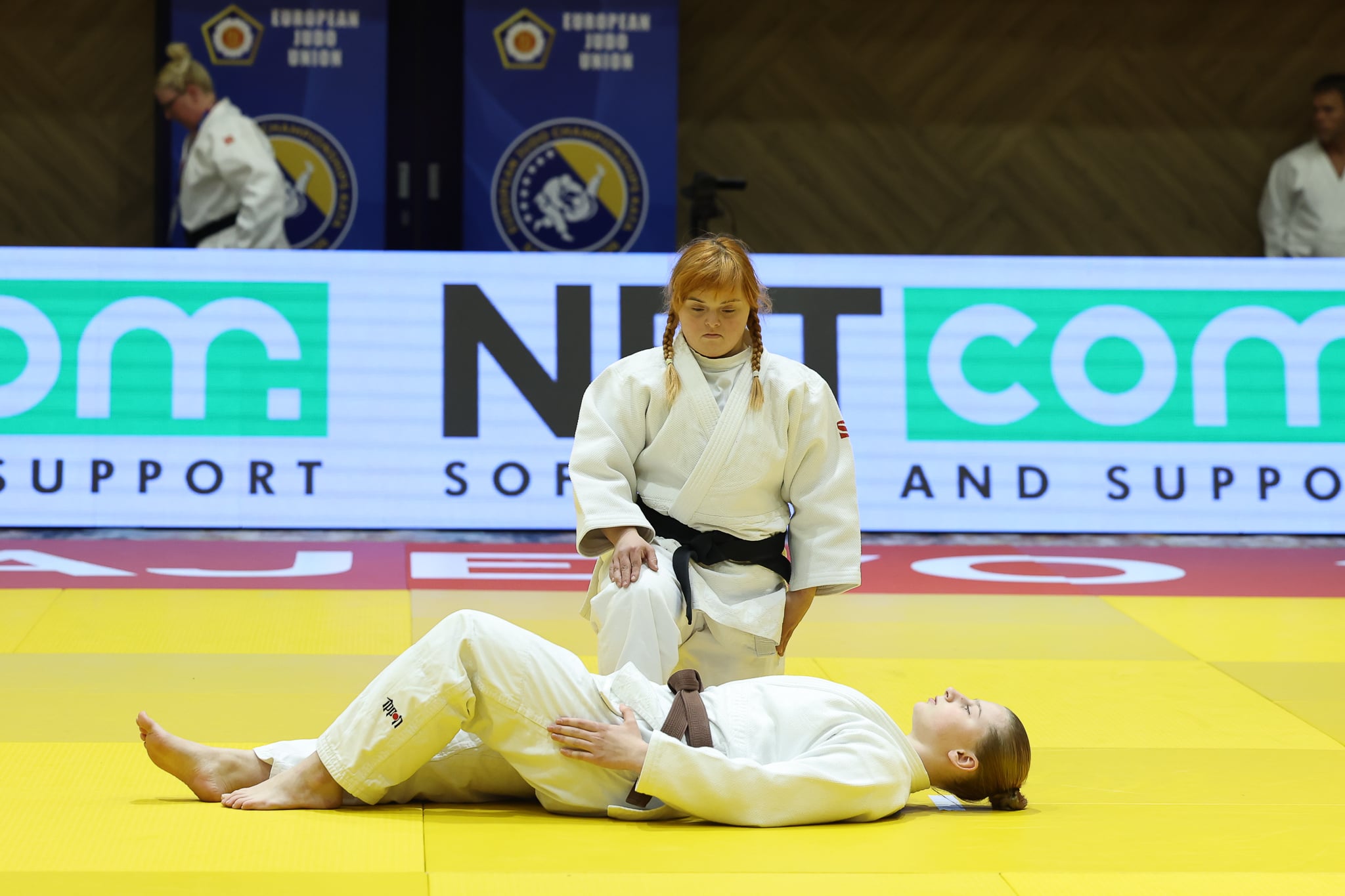
Part of the programme on the second and closing day of the European Judo Championships Kata Sarajevo 2026 was the Adapted Judo segment, where judo truly became sport for all. This is the third time that the Kata Europeans has delivered a fully inclusive programme. Emotions were understandably high as spectators witnessed the pure joy, courage and unity displayed on the tatami, reminding everyone present of the values that matter most in life.

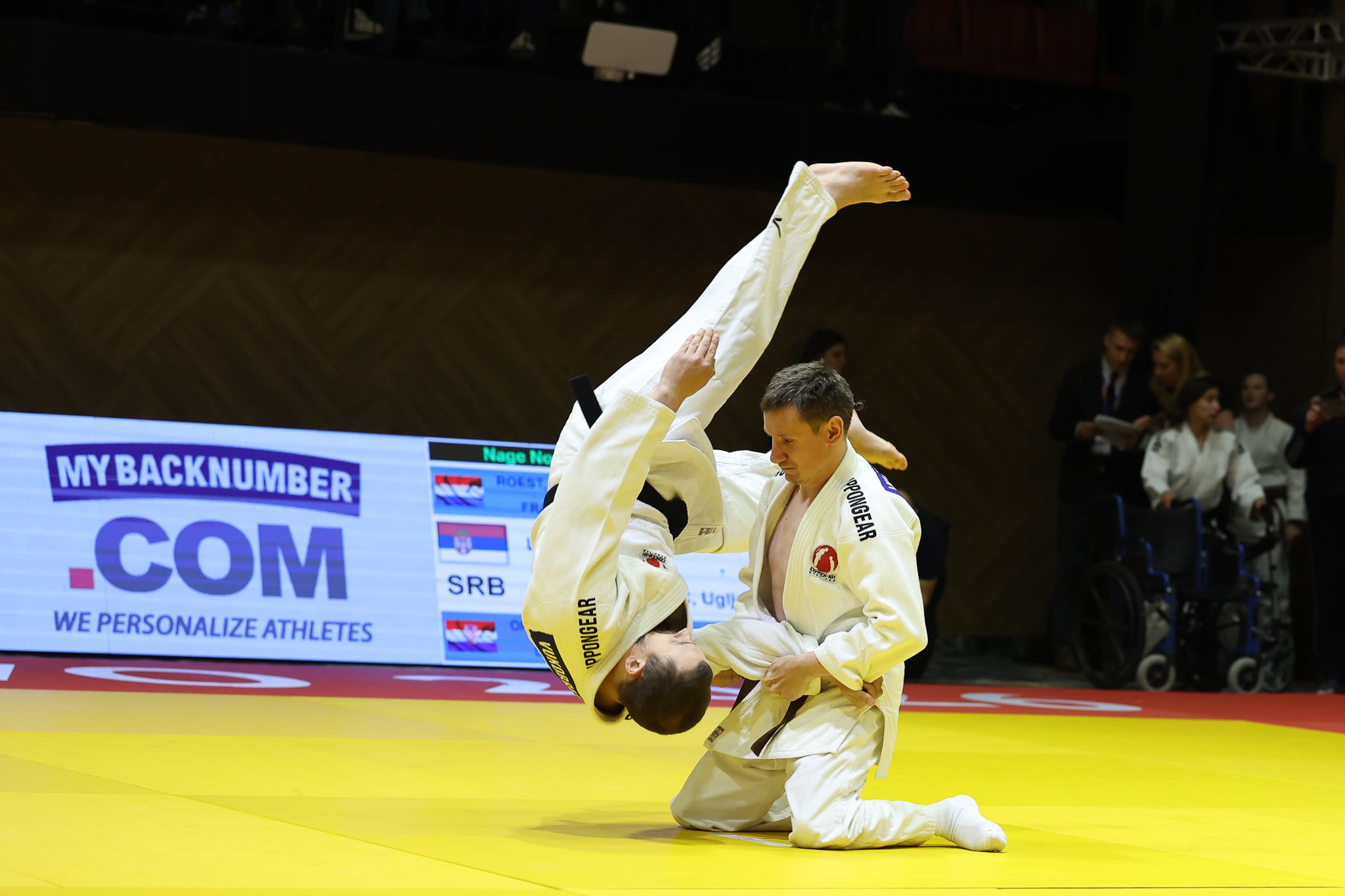
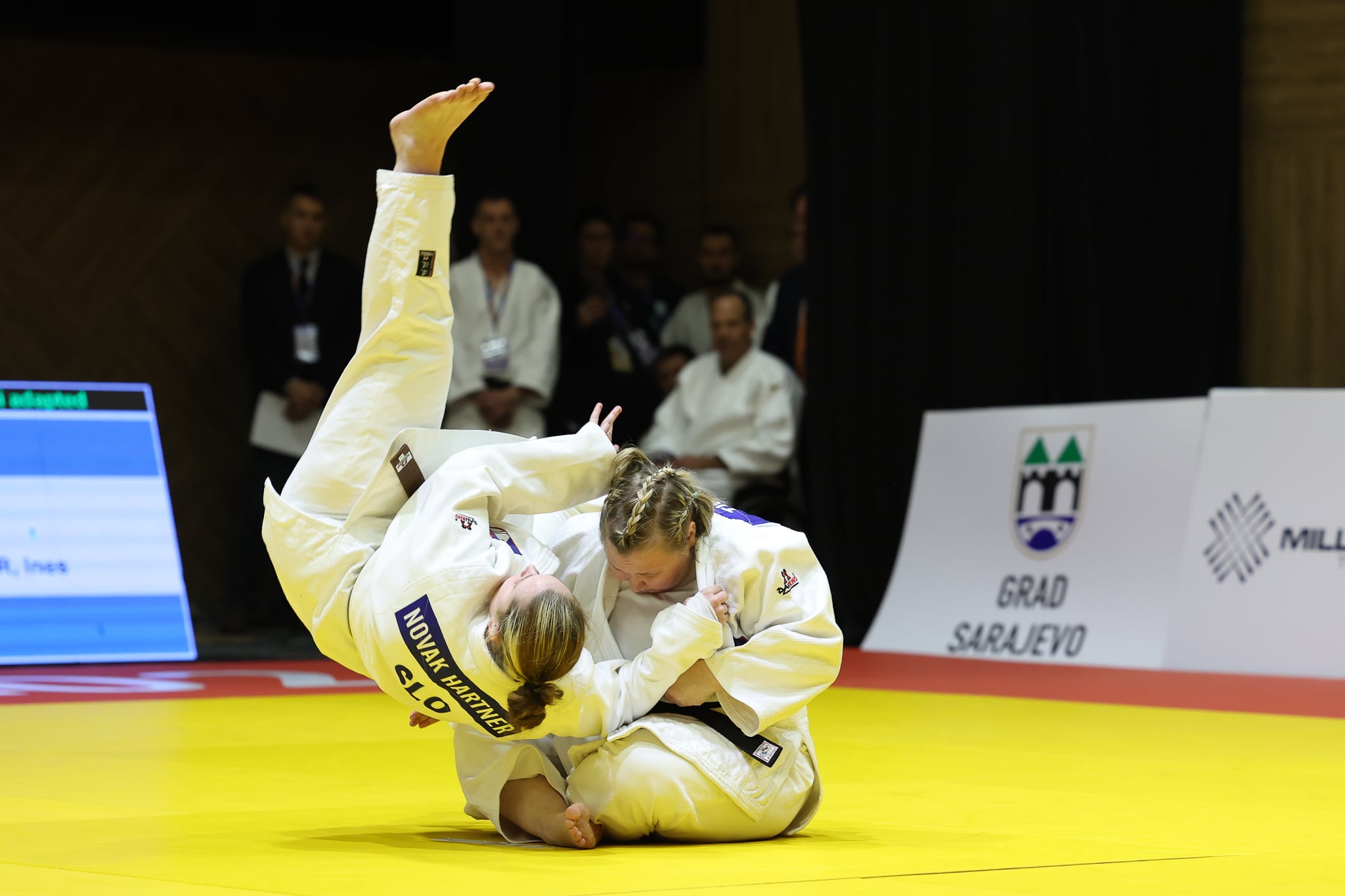
A total of 36 judoka from eight countries took part in the Adapted Judo programme, with 18 pairs competing across the official categories, while one additional pair performed in the demonstration event of Kodokan Goshin Jutsu. Adding to the significance of the occasion, the host nation medalled for the very first time at the Kata European Championships.
There were six categories contested for podium places, alongside the one demonstration category: Kodokan Goshin Jutsu.
The competitive categories were divided as follows:
- Category 1A: Tori is an adapted judoka, Uke is an adapted judoka
- Category 1B – Tachi-shisei: Tori is an adapted judoka, Uke is a mainstream judoka
- Category 1B – Ne-shisei: Tori is an adapted judoka, Uke is a mainstream judoka
For those unfamiliar with the discipline, Adapted Nage-no-Kata is a version of Kodokan Nage-no-Kata in which one or more techniques are modified to accommodate the functional abilities of a judoka with a disability, while still preserving the fundamental principles and structure of the kata.
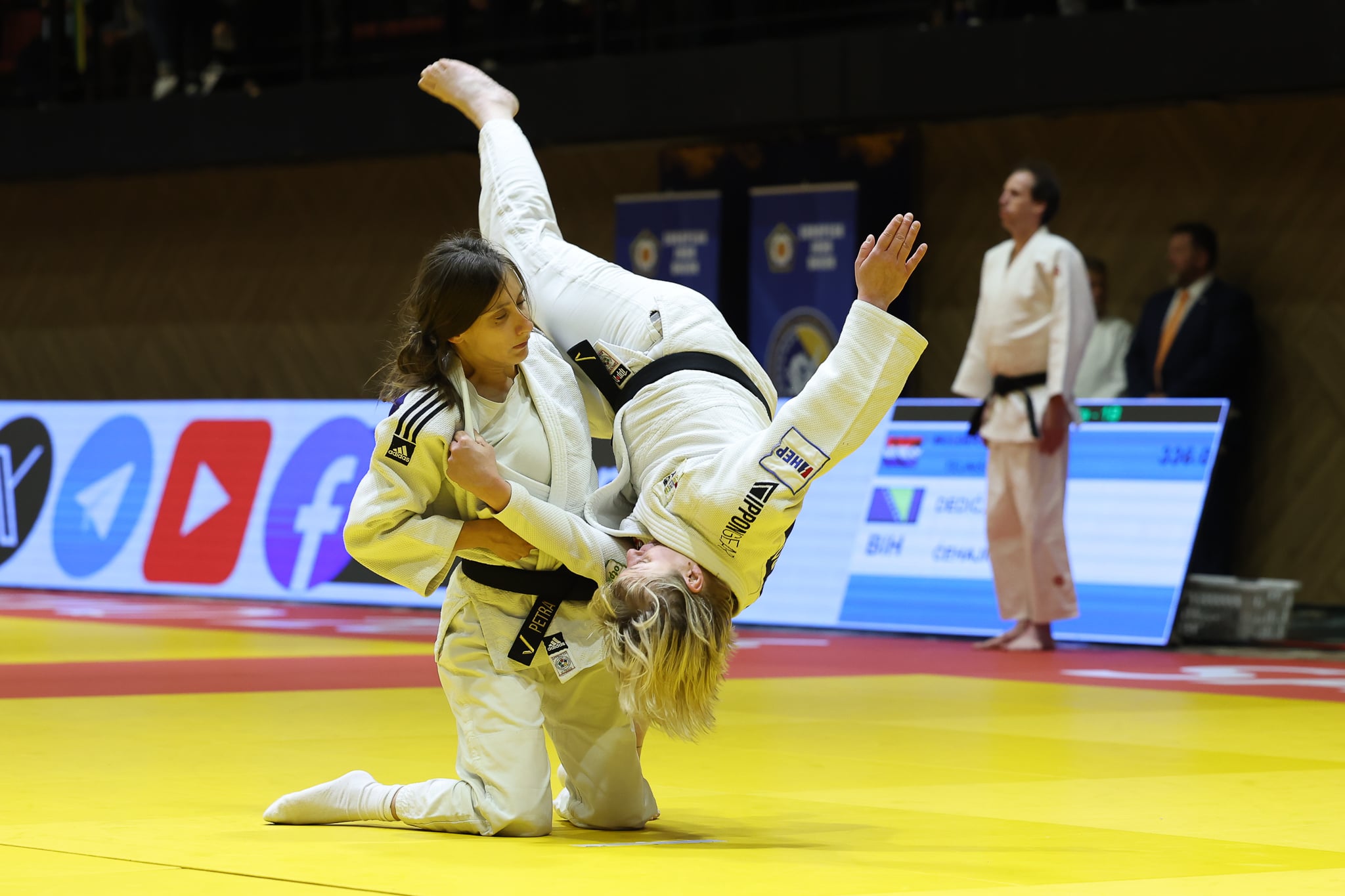
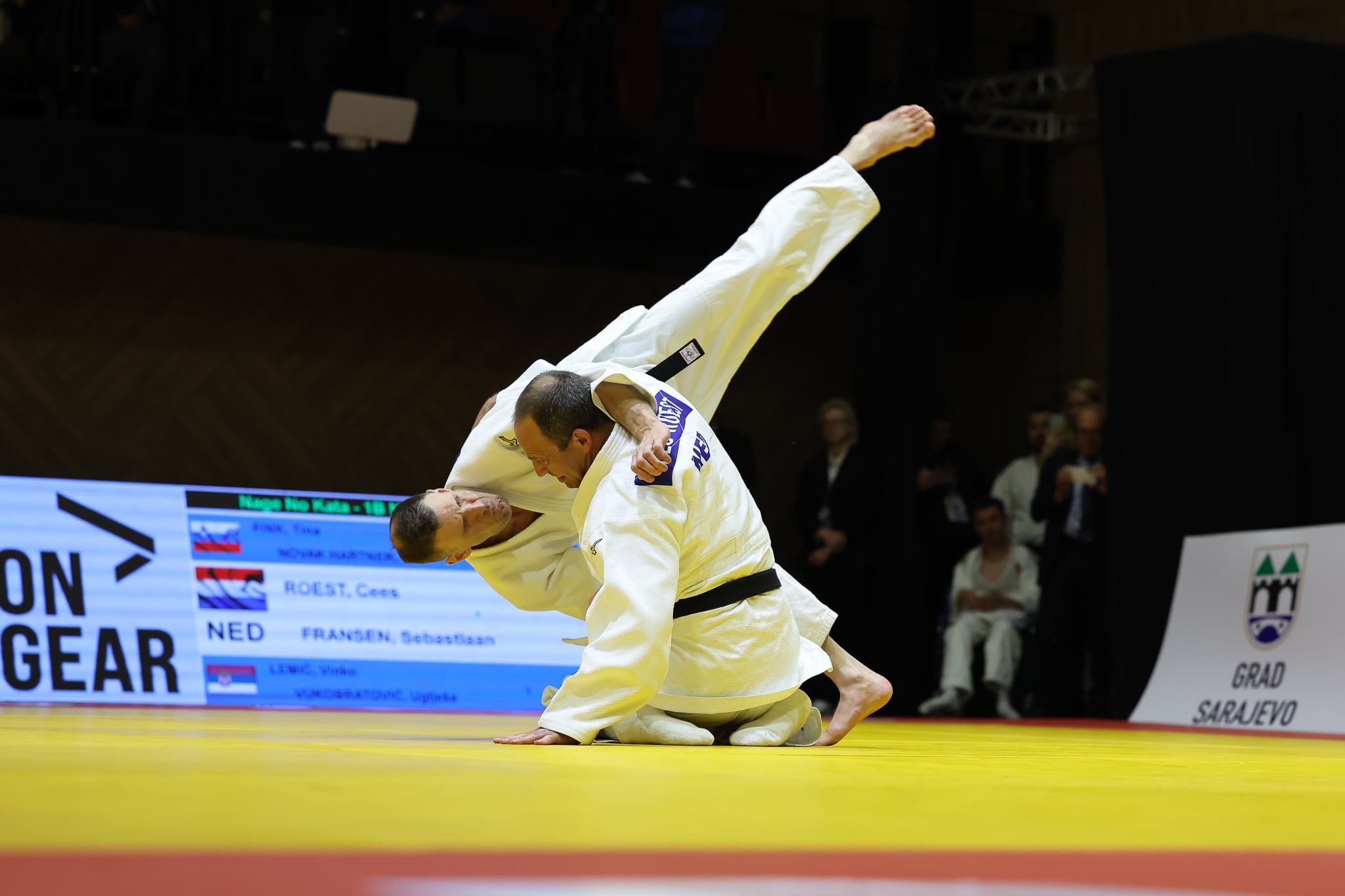
The kata may be performed predominantly from a standing position (Tachi-shisei), with necessary adaptations for athletes with conditions such as Down syndrome, limb deficiencies or similar impairments. It may also be performed predominantly from a seated or kneeling position (Ne-shisei) due to the athlete’s functional limitations, including wheelchair users or athletes with cerebral palsy.
Any adjustments to posture, gripping, movement or technique execution are carefully designed to ensure safety while maintaining the spirit and technical essence of Kodokan Nage-no-Kata. The same applies to any other kata performed within the Adapted Judo Programme.
With all that information in mind, lets see who are our newly crowned Adapted Judo Kata European Champions.
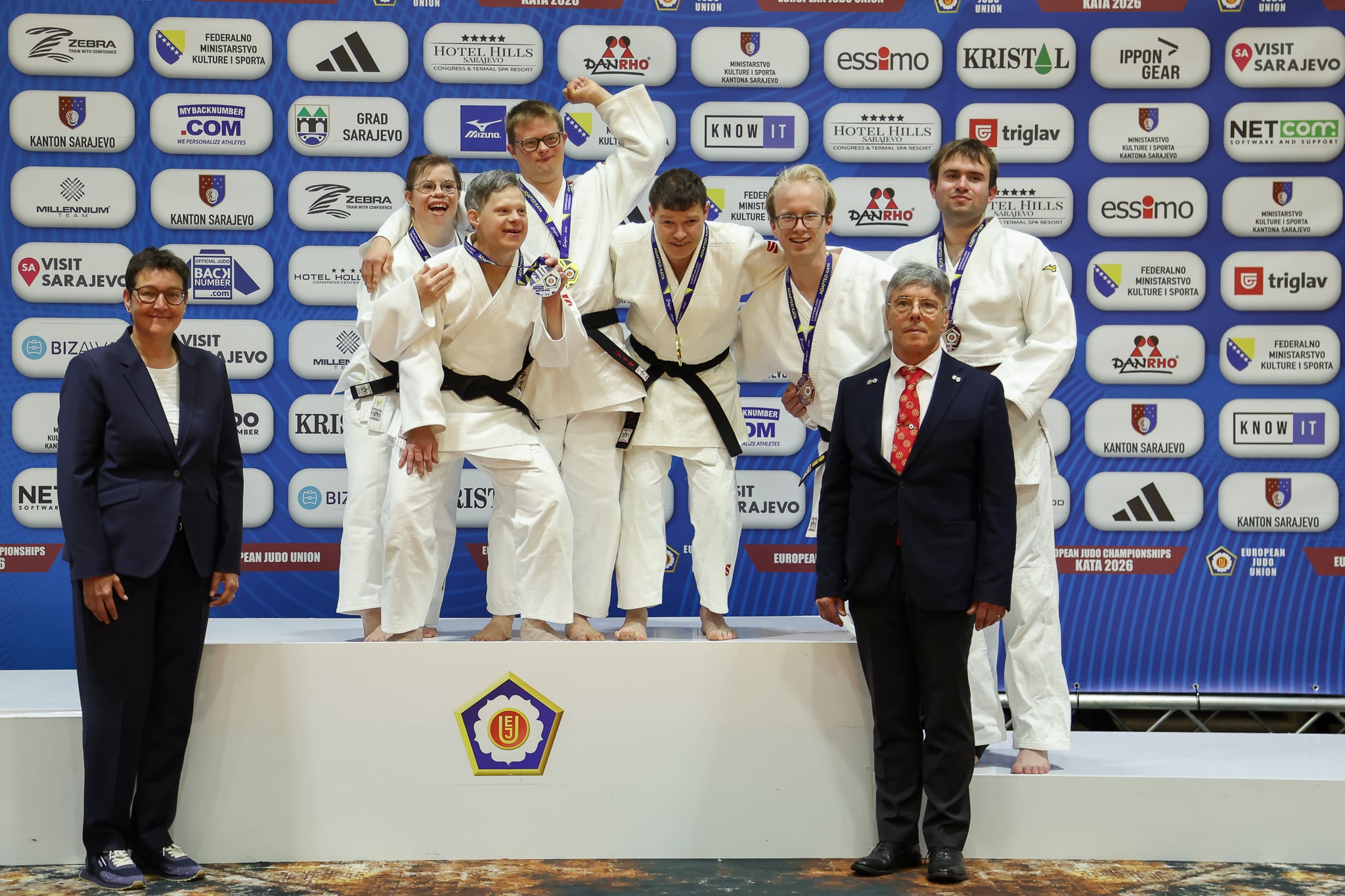
Nage-no-Kata 1A
This category was dominated by the Dutch athletes and the podium reflected exactly that. Timo Hup and Robin Gerritsen secured the gold medal with an impressive total of 260 points, while the duo of Sanne Simons and Thomas Schepen claimed silver on 256 points. Completing an all-Dutch podium were Tom Desantis and Fabian Smit, who finished in third place with 242 points.
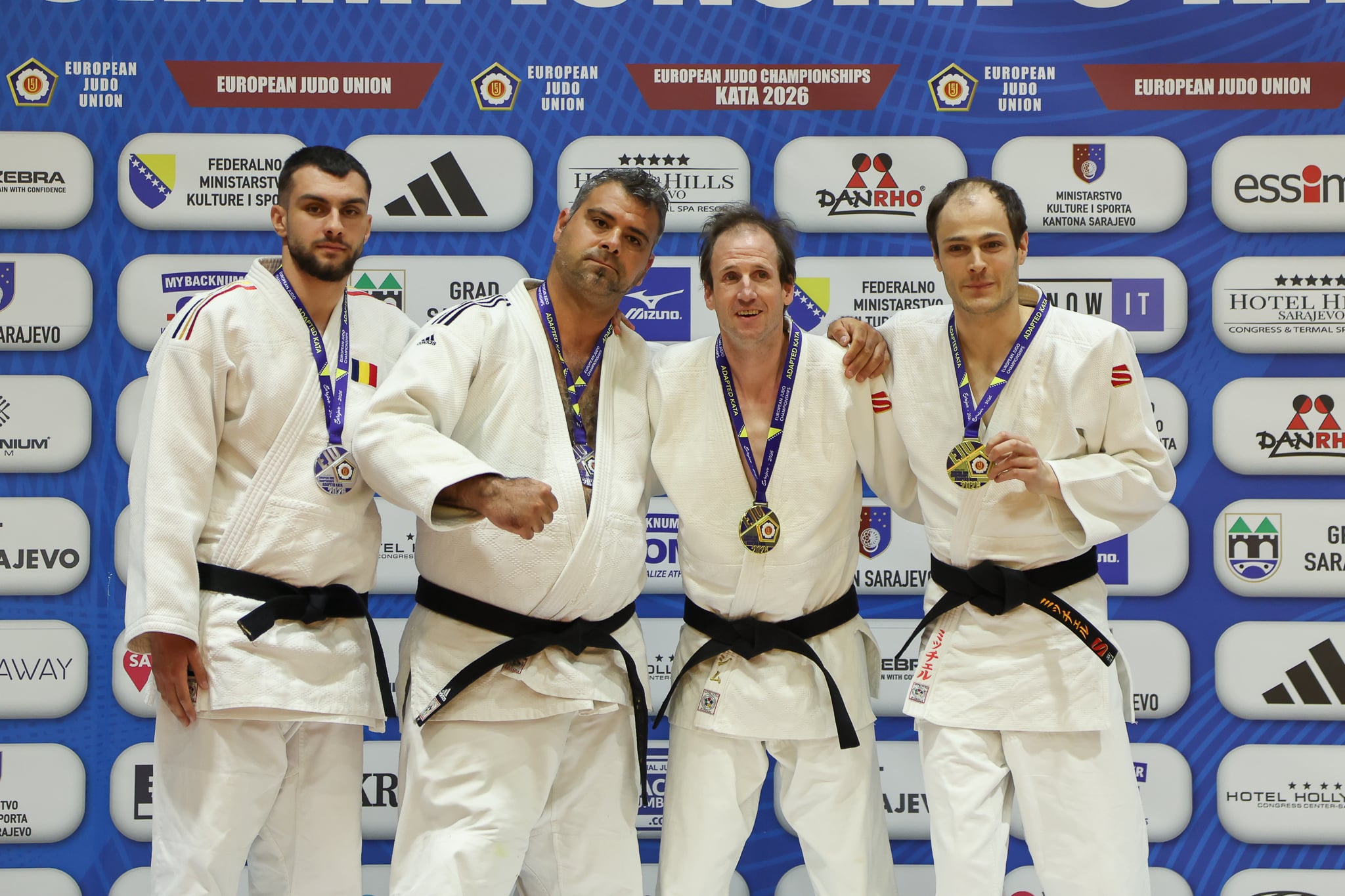
Nage-no-Kata 1B
The Netherlands continued their dominance in this division as Jim Van Den Broek and Mitchell Schoonhoven powered their way to gold with 229 points. Silver was claimed by the Romanian pairing of Madalin Constantin and Fabian Ristea, who finished strongly on 220 points.
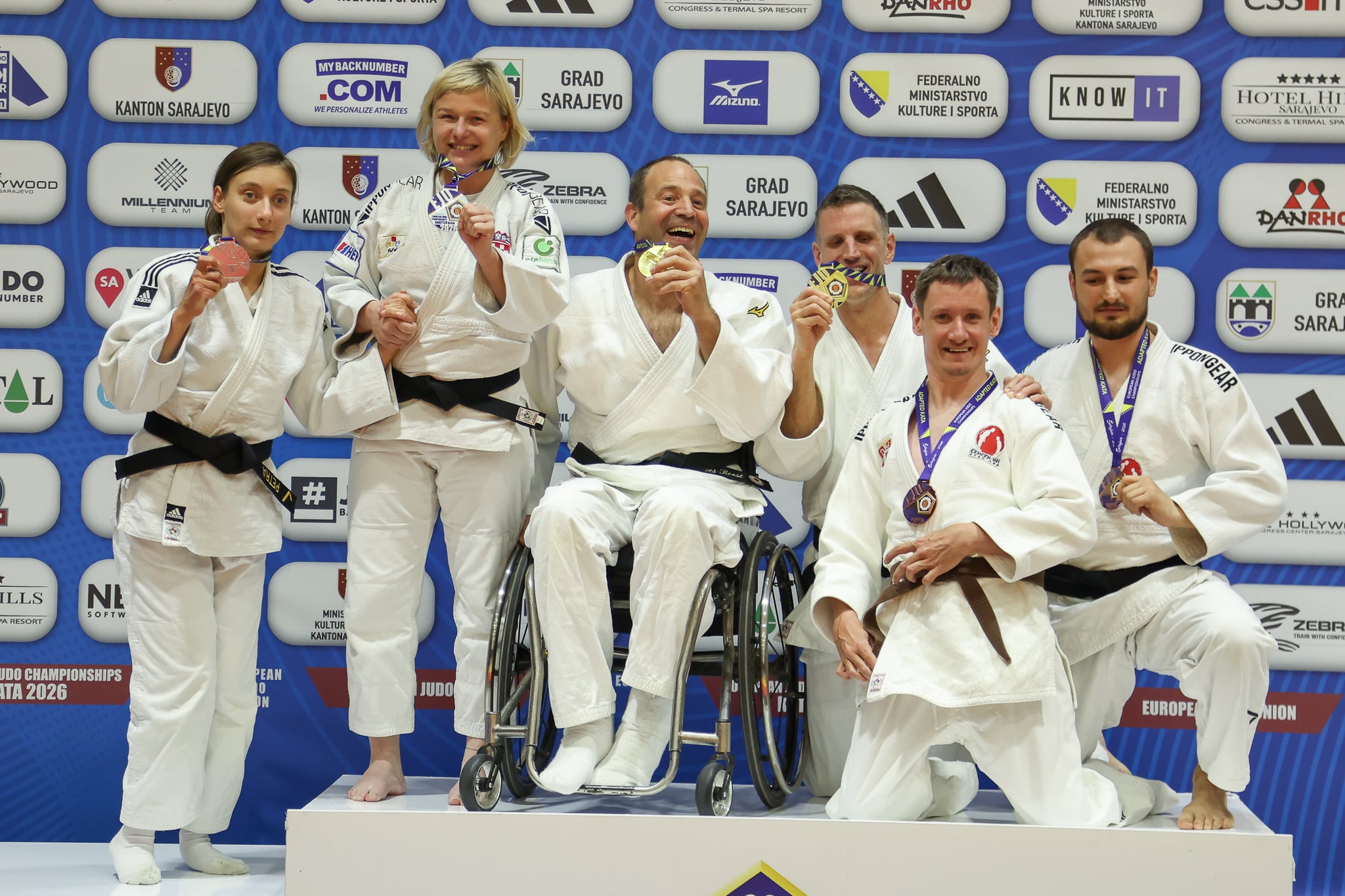
Adapted Nage-no-Kata 1B Ne-Shisei
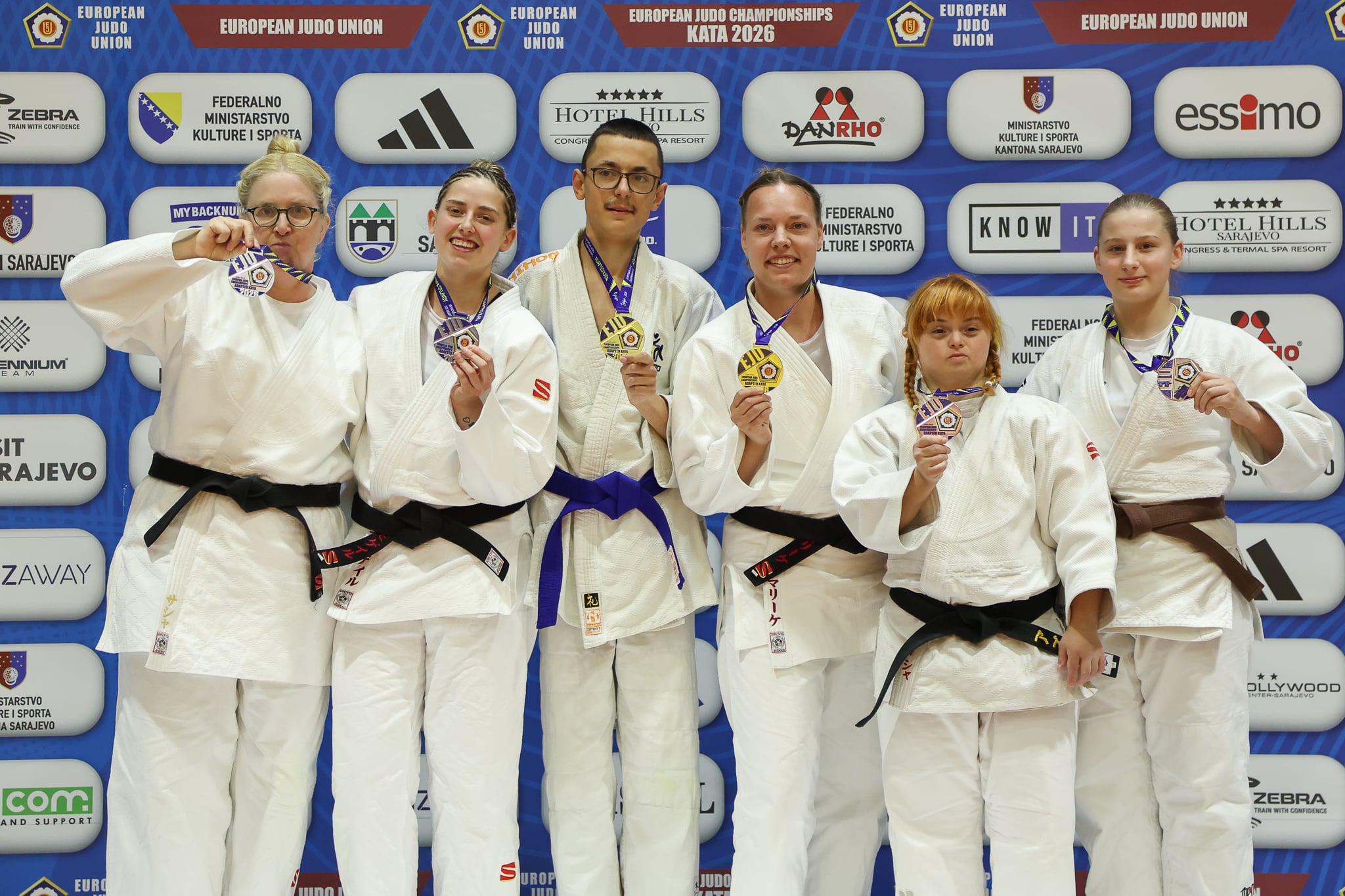
Another category, another Dutch victory. Cees Roest and Sebastiaan Fransen continued the Netherlands’ remarkable run by taking gold with a commanding 260 points. Silver was secured by Croatian pair Petra Orešković and Sanja Delladio on 254 points, while the bronze medal went to Vinko Lemić and Uglješa Vukobratović with 244 points.
The bronze-medal finish carried particularly deep emotion for the Serbian duo, who had narrowly missed out on the podium in previous editions. This time, their continued effort was finally rewarded.
Following the medal ceremony, the coach of the Serbian team, Sayonela Nela, shared an emotional reflection on the journey behind the result:
“Our third European Championship carries special weight and emotion for us. We started practising Nage-no-Kata without a major strategy or long-term plan. We simply saw an opportunity for Vinko to show his abilities and, through kata, gain space to grow, improve and believe in himself.
“Vinko lives with cerebral palsy but beyond that diagnosis, he was also born with a digestive tract condition which resulted in 37 stomach surgeries. When he started judo in 2018, medical expectations were full of limitations. Yet from the very beginning, he showed something that cannot be taught: incredible perseverance.
“Since 2018, he has missed perhaps only five training sessions. He is the most regular member of our club and a true example of discipline.
“At our first European Championships, we realised how much we still had to learn. After the second edition, we felt the Adapted Nage-no-Kata divisions were not entirely fair but we did not give up. Instead, we worked even harder. We invested enormous time and effort into improving both Tori and Uke techniques, wrote projects so we could attend advanced training in Slovenia, trained daily, studied literature and analysed videos.
“The decision to divide Adapted Nage-no-Kata into Ne-shisei and Tachi-shisei gave us even more motivation to continue forward.
“That is why today’s medal is an indescribable feeling for us. We are proud of every moment of work, effort and struggle invested through the years. This medal is much more than an award. It represents perseverance, belief in possibilities and refusing to accept limitations as obstacles. It proves that hard work and persistence always pay off.”
Katame-no-Kata 1B
The Netherlands continued their dominant run in this division, this time through the impressive performance of Nick Bisschop and Marieke Hessels, who claimed gold with a total of 362 points. Silver also went to the Dutch team, as Sacha Mulder and Abigail Teunissen secured second place on 336 points.
Bronze was celebrated loudly by the home crowd as Bosnia and Herzegovina’s Azra Dedić and Ella Čehajić stepped onto the podium with 137 points, marking a historic moment both for the hosts and for the nation’s judo history books.
Speaking to the local heroes after their historic achievement, the emotions were impossible to hide.
“This medal means so much to me because it is my first European medal,” explained Azra Dedić. “It carries huge significance and so much happiness, especially winning it here at home.”
Her partner, Ella Čehajić, was equally emotional about the achievement and proud to have shared the journey together. “I’m really happy that I could do this with Azra. It feels amazing that I could help her win this medal and support her as her uke today.”
The duo have only been working together for around a year but their connection both on and off the tatami quickly became evident. Their partnership began through friendship and a shared desire to make something special happen for Bosnia and Herzegovina.
“She wanted to compete and I really wanted to help her because she is my good friend,” Čehajić explained. “So I offered to become her partner.”
Making history by winning Bosnia and Herzegovina’s first medal in Adapted Kata at the European Championships only added to the emotional weight of the moment. “It feels incredible. There are so many emotions right now. I’m very happy that we made history” shared Dedić.
Adapted Nage-no-Kata 1B Tachi-Shisei
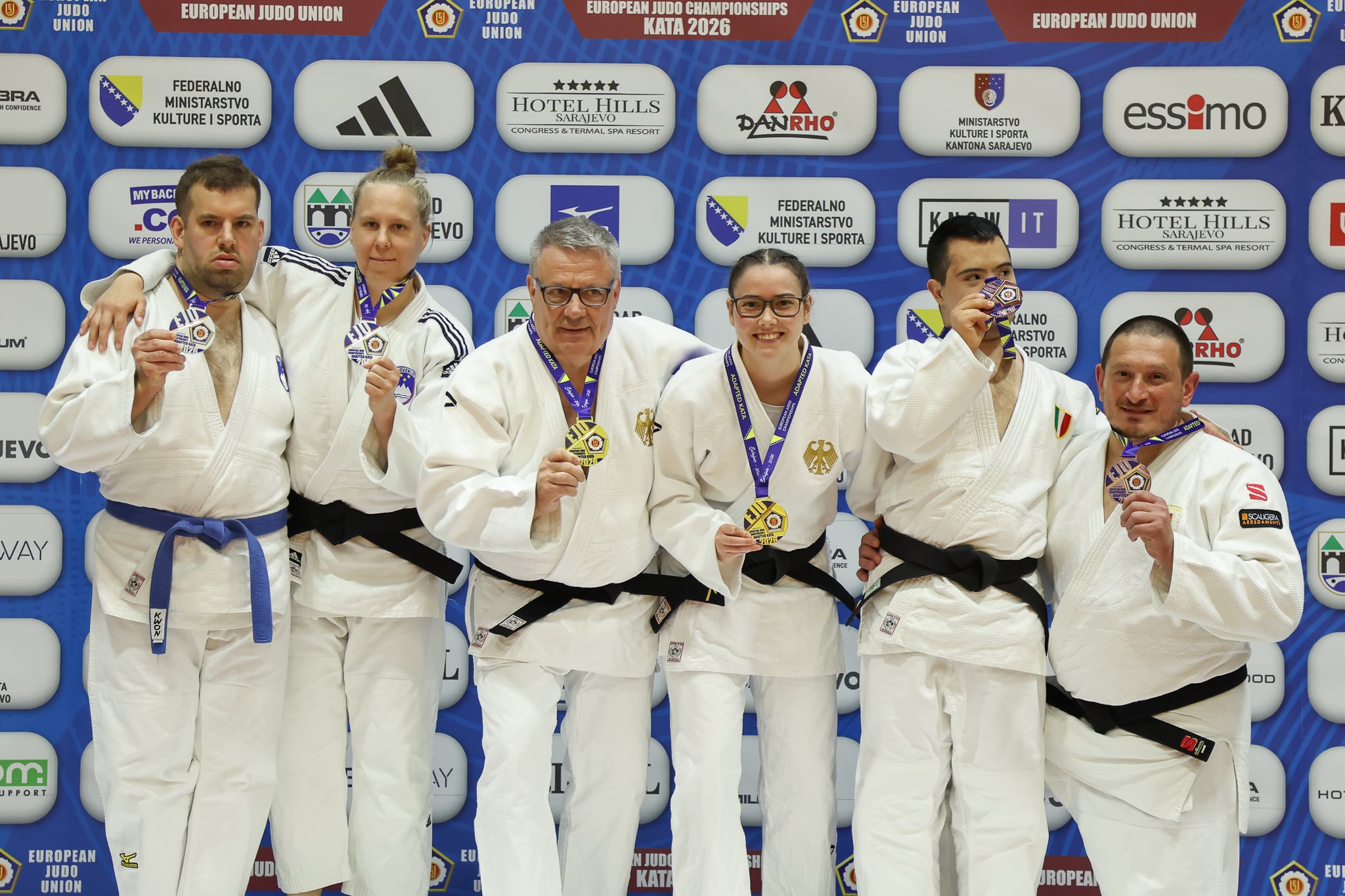
Germany stepped in to break the Dutch dominance in this division, with Uwe Helmich and Natascha Haseler delivering a gold-medal performance worth 253 points. Slovenia’s Aljaž Colarič and Tina Peštotnik secured silver on 231 points, while Italy’s Erik Cheli and Mauro Collini completed the podium with bronze and 229 points.
The German pair were visibly emotional after their victory, especially after months of hard work adapting and refining their techniques within the newly separated category structure.
“We are very happy,” they said afterwards. “We trained a lot for this moment and worked hard to improve every single technique.”
Their ambitions, however, extend beyond the European stage. The pair hope to see Adapted Kata continue growing internationally, with one major dream firmly in mind.
“It would be amazing if Adapted Judo was included at the Kata World Championships,” they explained. “Then we could compete against even more countries and continue pushing the level higher.”
Katame-no-Kata 1A
There was only one entry in this category, meaning the Dutch duo of Damian Schoonhoven and Ethan Bink automatically secured the gold medal. Nevertheless, the pair still delivered a strong and composed performance, finishing with an impressive total of 353 points.
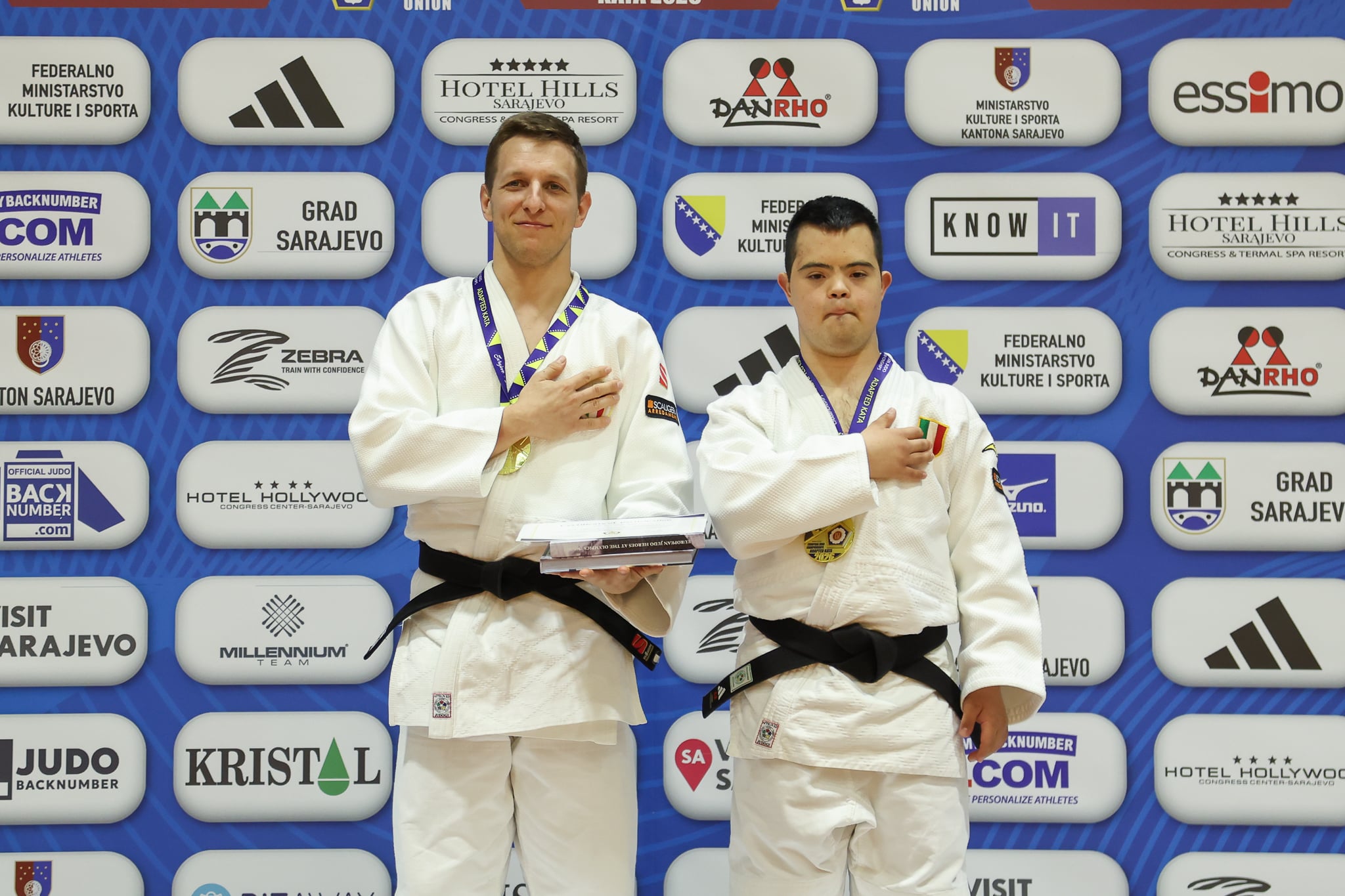
Additionally to all of the above, although performed as a demonstration event, it was nonetheless an outstanding display delivered by the Italian coach-athlete duo of Erik Cheli and Tommaso Rondinini as they demonstrated their adapted Kodokan Goshin Jutsu.
Some victories in Sarajevo could not be measured by scores alone. Over these two days, the Adapted Judo programme reminded everyone inside the arena that judo has the power to change lives, build confidence where doubt once existed and create moments people will carry forever.
Author: Szandra Szogedi