





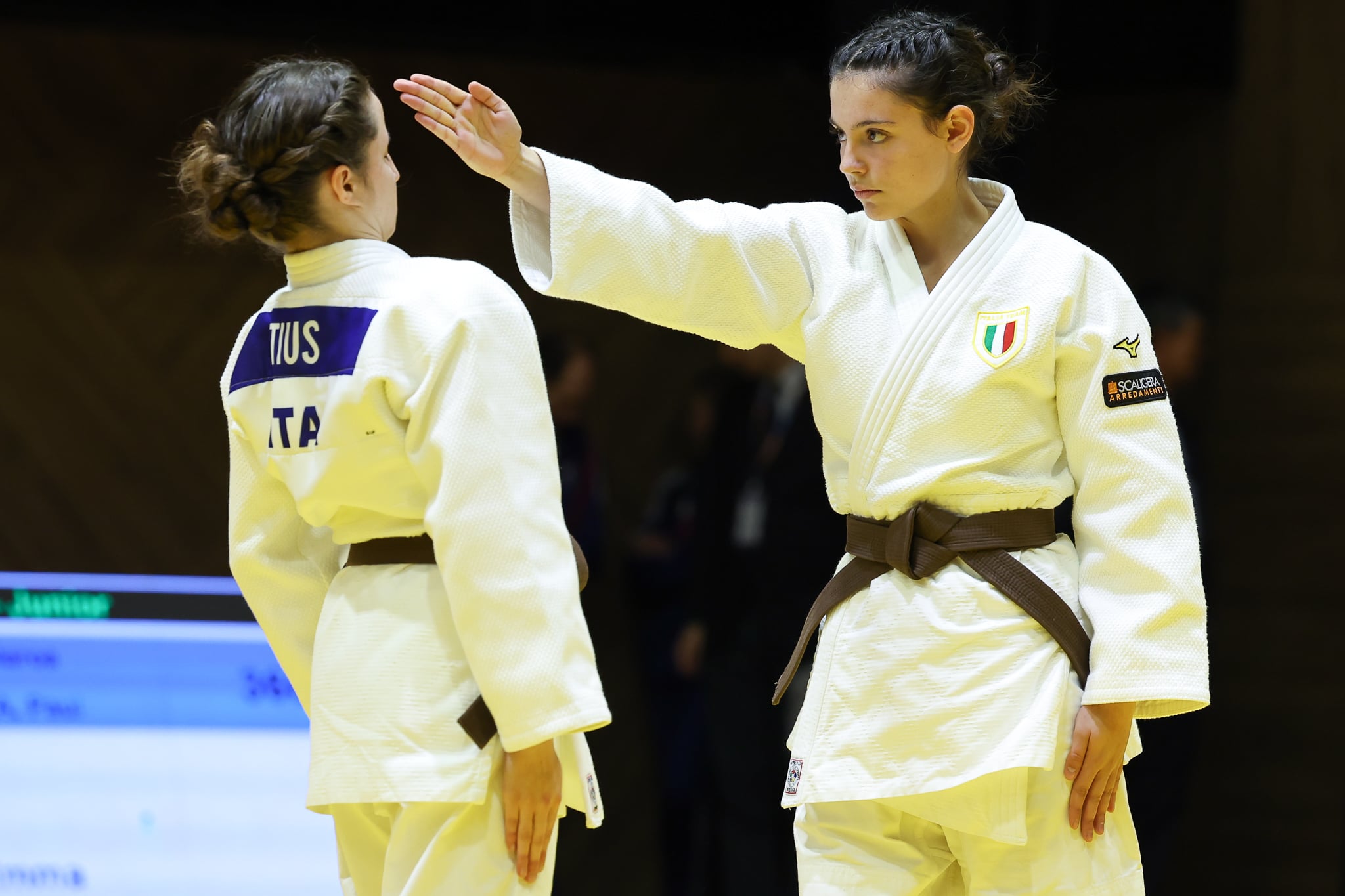
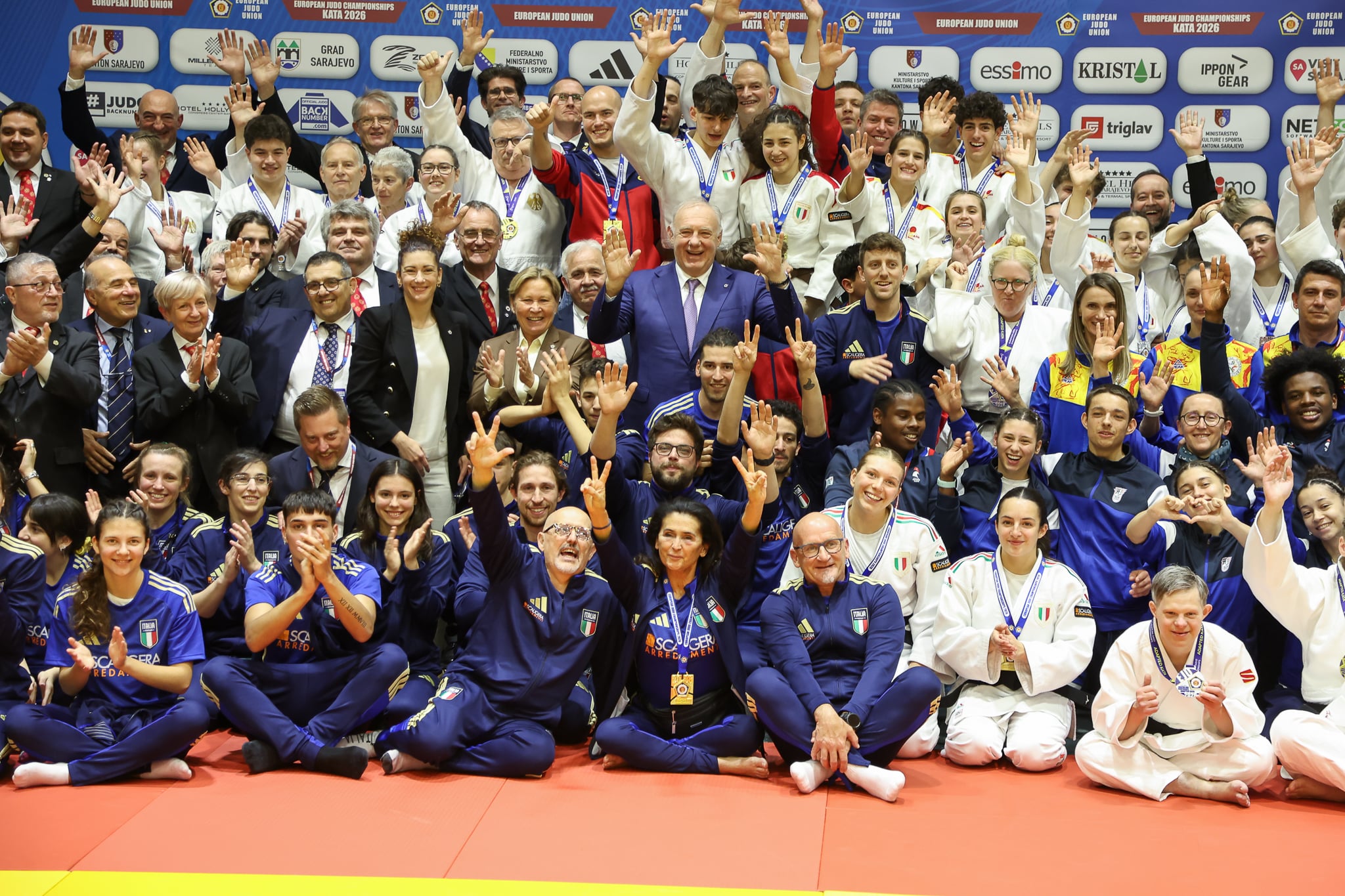
It is safe to say that Italy needed extra luggage for all their medals once the European Judo Championships Kata Sarajevo 2026 concluded, as they comfortably topped the overall medal table with 15 pieces of hardware in total, made up of eight gold, two silver and five bronze medals.

The Netherlands finished in second place with five gold, two silver and four bronze medals, while Germany completed the top three with three gold, three silver and two bronze medals.
All in all, 15 nations walked away with at least one medal apiece.
Besides the Adapted Judo segment of the event, the second day also featured performances in the remaining two senior categories, Itsutsu-no-Kata and Koshiki-no-Kata, alongside the cadet and junior competitions in Nage-no-Kata, Katame-no-Kata and Ju-no-Kata.
Nage-no-Kata Cadet
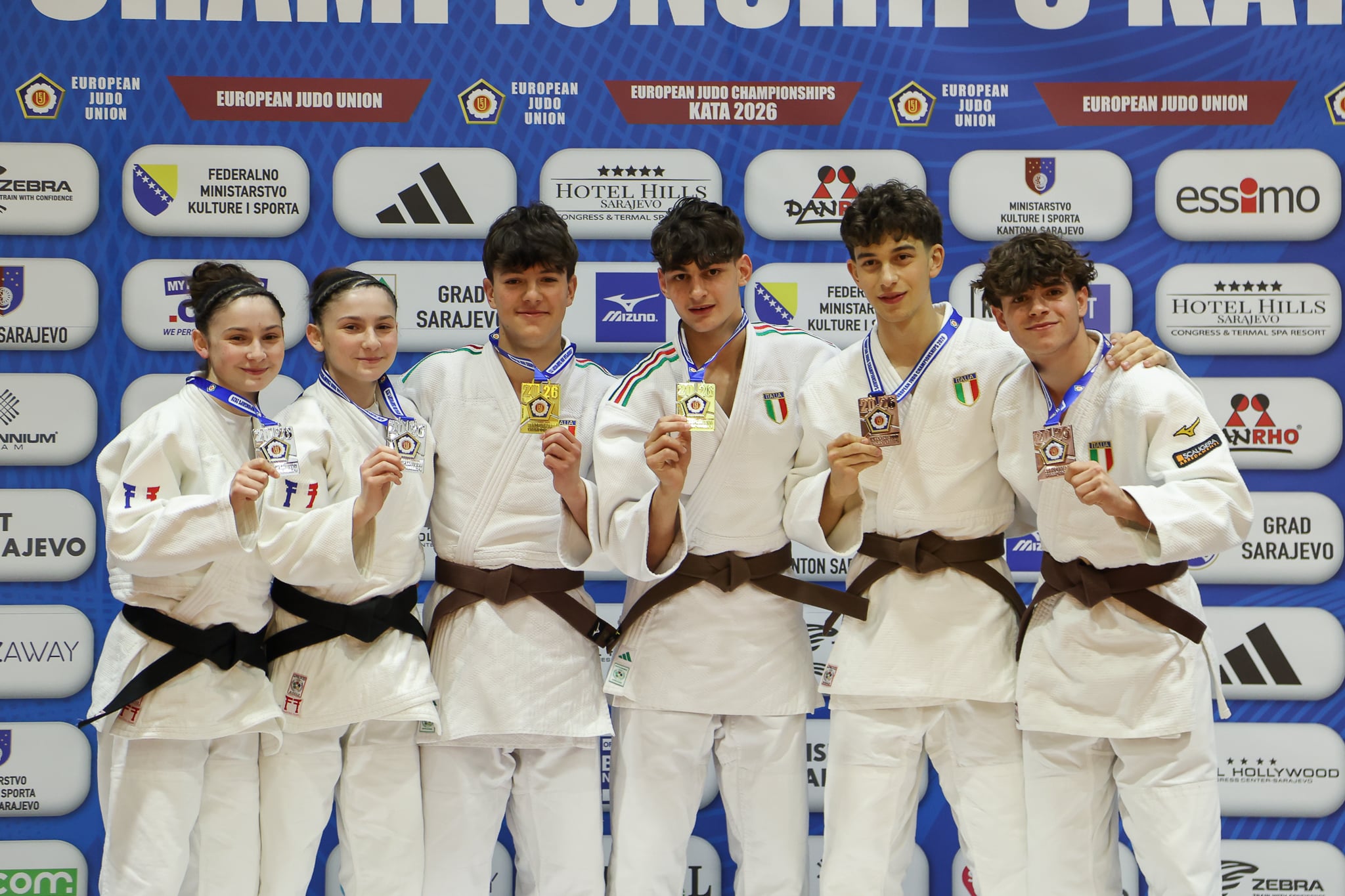
The Nage-no-Kata Cadet category delivered a genuine showdown, dominated largely by the young Italian talents, who secured both gold and bronze while leaving just enough room for the French sisters, Stella and Loane Pellegrino, to squeeze into silver with 247 points.
At the very top of the podium stood Elia Domenichini and Daniele Gabbriellini, who finished on the exact same score as the French pair. In kata, however, when scores are tied, the smallest technical details and the nature of the mistakes become decisive. On this occasion, the duo from Tuscany edged ahead to claim gold, sparking huge celebrations, made even more special by sharing the podium with their teammates and fellow city representatives, Francesco Cosentino and Andrea Giannettoni, who earned bronze with 245 points.
The emotions continued long after the medal ceremony as all four Italians reflected on their achievement together.
“We feel really good because last year we finished second and this year we did even better,” explained the gold medallists. “It’s always important to improve from one year to the next.”
Asked what they focused on most since last season, the pair highlighted the second group of techniques.
“That was the weakest part for us last year,” they admitted.
For the bronze medallists, the podium represented an even bigger emotional leap.
“We feel very good because last year we went out in the preliminary stage and now we have a bronze medal,” they said with huge smiles. “For us, this feels almost like gold because it’s such a big jump from last year.”
Katame-no-Kata Cadet
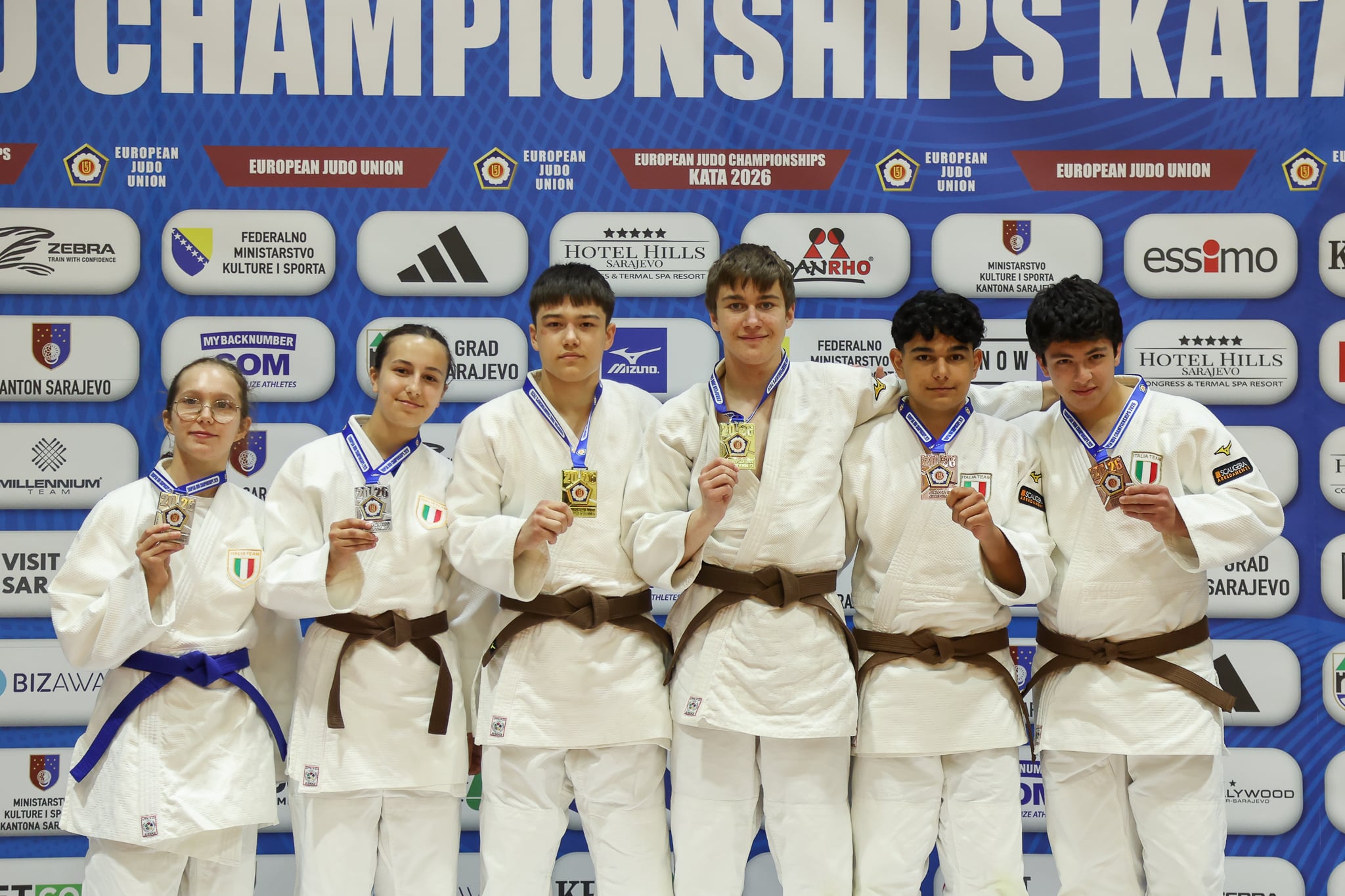
Daniil Timoshenko and Aleksei Antonov of Russia brought Italy’s winning streak to a halt in spectacular fashion, taking gold with a total of 364.5 points after an exceptionally sharp and composed performance.
The margins at the top could hardly have been tighter. Italy’s Irene Laurini and Eva Carbini Diotallevi pushed the winners all the way and finished just behind on 363 points to secure silver, while fellow Italians Ryan Leonardo Anzalone and Enrico Bertrand completed the podium with bronze on 362 points.
Behind the Russian victory, however, was a story few inside the arena would have imagined just weeks earlier.
“We still can’t believe it,” the new European champions admitted afterwards. “It feels like a dream but now we realise it’s real.”
Their road to gold was far from straightforward. Antonov had originally been preparing with another partner before injury suddenly forced a complete change of plans only weeks before the competition.
“He was training with someone else before but then the partner got injured,” they explained. “So we only prepared together for around three weeks.”
Despite the extremely limited preparation time, the pair somehow found immediate chemistry on the tatami, turning pressure into freedom and uncertainty into gold.
“We trained for many hours in those three weeks,” they said. “We just continued working and didn’t give up.”
That resilience became the defining theme of their victory. When asked what comes next after becoming European champions, the answer was immediate:
“Keep preparing, keep trying our best and never give up.”
The triumph also carried extra significance for the Russian duo, who were proud to show another side of their nation’s judo identity beyond the traditional success seen in shiai.
“Russia can do more,” they smiled. “And we can do even better.”
Ju-no-Kata Cadet
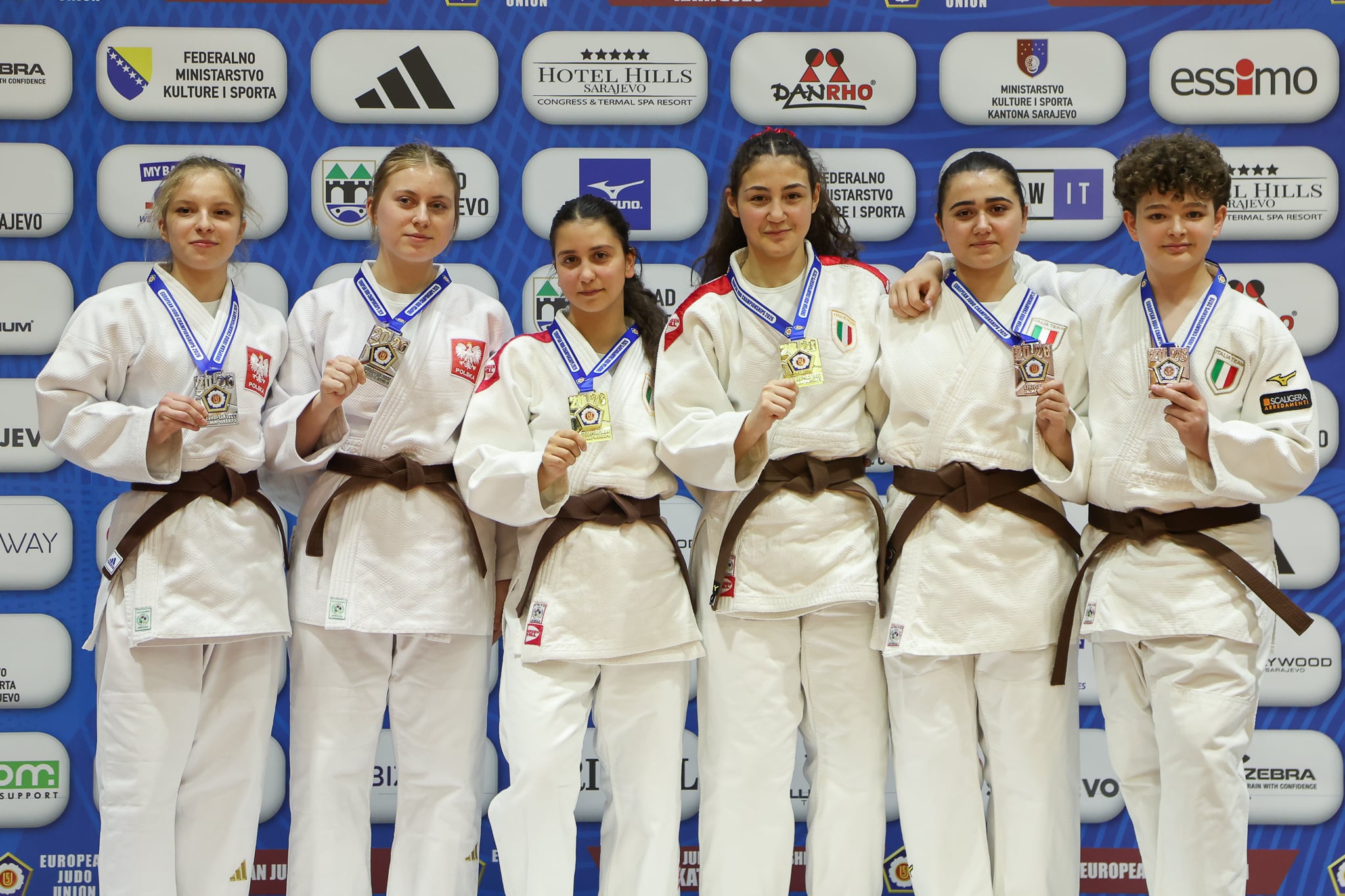
Italy added yet another gold medal, and another podium finish, to their remarkable tally in the Ju-no-Kata Cadet category. Martina Padalino and Ania De Palma delivered a graceful and commanding performance to take gold with 380.5 points.
Poland’s Anna Zwajkowska and Alicja Zenni followed closely behind to secure silver on 371 points, while Italy returned to the podium once again through Michelangelo Lolli and Alessia Italia, who claimed bronze with 369 points.
Nage-no-Kata Junior
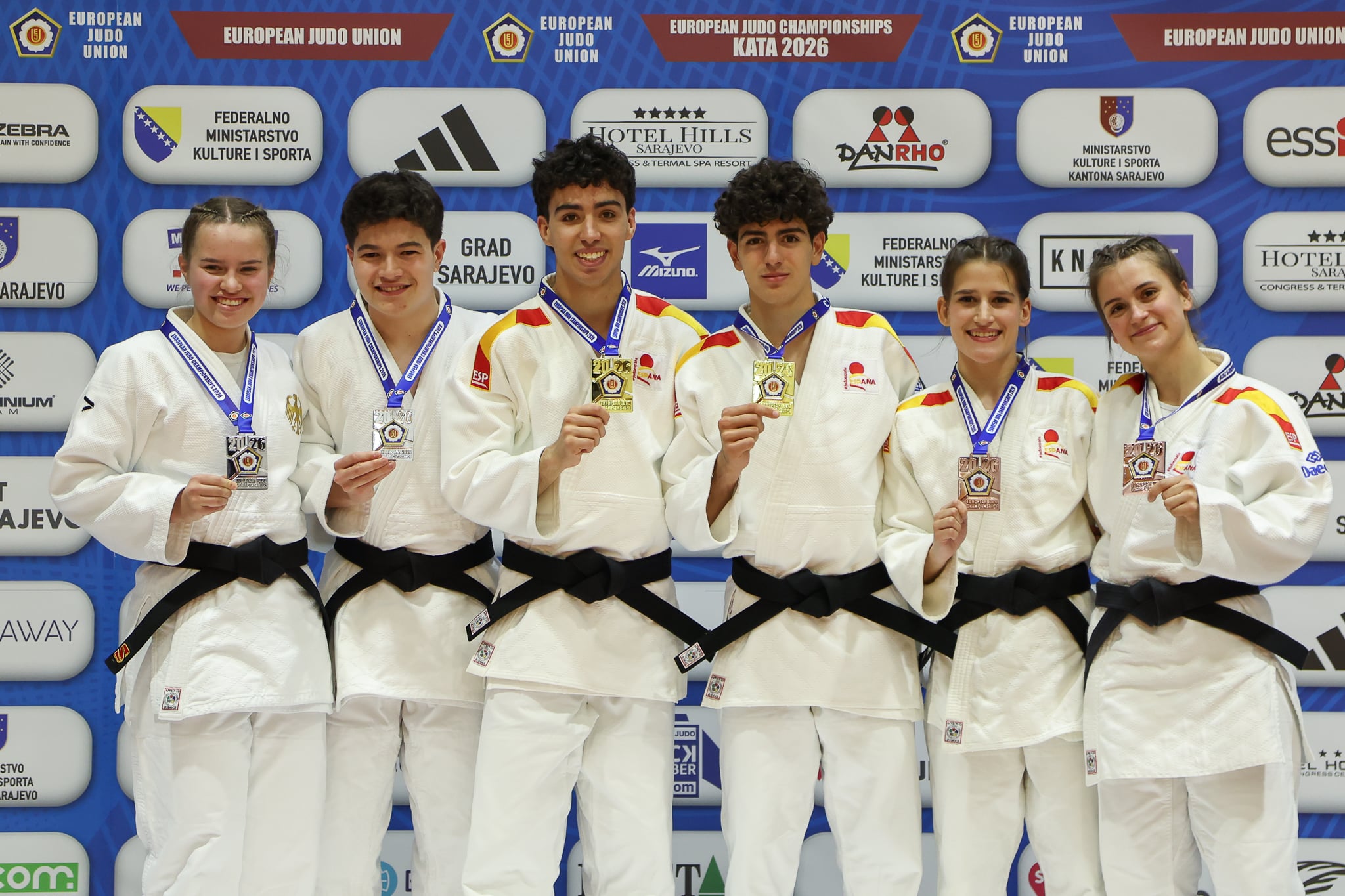
When attention turned to the junior division, Spain took complete control of the category. Diego Hurtado Martin and Javier Miguélez de Salas delivered a superb performance to secure gold with a total of 378.5 points.
Seven points behind them, Germany’s Jette Buchholz and Laurenz Degener claimed silver after a strong showing throughout the competition, while Spain returned to the podium once again through Eva Manzano Cisneros and Andrea Limón Tamargo, who secured bronze with 368 points.
Katame-no-Kata Junior
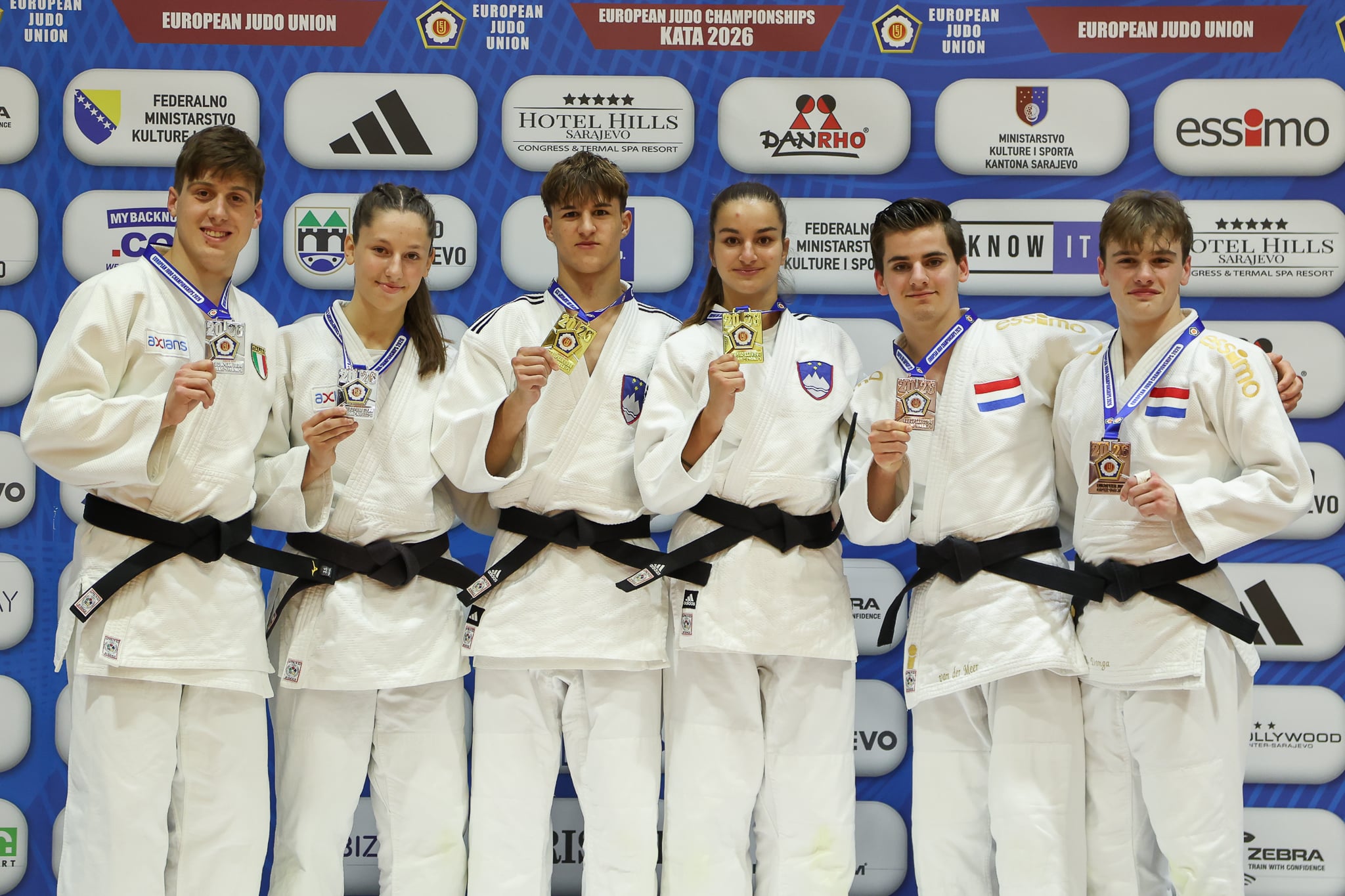
Slovenia stole the spotlight in this division as Kara and Keno Kojc delivered an outstanding performance to claim gold with an impressive 387.5 points.
Silver went to Italy through Giada Casetta and Francesco Piva, who finished on 365.5 points, while the Netherlands completed the podium as Tristan Donga and Stan van der Meer secured bronze with the exact same score.
Ju-no-Kata Junior
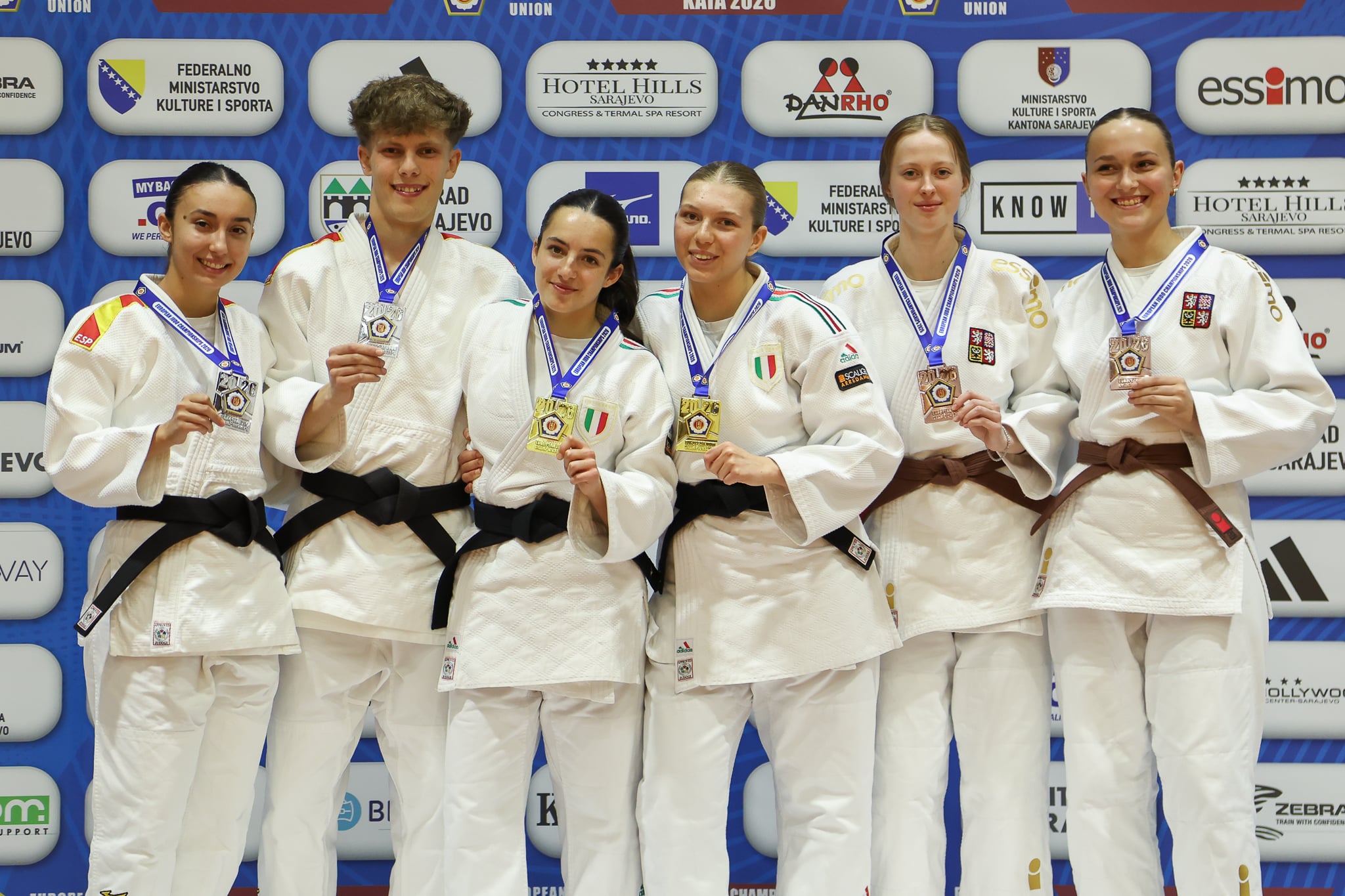
Italy added another golden moment to their unforgettable championships through Giulia Bezzi and Sara Orlando, who secured top spot with 380 points after a beautifully executed performance.
The margins could hardly have been tighter. Spain’s Alvaro Sanchez Resino and Sara Fernandez Martinez followed just one point behind to claim silver with 379 points, while another single-point gap decided bronze, as Czech duo Barbora Selesovska and Brigita Biolkova completed the podium on 378 points.
Itsutsu-no-Kata
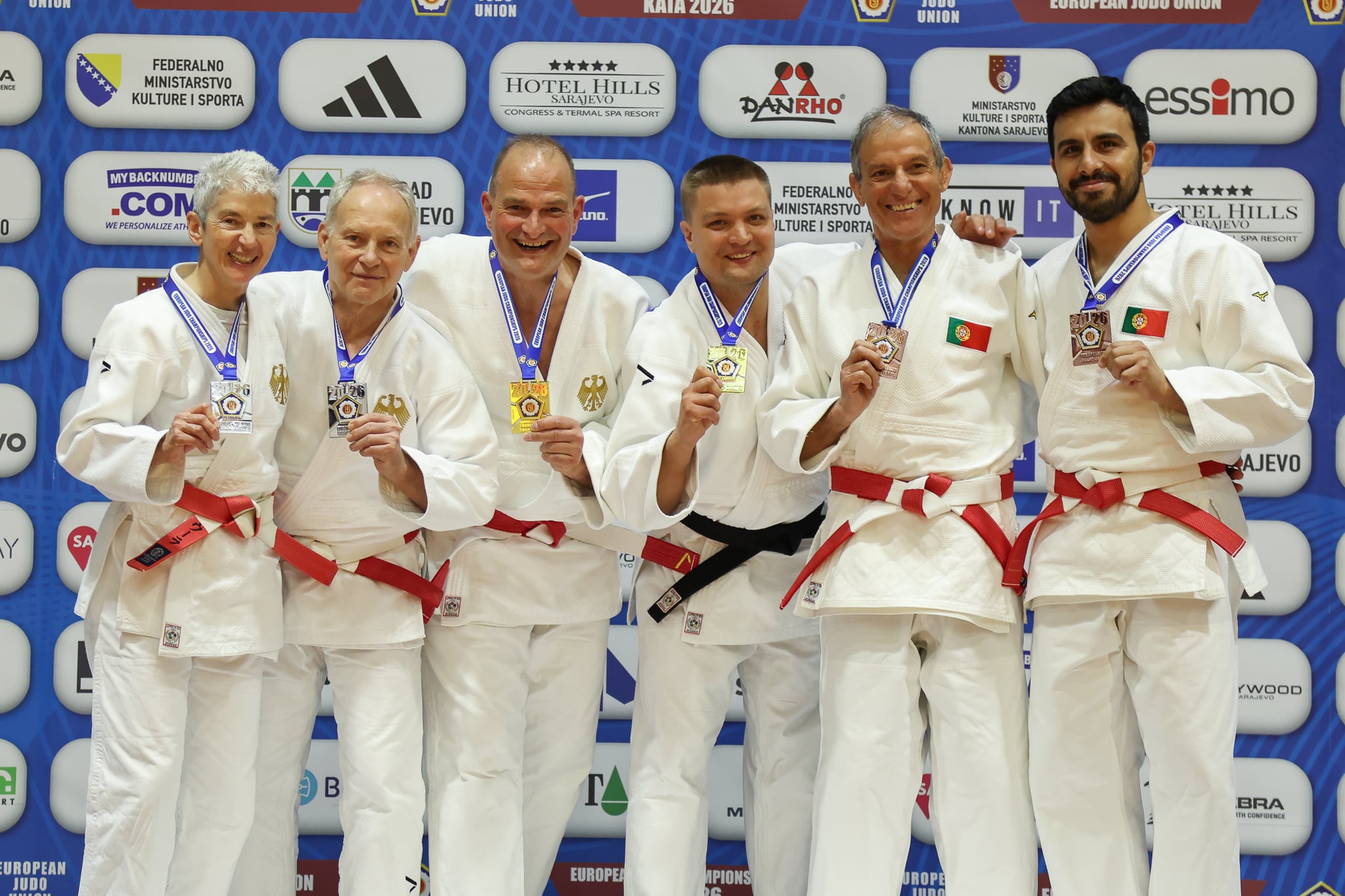
Defending champion power was on full display in this division as Germany’s Soenke Schillig and Johannes Christoph Kroeger successfully retained their title after another commanding performance, finishing on 160.5 points.
Germany also secured silver through Ursula Loosen and Wolfgang Dax Romswinkel, who scored 163.5 points, while Portugal claimed the final podium place as Pedro Gonçalves and Jorge Fernandes earned bronze with 157.5 points.
The winning team shared:
“We dreamed of retaining our title for a second time, and we fought hard for it. There was pressure, of course but through constant training and belief in ourselves, we made the dream real.”
Koshiki-no-Kata
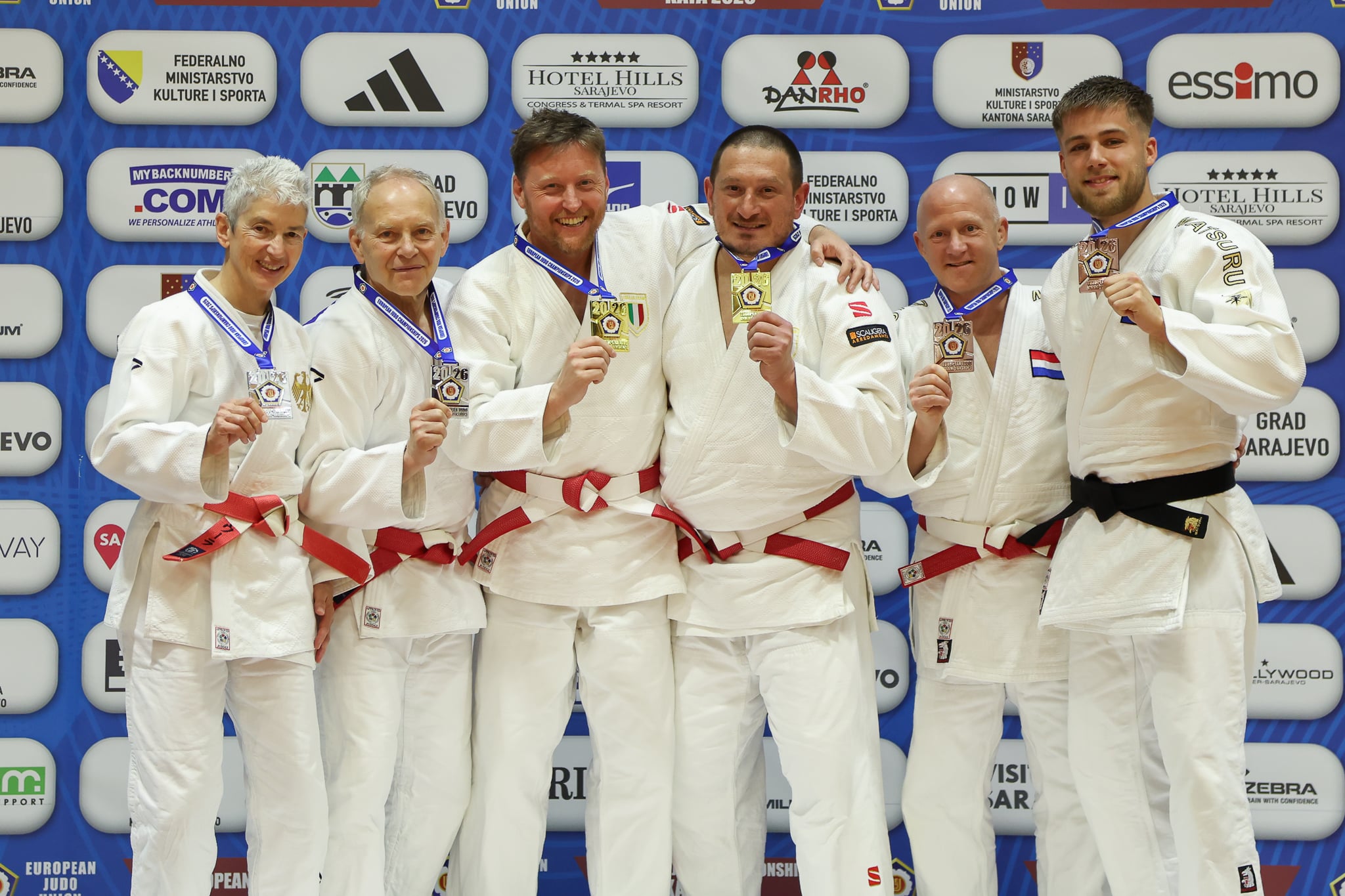
Saving the best for last seemed to be Italy’s philosophy as they closed the European Judo Championships Kata Sarajevo 2026 with yet another gold medal, this time in the Koshiki-no-Kata event. Enrico Tommasi and Mauro Collini delivered a magnificent performance to take the title with 507.5 points.
Germany’s Ursula Loosen and Wolfgang Dax Romswinkel followed closely behind to secure silver with 503 points, while the Netherlands completed the podium through Peter Goossens and Jelle van Roosendaal, who claimed bronze on 492.5 points.
For Tommasi, the victory carried especially deep meaning. After 17 years dedicated to kata, he finally captured his first ever European gold medal, making the triumph all the more emotional and unforgettable.
It is with these golden moments that the European Judo Championships Kata Sarajevo 2026 officially came to a close.
Author: Szandra Szogedi