





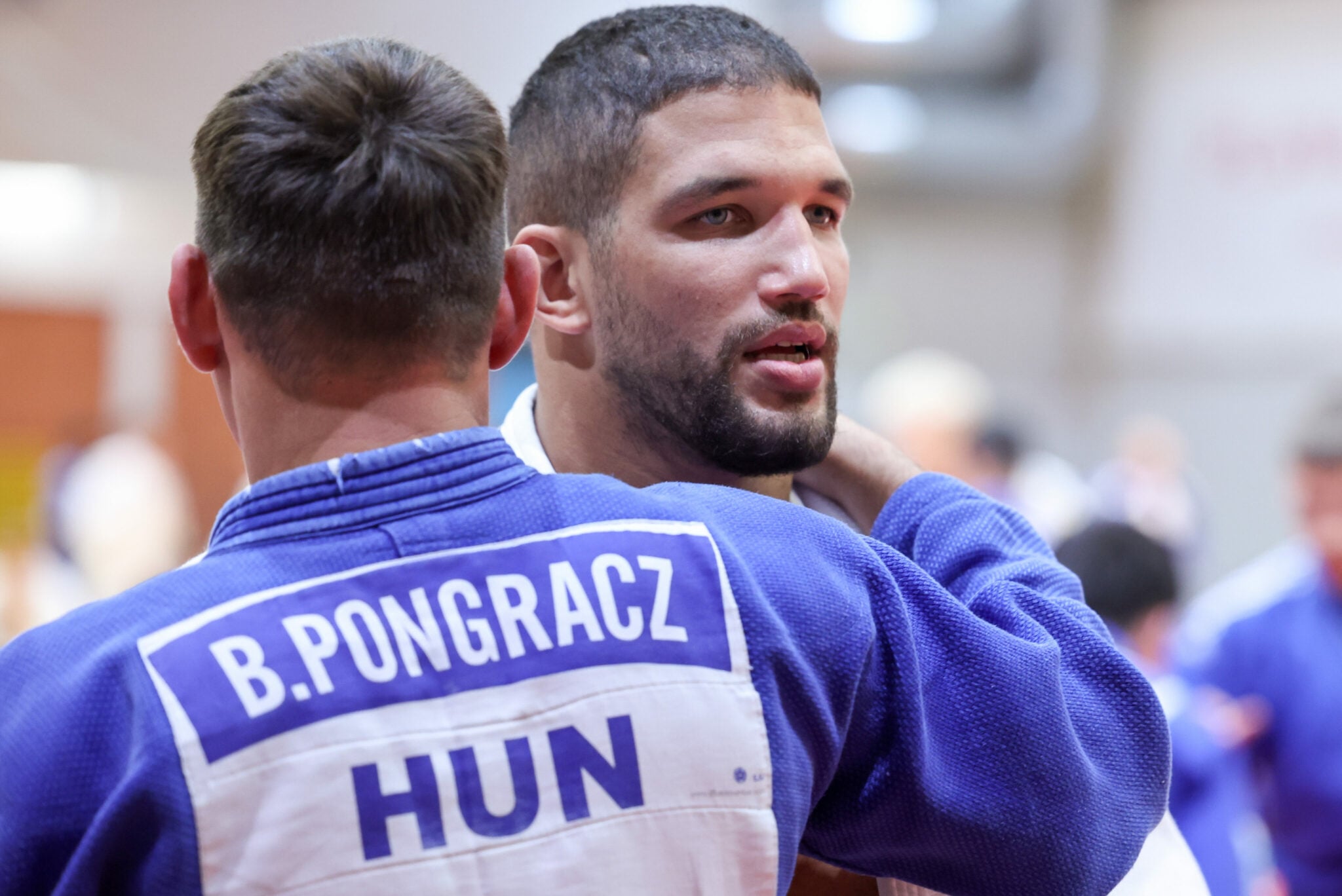
Tóth Krisztián and the Olympic Training Camp in Tata have long been a familiar duet. Years of sweat, repetition and refinement have passed through its halls. Yet, between 30 March – 3 April, the rhythm changed. This time, for the first time, he arrived with the responsibility of carrying others.

The Olympic bronze medallist arrived to Tata as a coach for MTK Judo Club and the experience, by his own admission, was far from straightforward.
“Well, on one hand it is very sad and on the other, it is really exciting. I didn’t expect it to be this difficult to be here as a coach. We came with a large number of athletes and it is very challenging to see and manage all of them consistently whilst finding the right approach for each of them.”
There is honesty in that assessment and perhaps a hint of the internal shift many elite athletes face when stepping away from competition. On the tatami, control is personal. Off it, influence becomes dispersed, subtle and far more complex. The fight is no longer his to win, or is it?
“I plan to coordinate everything in the same way and with the same mindset as when I was competing. I believe in hard work and as a result, I want to pass that on to the athletes as well, to work as much as possible. From that, I hope, rather, we hope, that results will come sooner or later.”
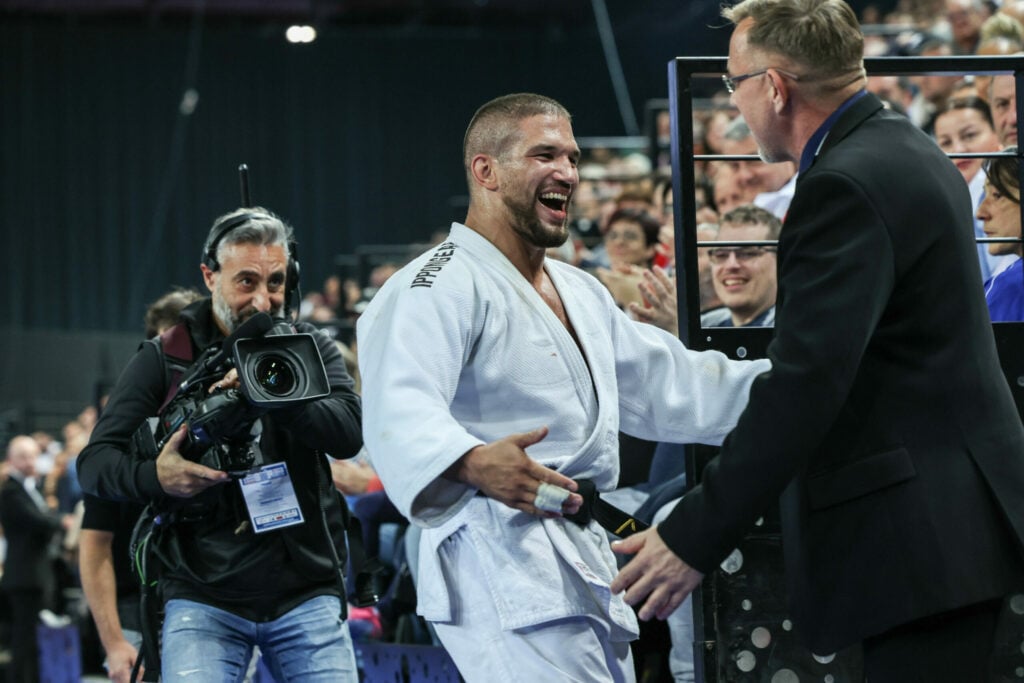
Over the course of his career, Tóth worked under the guidance of Pánczél Gábor, one of Hungary’s most decorated judo coaches. The influence is evident, not in imitation but rather in principles, some of which Tóth looks to carry forward.
“Identifying with the current rules, being very innovative, having a broad perspective, gaining a lot of experience and learning from it whilst following international trends. These were the fundamental pillars and I am trying to keep them in my own work as well.”
Still, the most immediate connection he holds with his athletes is not tactical, it is lived.
“I try to pass on the experiences I have actually gathered over the past 15 years. I know the situations they are going through now, or will go through and I want to prepare them for those. Because of that, I can be authentic in their eyes and I think they will trust me more.”
Trust, in this context, is not built through authority alone. Tóth has stood where they stand. He understands the silent doubts, the physical toll, the narrow margins between victory and frustration, and not least, the sacrifice. He has done it all…, and there is an additional element, something less visible, yet fundamental to his approach.
“I think my game intelligence and my tactical structure were the most valuable, especially how they developed and came together at their peak. I definitely want to pass these on and carry them forward, so that the athletes understand they need to think on the mat, what leads to what and how situations evolve.”
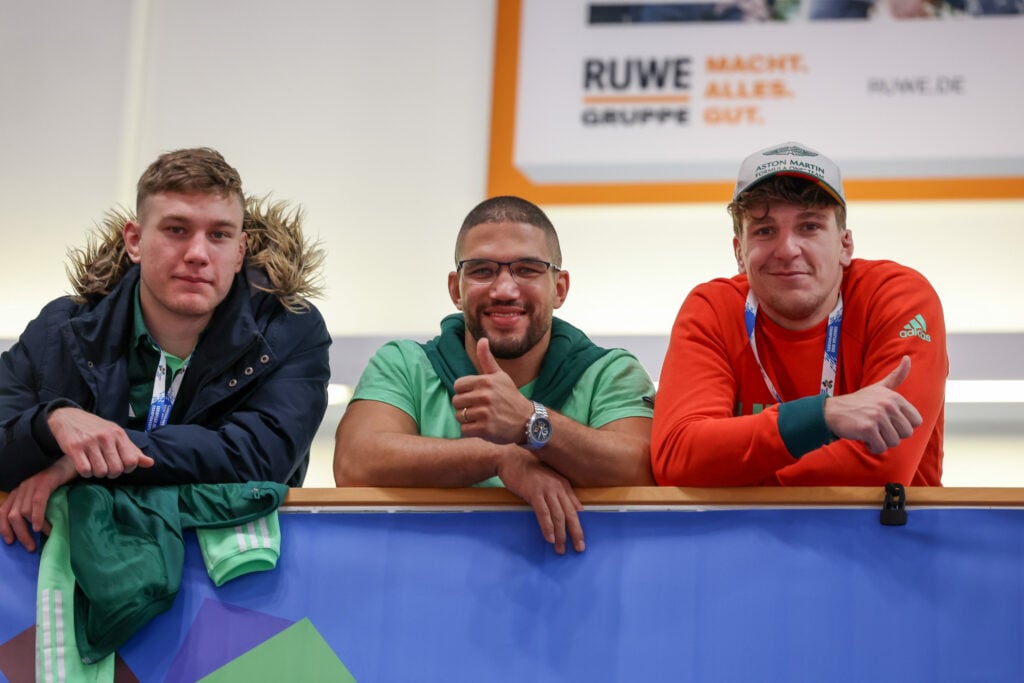
Above all, the most telling part of his outlook lies beyond the scoreboard.
“I also want to educate them not only in sport but in life as well. It doesn’t stop at judo. As a coach, I want to remain approachable but at the same time keep enough distance so that the relationship is not purely friendly but has a clear structure. That is something I will try to maintain over the coming years.”
It is a delicate balance, proximity without familiarity, guidance without overreach. One that every coach must negotiate but few articulate so plainly. In Tata, Tóth’s role may have shifted but the essence remains: the same hall, the same mat, the same echoes of effort. Only now, the victories will be measured differently, with Tóth experiencing them from the coaching seat.
Author: Szandra Szogedi