






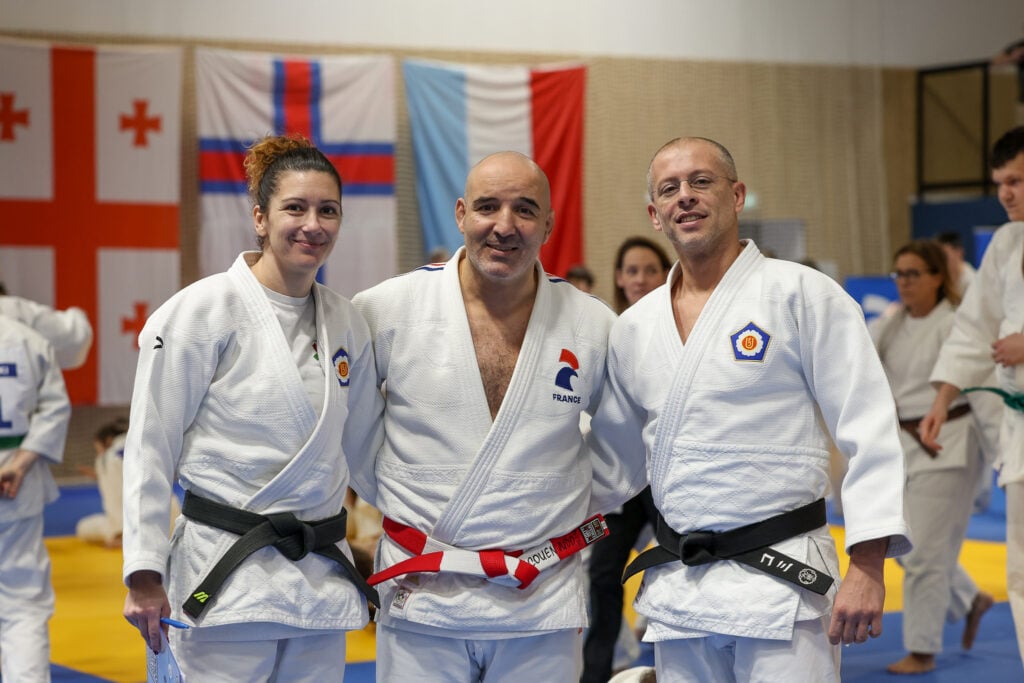
The wind off the Normandy coast carried a chill, the kind that nudges you to huddle closer to the people around you. Yet in Houlgate, as the final medals were placed around necks and the last group photos were taken, there was nothing cold about the atmosphere. Instead, warmth radiated through the hall, joyful, unguarded, deeply human. The final EJU tournament of 2025 had come to an end and with it, a year shaped by a single, unshakeable purpose: inclusion.

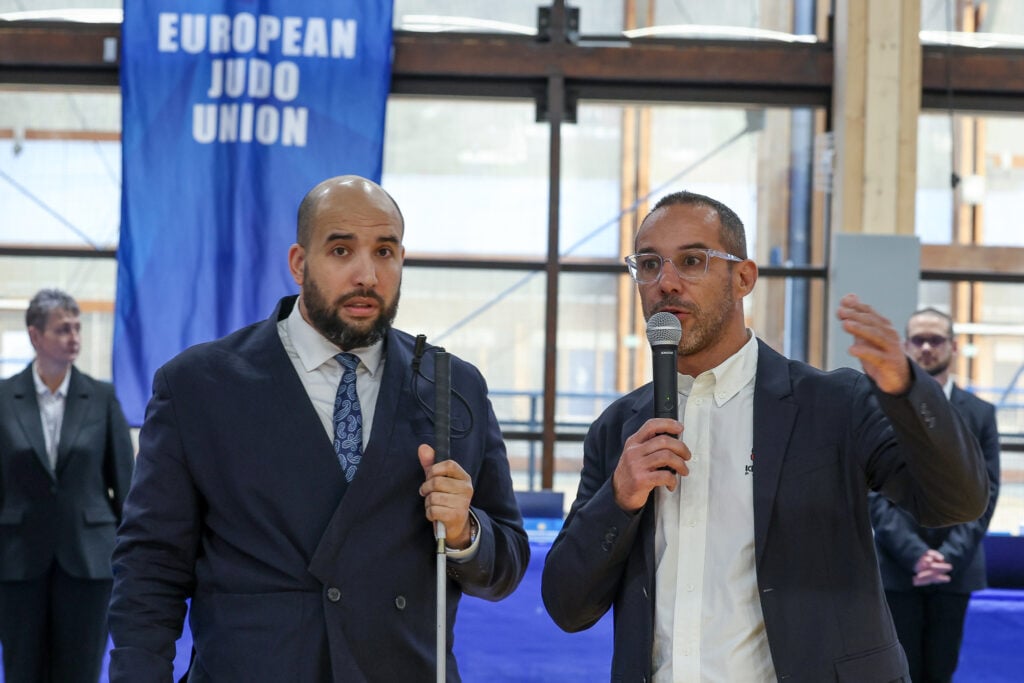
Around 200 judoka from 12 nations stood shoulder to shoulder one last time this season, exchanging hugs, laughter and farewells before stepping out into the winter breeze. Adapted judo events always carry a heightened emotional charge but Houlgate felt different. Bigger. Braver. Kinder. Perhaps because this was the first time France had hosted a Get Together event, an achievement years in the making. To understand its impact, we turned to Antonie Hays, Director of France Para Judo who reflected with honesty and unmistakable pride.
“For me, seeing France host a Get Together event for the first time has a very profound meaning. Adapted para judo has always had strong representation within France Judo. Now, on the cusp of obtaining ministerial recognition, we are preparing to fully integrate this community. We will finally be able to expand recreational and competitive opportunities for people with intellectual disabilities and beyond.
“Seeing an event truly open its doors to all judoka, regardless of disability, shows that we are moving toward inclusion but also toward competence. We are not just ‘making room’; we are offering a technical, structured, demanding framework that respects their potential. For me, this is a silent but major revolution.
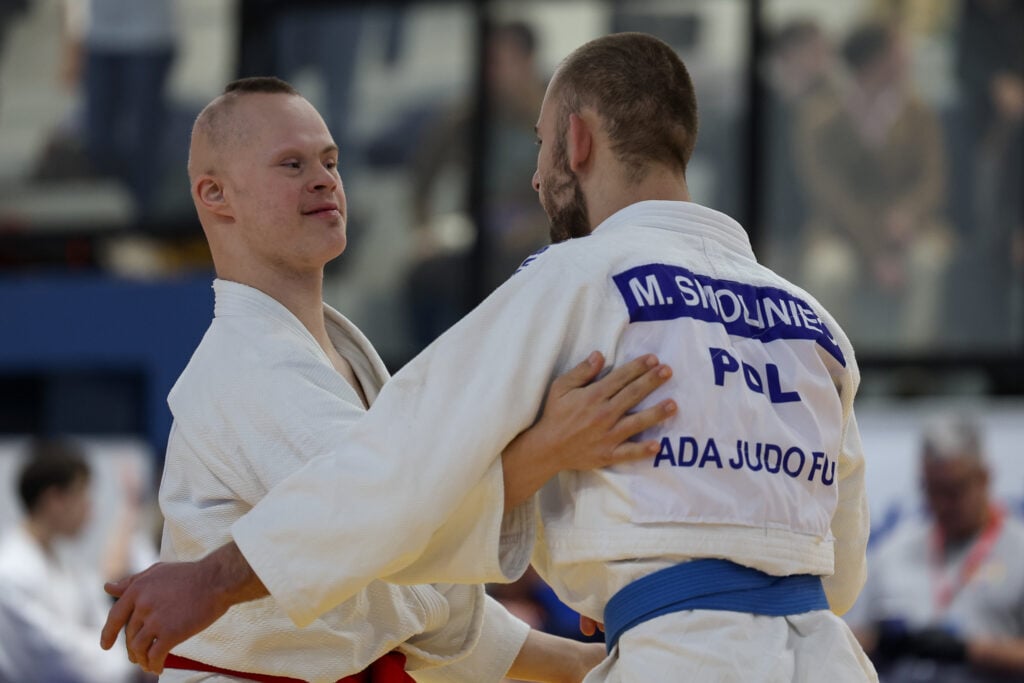
“Honestly, I leave with a great deal of emotion and pride. I am proud France took on this challenge with such seriousness. Proud to see judoka, some competing internationally for the first time, to blossom, discover their abilities and push their limits. Something else that astounded me is the diversity of athletes, each with their own rhythm and needs, yet all sharing the same infectious energy; the commitment from coaches and clubs, eager to learn, ready to adapt; the atmosphere on the tatami, friendly yet fiercely competitive, proof that athletes came not simply to participate but to do judo in the fullest sense and finally, the human connections, the kind that stitch nations, families and communities together.
“This is not the end. It is the starting point. The momentum is here and for someone who has been advocating for years for all judoka to find their place, this is a moment I will never forget. Thank you all.”
As the season closed, the reflection widened. Marina Draskovic, EJU Adapted Judo Programme Leader, offered a panoramic view of a year that reshaped the landscape of adapted judo in Europe.
“This year has been an especially meaningful one for Adapted Judo within the European Judo Union. We began with a workshop for all national federations, during which we finalised the Adapted Judo rules, introduced several refinements to the kata regulations and initiated the creation of the Eligibility Criteria for Athletes with Disabilities in EJU Adapted Judo Tournaments. After months of careful work and consultation, the document was officially published in September, giving our community a clear and reliable framework that supports fairness, transparency and long-term development.
“The 2025 EJU Get Together Tour featured four events, each marked by a growing and diverse group of participants. Several nations took part for the very first time, an encouraging sign that interest in Adapted Judo is expanding and that our efforts to create accessible pathways are resonating across Europe. What touched me personally throughout the tour was witnessing the remarkable progress of athletes who joined us for their second season. Their technical improvement, stronger tactical understanding and newfound confidence were visible in every match and while it is wonderful to see them grow as judoka, it is even more rewarding to know that this confidence accompanies them well beyond the tatami and into their daily lives.
“A major highlight of the year was the Open European Adapted Judo Championships. Unlike last year’s event, which focused solely on athletes with intellectual impairments, this edition welcomed judoka with a variety of disabilities. This proved to be an excellent decision as the level of judo was genuinely impressive and the breadth of competition enriched the experience for athletes, coaches and spectators alike.
“Additionally, the inclusion of Adapted Kata once again within the European Kata Championships reaffirmed what true inclusion looks like, athletes with and without disabilities competing side by side, each contributing to a shared celebration of skill, respect and spirit. Moreover, each Kata Tournament, organised by EJU, had adapted judo kata section inside the programme. The end of the year was also marked by the EJU Medical Seminar, where Adapted Judo was discussed in depth and received unanimous support from all attending doctors for the continued development of the initiatives we have set in motion.
“Looking back, it is clear that we have completed a truly successful year, one filled with opportunities for athletes across Europe and significant steps forward for Adapted Judo as a whole. The European Judo Union can be proud of its role as a continental leader in this field and I am honoured to contribute to a movement that continues to grow stronger, more inclusive and more inspiring each year.”
When the last hugs signalled the ending of the event, the hall slowly emptied. Conversations drifted into the cold evening air. Coaches carried bags. Families bundled up children. Athletes, still wearing their medals, waved goodbye to new friends.
This is how a season ends, not with silence but with echoes of laughter, footsteps, long embraces and promises to meet again. Houlgate, as well as the 2025 Get Together Tour, was a mirror held up to the sport, reflecting what judo can be when courage, compassion and community sit at its core. The 2025 chapter is closed. The work continues and 2026 waits brighter, bolder, filled with hopes.
Author: Szandra Szogedi