





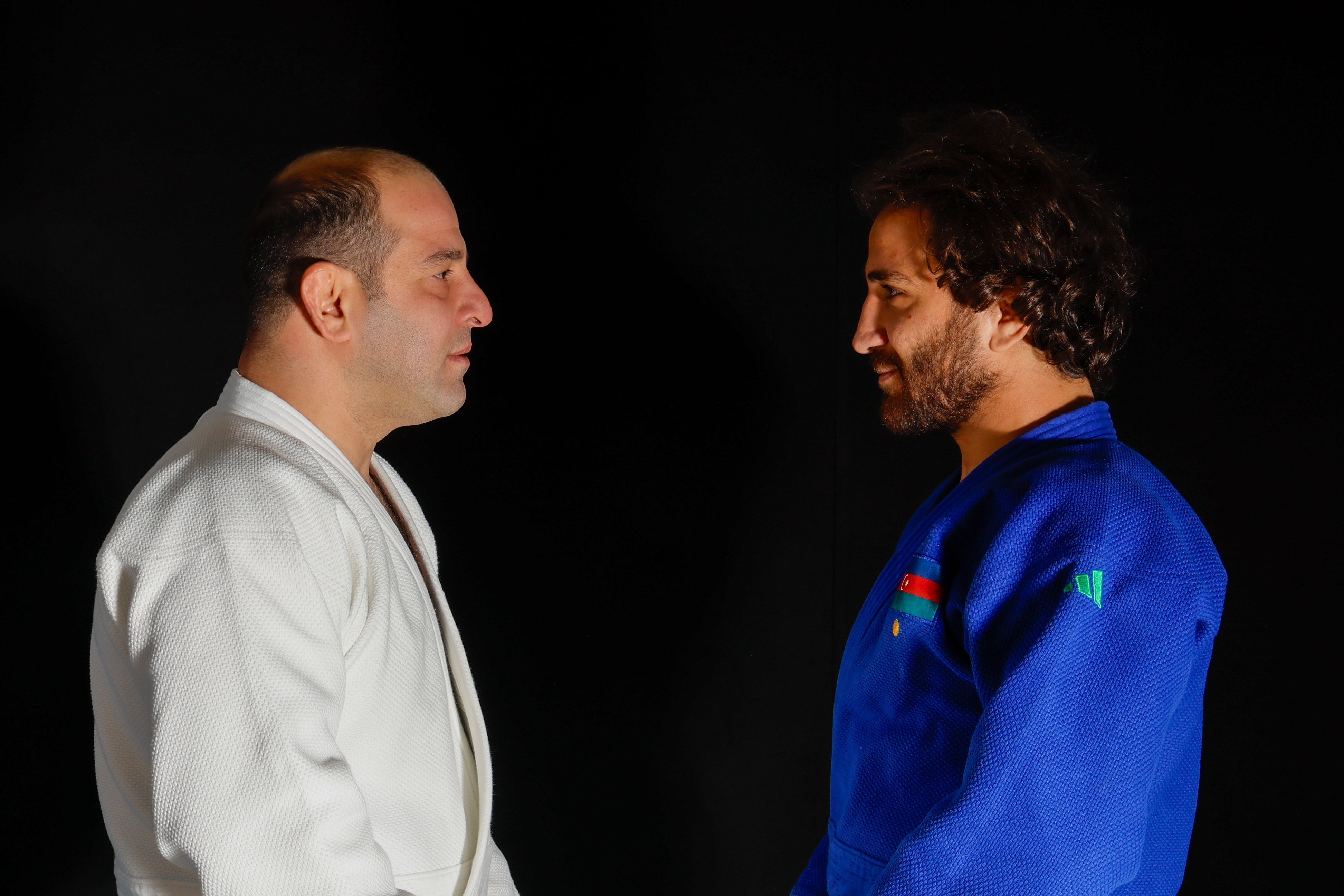
In judo, the black belt is often seen as an end point. A summit reached after years of sweat, sacrifice and stubborn belief. Yet in our Belt of Life series, we are discovering something quieter and far more powerful. The belt is not a finish line. It is a thread. A thread that binds people together.

Like the obi itself, these connections need tightening from time to time. They loosen with distance, with defeat, with doubt but when cared for, they hold firm. This chapter brings us to two men from Azerbaijan: Elnur Mammadli and Hidayat Heydarov. One an Olympic champion in Beijing in 2008, world silver medallist and double European champion. Retired at 27. Inducted into the IJF Hall of Fame in 2018. The other one is an Olympic, world and European champion of his own generation. On paper, it reads like a passing of the torch. In reality, it is a tight-knit connection.
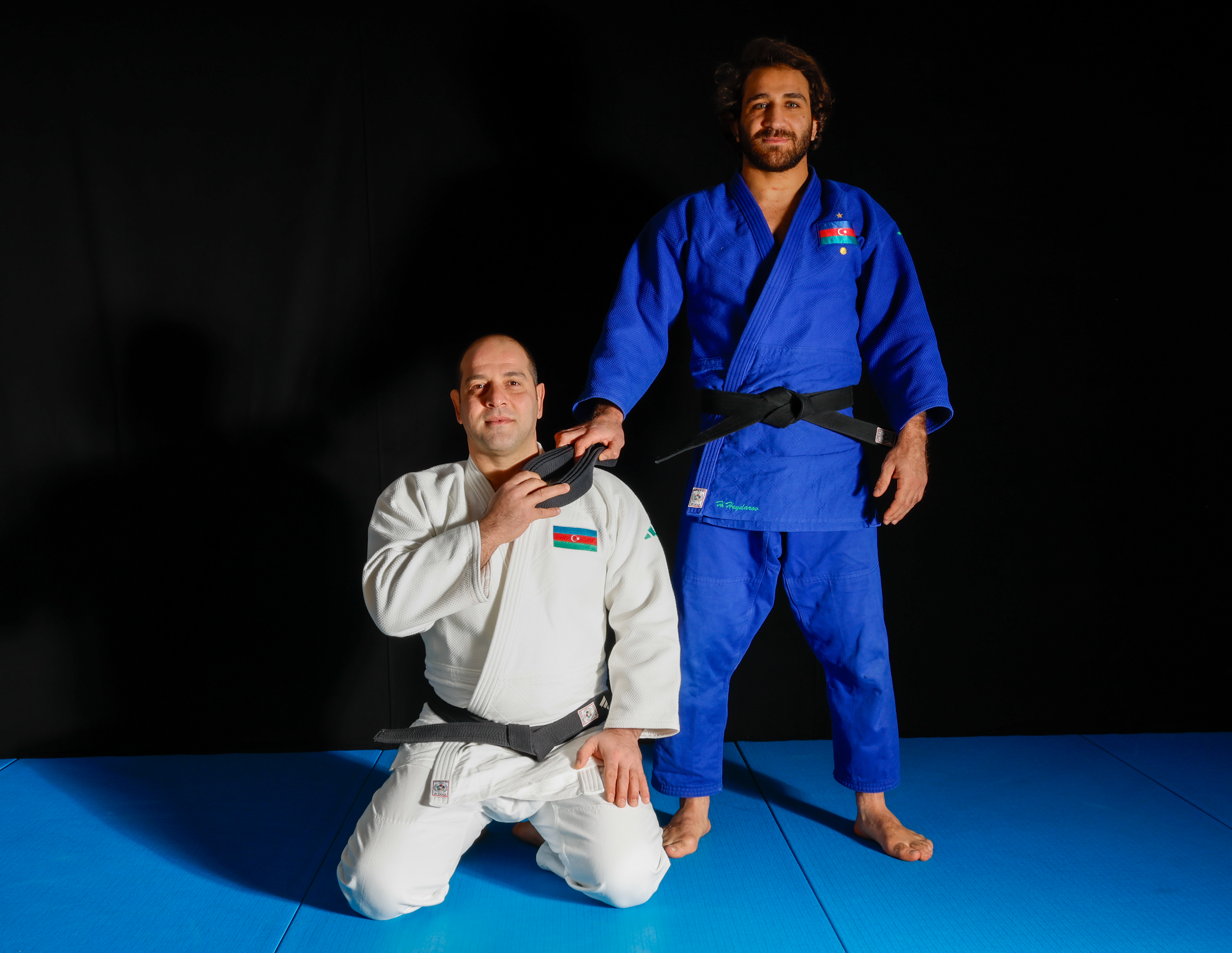
“He is my coach for life.”
In sport, a coach is defined neatly: someone who trains, mentors and guides an athlete to improve performance but words can be too small for certain truths. For Hidayat, Elnur is not simply a coach.
“It is three years that we started to cooperate,” he explains. “As a judo coach, he teaches me things I don’t know, he adds to my judo…, but in life, when I struggle, in difficult moments, he shows me how to solve problems, real life problems. When you combine all of them, he becomes the coach for life for me.”
There is no hesitation in his voice when he speaks. No carefully constructed answer. Just certainty. “He is always with me when I lose or win. When I am in a difficult situation or when I am in good moments. All the time he is nearby me. It is not only about judo. In my whole life, he is my coach.”
After Olympic success, life shifts. The spotlight grows brighter. Expectations become heavier. Victory, paradoxically, can be destabilising. Heydarov admits that Mammadli warned him long before the wave arrived.
“After the Olympics my life changed a lot. He told me in advance what I could expect, what changes might happen and all of them happened. There were difficult moments to come back on track, to come back to judo. He supported me mentally, morally. He gave me the feeling again that I can become a two-time Olympic champion.”
There is something deeply human in that. The idea that belief can be handed from one generation to another like a well-worn belt, softened by experience, strengthened by struggle. When asked whether he would be the same athlete, or the same man, without Elnur, Hidayat answers before the question has fully settled in the air.
“No. For sure not.”
No pause. No doubt.
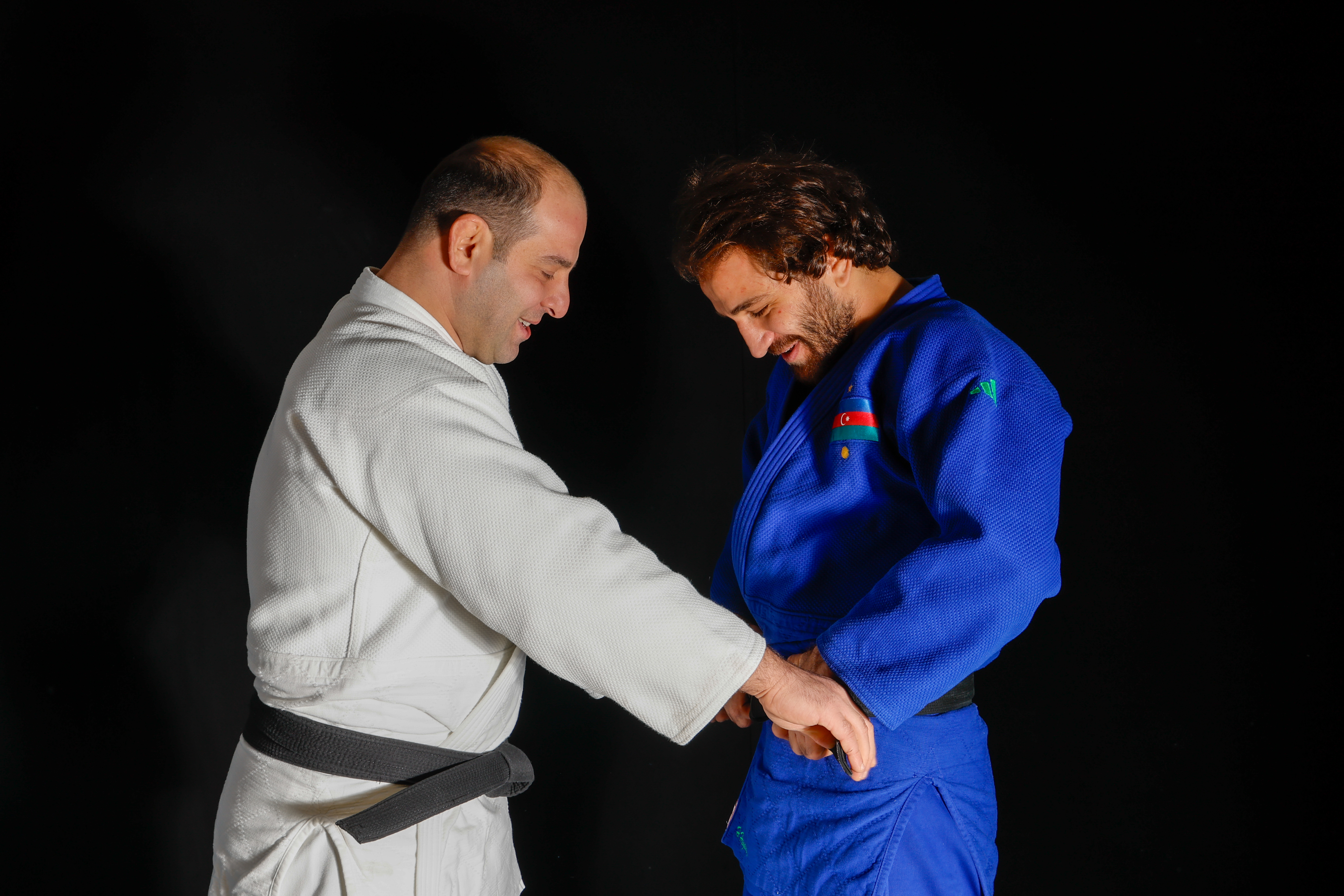
“Mirror.”
When it is Mammadli’s turn to choose his word for the black belt, he does not speak about leadership, or legacy, or even victory.
“Mirror,” he says.
He smiles as he explains. “He [Hidayat] is really crazy on the tatami. A true fighter. He doesn’t like losing. When he loses, he cries. For him it is like die or continue and all these things I had when I was a judoka.”
In Heydarov’s intensity, Elnur sees his younger self. In the emotional storms after defeat, he recognises his own past. It is not just technical understanding that binds them; it is shared temperament. Shared fire. “When I started to work with him, I felt it immediately. It was like looking into the mirror. This gave me a closer understanding of him and his journey.”
There is something poetic about that, a champion facing his own reflection, not in glass but in flesh and blood. When asked whether working with Heydarov reignited something inside him, whether this feels like a second career, Mammadli answers openly.
“I stopped judo at 27. Inside my heart, I have the feeling that the goals I couldn’t achieve, I can do together with him. Especially the title of world champion. When he is fighting, I have the same feeling like I am fighting on the tatami. If you ask me if we can call it a second career, for sure we can.”
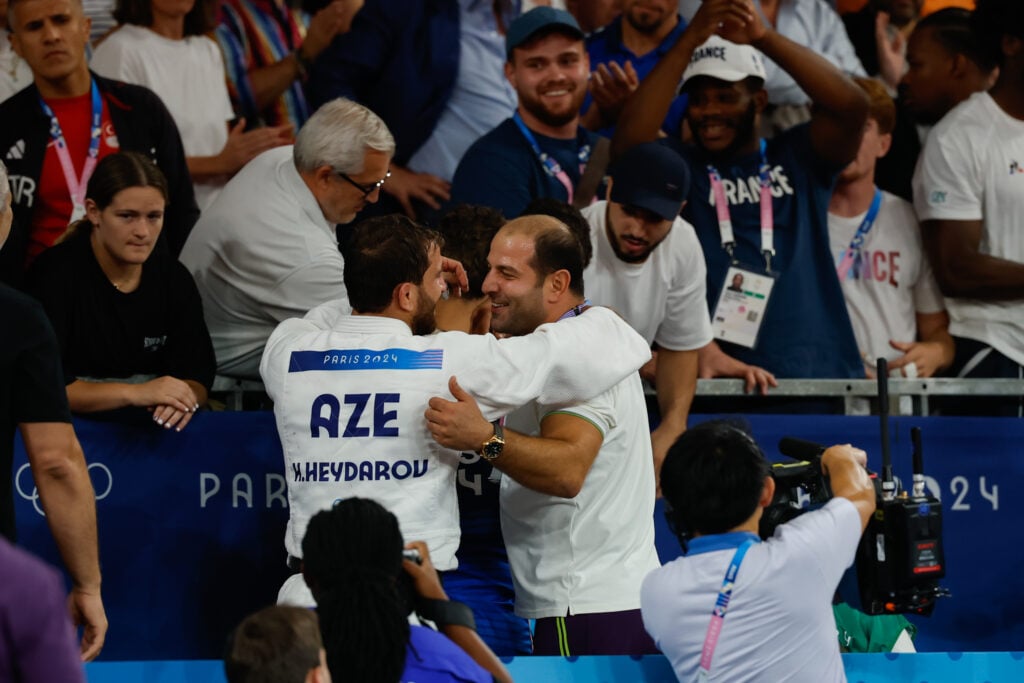
Some careers end with a final bow, others simply change form. Their journey now points towards Los Angeles 2028. There will be more camps, more weight cuts and more long, silent bus journeys after hard defeats. Hopefully, more gold too. Yet, the real story is not written in medal tables, it is written in build ups following a defeat, in honest warnings about fame, in the steady presence of someone who has walked the road before you and refuses to let you stumble alone. The black belt, in this chapter, does not represent dominance. It represents continuity, reflection and trust.
When you tie your belt before training, you are not only preparing for yet another session. You are fastening yourself to something larger than victory, to a lineage of lessons, to mentors who see themselves in you and to the responsibility of carrying forward what they once carried.
The belt circles your waist but it also connects your past and your future.
Tie your belt. The journey awaits.
Images: Gabi Juan
Author: Szandra Szogedi