





In the second instalment of our three-part series, Driton “Toni” Kuka recounts the moment that nearly ended his coaching career, the redemption that followed and the millimetre-perfect preparation that has delivered Olympic gold on the world’s biggest stage.

The Lowest Point
Every coach has a moment that defines them, a crucible that either breaks them or forges them into something stronger. For Kuka, that moment came in London 2012, in the most unexpected and devastating fashion.
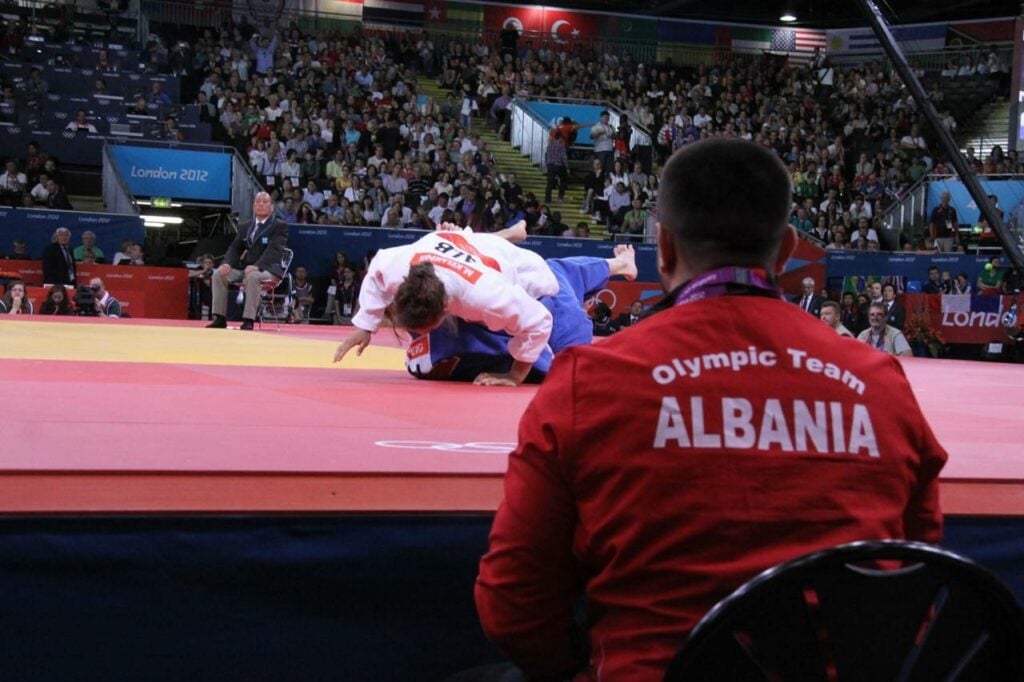
“It was in the first Olympic Games. We competed for Albania in 2012,” Toni begins, his voice carrying the weight of a memory that still stings over a decade later. “Majlinda won the first match against the Finnish girl, who was a strong opponent. Then she fought a girl from Mauritius in a match where Majlinda was normally favoured.”
What happened next still seems impossible to Toni.“In the first minute she scored waza-ari and then she got a bit euphoric. Soon after, she fell for ippon. For me, the whole world...[he pauses], in my mind, it looked like a bad dream, something that couldn’t possibly be happening.”
The immediate aftermath was raw .“We went to the warm-up area. I was alone beside her. I banged the back of my head against the wall two or three times. ‘Why here?’ I said. She didn’t speak. She was crying. I was so depressed. I felt terrible.”
The weight of expectation made it worse. “In this competition, the expectation for Albania was for her to win a medal and imagine, the President of Albania, the Prime Minister of Albania, the President of Kosovo, the Prime Minister of Kosovo were all sitting there with President Vizer…, and we lost.”
Toni’s voice drops as he continues. “I felt terrible, like I would blame myself for all of it.. As a person, I have a strong ego. That is just who I am; it comes from my parents, from my family. I am careful not to speak badly of anyone but equally, if someone criticises me, or if I make a mistake, it is very hard to accept. So in competition, it was incredibly difficult for me to accept this loss. Losing to top athletes? No problem…, but like this and at my first Olympic Games…”
The Spiral
What followed was a darkness Toni hadn’t anticipated. “After this, I thought I would never be in a position to face all those nations, all those Albanians in Kosovo, in Albania, because Albanians live in many countries. I thought, this is over for me. I thought I would never face the media again. I thought it was the end of my judo life.”
For three to six months, Toni spiralled. The defeat itself was painful but the aftermath was worse. “Of course, the competition itself was terrible but after, the comments people made: ‘She was just used to fighting in easy competitions. This isn’t the same. She learned to win medals the easy way.’ So many negative comments. So many people. She was in an even worse situation than me.'”
The Turning Point
Then came the conversation that changed everything. “I said, ‘Look, you lose, I lose. This is part of our job. This is our reality, winning or losing. It is you and me. Let’s work for winning, for fighting but from now, we have our federation, our small family. We don’t care about the media, about other people, about politics, about presidents, about nothing. We want to fight and do judo for me, for you, for the people around us. We don’t care what people say.”
Majlinda and Toni made a pact. They would insulate themselves from external pressure and focus solely on the work. “We would cut ourselves off. We would separate from everything. We started working really hard and the big result came the following year. 2013, she became world champion, Kosovo’s first ever world champion.”
Toni allows himself a slight smile. “And then, you know, people forget everything. Suddenly it is all ‘Oh yes!’ and then we carried on.”
However, that London moment haunts him still. “This moment was really hard. First Olympics, the opponent was not among the favourites and losing to them, I blamed myself a lot. I said, ‘I am a foolish coach. I didn’t know how to deal with the programme, with the system, etc…”
Toni was searching for answers where there might not have been any. “I was analysing everything, everything but of course, it is sport, it happens. Yet at that time, first Olympics, I was a coach without Olympic experience.”
Rio: Redemption in Isolation
The lessons from London shaped everything about Rio 2016. “The next four years, we were so close. We were so careful and in Rio, when we went to Rio, we didn’t go with the other athletes. We didn’t go with anybody. I went with Majlinda and Nora, they had to fight. Distria was Majlinda’s sparring partner. Only the four of us on the plane and Agron as president. Nobody else.”
Toni’s approach was uncompromising. “I said to the President of the Olympic Committee, ‘Don’t disturb me, you or anybody else. I don’t want to see anyone.’ He really did everything for me and I am really thankful to him because he said to the rest of the team: ‘Toni and his team, leave them alone. If you see them, even in restaurants, go somewhere else. Let them do their job.'”
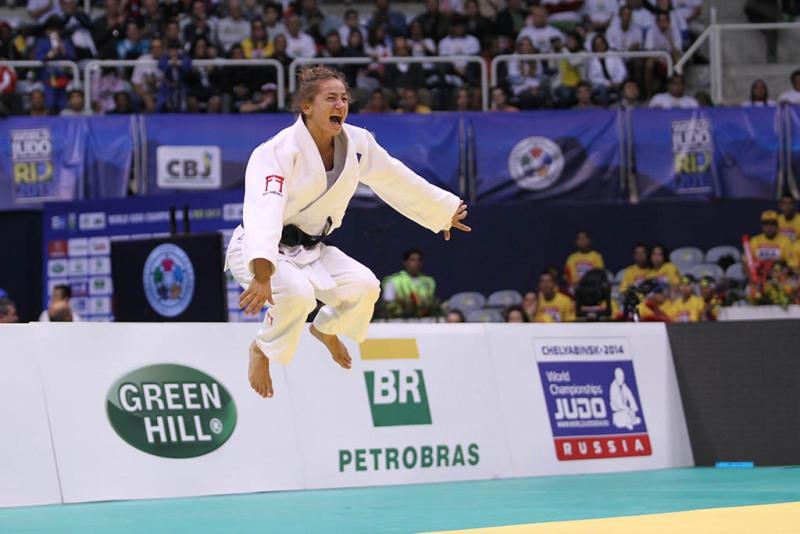
The bubble was complete. “I said to Majlinda, Nora and Distria, ‘Okay, this is us. If we win a medal, it is our job. If we lose, we take responsibility.’ And it happened. It happened, the Olympic gold.”
Rio 2016, Toni insists, was the making of him. “Those Olympic Games in Rio, I think they made me, psychologically, as a coach and my athletes too. After that, we did the same for Tokyo and the same for Paris. They know this is the way I work. We won five Olympic medals across three consecutive Olympic Games, including three golds. This is my way of working. This is the way we win medals and as long as I am a coach, we will do it like this.”
Millimetres and Minutes
When Toni speaks of preparation, he is not speaking metaphorically. “This is very important. This is where the athletes overthink everything and for this part, I am working in millimetres. Timing of the training sessions, down to the minute. Sometimes, believe me, I count the metres from the warm-up area to the fighting area. Everything seems important to me.”
This obsessive attention to detail gives him confidence. “When I do all of these things and I put in paper, then this gives me confidence that I did 100% what is necessary to win Olympic medals. We must be an Olympic medallist and my team trusts me because I am always explaining them: ‘Look, we do everything 100% what is necessary. This is my way.'”

Tokyo: The Peak
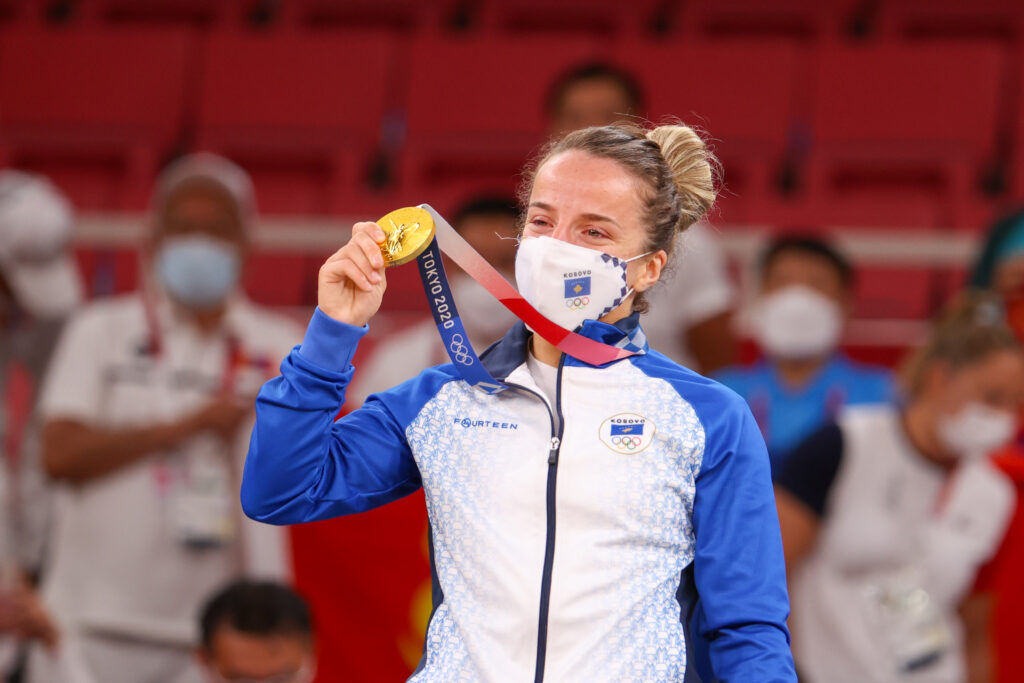
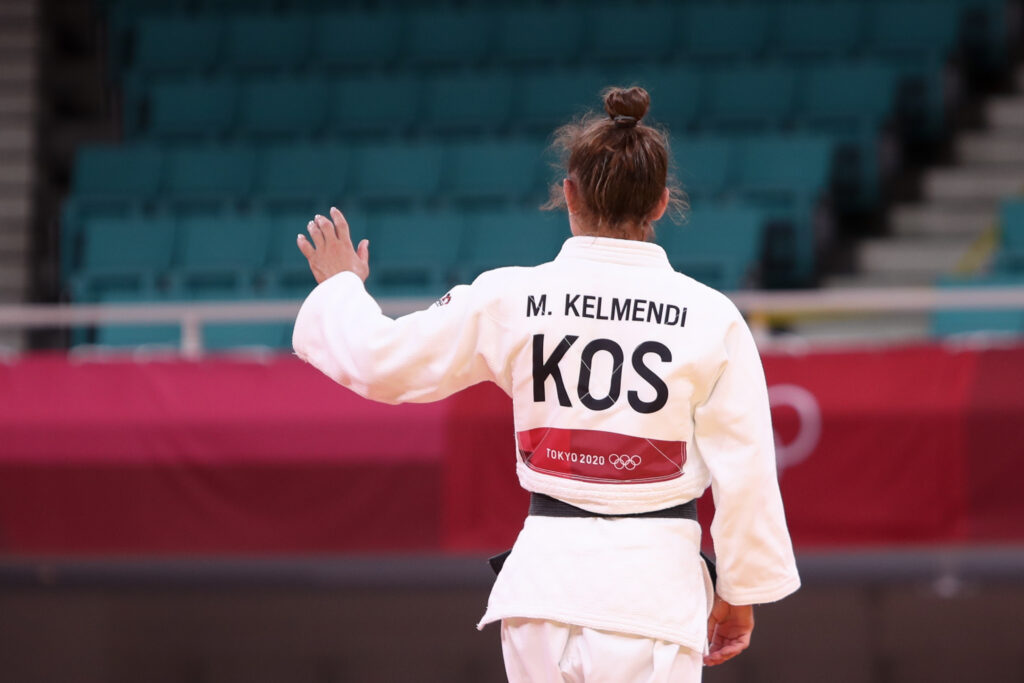
If Rio was redemption, Tokyo was perfection but it nearly didn’t happen for Distria Krasniqi.
There was an important situation in the case of Distria for the Olympic Games in Tokyo, “We did one part of the preparation in the mountains, a really hard part. Three weeks after this, or one month, I don’t remember exactly but I have it written down, of course” – he smiles with both pride and determination – “was the World Championships.”
The 2021 Budapest Worlds fell awkwardly in the Olympic preparation timeline. “I said to them, ‘Look, I will give you the freedom to choose. If you want to fight, that is okay but we will not disturb the system of peaking for the Olympic Games because of this.”
Distria chose to fight. Toni knew the risk. “She was a bit tired. I knew she would only be at 50–60% of her best. She came fifth. I could see she was dropping weight really fast and naturally, she was losing muscle. This was worrying.”
What followed was coaching at its most meticulous around nutrition and all elements needed to fall in line in order to peak. The vindication came at the weigh-in in Tokyo. “Two or three days before the Olympics, we went to the weigh-in, Distria, me and the team. When she stepped on at her normal weight, when I saw her physique, she was, I think, 48.8kg or 49.5kg; I have this written down as well. She was pure muscle, like a solid piece of muscle, from head to toe. I said to myself, ‘Thank you. This is good work. We did well.'”
Still, at that moment, Toni kept his emotions in check. “Of course, I didn’t say this to Distria because I didn’t want to discuss these things with her before the Olympic Games but at Worlds I was concerned. I said, ‘Fight. It will be what it will be, we can’t change the programme. The peak is planned for later.’ Fortunately, when I saw her on the day of competition in Tokyo, I said, ‘Distria, you will win, against all of them. Today you will be a different person.'”
She did exactly that. “She beat everyone. She threw everyone. She was absolutely incredible that day. Nora also performed well. Majlinda was struggling with a lot of issues at the time.”
It is what Toni says next that reveals the magnitude of Tokyo 2021. “Believe me, all five of them. I think Tokyo was the best work of my life. I don’t think I can build a team like I did for Tokyo again because Distria, Majlinda, Nora, Akil and Loriana, each of them had the potential to win gold. I am certain of what I am saying and they were ready.”
He knew it was improbable. “Yet of course, I knew it couldn’t all happen, it is sport. Still, winning two golds in the middle of Japan, in the categories where Japan is dominant, -48kg and -57kg, was amazing. In the end, we were the second nation on the medal table because Japan won nine golds, we won two. We were ahead of France, ahead of Georgia, which is really something.”
His voice softens as he stares ahead, a distant, dreamy expression crossing his face. “I hope it will happen but I don’t think it will happen again. I don’t know. It is really hard to repeat things like this. It is hard and judo is a tough sport. So combine the two, and it is incredibly difficult.”
The Calendar Conundrum
Returning to the topic of LA2028, the qualification calendar presents new challenges. How does Toni choose which events to attend whilst avoiding injury and mental burnout?
“In the past, I had athletes who managed to win medals almost everywhere. In that case, it is much easier. because in one year, you can choose from six to eight competitions, accumulate your points and you are not chasing them.” he explains.
Yet, this cycle is different. “This year, like we were discussing, I have got some young athletes. They will have to do a marathon of competitions and it is not going to be easy. Obviously, a big part of the job is picking the right competitions at the right time to peak well, to stay injury-free and with this incredible field of athletes, it is really tough but we will try.”
His strategy is pragmatic. “This is what I was saying at the start. Now it is time to set things up. I hope we can manage without injuries but it is always a fine balance, pushing them too hard or keeping them away from too many competitions. Judo is a tough sport and injuries just happen.”
The opening six months are critical. “I think if we manage to perform well at the beginning of the qualification period, then it is much easier. So the first six months are crucial. If we can manage, when Olympic qualification starts, to achieve two or three medals in the next four or five competitions, we will have done a good job.”
Early success provides a buffer. “If we have seven or eight months to secure two or three more results, then we can be selective but for the athletes who I think can qualify and who aren’t yet at the top level, we will see. It depends on how they start.”

The Historical Moment
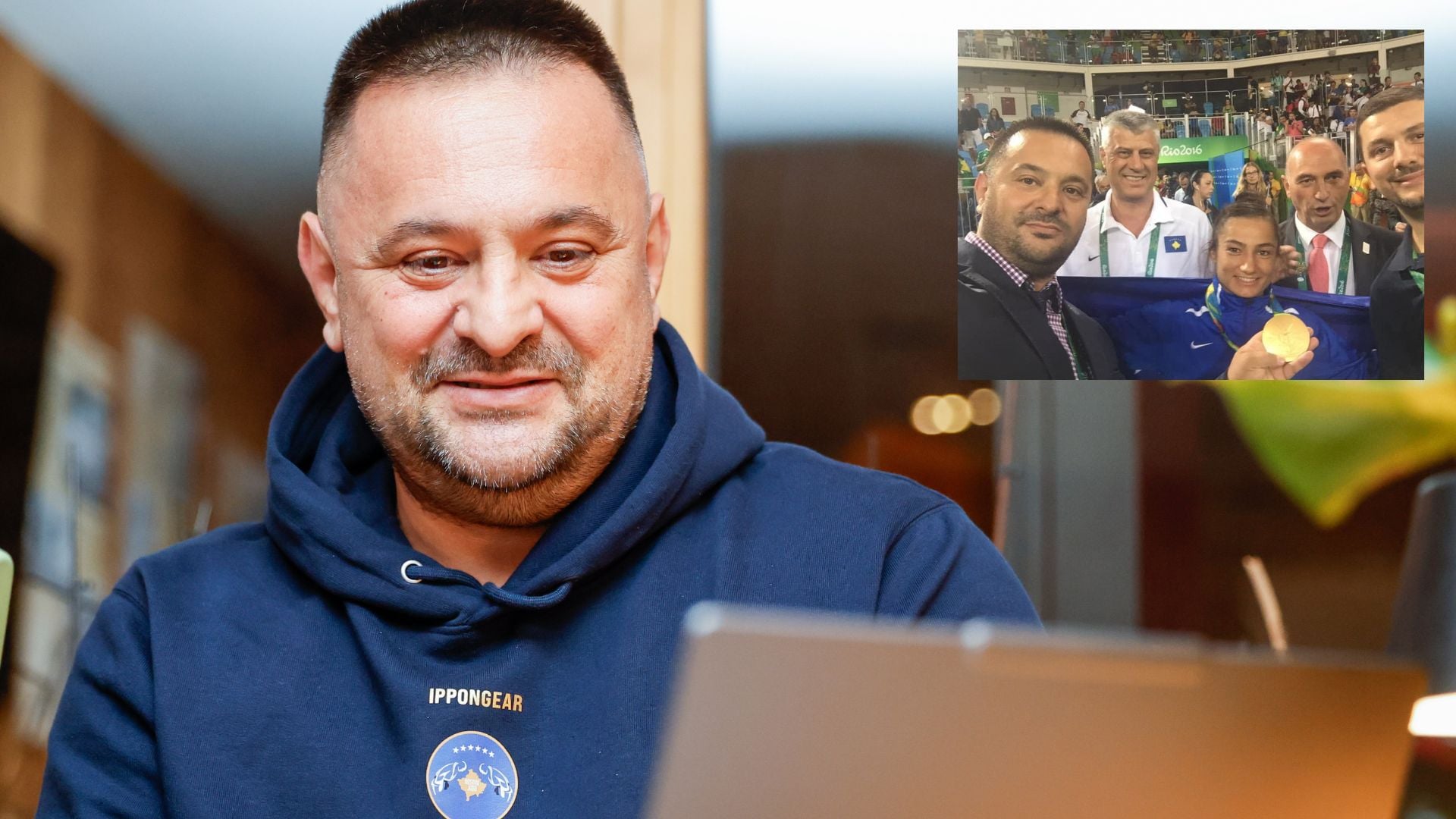
Jumping back. It is 2026. Ten years. A decade since Majlinda Kelmendi won Kosovo’s first-ever Olympic medal in Rio 2016. Not just any medal, the gold medal. She became Olympic champion. Speaking of Toni’s growth as a coach whilst looking at the photograph from that day, the medal ceremony, the flag, the emotion, what does Toni feel?
“This was an important moment. Immediately after the medal ceremony, in fact, from the moment Majlinda won the final, I think for about two hours I had some kind of blackout in my mind. Only when I see the photos can I see what happened.”
He remembers only fragments. “I remember only one thing. The President of our country was sitting in the spectators’ tribune and I went to bring him down for photographs. Security didn’t let him come down, of course, it is normal protocol but I was so emotional in that moment and I called Sheldon [Franco Rooks]. I said, ‘Why? This is our President. This is Olympic gold. First ever for Kosovo.’ and he said, ‘Okay, I will manage it’ and Sheldon did this favour for us.”
The photograph that resulted is now historic. “This is, of course, the historic photograph, those crazy moments. It has been 10 years. Such incredible moments.”
What would he say to his younger self in that photo? The answer is immediate and visceral. “I don’t know why I felt so proud, it was the same President as in 2012. I wanted to show, not him personally but the President representing my country and all our people, that London was just an accident and we have proved it. This was the moment when I felt so proud, for myself, my team, my family and especially for my country and my nation.”
Growth Through Fire
From that moment in 2016 to today, how much has Toni grown as a coach and as a person?
“Of course, at that time, I was so emotional, so euphoric, full of energy. I think as a coach I made more mistakes than I do now. Now I have the experience to manage things better for all of us, not only the judo aspects but everything. Now I see things from experience, which makes me a somewhat different person as well.
“Sometimes, in that period, I was so hard for my athletes. I was so hard in discipline part and now I am trying to do more tactical. In that time I saw only one way. So it is different, it is totally different.”
In the final episode, Toni lays bare the personal cost of Olympic success, the sacrifices that haunt him, the moment he nearly walked away, the mental health burden of coaching at the highest level and why the adrenaline of elite sport might be an addiction he will never break.
Author: Szandra Szogedi