





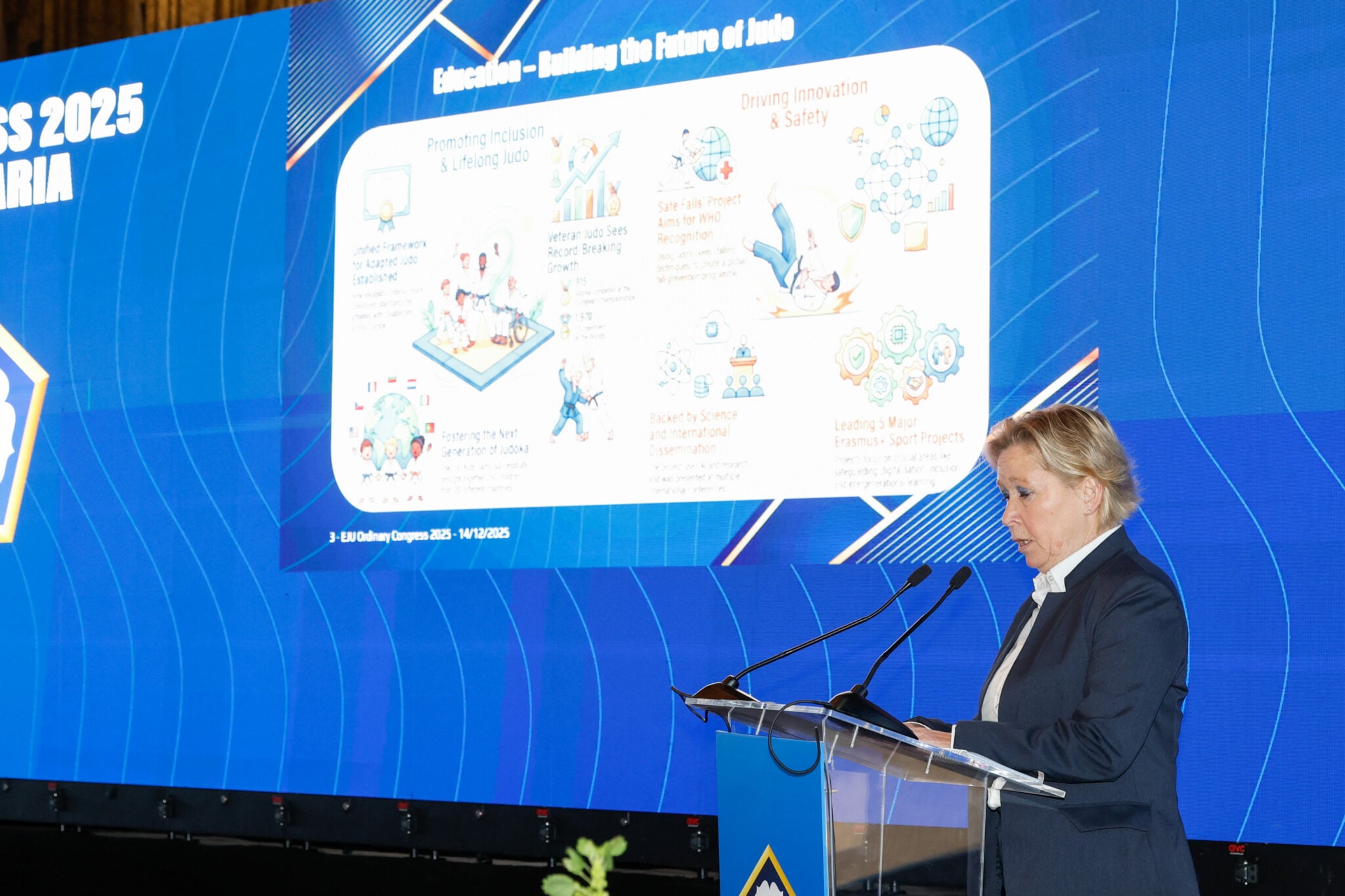
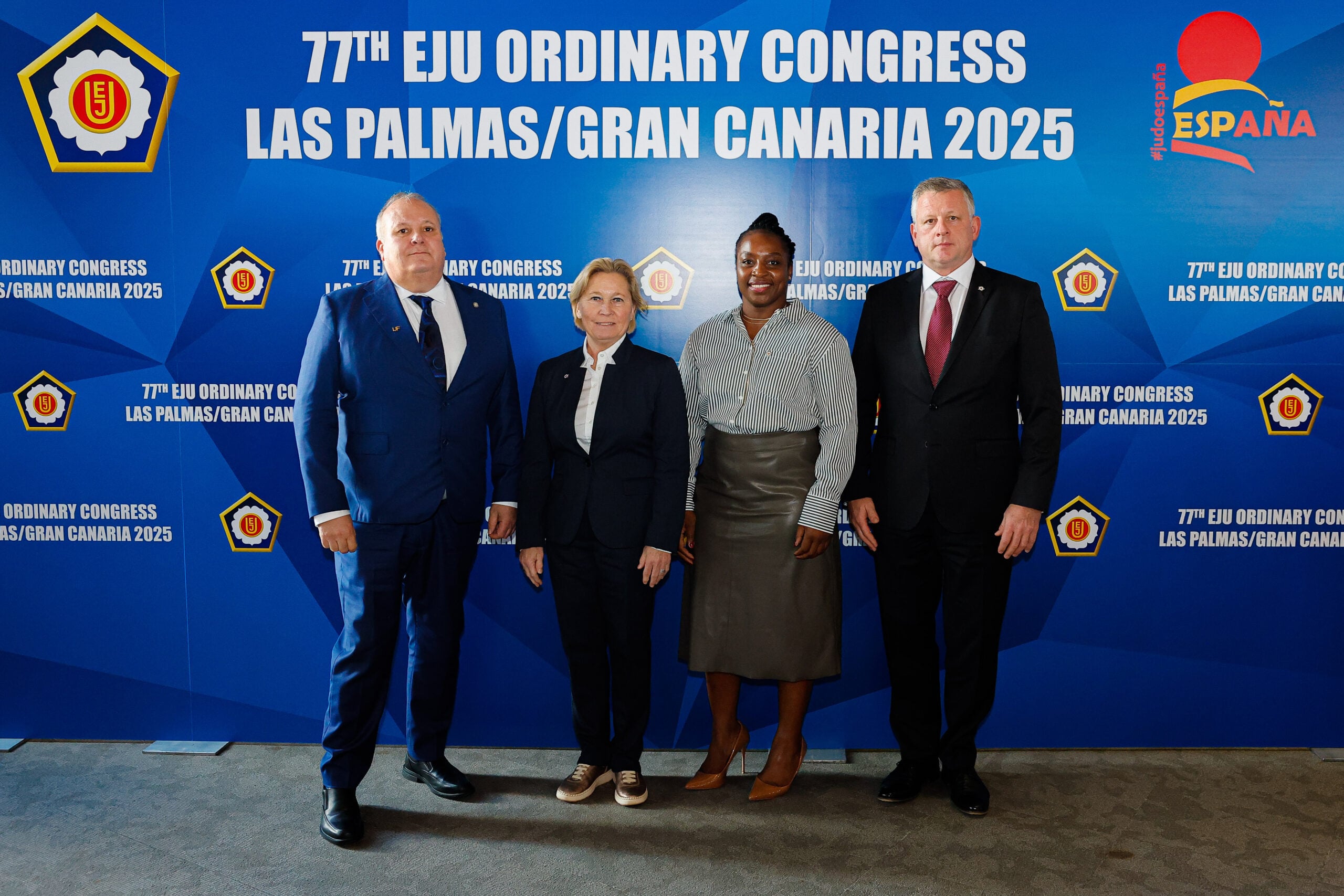
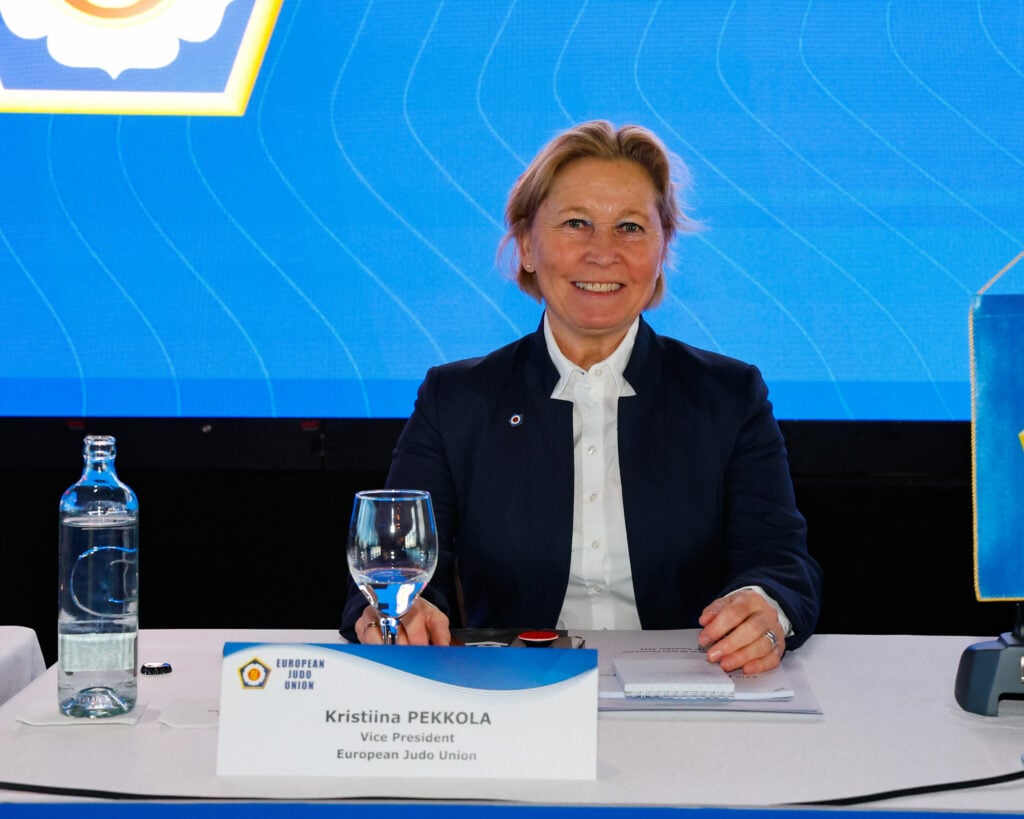
At the 77th Congress of the European Judo Union, held in Las Palmas, the EJU Education Sector reflected on a landmark year of progress, inclusion and innovation. Vice President of Education, Kristiina Pekkola, shares insights into the sector’s key achievements in 2025 and outlines the priorities shaping the future of European judo education.

Looking back at 2025, what do you consider the most significant achievements within the EJU Education sector?
KP: “The year 2025 marked remarkable progress in strengthening the connection between judo and lifelong learning. One of the most important achievements was the expansion of the Kata for All education programmes, including kata for children, cadets and juniors. We successfully introduced kata initiatives in countries that had not previously hosted kata festivals or seminars, while continuing to integrate adapted judo into kata education.
“Another highlight was the record-breaking participation at the World Veterans and Kata Championships, reinforcing our commitment to excellence, inclusion and the holistic development of judoka at every stage of life. In parallel, 2025 will be remembered as a landmark year for Adapted Judo within the EJU, signalling a new era of inclusivity and sporting excellence.”
Which new educational initiatives or programmes launched this year had the biggest impact on national federations and coaches?
KP: “A historic milestone was the Open European Adapted Judo Championships 2025 in Conegliano, which welcomed athletes with all types of disabilities for the first time, an important evolution from previous editions focused solely on intellectual impairments.
“The Houlgate Adapted Judo Camp and Workshop also stood out, not only as a sporting event but as a celebration of diversity, education and community. Alongside these initiatives, the introduction of digital learning modules and updated kata education resources provided coaches with accessible and practical tools, empowering national federations to raise educational standards and better support their members.”
How has the EJU’s approach to lifelong learning for coaches, referees and athletes evolved over the past year?
KP: “Our approach in 2025 became more integrated and continuous. Through Erasmus+ projects, we strengthened judo education in schools and enhanced inclusion for athletes with disabilities, creating a strong foundation for long-term development.
“By combining face-to-face seminars, online learning resources and practical certification pathways, we established a framework that supports ongoing professional growth. Projects such as Jita Kyoei 2, focused on integrity, values and education, made significant progress through the development of educational tools, training courses and a quality label system for clubs, concluding at the end of 2025.
“In addition, the JOY Project, connecting older and younger generations, continued to transform judo into a powerful intergenerational link, while the DATA Project supported the digital transition of sport organisations. The SAFE COMBAT Project also advanced substantially, strengthening safeguarding through research, collaboration and the development of a dedicated safeguarding code and certification system.”
What challenges did the Education sector face in 2025 and how did the EJU work to overcome them?
KP: “One of our main challenges was the difficult economic situation, which led to the delay or postponement of certain actions and events. This inevitably affected our ability to maintain consistent qualitative standards and to launch new educational opportunities for national federations.
“Another challenge was ensuring consistency across diverse national contexts. We addressed this by strengthening collaboration with federations, offering adaptable resources and multilingual support. Balancing traditional educational formats with digital innovation also required careful consideration, which we met by investing in high-quality hybrid solutions that combine accessibility with excellence.”
Can you highlight any key collaborations that helped drive educational progress this year?
KP: “Collaboration was central to our success in 2025. Strong partnerships with national federations, universities and medical experts played a vital role in advancing our programmes. Co-operation with the EJU Scientific Commission provided valuable research-based insights, while collaboration with medical professionals ensured the credibility and effectiveness of our Adapted Judo initiatives. These partnerships reinforced our commitment to evidence-based and inclusive education.”
As we move into 2026, what are the Education sector’s main priorities and what developments can the judo community expect?
KP: “Looking ahead, our priorities include expanding digital education platforms, deepening research-driven initiatives and further strengthening inclusivity across all programmes. We also aim to integrate mental health and resilience training more fully into coach and athlete development, ensuring a truly holistic approach to education.
“Diversity and gender equity will remain key priorities, from the tatami to leadership roles. The judo community can expect innovative learning opportunities, enhanced international co-operation and a continued emphasis on lifelong learning as we build on the strong foundations laid in 2025.”
Author: Szandra Szogedi