





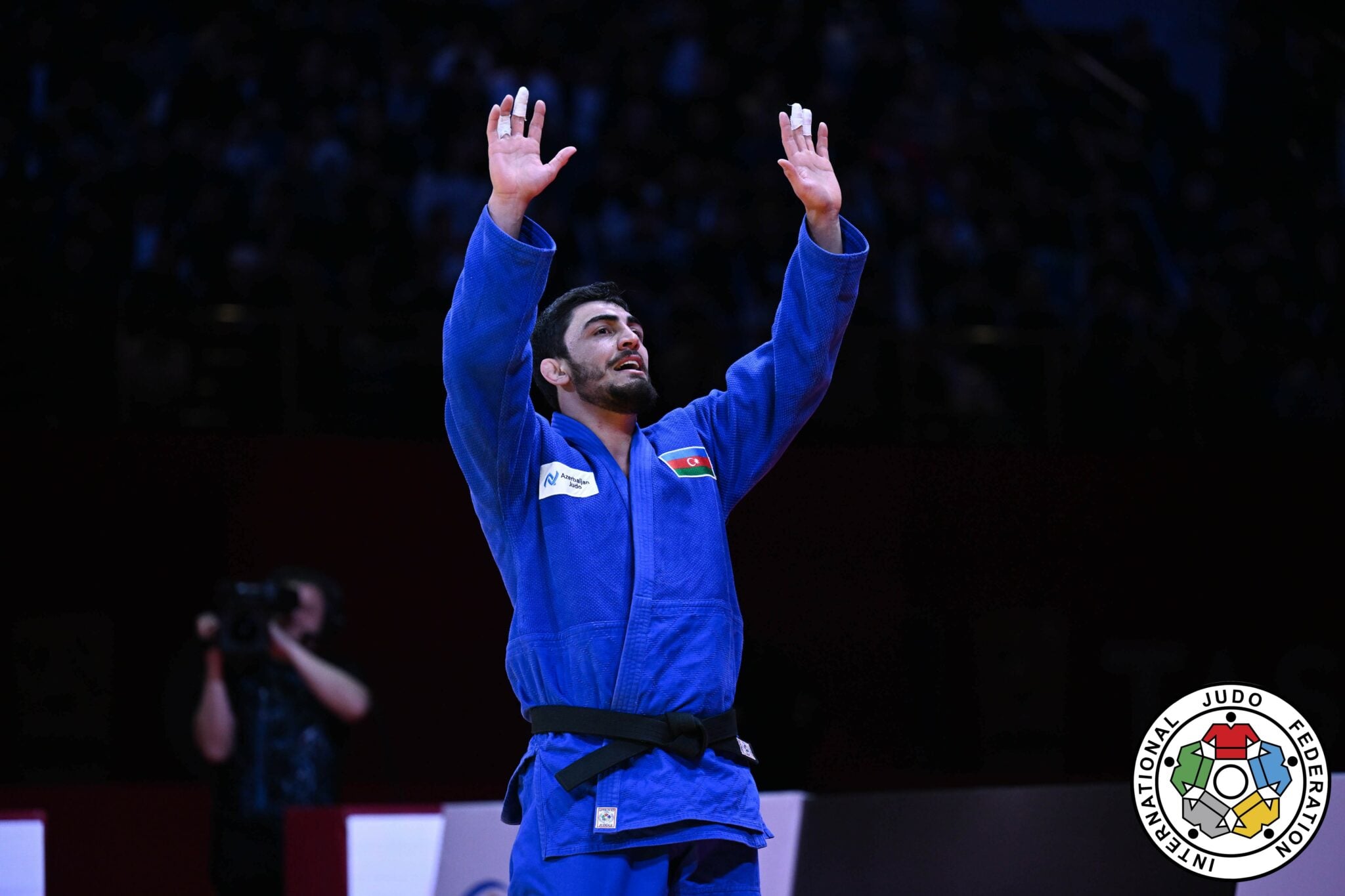
The third and final day of the OTP Group Tashkent Grand Slam 2026 concluded with an elevated performance from the European judoka. A total of 10 medals were secured, three of them gold, two courtesy of Azerbaijan. The team that effectively carried the continent throughout the weekend in a fiercely contested event may not have been able to overtake Japan’s lead on the overall medal table but they closed the gap and finished with four gold, one silver and two bronze medals. The hosts, Uzbekistan, remained in third place. So, what unfolded during the final block of day three?

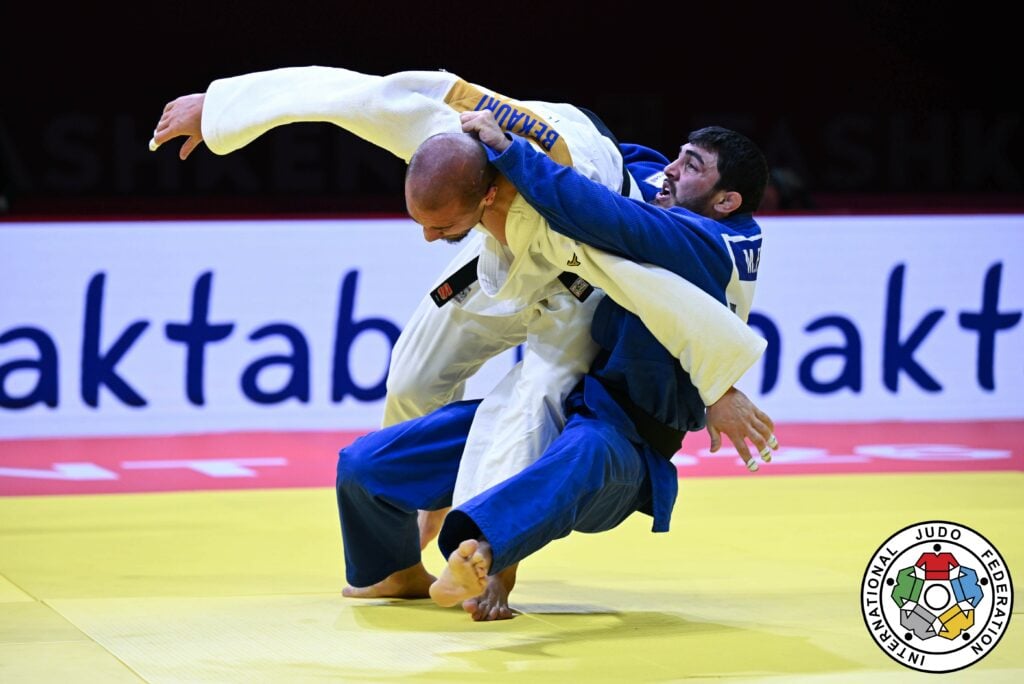
The gold medal contest in the -90kg category promised a compelling clash between double Olympic champion Lasha Bekauri’s explosive creativity and Murad Fatiyev’s tactical discipline. At the halfway stage, only Bekauri had been penalised for passivity. In a confused exchange, Fatiyev seized his opportunity, cleverly guiding his opponent to the mat to score waza-ari. He extended his lead with an additional yuko, placing the Georgian under genuine pressure. Bekauri pushed relentlessly in the closing stages but Fatiyev managed the contest intelligently and held on to secure gold in a result that surprised many observers.
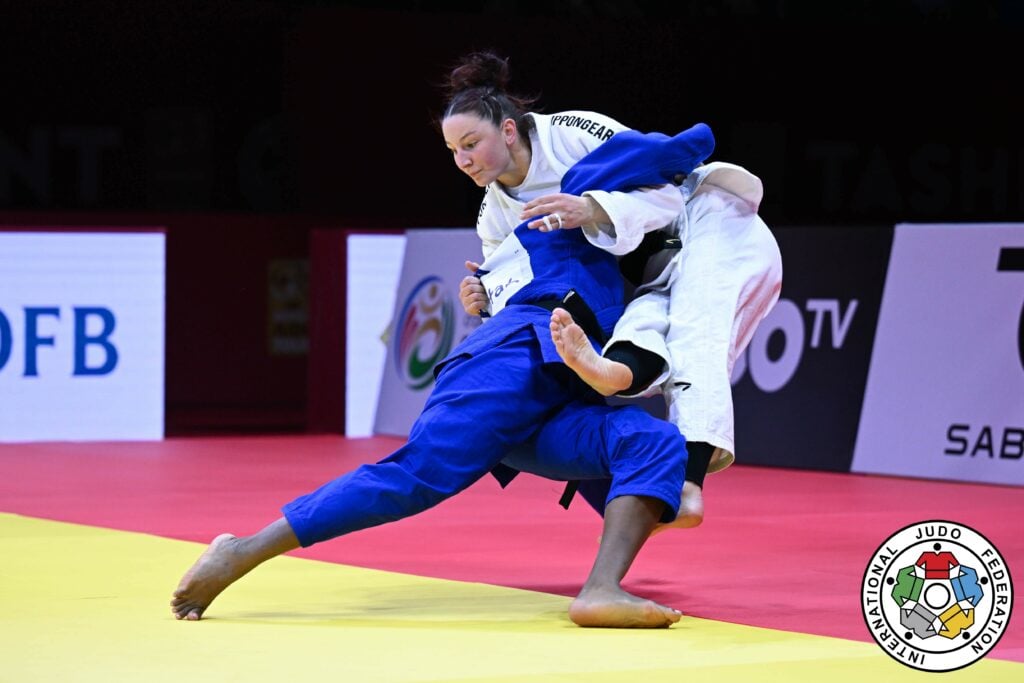
Golden moments continued in the -78kg category as Anna Monta Olek (GER) and Kaila Issoufi (FRA) faced one another in the final. With both athletes in formidable form, anticipation was high for an intense encounter. Issoufi’s tactical plan was clear: control Olek’s sleeve to neutralise the German’s powerful maki-komi attacks and wait patiently for the right counter opportunity. She executed her strategy superbly. The French judoka scored an initial yuko before adding a waza-ari with a perfectly timed counter that came close to ippon. Maintaining her focus, Issoufi transitioned immediately into groundwork, securing a hold and flowing into an armlock sequence for ippon. It was a performance of maturity and precision, earning her a first Grand Slam gold medal.
Additionally, Aleksandra Babintseva (RUS) claimed bronze in the -78kg category as she faced Karol Gimenes (BRA). There was little suspense. Babintseva scored two early yuko before finishing with a hold-down for ippon.
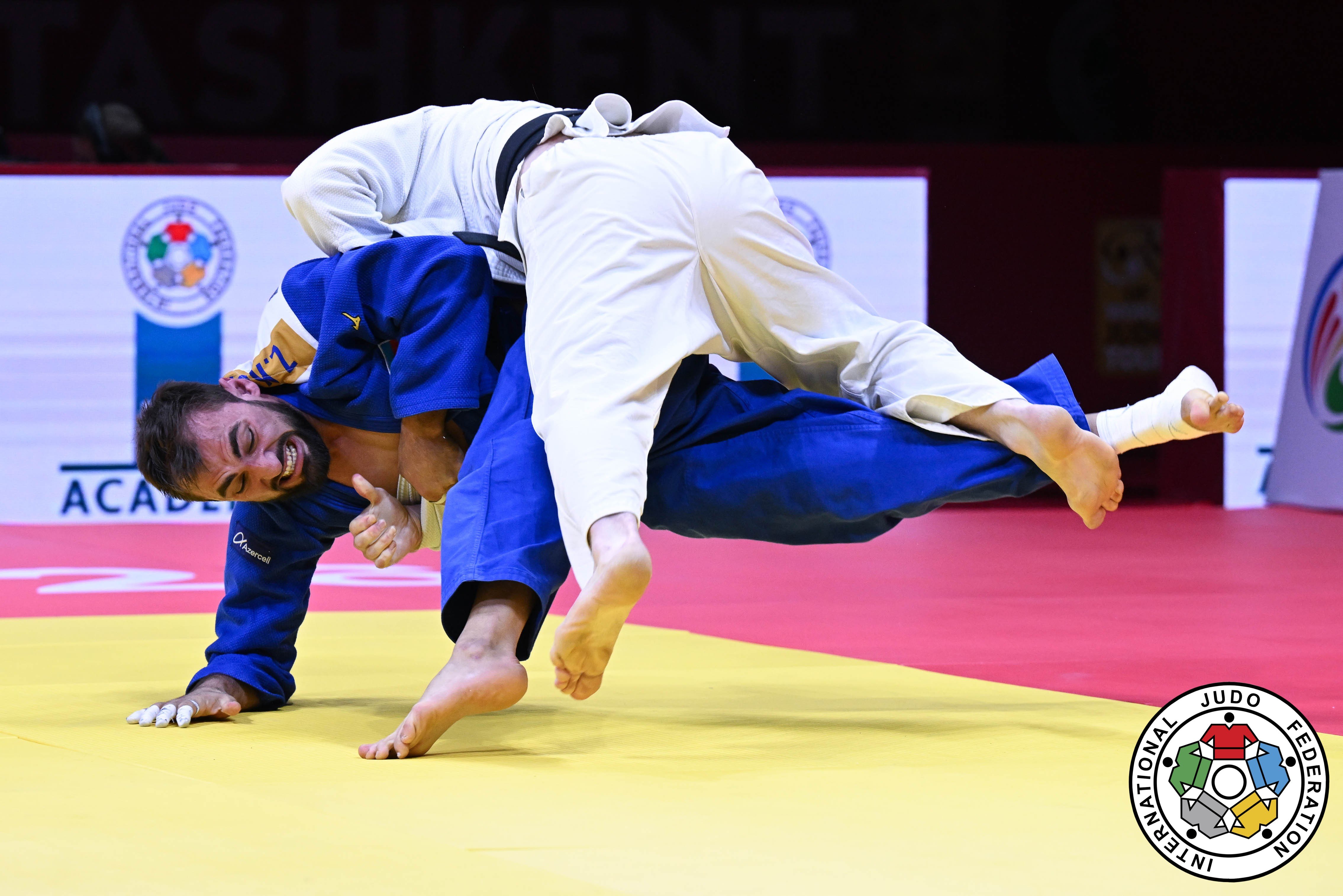
Great champions are not always at their peak but they reveal themselves in difficult moments. Bronze was not the objective for Zelym Kotsoiev (AZE), yet by the end of a demanding day it carried real value. To reach the podium in the -100kg category, he had to overcome Adam Sangariev (RUS). For much of the contest, the Olympic champion struggled to find his rhythm. Sangariev offered few openings but Kotsoiev was not at his explosive best either. With the bout heading towards a narrow conclusion, he found perfect timing in the closing seconds, launching a powerful maki-komi for ippon.
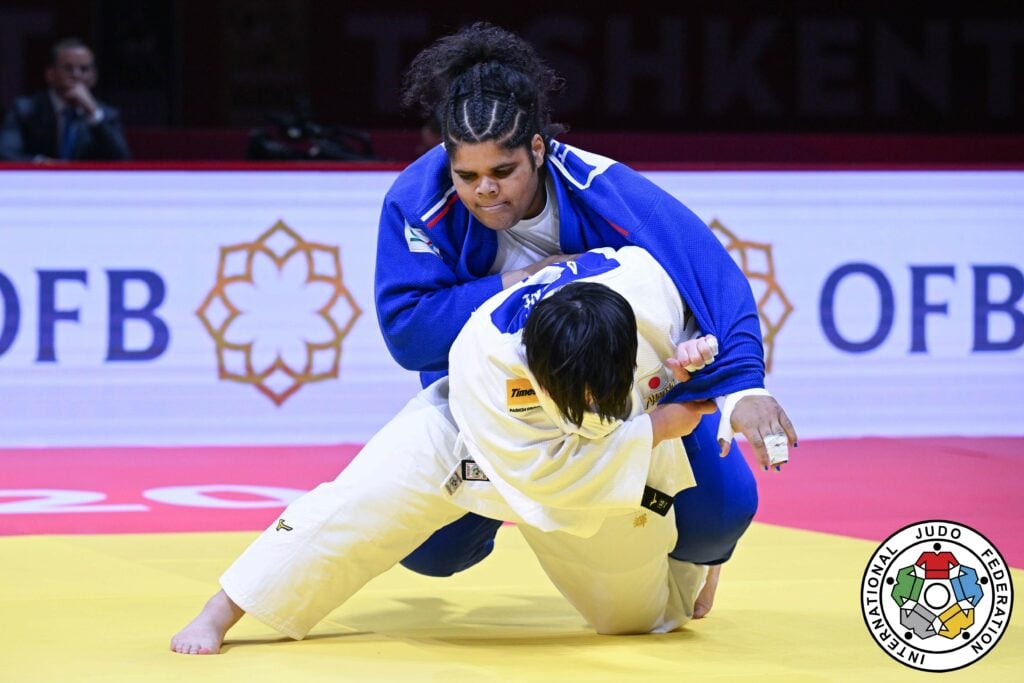
Lea Fontaine (FRA) was the only European judoka to reach the podium in the +78kg category. Following three confident wins, she progressed to the final to face Akira Sone (JPN). The contest offered a fascinating contrast: two fundamentally different styles and physiques meeting on the tatami. Sone produced a display of dynamic, mobile judo, using near-flawless footwork and sharp technical precision to disrupt Fontaine’s rhythm completely. She moved constantly, creating angles and denying the French athlete any stable base. Eventually, she identified the opening she had patiently constructed. A well-timed o-uchi-gari brought a decisive yuko, which proved enough. With control and experience, Sone managed the closing stages to secure another Grand Slam gold medal, a return to the top that reflects her stature in the sport. Silver for France.
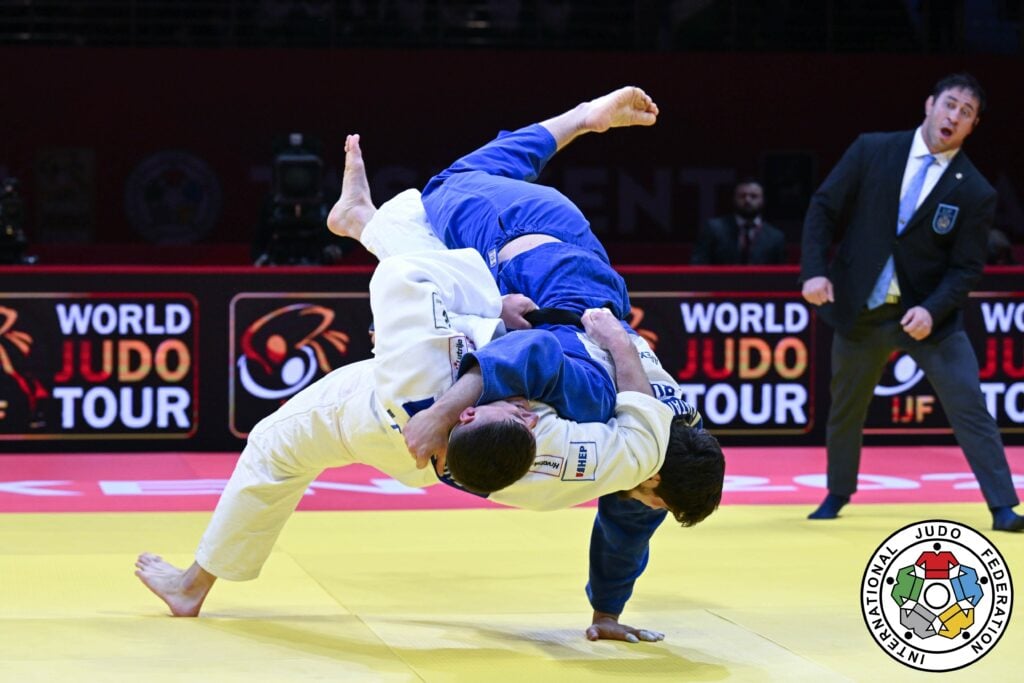
Three of the four medals in the +100kg category were taken by European judoka. The bronze medals went to Mikita Sviryd (CRO) and Dzhamal Gamzatkhanov (AZE). In the first bronze medal contest, Sviryd faced Bislam Katamardov (RUS), with both athletes seeking redemption. The Croatian secured bronze with two spectacular scores, first a waza-ari followed by a yuko, earning his first Grand Slam medal. The second bronze medal contest was scheduled between Gamzatkhanov and Yerassyl Kazhybayev (KAZ). However, with the Kazakh athlete unable to compete, Gamzatkhanov was awarded the bronze medal.
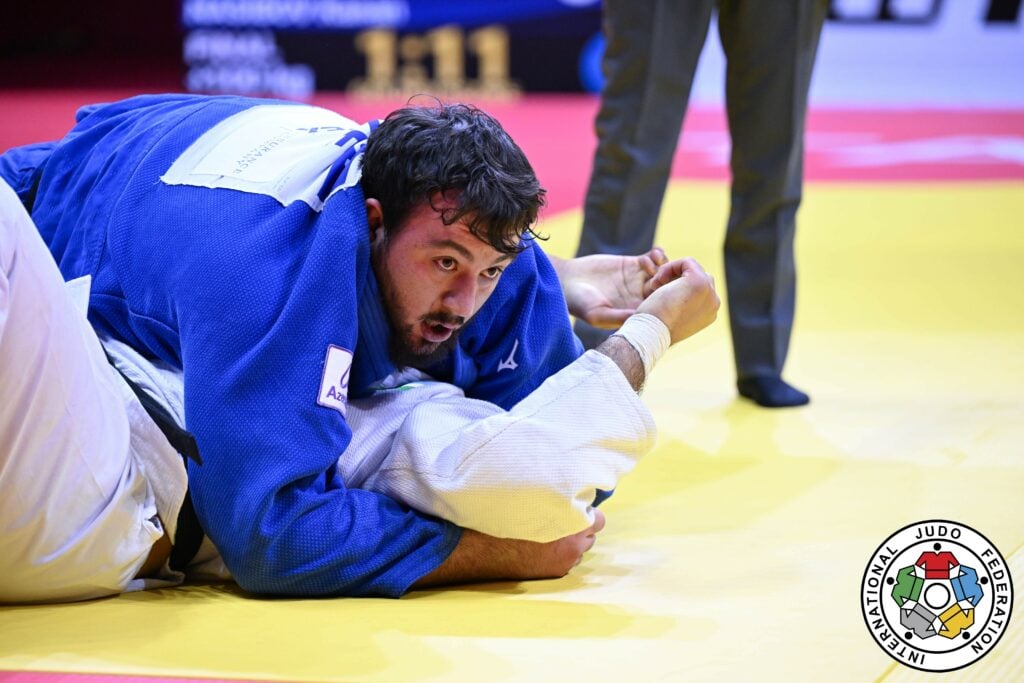
The final was tense as the hosts had the opportunity to close the weekend in style with gold and their national anthem echoing through the arena. However, Kanan Nasibov (AZE) had other ideas as he faced Alisher Yusupov (UZB).
The arena believed. Yusupov believed. He gave everything, attacking relentlessly and laying his heart on the tatami, determined to deliver gold for his supporters, but it was not enough. After an extremely tight contest, the bout moved into golden score. There, Nasibov found the decisive moment, securing a hold-down to claim gold and silence the crowd. It was a fierce and memorable battle between two heavyweights who left nothing in reserve.
For Europe, it was the perfect way to conclude a weekend that may not have started in the strongest fashion but ended in emphatic style. The next IJF World Tour event will take place next weekend as the Upper Austrian Grand Prix gets underway from 6–8 March 2026.
Source: IJF/Nicolas Messner
Author: Szandra Szogedi