





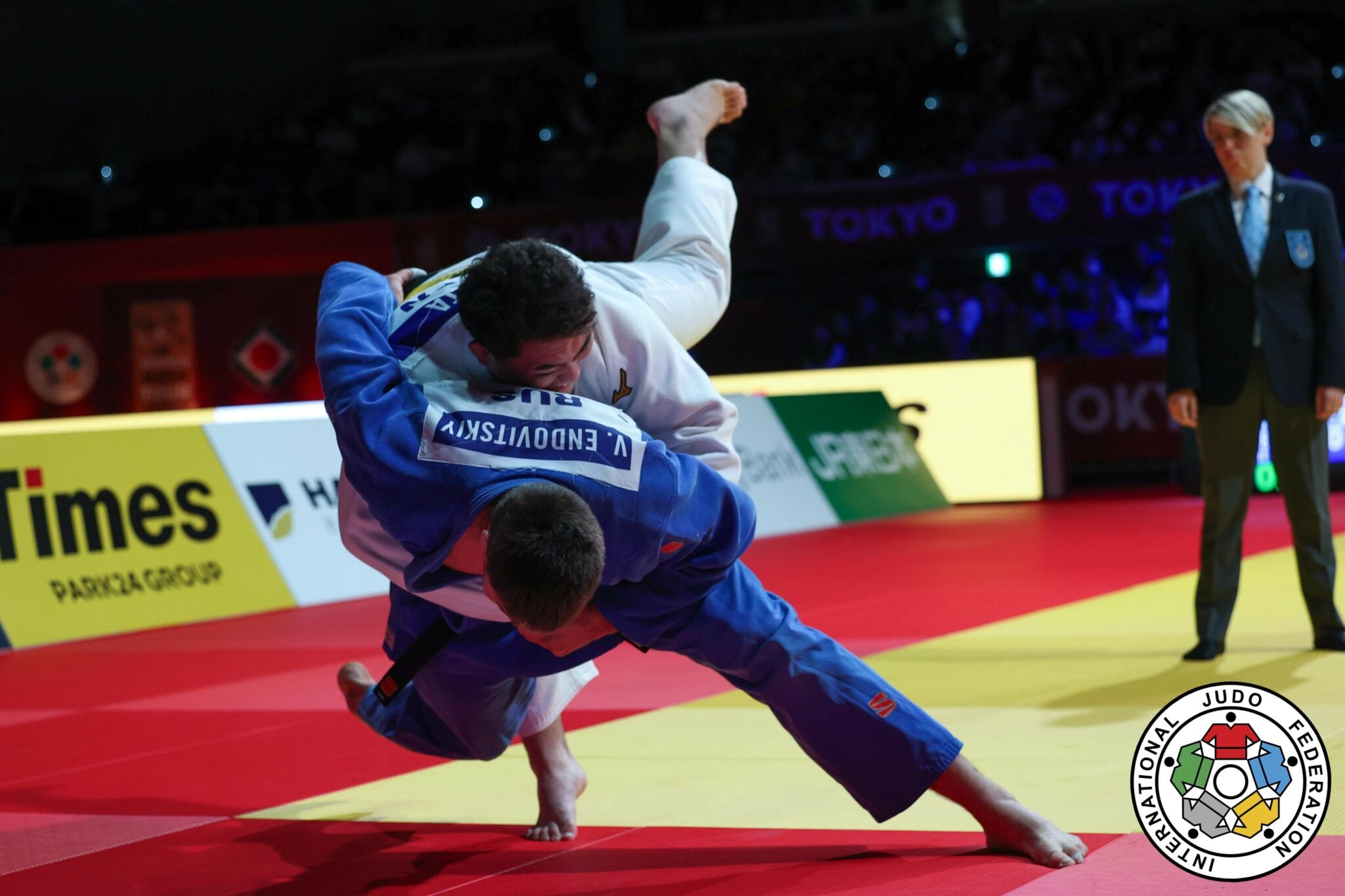
The opening day of the PARK24 Group presents Tokyo Grand Slam 2025 delivered exactly what the judo world expected: uncompromising contests, roaring crowds and inevitably, fierce Japanese dominance. By the time the preliminary rounds had concluded and the schedule for the final block was revealed, Europe found itself with just two shots at gold, in the –100kg and +100kg men’s divisions. Every other category had already been secured for the host nation. Even so, Europe refused to go quietly.

The continent’s first medal of the day came courtesy of Giorgi Jabniashvili (GEO) in the fiercely contested –90kg category. Facing Tiziano Falcone (ITA), the Georgian judoka was made to work for every exchange. Falcone countered with determination but Jabniashvili maintained the upper hand, ultimately breaking through with a sharp, well-timed seoi-otoshi for waza-ari. Neither athlete found another opening and as the final seconds disappeared, the bronze was sealed for Georgia, Europe’s first podium finish of the tournament.
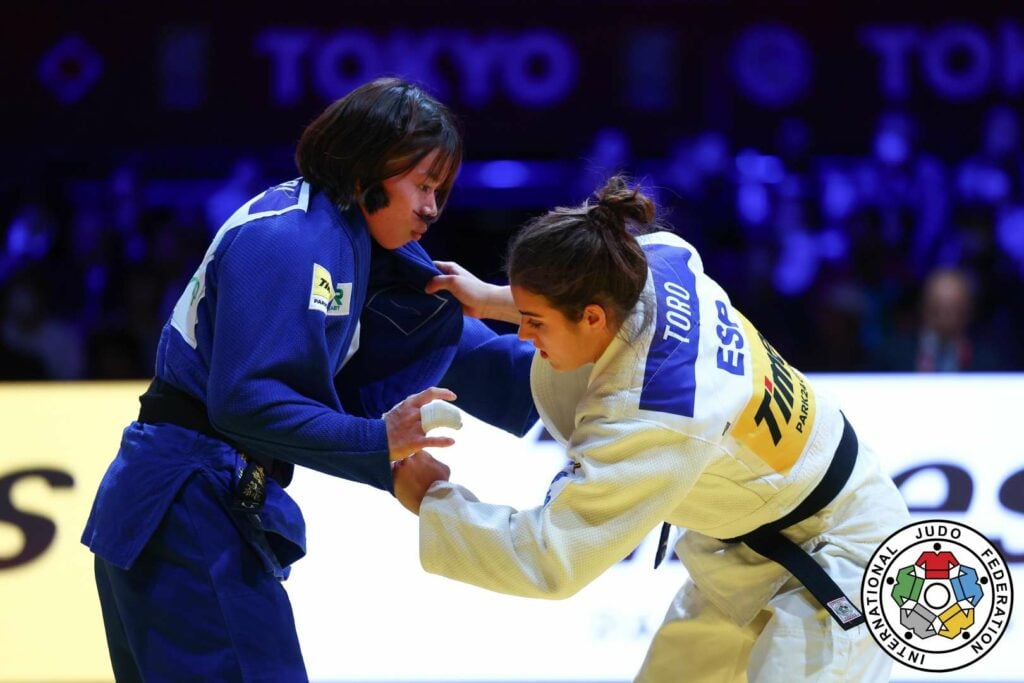
Spain’s hopes rested on Ariane Toro Soler in the second –52kg bronze medal contest and she delivered under pressure. Her meeting with Japan’s Kisumi Omori unfolded as a tactical, finely balanced contest, with both judoka attacking but unable to convert their efforts into scores. Entering golden score one penalty behind, Toro Soler was forced to chase the momentum and she did so with composure. A skilful low side-sacrifice technique earned her a yuko after video review, enough to secure the medal and place Spain on the Tokyo podium. She was the sole European medallist in the category.
Europe’s first chance for gold came in the electrifying –100kg final, as Ilia Sulamanidze (GEO) stepped out to face home favourite Dota Arai (JPN). The Tokyo Metropolitan Gymnasium erupted, you could feel the weight of expectation in the air. Arai opened aggressively, launching a series of enormous o-uchi-gari and uchi-mata attempts that forced Sulamanidze dangerously close to conceding. But champions recover fast and Sulamanidze proved exactly why he belongs among the world’s elite. In the next exchange, he initiated an o-soto-gari, prompting Arai to evade but the Georgian was already two steps ahead. He linked into a perfectly executed o-soto-otoshi, sending Arai cleanly onto his back for ippon. The crowd fell silent; Europe roared. Georgia had stolen Japan’s gold.
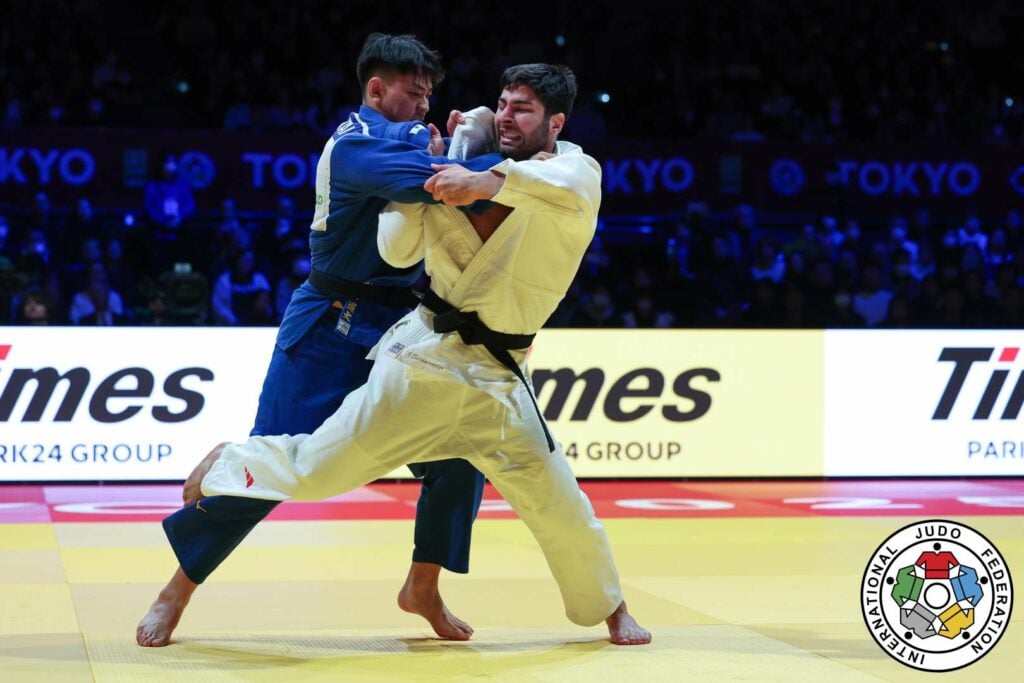
Momentum stayed with Georgia as Eteri Liparteliani entered the –57kg bronze medal contest against France’s Sarah-Léonie Cysique. Cysique worked relentlessly to disrupt Liparteliani’s preferred distance, nearly catching her with a sharp foot sweep but Liparteliani responded with renewed purpose. In a dynamic exchange, she secured an unusual but effective grip and launched obi-tori-gaeshi for waza-ari. Cysique fought until the last seconds, nearly scoring with sasae-tsuri-komi-ashi but the clock defeated her. Liparteliani claimed another Grand Slam medal for her growing collection and another podium for Georgia.
The +100kg final promised a showdown and it delivered. Japan’s Hyoga Ota met Valerii Endovitskii (RUS) in a battle of power and control. For much of the contest, neither judoka could create a decisive opening. Then, as the final minute approached, Endovitskii began reaching deep down Ota’s back, an awkward, suffocating grip that unsettled the Japanese athlete. With seconds remaining, Endovitskii capitalised, winding through with a beautifully timed soto-makikomi. The referee’s call of waza-ari coincided with the final buzzer. Heavyweight gold was not staying in Japan, Russia had claimed the title.
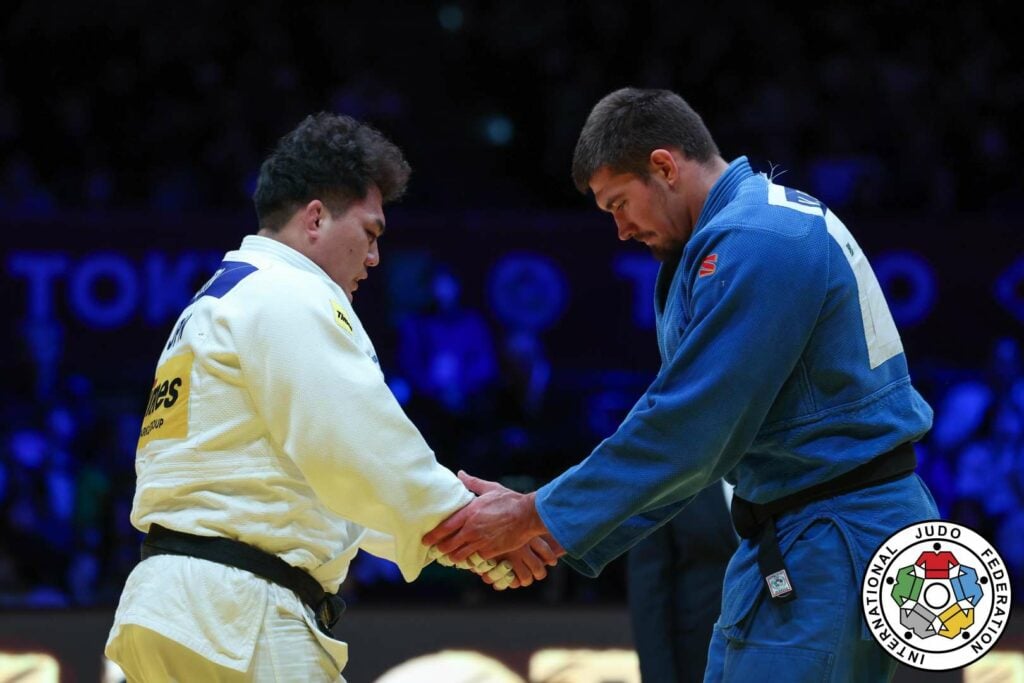
The first –63kg bronze medal bout featured Renata Zachova (CZE) against Gili Sharir (ISR). It turned into a duel of seoi-otoshi, with Sharir drawing first blood with a yuko, only for Zachova to level the scoreboard almost immediately. As the clock approached its final ten seconds and commentators prepared for golden score, Zachova surprised everyone with a small but decisive ko-uchi-gari. It registered a second yuko, enough to secure the bronze and close Europe’s medal tally for the day.
Day one ends with Europe fighting tooth and nail against Japan’s overwhelming strength but moments of brilliance ensured the continent did more than simply survive. It left with two gold medals.
Source and Images: International Judo Federation
Author: Szandra Szogedi