





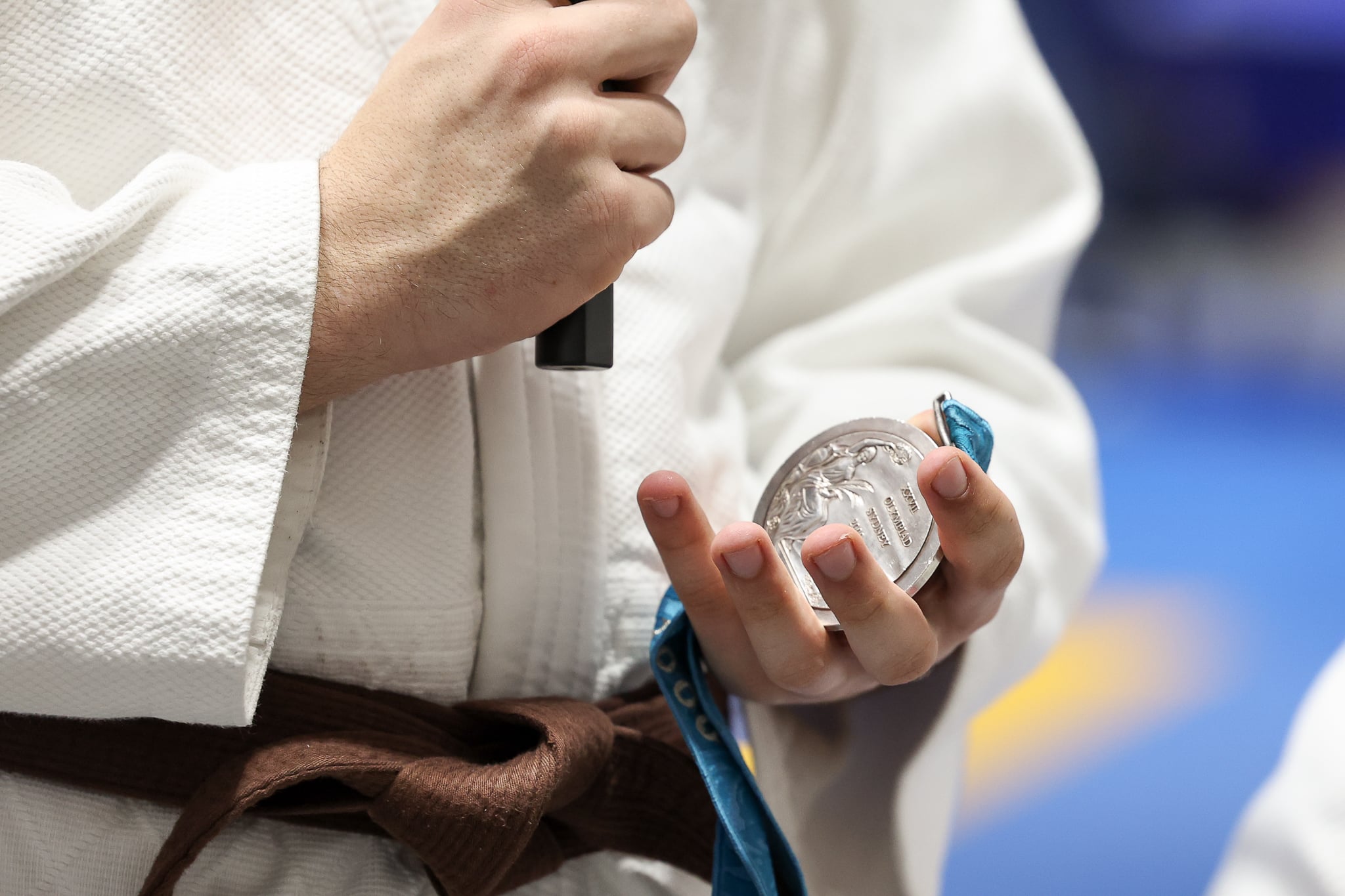
As Larbi Benboudaoud walks onto a tatami, there is a certain gravitational pull that surrounds him. Perhaps it stems from his Olympic silver medal, won in Sydney in 2000. Perhaps it comes from decades spent shaping French judo, first as an athlete, then as a coach and today as one of the federation’s leading strategic voices. In Houlgate, at the 2025 Get Together event dedicated to adapted judo, that aura takes on a softer tone. Here, he is not the high-performance architect nor the former world champion. He is simply a judoka among judoka…, and that, in many ways, is the essence of the journey he shared with us.

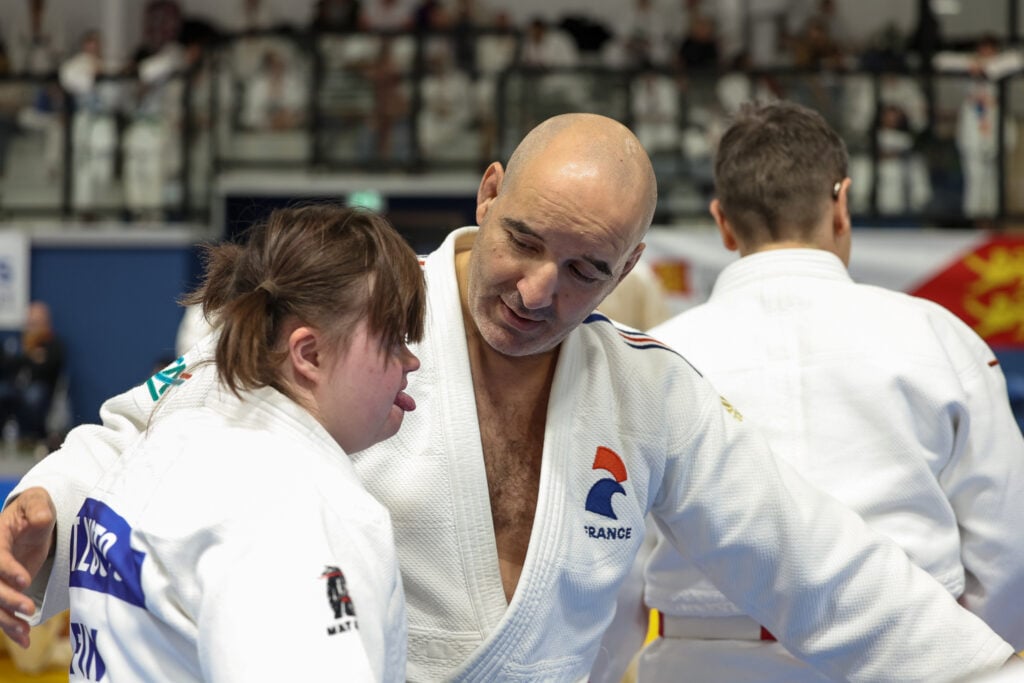
Benboudaoud’s competitive career closed after the Athens 2004 Olympic Games, a natural endpoint for an athlete whose achievements had already secured his place in judo history. Yet retirement only shifted his role, not his commitment. He transitioned almost immediately into coaching, first guiding the French junior and senior men’s teams and later joining the national women’s programme, where he contributed to a golden era of French judo. His eye for detail, reputation for humility and deep understanding of competition made him a keystone figure behind the scenes.
After serving as Director of High Performance for the Tokyo Olympic cycle, he stepped into a new chapter in 2023 as the Director of Institutional and Sports Relations for France Judo. The title may be administrative but the mission remains profoundly human, bridging the sport’s heritage with its future.
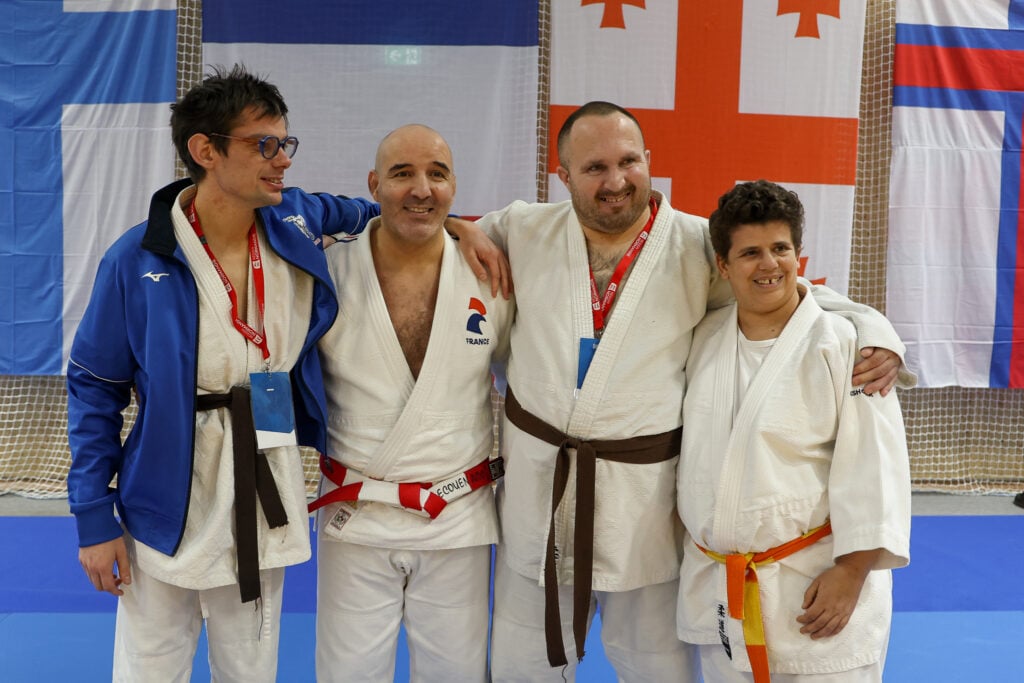
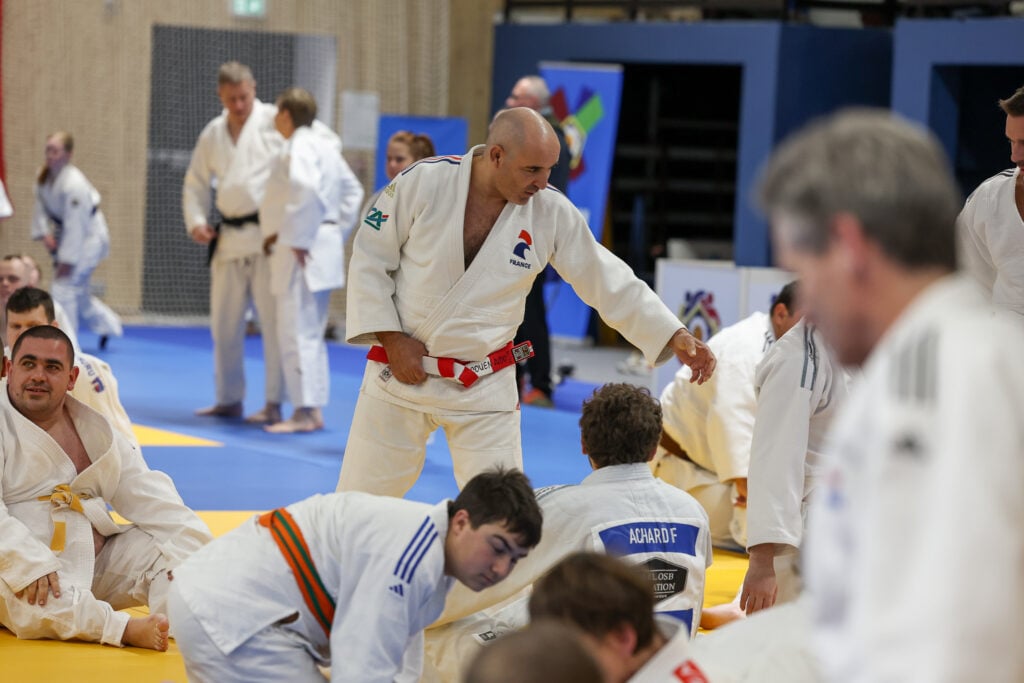
Returning to Houlgate is, for Benboudaoud, a return to familiar ground. As an athlete and later as a coach, he trained here within the intense, narrow focus of high-level competition. Today, however, the setting is transformed. Adapted judoka fill the room, athletes of diverse abilities, ages and experiences, united by the simple joy of stepping onto the mat.
“I always knew that judo was a sport for everyone,” he reflects. “However, when you are competing at a high level, you don’t always realise it.”
In Houlgate, that realisation becomes tangible. There is no pressure of world rankings, no chase for medals, only movement, connection and the shared discipline that defines judo. The Olympic medallist finds himself smiling, exchanging greetings, adjusting judogi, demonstrating techniques. The tatami has become a space not just for excellence but for belonging.
Benboudaoud’s dedication to inclusive judo is not new. Since 2004, he has served as a patron and ambassador of the French Paralympic team, a role he speaks of with quiet pride. His belief in expanding access to sport has become tightly woven into France Judo’s strategic vision.
“France is one of the leading nation in Olympic judo but that also means we must lead in inclusion. That is why we applied to our Ministry of Sports to officially be given the delegation for adapted sports, since we already have the Paralympics.”

During the divisioning sessions in Houlgate, he moved with the same calm precision that once carried him through world finals but here, every encouraging word seemed to hold as much weight as any medal. He offers a final reflection, one that feels less like a statement and more like a philosophy.
“Judo is one of the most inclusive sports in the world because everyone can practise it, men, women, the elderly, the tall, the short, people with disabilities. Our strength lies in our ability to adapt and to transmit the universal values of judo that contribute to making a better world.”
The sport that once catapulted Larbi Benboudaoud to global acclaim now shows its most generous face. A discipline that honours excellence, yes, but even more, honours humanity.
Author: Szandra Szogedi