





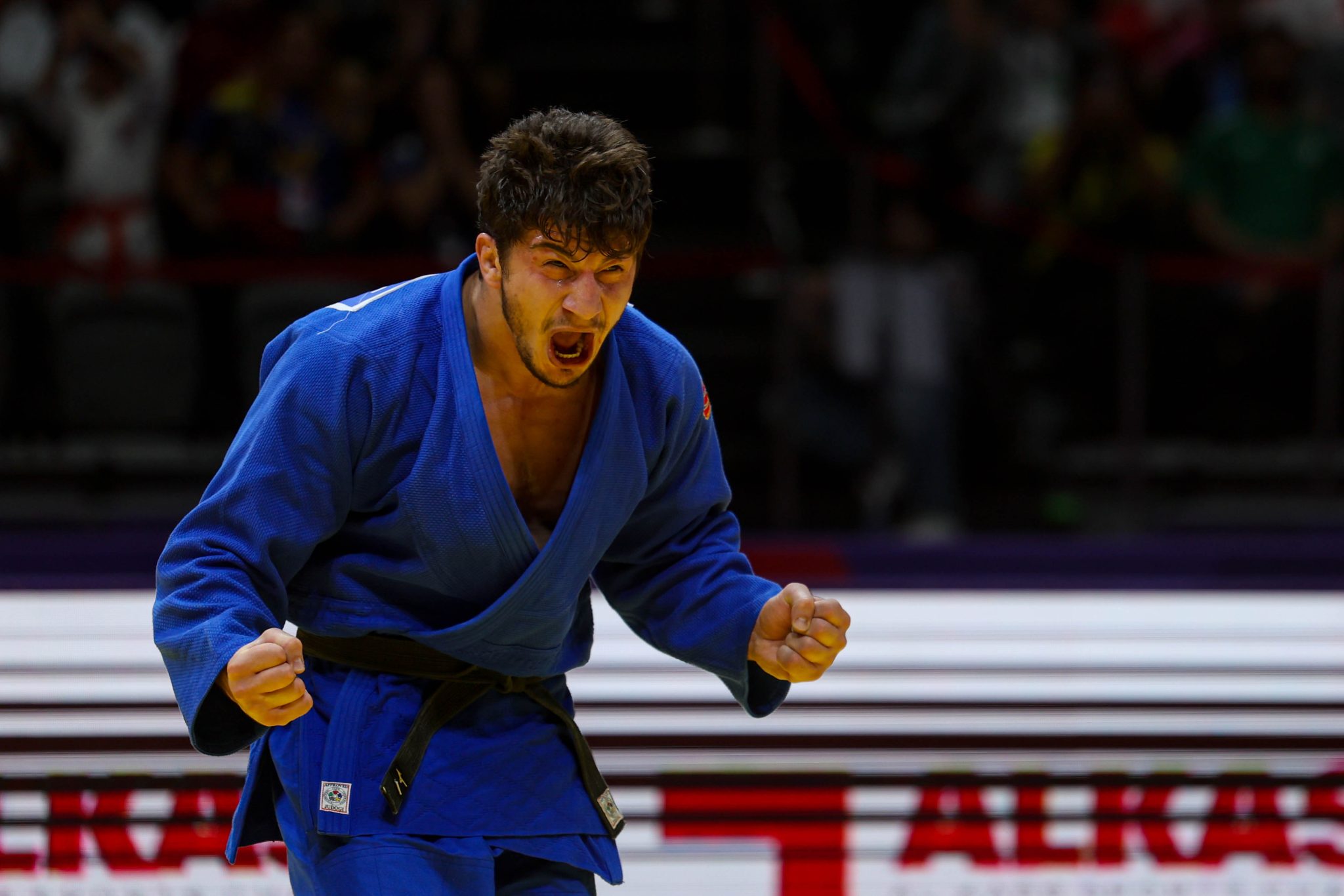
As Europe’s best judoka flow into Tbilisi, Georgia, for the 2026 European Championships, the EJU catch up with some of the host nation’s top stars among the men’s categories to talk about what judo means to them, what kind of judo one can expect from the Georgians on the tatami, and hopes for how they plan to succeed on home soil.

Top Georgian Stars to Watch at the European Championships Tbilisi 2026
A sport woven into national identity
For -90 kg 2023 world champion Luka Maisuradze, the sport runs to his very core, “Judo is in our blood.”
“Judo is deeply loved in Georgia,” he explains. “In our country, it is not just a sport, it is an essential part of our culture and tradition.”
Maisuradze points to a national character shaped over centuries and a long history of conflict. In that context, the one-on-one nature of judo, while also represented in the mixed teams as a collective, feels instinctive. It mirrors both the country’s past and its enduring spirit.
“Judo, with its core values – fighting spirit, respect for the opponent and discipline – aligns closely with the Georgian character and with our traditional wrestling style, which is recognised on UNESCO’s Intangible Cultural Heritage list,” he added.
That connection, he says, helps explain why Georgia continues to produce elite competitors and fiercely loyal supporters.
Paris 2024 Olympic silver medallist and reigning European champion Ilia Sulamanidze (-100 kg) echoes the sentiment, framing the sport as an extension of the national experience. For him, judo reflects the kind of struggle that has long defined Georgian history. “That is why victory there brings them [Georgians] immense joy.”
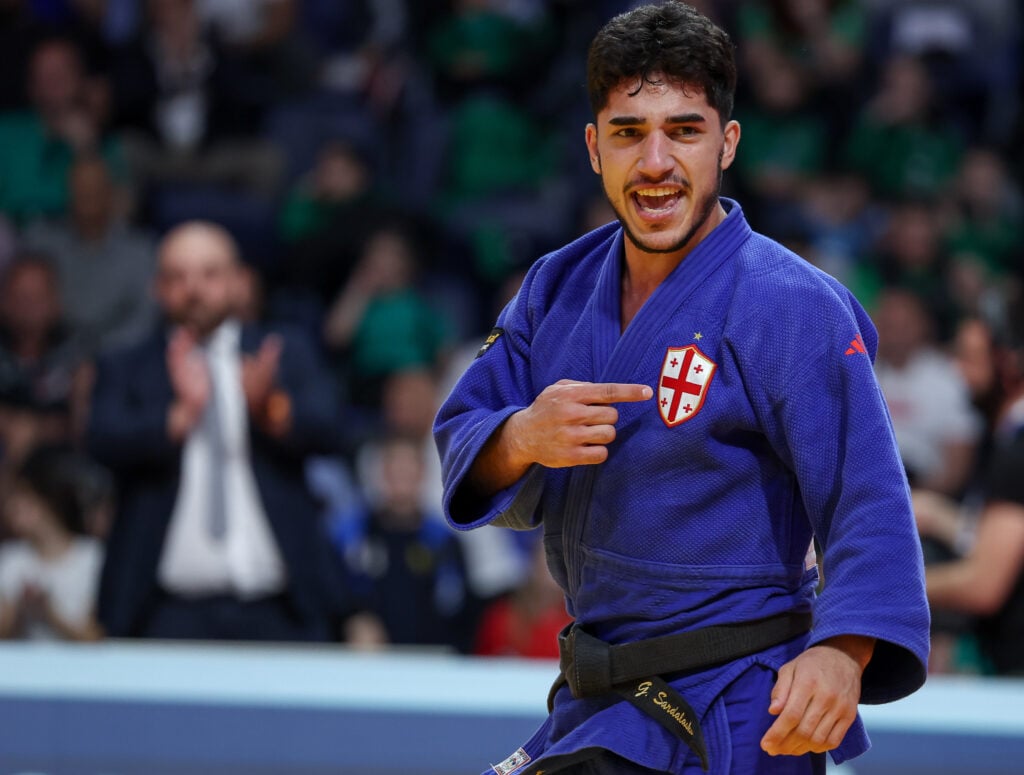
2024 -60 kg world champion Giorgi Sardalashvili, also highlights the bond between athletes and their supporters, who are sure to be on full display here in Tbilisi this week.
“The Georgian people have a very close connection to judo,” he says. “And we have truly exceptional fans.”
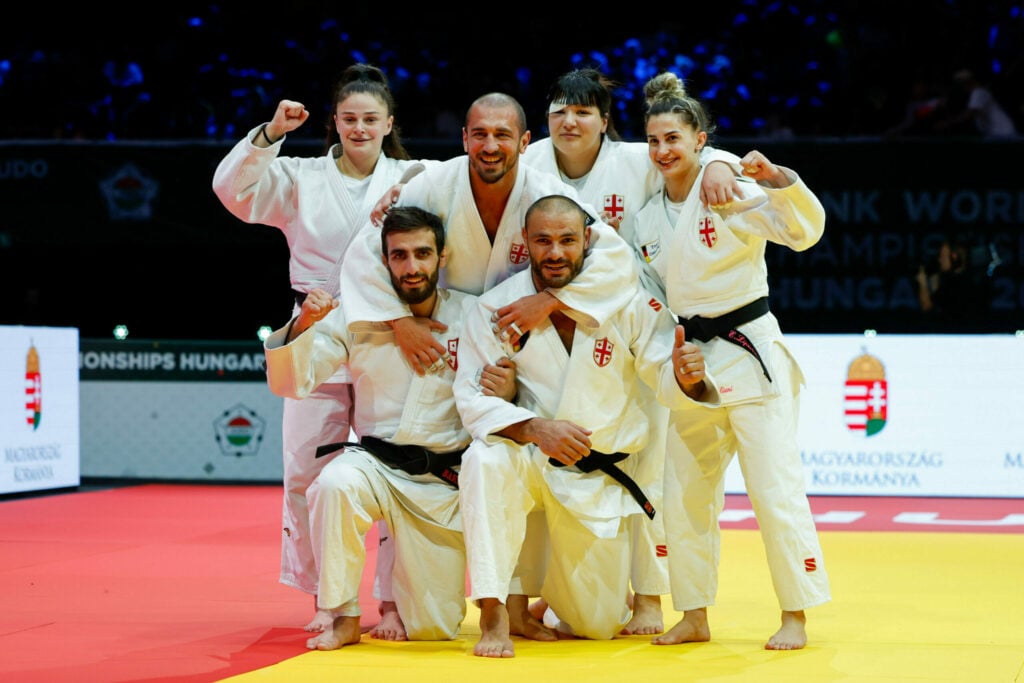
What are your favourite moments in Georgian judo?
When asked to reflect on their favourite moments in Georgian judo history, Maisuradze pauses. For a nation with such sustained success on the international stage, narrowing it down is no easy task.
“However, even during one of the most challenging periods for our country, when there was war, we still managed to win an Olympic gold medal. That is why Irakli Tsirekidze’s Olympic title [in 2008] was especially significant for Georgia.”
He is equally emphatic about the legacy of -73 kg judo legend Lasha Shavdatuashvili. With a complete set of Olympic medals, gold, silver and bronze, alongside world and European titles, the 34-year-old continues to act as an example for the entire team.
“As a young and relatively inexperienced judoka at the time, he achieved extraordinary success,” Maisuradze explained. “Despite reaching the pinnacle of the sport, he never stopped developing and working hard. Ultimately, he became the most decorated Georgian judoka and his dedication and determination have become an example for all of us.”
Competing himself in the -90 kg category himseld, Maisuradze highlights the unique place the weight holds within Georgian judo. “The -90 kg weight category is truly special for Georgia,” he says. “It is the category where we have won the most Olympic gold medals.”
Maisuradze has contributed to that legacy himself, claiming the world title in 2023 in an historic first all-Georgian final against teammate and double Olympic champion Lasha Bekauri, who announced himself with Olympic gold on his debut, at the Tokyo 2020 Olympics, before defending his title at the Paris 2024 Olympics.
“The next generation is already proving that they can achieve great success in this category,” he adds. “For that reason, it is fair to call the -90 kg category the ‘Georgian weight.’”
Sulamanidze also points to his friend and teammate, Bekauri, as an inspiration, noting that his successes continue to raise the overall standard of Georgian judo.
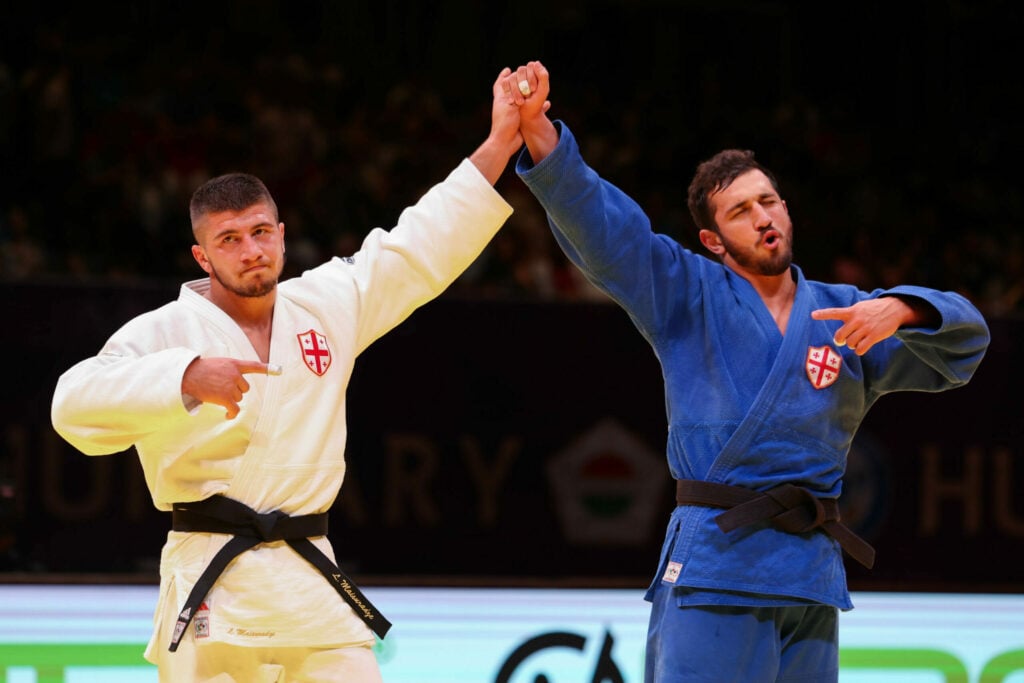
What defines the Georgian judo style?
That evolution naturally raises a broader question: what exactly defines the Georgian style?
Judo may be a global sport, but it has never been uniform. Across continents, distinct national styles have emerged, shaped by physical attributes, technical traditions and, in some cases, centuries of history. Georgia is perhaps one of the clearest examples of this, a country where judo has evolved in close dialogue with its storied wrestling culture.
For Maisuradze, the foundation lies in proximity and pressure.
“Georgian judo has a very distinctive style which often makes us uncomfortable opponents for athletes from other countries,” he says. “We typically prefer close distance fighting, which comes directly from our traditional wrestling background.”
That background is crucial. Many Georgian judoka begin their careers in traditional wrestling, carrying over movement patterns and techniques that influence their judo.
The result is a style particularly rich in ashi-waza and te-waza, often executed with a rhythm and structure that differs from more classical Japanese approaches. Some of these techniques even retain their original Georgian names. Sulamanidze lists a few techniques rooted in Georgian wrestling tradition, including “Mogverdi, bruni, Khabareli and gadavleba.”
Sardalashvili agrees, “Before judo became popular in Georgia, many techniques were already partially developed through these traditional styles and later adapted into judo,” he says, pointing to o-goshi, ouchi-gari and ura-nage.
At the same time, Maisuradze is keen to stress that Georgian athletes are far from one-dimensional. “This does not mean we lack classical judo skills,” he notes. “We are also effective in katame-waza, which is not directly related to traditional wrestling.”
Even within sutemi-waza, where throwing techniques involve giving up balance or position, Georgian judoka have adapted selectively. Techniques such as ura-nage align naturally with their close-contact and physical style, while others require adjustment away from traditional wrestling instincts.
The overall result is a well-rounded, highly adaptable and, dare we say, dangerous approach. It’s no secret that opponents don’t want Georgian judoka getting too close.
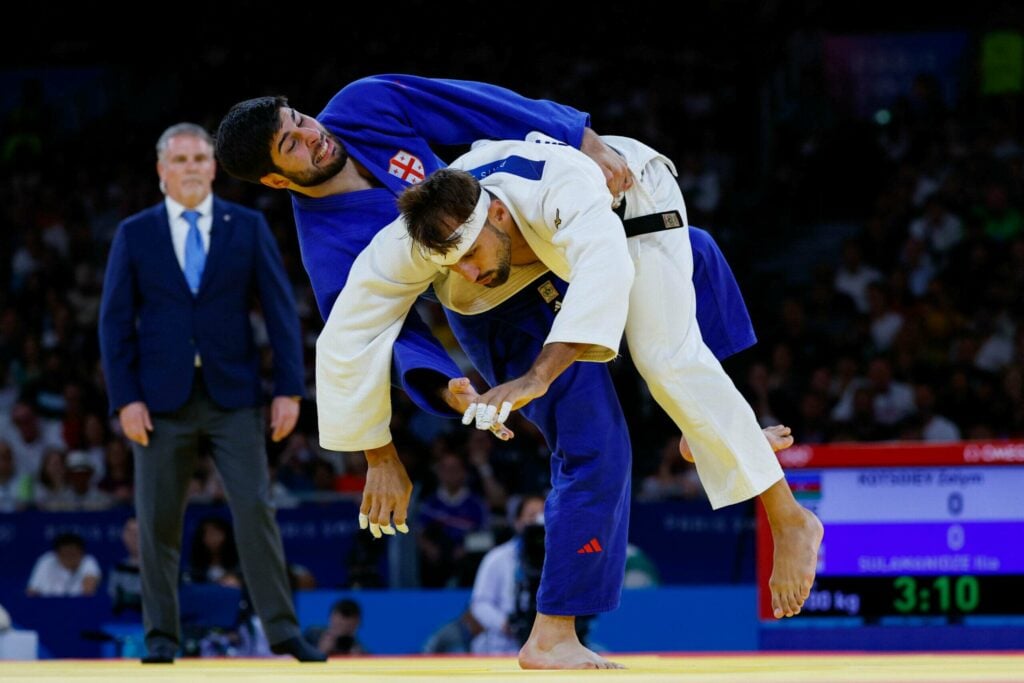
Title defences on home soil: “it is double motivation”
As the European Championships arrive in Tbilisi, the spotlight falls not only on challengers but on the reigning champions tasked with defending their crowns in front of a home crowd.
Asked how he plans to retain his European title at -100 kg, Sulamanidze’s answer echoes an earlier sentiment of Maisuradze’s, “My plan is in my blood, it always speaks for itself.”
The stakes, however, are heightened by the setting. Defending a European title at home is another feat entirely, after all.
“For me, defending the title on home ground will be a tremendous joy, for both myself and my country,” Sulamanidze.
A similar sense of purpose runs through Sardalashvili, who also enters the championships as reigning European champion, at -60 kg. Far from feeling any pressure, the former world champion actually draws energy from the occasion.
“Some may think that competing on home soil brings extra pressure, but for me, it is double the motivation,” he says. “I will have my people in the arena supporting me and giving me energy.”
“Defending the title would prove, in the most direct sense, that you are the best on your continent,” he explains. “Not many Georgians have won back-to-back European titles and I want to be one of them.”
Behind that confidence lies a year of focused development. Sardalashvili describes significant progress since his last European triumph, with improvements made across all areas of his judo, as well as in his personal life .
Yet the long-term vision remains clear, with every step part of a broader plan building towards the LA 2028 Olympics, with qualification set to begin this year at the Ulaanbaatar Grand Slam in June.
When asked to name their toughest opponents, both judoka gave the same answer:
“The toughest opponent is myself,” Sardalashvili said. “It doesn’t matter who I face, where they are from or what titles they hold. On the tatami, titles don’t win matches; the one who is stronger in that moment does.”
All will be revealed when the champions, along with the stars of the women’s team, take to the tatami starting 16th April.
Author: EJU Media