





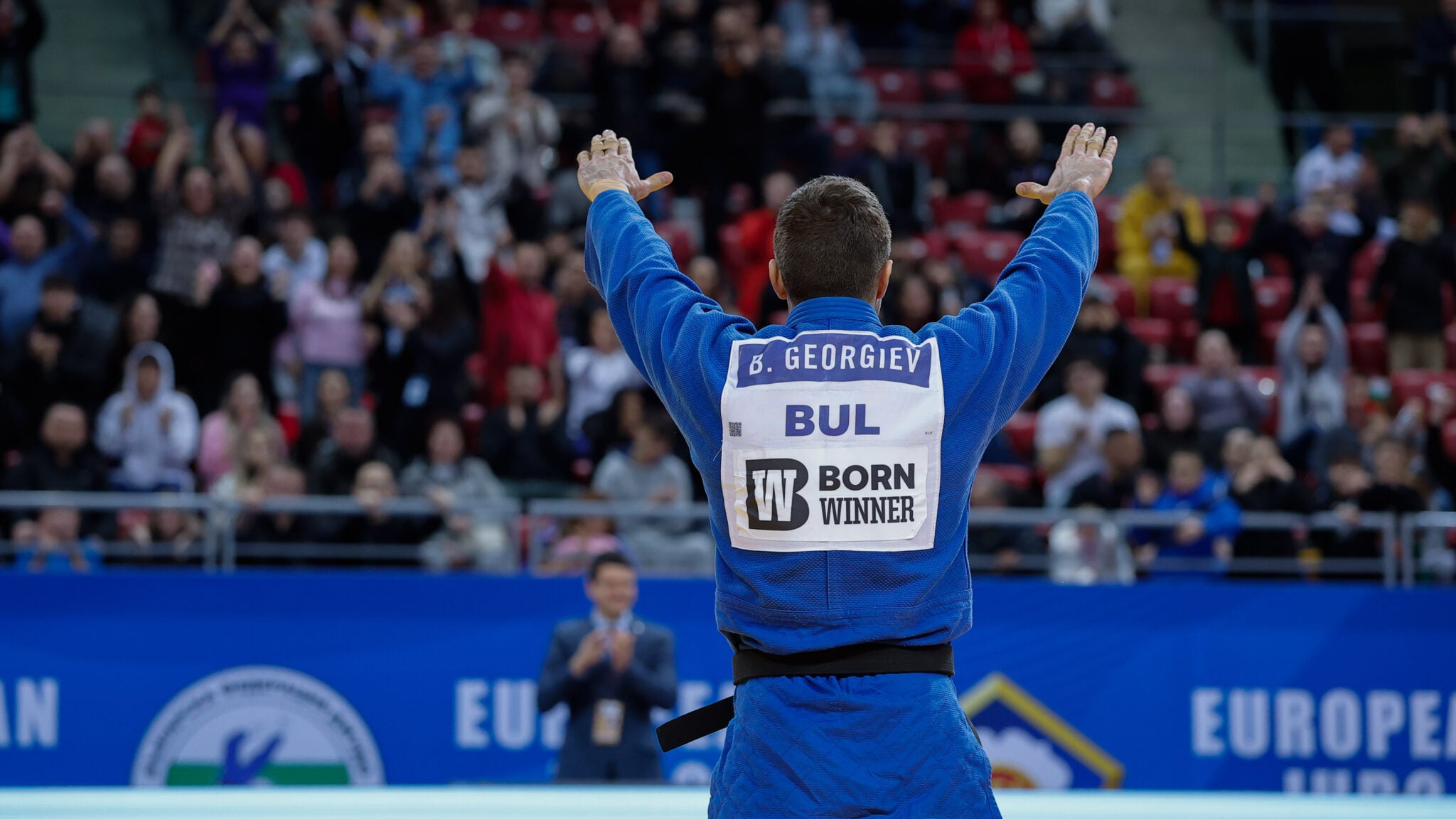
The second and final day of the European Judo Open Sofia 2026 delivered everything the locals would have dreamed of. Meanwhile, if day one showcased European depth, day two proved that rankings are merely suggestions when athletes step onto the tatami. As the final medal ceremony concluded, Bulgaria stood atop the table with three golds, one silver and three bronzes, a home performance that sent Arena 8888 into euphoria. Japan followed with three golds and a bronze, whilst Ukraine’s two golds and a silver from day one secured third place overall.

Yet, the story of Sunday’s event wasn’t just about medal counts. It was about Greek judoka ranked 415th defeating world number 68, about 18-year-old Americans controlling heavyweight divisions, about Japanese unknowns dismantling seeded opponents and about home heroes delivering when pressure peaked. Here is how the final day unfolded.
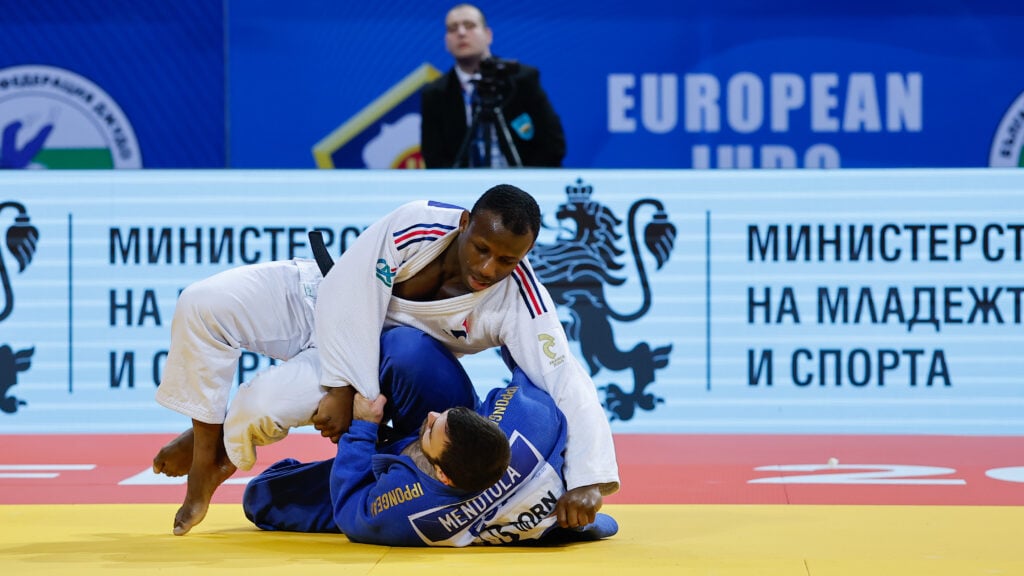
-81kg: Experience Prevails
The day’s opening final paired Paris 2024 Olympic mixed team champion Alpha Oumar Djalo (FRA) against Spain’s Jose Maria Mendiola Izquieta, who would stunned observers throughout his run to the final. Surprise carries you to finals. Experience wins them.
Ninety seconds in, Djalo landed a perfectly timed tani-otoshi for waza-ari and controlled the remainder to claim gold. The upset story ended; the Olympic champion prevailed. Bronze medallists are Ciprian Gribinet (MDA) are Umalt Demirel (TUR).
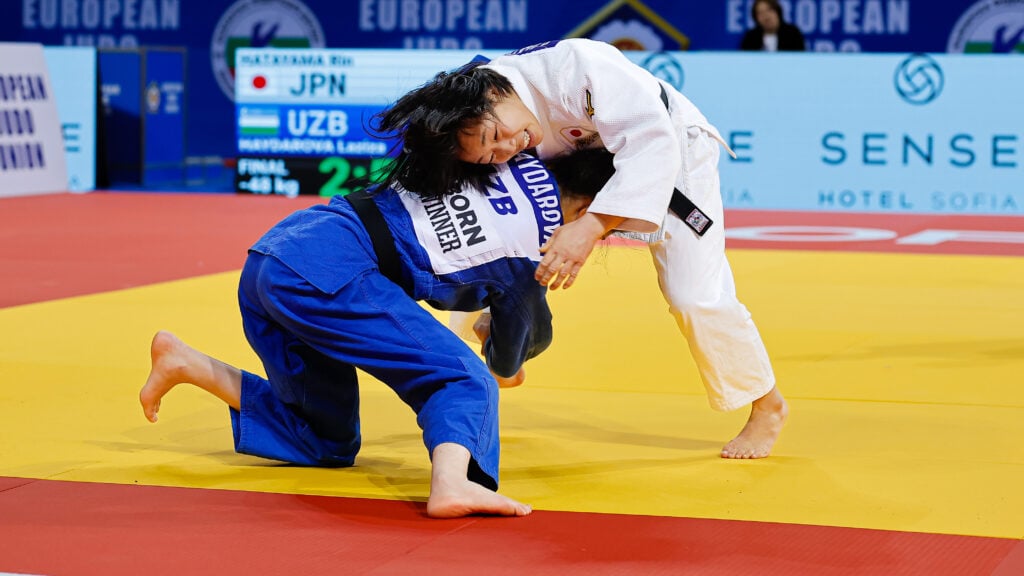
-48kg: Japanese Force Unstoppable
Top seed Amber Gersjes (NED) entered as favourite in the -48kg category, however, she didn’t survive the Japanese onslaught. Hatayama Rin dismantled the Dutch judoka, then continued her relentless march to the final where Uzbekistan’s Laziza Haydarova awaited. At 2:38, Hatayama’s shime-waza ended the contest. Japan’s first gold of the day, secured with ruthless efficiency. Bronze medalst were claimed by Erza Muminoviq (KOS) and Coralie Gilly (FRA).
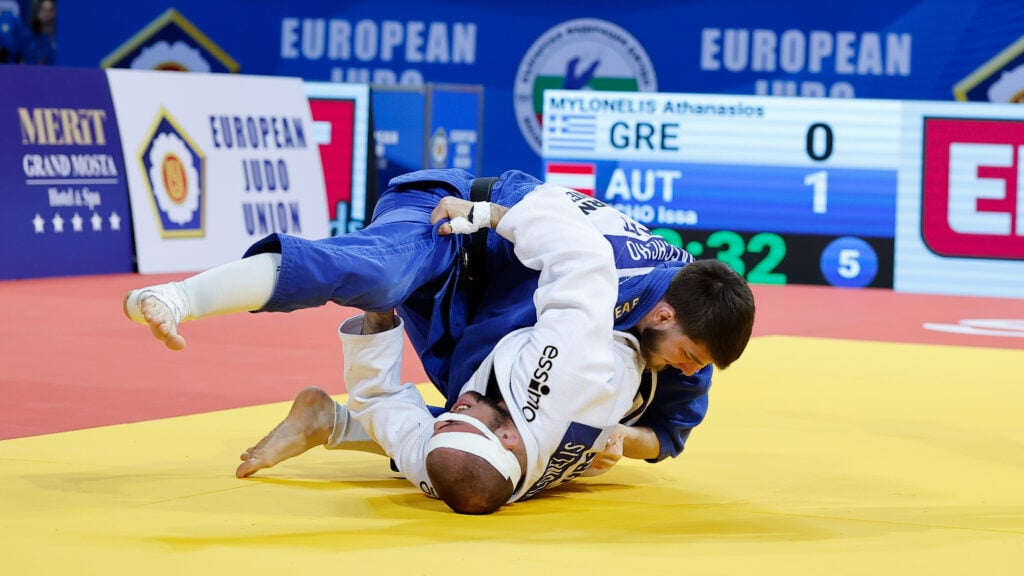
-90kg: When Rankings Mean Nothing
By the second round of the -90kg category, the draw had exploded. Greece’s Athanasios Mylonelis, world ranked 415th, defeated table leader Aram Grigorian (UAE), ranked 68th. He didn’t stop there, progressing all the way to the final.
Meanwhile, Austria’s Issa Naschcho (ranked 345th) had identical ideas. Come. Surprise. Reach the final. The unexpected rendezvous delivered intensity but Naschcho controlled proceedings from the first minute onwards. At 2:35, osaekomi sealed ippon, a skill he had showcased throughout the day. Gold for the Austrian underdog. Bronze medal finishers are Mariyan Palev (BUL) and Nikoloz Davladze (GEO).
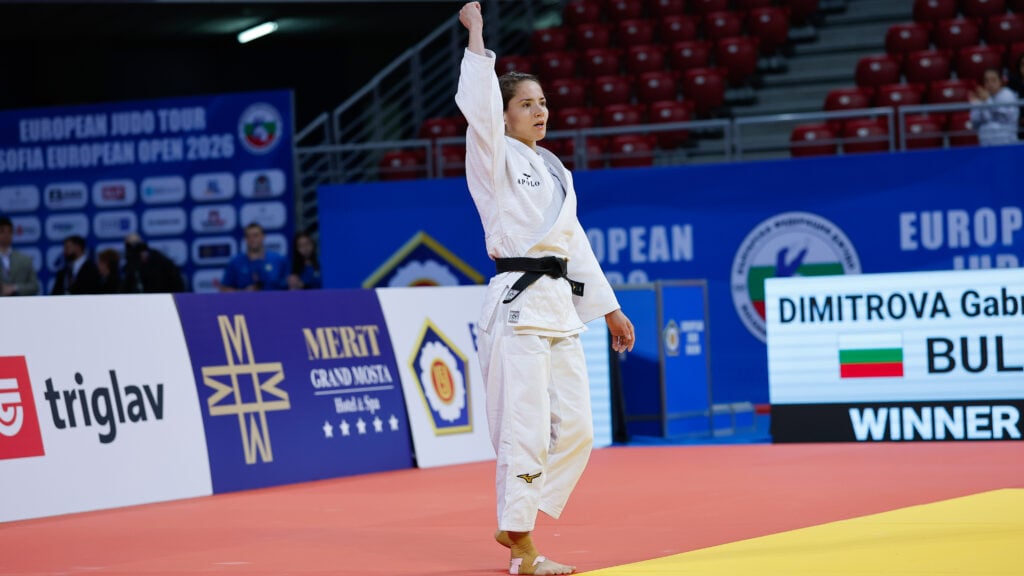
-52kg: Bulgaria’s First Strike
The -52kg category appeared to follow script until the quarter-finals, when Bulgaria’s Gabriela Dimitrova dismantled top seed Mukhayyo Akhmatova (UZB) through exceptional ne-waza. Confidence surged. Momentum shifted.
In the final against France’s experienced Lea Metrot, Dimitrova delivered a textbook morote-seoi-nage to take the lead which she kept for victory. Bulgaria’s first gold of the day. Second of the weekend. Still, Arena 8888 sensed more was coming. The two bronze medallists are Fationa Kasapi (KOS) and Sita Kadamboeva (UZB).
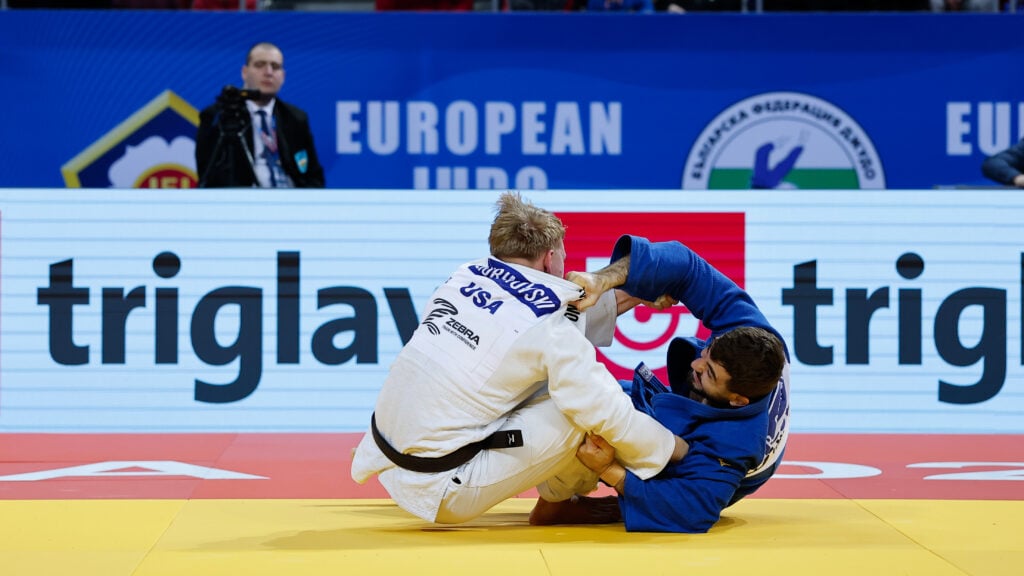
-100kg: Teenage American Meets Bulgarian Determination
The 18-year-old American Daniel Liubimovski controlled every step to the -100kg final, his youth matched by composure. However, waiting there was Bulgaria’s Boris Georgiev, fighting at home with the crowd behind him.
Georgiev ensured his name would be remembered. In the contest’s dying seconds, he executed sutemi-waza, yuko scored, seconds remaining, crowd roaring. He worked the clock. Victory was secured. Bulgaria’s second gold of the day. The bronze medal winners are Rares Arsenie (ROU) and Cedric Olivar (FRA).
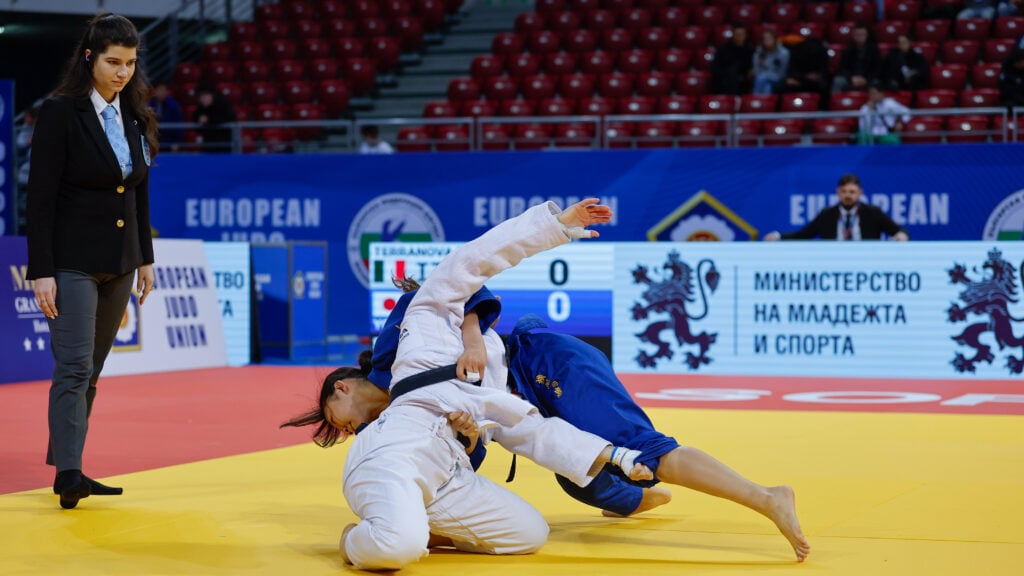
-57kg: Another Japanese Unknown Emerges
The women’s -57kg division introduced another Japanese force: 20-year-old Yokoji Moe. Though she stumbled occasionally en-route to the final, consistency prevailed.
Against Italy’s Michela Terranova, Yokoji’s newaza mastery decided matters. Both judoka claimed their first European Open medals in Sofia, one gold, one silver, both futures brightened. The two bronze medal winners are Flaka Loxha (KOS) and Lele Nairne (GBR).
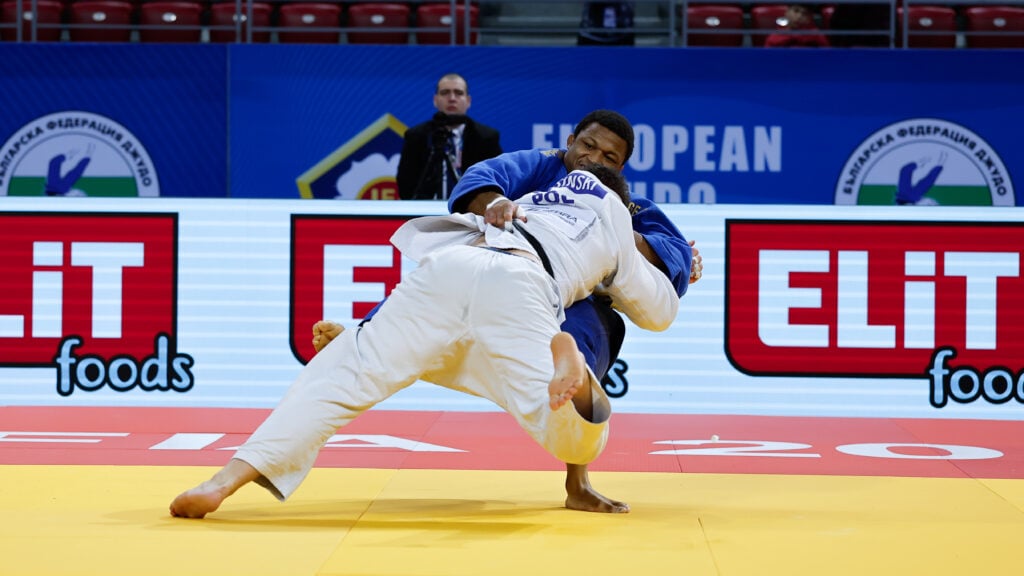
+100kg: Seeds Deliver
The weekend’s final contest saw top seed Grzegorz Teresinski (POL) face second seed Losseni Kone (GER), the heavyweights delivering what rankings predicted. With just over a minute remaining, Kone initiated an attack, controlled the landing and transitioned to osae-komi. Gold for Germany. Silver for Poland. The final medal decided and with that, Sofia 2026 was completed. Bronze medals claimed by Igor Vracar (SRB) and Diogo Brites (POR)
The 2026 European judo season opened with a statement: depth matters, rankings suggest but don’t dictate and Opens remain the proving ground where reputations are built and shattered in equal measure.
Missed the action? All contests are available to watch on-demand via JudoTV.com. View our complete photo gallery via the following link. The next European Judo Open takes place 14–15 February in Ljubljana, Slovenia.
Author: Szandra Szogedi