




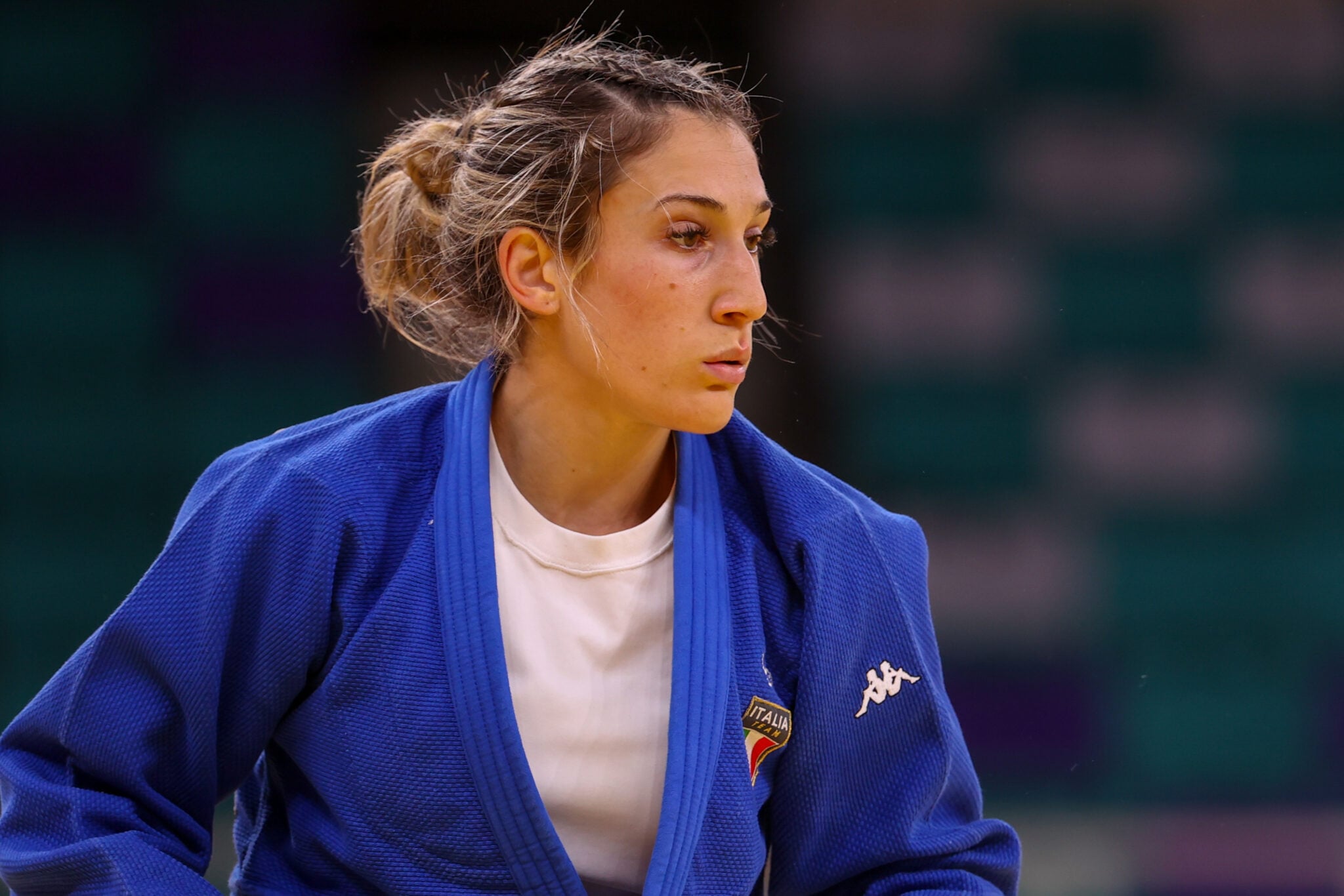
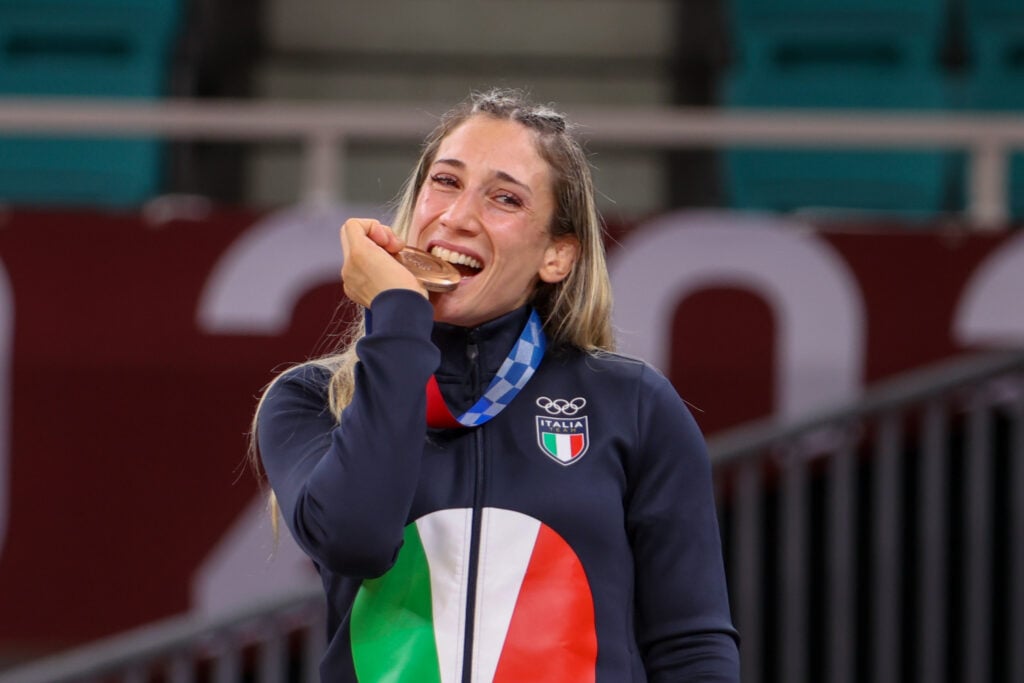
Since her Olympic bronze medal win, Maria CENTRACCHIO of Italy has been recognised for her sporting accomplishments and through her position with the police, has been able to help more and more young women, whether it be through health discussions or gender discrimination, she has been able to use her experience and own stories to guide others and let them know they aren’t alone.

That wasn’t the case for Maria following the Olympic Games in Tokyo however, as she found herself in a confusing place and dealing with the unknown, a very difficult position to be in for anyone, let alone an athlete who knows their body.
After the Olympics I took a little break from training, I had some things to fix like my elbow, and afterwards I had a really strange feeling, even without the training. When you are used to it, you know you’re going to be tired and sore, it’s normal for when you’re doing judo, so when I felt this way without the training, I knew something was wrong. I had to ask, what is going on? I had so many examinations because there were so many different opinions, but when the results came from, everything was perfect.
Despite knowing that everything technically looked fine following the tests, Maria still knew that what she felt was very real, she even considered the pain to be a byproduct of stress, but then came her answer.
Doctors explained to me about fibromyalgia and that there isn’t a formal diagnosis. First you have to exclude other things, many other things, then this is the result. There are then some tender points on your body to test, if there is pain they decide you have this. As soon as I had the diagnosis, it became very easy for me, when I was training I wasn’t sure how far I could push, I didn’t know if I could even drive. It isn’t so serious, yes I still have to deal with it every day and it’s annoying but it isn’t going to stop me, I was very glad that it was something like this and I started to find my way to manage it.
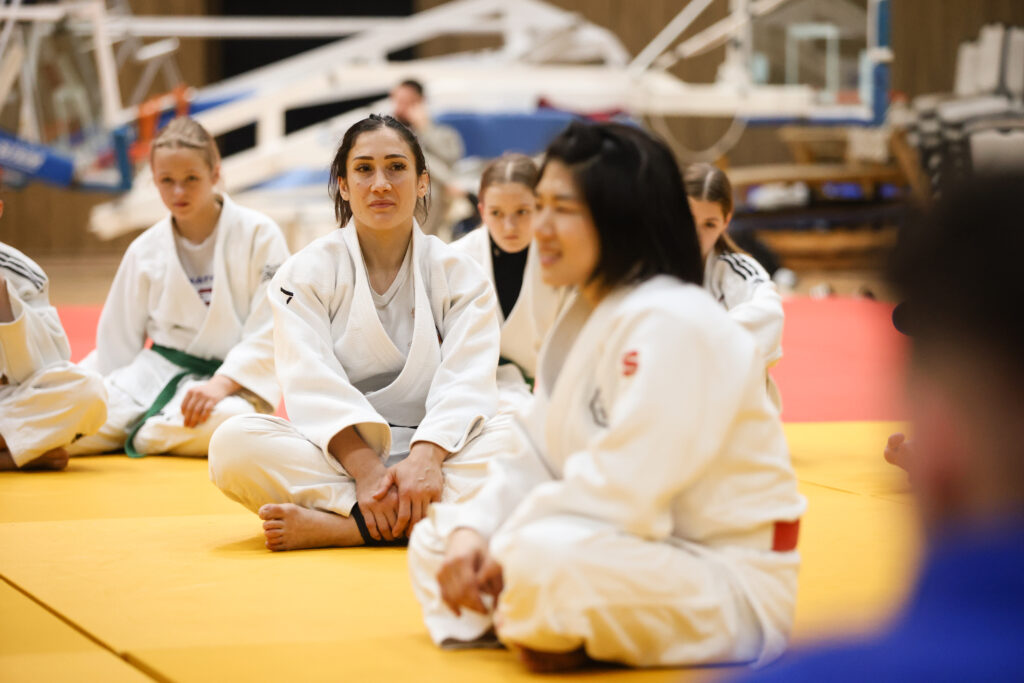
Maria has been a member of the EJU team, leading as the European Hero alongside Kodokan Experts during the ever-growing Hopes Tournament for the U13 and U15 judoka who are able to learn from the best before trying out their new skills in a competition format. As always, it’s a professional appearance, but the esteemed athlete will always take time to talk to the young aspiring judoka, nothing is stopping her.
I really didn’t want to adapt my life to this but it’s something I just have to do, I am not stopped, it is not an obstacle but it’s just another thing I now have to manage. It’s a funny thing, it isn’t affected by how much I do, but how I feel, if I am stressed it’s worse, I can help it through my diet too, but my body really tells me how much I can manage.
Through her position within the police, she has been in attendance of seminars for women, serving in multiple areas, whether it be health or gender discrimination,
It was very interesting, because there were many doctors there to talk about new technologies, more people talking about their experiences, and it’s important to share these stories so that others can be influenced and inspired. Sometimes, it can feel like you are dealing with things alone and can’t see the light, so just knowing that someone else has been where you are and have found a way, it gives hope.
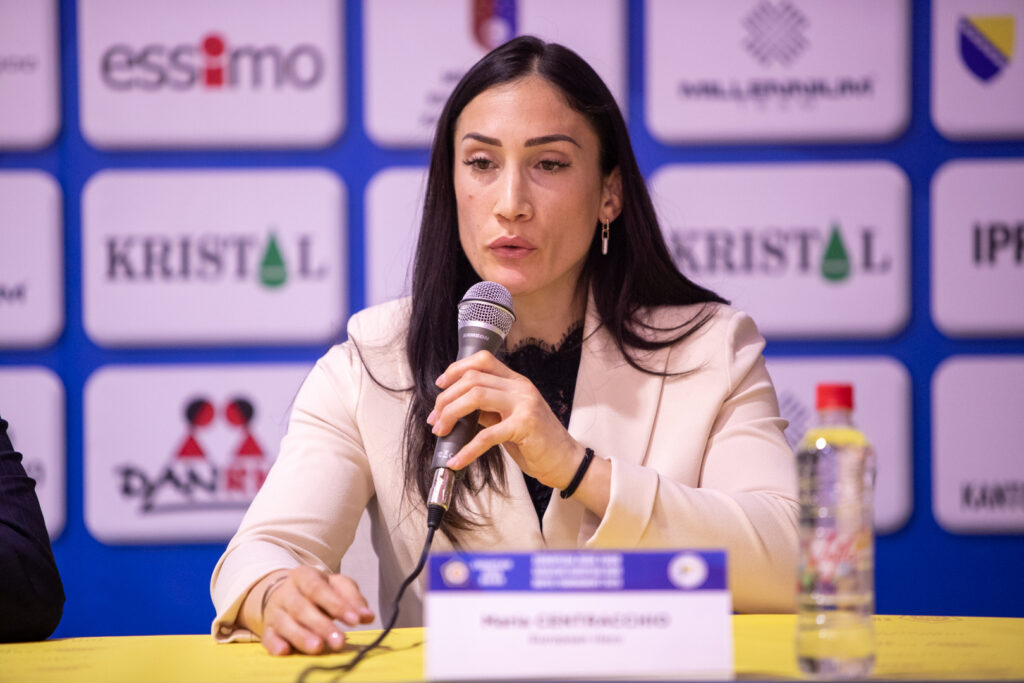
I’m lucky that with the police I can give back in this way. After the Olympics, I did many of these talks because I hadn’t gone in to coaching or anything, and I think it is even more important for young people to see that even Olympic athletes are normal people with normal problems.
There are certain topics that continue to be highlighted for young women as we strive for equity in sport,
We are still dealing with a lot of gender discrimination in my country, in normal life and in sport, but we talk about positions of power or leading positions. I don’t think it’s as bad as it was, but I think it is just the culture and these things take time to change. I am honoured that our police group were invited to talk and present our experiences, how women are strong, and in Italian Judo, many of our results are from women too so it’s a good example.
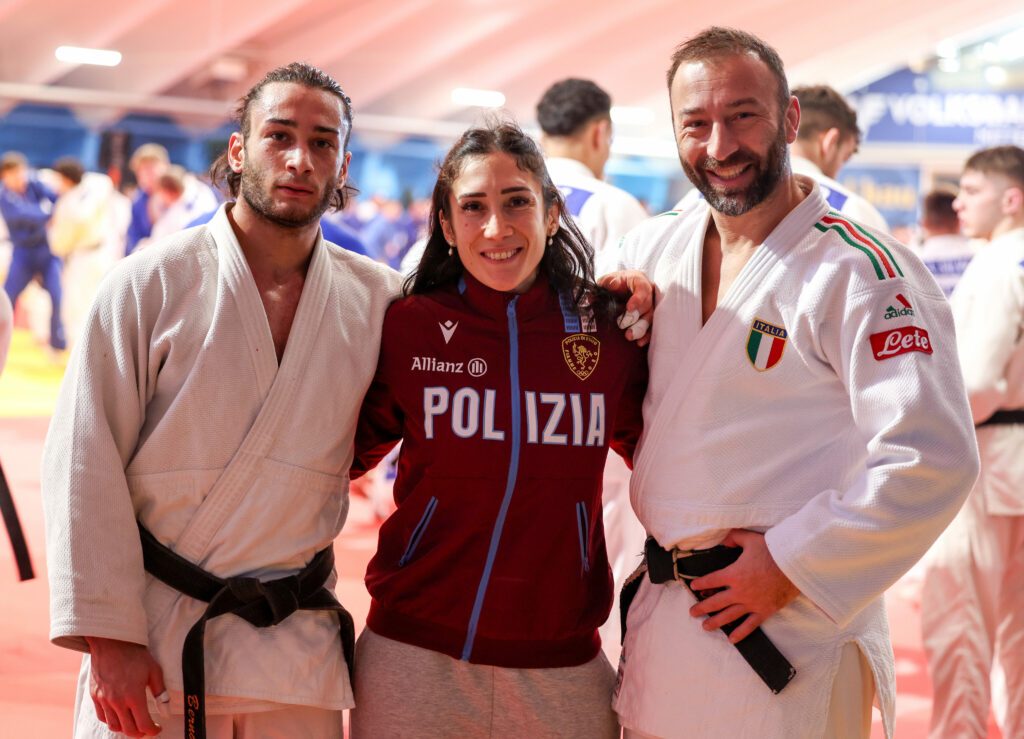
I was very lucky in my family and in my house, I was never treated differently, or ‘like a girl’, I was the same as all my brothers and never felt a difference growing up. Now of course I know it isn’t the same for everyone but it is our mission to make it this way.
It really feels like the path has naturally been chosen for Maria and she feels it too.
Judo has given me so much and if I can use it to help anyone, and not just with judo, but with a story or experience, then this is enough for me, it makes me happy. We need connection and we need to grow, and helping someone helps me at the same time. It is important to me that we understand we are not alone on this planet.
Author: Thea Cowen