





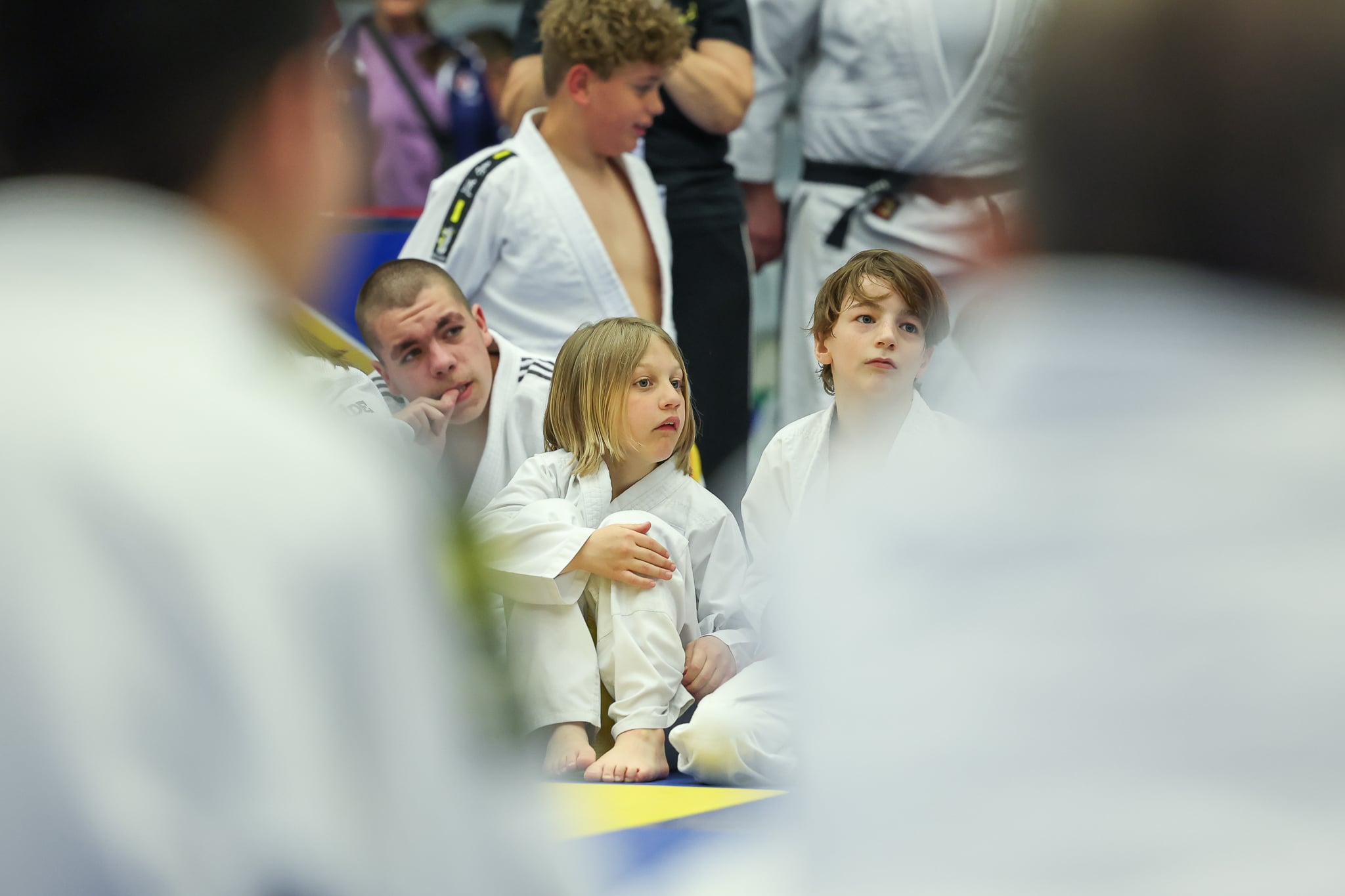
Two names that once defined Belgian excellence on the world stage, Gella Vandecaveye and Ulla Werbrouck, stood once again at the edge of the tatami. Only this time, they were not there to fight. They were there to feel. At the Triglav Insurance Get Together Tournament Kortrijk 2026, both Olympic icons immersed themselves fully in the inaugural Adapted Judo Tour on Belgian soil. Not as distant figures, not as honoured guests observing from afar but as participants in the atmosphere, engaging, laughing, connecting. They leaned into it.

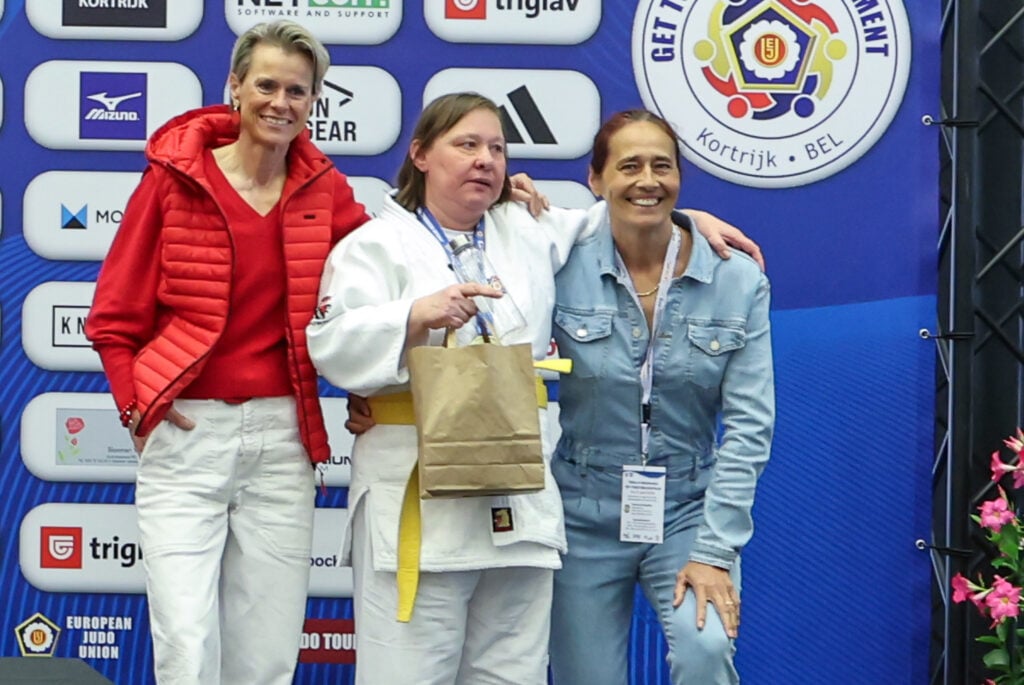
Werbrouck, Olympic champion in Atlanta and a product of a generation defined by relentless pursuit of victory, today’s experience was entirely new and it challenged her, gently but profoundly.
“I think the organisation is perfect. It’s the feeling you have the good vibes here. Everybody is happy. The trainers are happy. Everybody is happy… When they lose, they are still laughing.”
She pauses, almost searching for the right words, as if translating not just language but a shift in mindset.
“For us it was, when I competed… we have to win, win, win. Here it’s… we have to have fun and that’s so different… but so very warm.”
Warm. She returns to that word again and again, as if it is the only one that truly fits.
For someone shaped by podiums and pressure, this environment, where joy outweighs outcome, requires a different kind of adjustment. Not technical or tactical but, more so, emotional. A recalibration of what success looks like. Yet there is no resistance in her reflection. Only curiosity, even admiration. “It’s really fun… I see a lot of friends from when I was young… it’s 20 years ago… it’s really fun.”
Life has moved on for Werbrouck. The tatami has been replaced by football pitches, her focus now firmly on family life. “Now I’m a football mama,” she smiles, describing weekends spent supporting her three sons. Judo, she admits, no longer occupies her time but it has not lost its place in her identity. “If you say, Ulla, you are 15 again… I do everything again. Yes, direct.”
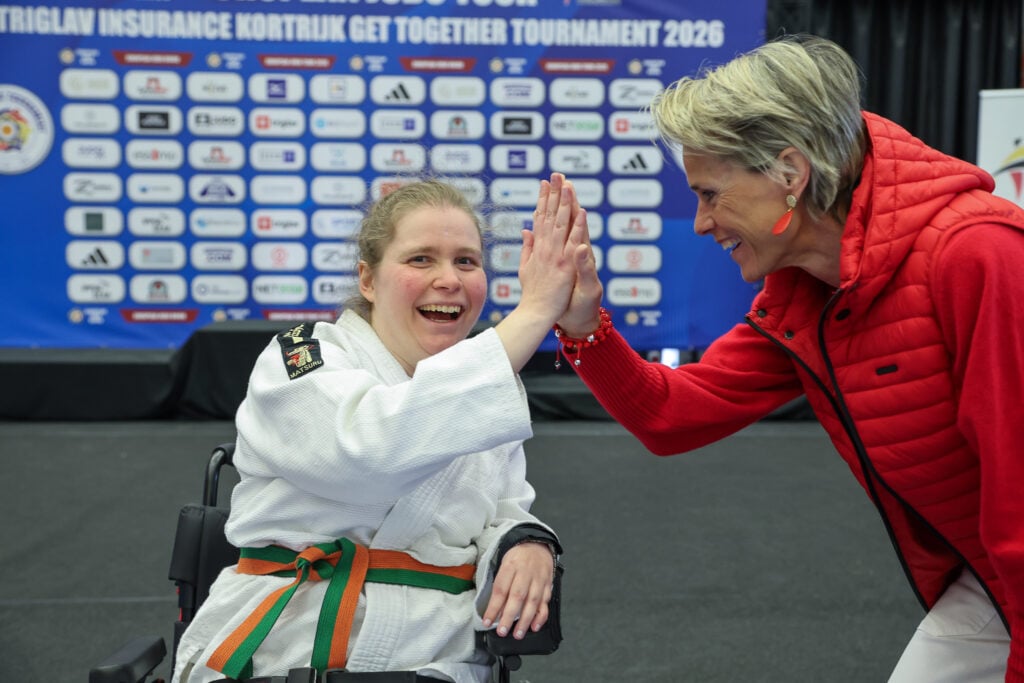
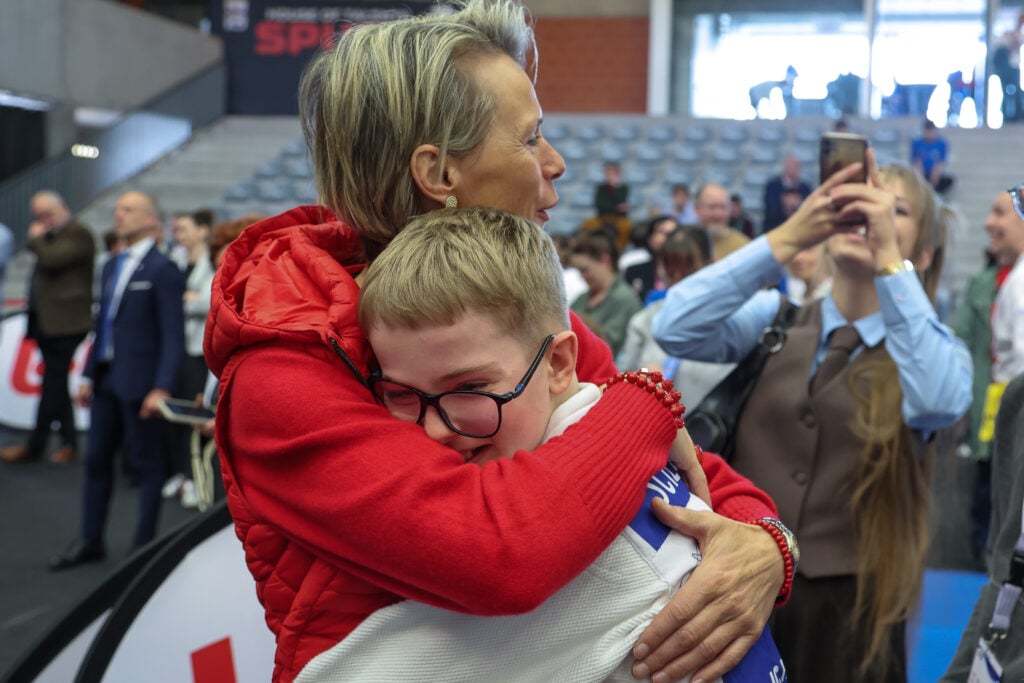
Beside her, Vandecaveye carries a different rhythm into the same space. A double Olympic medallist, who works in marketing and public relation during her day to day life, arrives not discovering adapted judo but reinforcing a long-held belief: that sport must belong to everyone.
“I always liked adapted sports,” she explains. “Because I think sports and physical activities are a fundamental right… for young people, older people, people with disability.”
Her words are deliberate, grounded in years of engagement beyond elite competition and because of that, for Vandecaveye, this is not a moment, it is a mission.
“It is important to break the isolation… people with disability don’t need to stand on the sidelines, they are part of the society and so they should take part too. They can make friends, they can develop their personality.”
She has seen it first-hand, in small clubs, in local tournaments, in the Special Olympics. What draws her back is not performance but presence. “You only see happy faces. Participation is more important than winning. There is a lot of fair play… so many volunteers… it’s a friendly way to compete.”
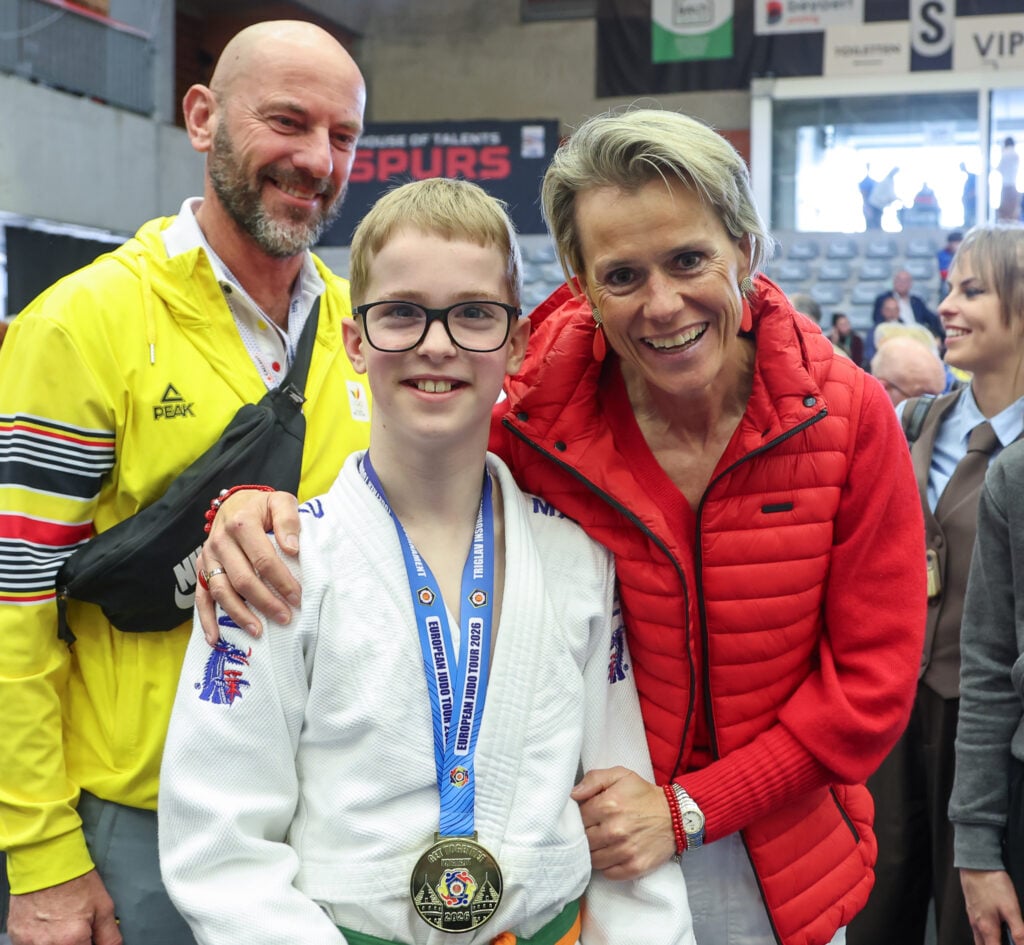
Now, even for someone so closely connected to inclusive sport, the scale and professionalism of the European initiative in Kortrijk left an impression.
“When I see the organisation, so professional, like other official tournament, I was really surprised. I thought, this is amazing. We have to promote this. We cannot take it for granted.” Her pride is unmistakable, not only in the movement but in the setting. “This is Kortrijk… my city… this is my sport, judo. I had to be here.”
Today, in Kortrijk, Belgian judo’s past did not only observe inclusion; it embraced it.
Author: Szandra Szogedi