





A groundbreaking judo programme designed specifically for autistic children will soon be available on the European Judo Union’s educational platform, following the success of a pioneering Italian initiative that has already benefited hundreds of children across Europe.

The KATAUTISM project, coordinated by the Italian Judo Federation (FIJLKAM), aims to provide judo coaches with specialised training to adapt martial arts instruction for children on the autistic spectrum, a population increasingly present in sports clubs but historically underserved by traditional coaching methods.
From Pilot to European Programme
The research project emerged from four years of experience within FIJLKAM led by Dr Nicole Maussier, member of the FIJLKAM National School as national course tutor. Through monitoring the needs of students, coaches, instructors and teachers, a clear gap was identified: gyms lacked properly trained personnel to support the motor activities of children with autism spectrum disorder (ASD).
KATAUTISM began as a pilot programme in 2021/2022, involving one Italian region with 100 children, five of whom had autism. The results proved sufficiently promising that in 2022, KATAUTISM won the Sport and Health tender, becoming a national project spanning seven Italian regions with 573 participating children, including 31 with ASD.
Both iterations demonstrated significant behavioural, relational and motor adaptations in participating children, providing evidence that structured, autism-aware judo instruction delivers measurable benefits.
Why Judo Works for Autistic Children
Latest scientific research indicates martial arts are among the most recommended sports for autistic children, offering structured environments, clear rules, repetitive movements and physical engagement that align well with ASD characteristics.
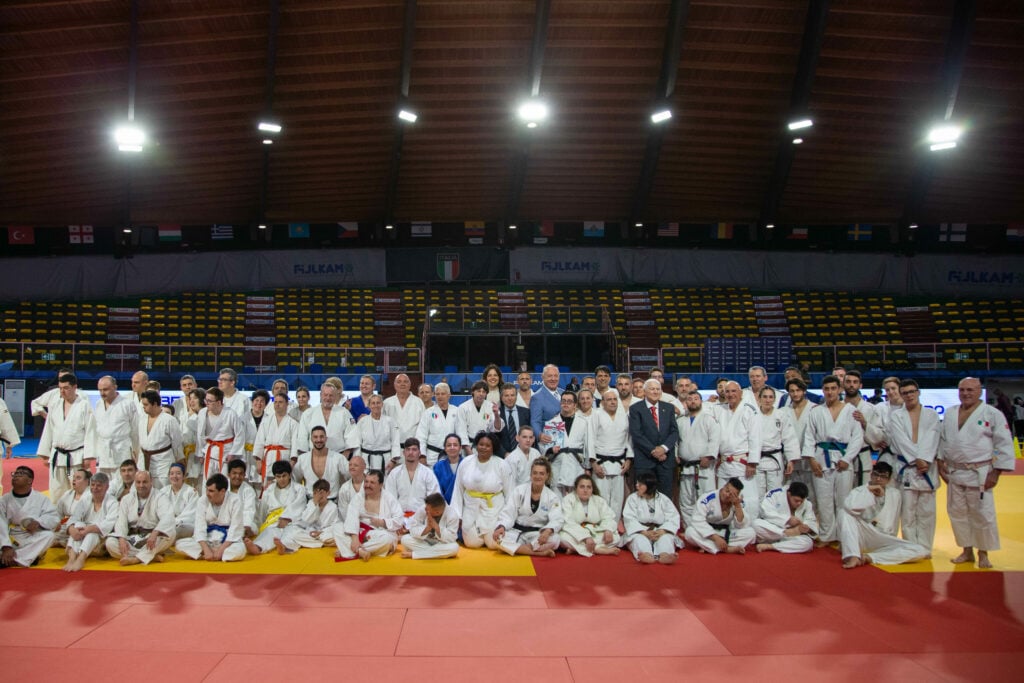
Building on this evidence, KATAUTISM has structured a specialisation pathway for judo coaches, beginning with intensive training at the Olympic Centre in Ostia, Italy, where staff members from each participating European country will attend comprehensive courses.
The training comprises four components:
- Theoretical (Technical): Judo-specific instruction adapted for ASD learners
- Theoretical (Clinical): Understanding autism spectrum characteristics and needs
- Practical (Educational): Gym-based application of adapted exercises in school settings
- Practical (Clinical): Hands-on sessions with autistic children led by autism tutors, allowing coaches to directly experience challenges and learn appropriate responses
Participating countries must recruit coaches experienced with autistic children and psychologists or psychotherapists specialising in ASD.
Comprehensive Support System
KATAUTISM extends beyond coach training to create a sustainable ecosystem supporting autistic children’s participation in judo:
- Specialised Communication Materials: A children’s comic designed specifically for autistic learners
- Spin-Off Location Tool: A searchable database allowing families with autistic children to locate nearby judo clubs staffed by KATAUTISM-trained coaches, a tool applicable to other sports and future inclusion projects
- Virtual Training Platform: The EJU’s e-learning platform will host KATAUTISM training materials, ensuring ongoing access for future adapted judo instructors beyond the project’s initial cohort
- Research Documentation: Targeted research outlining best practices and contributing to improved quality of life for autistic individuals and their families
Five-Nation Partnership
KATAUTISM unites five partners across five European countries, with the Italian Judo Federation serving as coordinator. Marina Drašković from the EJU provides extensive experience and serves as one of the driving forces behind the initiative.
Three partners focus on programme development and information gathering, whilst two provide training, scientific research and dissemination activities.
The programme involves 30 classes benefiting:
- 600+ children, including 30 with ASD, directly participating in judo programmes
- 50+ instructors receiving direct training
- 200+ future instructors accessing training via the virtual platform
EJU Support
As project partner, the EJU has provided judogi and tatami for six schools: one in Spain, one in Portugal, and four in Italy, ensuring participating locations possess appropriate equipment for adapted judo instruction.
The consortium is currently finalising the autism-specific coaching course, which will soon be available on the EJU’s educational platform, making specialised training accessible to coaches across Europe’s 51 member nations and beyond.
The latest scientific research supports what the pilot data confirmed: judo, when taught by properly trained coaches who understand ASD characteristics, delivers significant benefits for autistic children. KATAUTISM transforms that knowledge into practical, accessible training that expands inclusion across European judo.
Author: EJU Media