




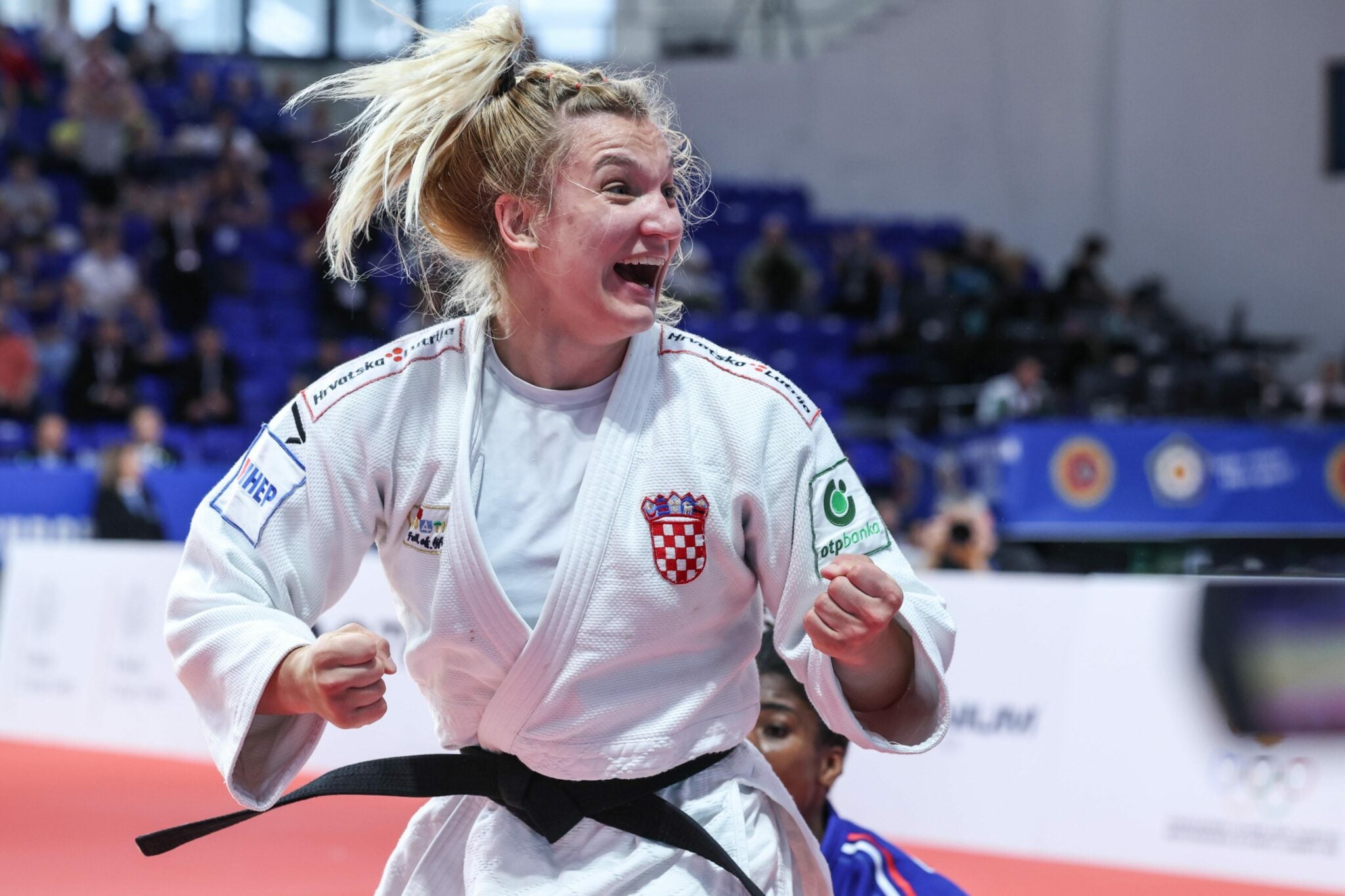
For Lara Cvjetko, becoming world number one in the -70kg category was never meant to be a finish line. It was, instead, confirmation that the work she has been putting in, quietly, relentlessly, often without shortcuts, is beginning to show its full shape.

“This year I have managed to get to the WRL number one position after winning a bronze medal at the European Championships in Podgorica,” she says. “It was a really big moment for me, mostly because of how huge it felt to win a European medal after kind of a rough start of the season I have had.”
That medal carried more weight than most. Confidence had been shaken, results had not come as expected and expectations, both internal and external, were heavy. Then, just days after stepping onto the European podium, she received the news that she would rise to the top of the world ranking.
“A week after, I found out I would be climbing to the number one position,” Cvjetko explains. “It felt really good to finally see my name up there but it feels even better to keep that status for the remainder of the year and finish this year with that ranking.”
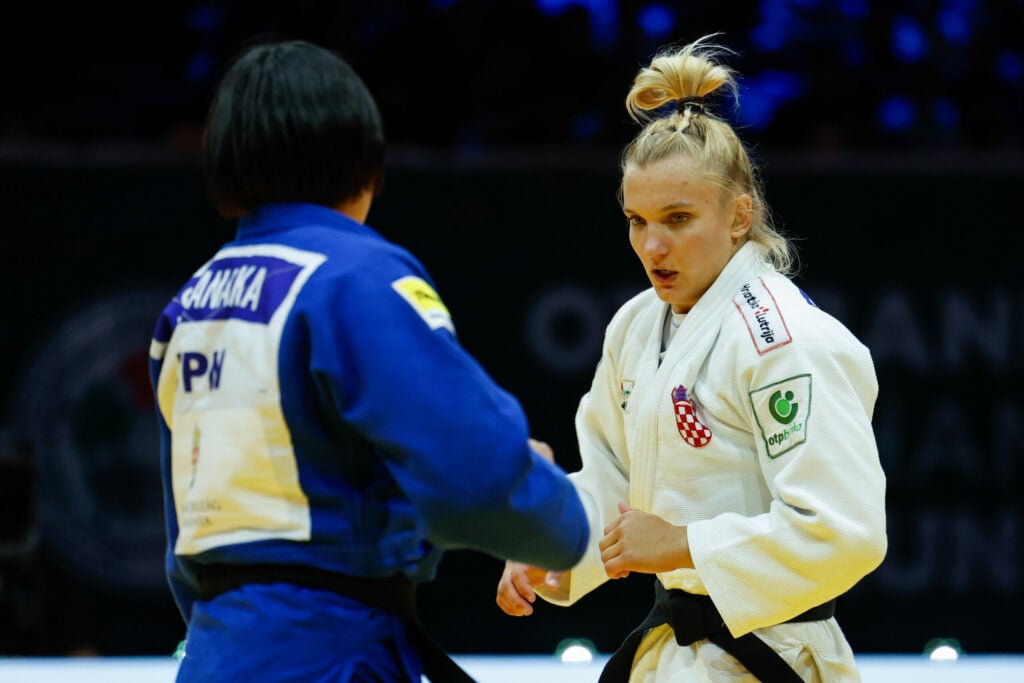
For her, that continuity matters more than the headline. “I believe it shows continuity in my results and work,” she says, “which I am hoping to show in competitions and seasons to come.”
Yet despite now leading the ranking list, very little has changed in her daily life.
“I don’t think the fact that I currently lead the WRL is changing anything about how I see myself as an athlete, or the way I train,” she says calmly. “It is nice to be the first seed anywhere I go but for me it’s more important to train harder every day and prove to myself I can improve and become the best version of me on and off the mat.”
She is realistic, almost blunt, about what rankings mean once competition begins. “As everyone knows, in judo, anyone can beat anyone on a good day,” she says. “The WRL number one won’t help me on the mat if I don’t put 100% into my training as I did in the past.”
Silver in 2025 That Still Hurts
If the ranking brought satisfaction, the 2025 World Championships in Budapest brought something more complicated. Cvjetko left with a silver medal, another world podium, another major achievement. And yet, the feeling remains unresolved.
“After winning the silver medal at this year’s World Championships, I can say the feeling is still a little bittersweet,” she admits. “I am incredibly proud to win another world medal but the fact that I came so close to the world title for the second time still leaves a bitter taste in my mouth.”
It is the mark of an athlete who refuses to settle.
“It is a really big result for me,” she continues, “but once I have achieved something, I can’t help but look for bigger things to do. For now, that would be the world title and of course, a medal at the upcoming Olympic Games.”
A Rivalry Close to Home
Croatia’s strength in the -70kg category has created one of the most intriguing dynamics in women’s judo. Alongside Cvjetko stands Olympic champion Barbara Matić, a teammate, training partner and direct rival for Olympic qualification.
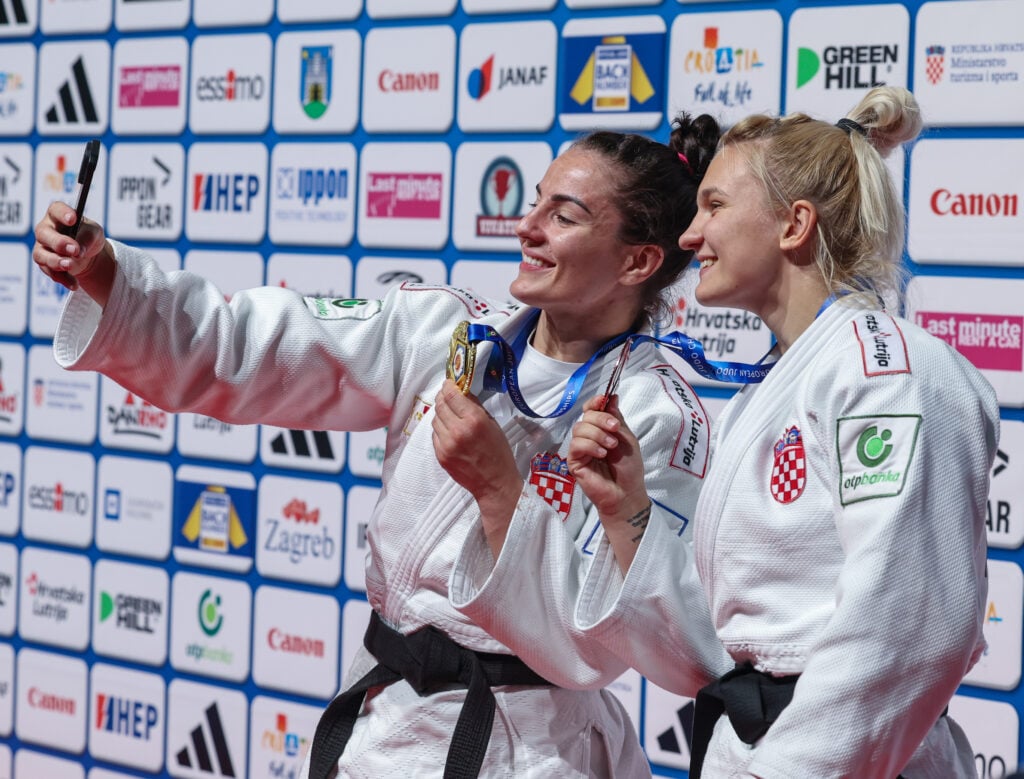
“Barbara and I are friends and I enjoy sparring with her,” Cvjetko says. “I think it’s always good to have someone of that calibre to train with in your city, especially in a country that is small like Croatia.”
On the tatami, the relationship is simple. “It is always business and trying to beat each other, just as I do with all other opponents on the mat,” she explains. “But it is nice that after, we can always chat about judo or something else.”
The reality of Olympic qualification, however, has been one of the most emotionally demanding challenges of her career.
“It was really hard missing out on the Olympic Games in Paris, since that was my dream since I was a little girl,” she says openly. “But as it comes with all losses and challenges, I came out stronger and more determined to work for the upcoming ones.”
At the start of the qualification period, she did not see herself as a favourite. “I thought I didn’t have much of a chance to compete for the spot against a current world champion who is seven years older than me, while I was still adapting to becoming a senior,” she recalls.
Yet, time changed that perception, both hers and others’. “As time passed, I think I did a pretty good job at keeping up and even coming ahead on multiple occasions.”
Injury, late in the race, proved decisive. Still, she refuses to frame the story as failure. “People tend to forget that I was pretty close to taking that spot for myself before I got injured in the final months of the race,” she says. “But that’s okay.”
Her conclusion is quietly defiant. “I am willing to work even harder for my results and my chances, because I am used to the fact that they don’t come easily to me in life. That will make it even sweeter when I manage to reach them.”
The Decision That Changed Everything
Looking back, Cvjetko is clear about when her career truly shifted direction.
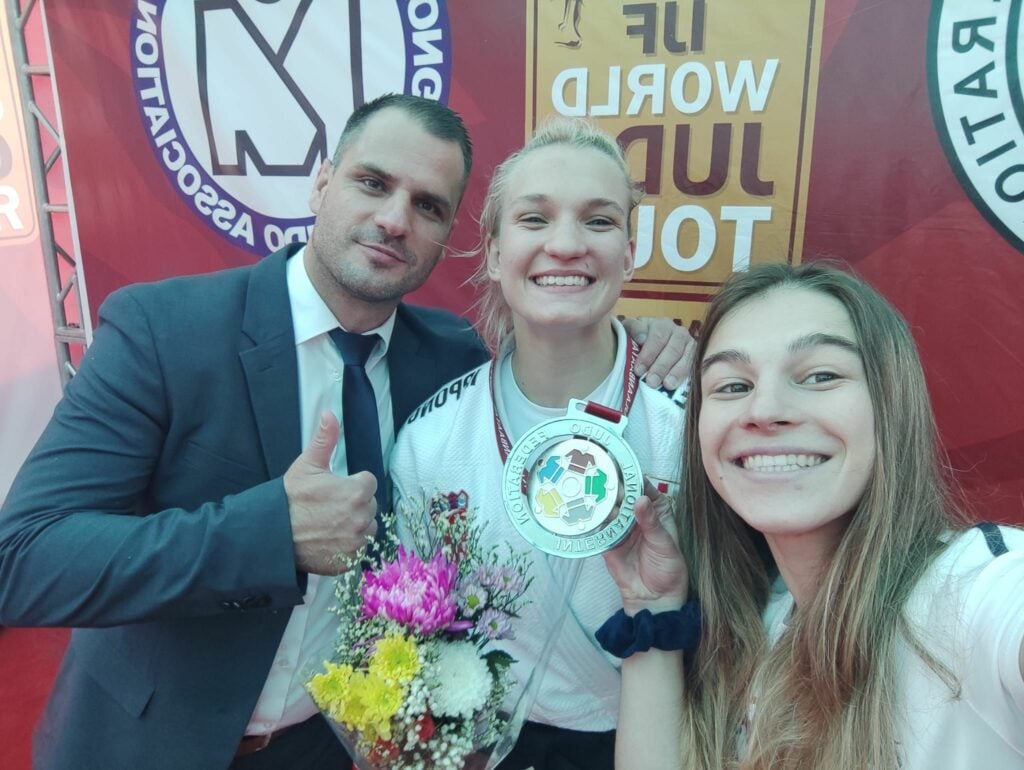
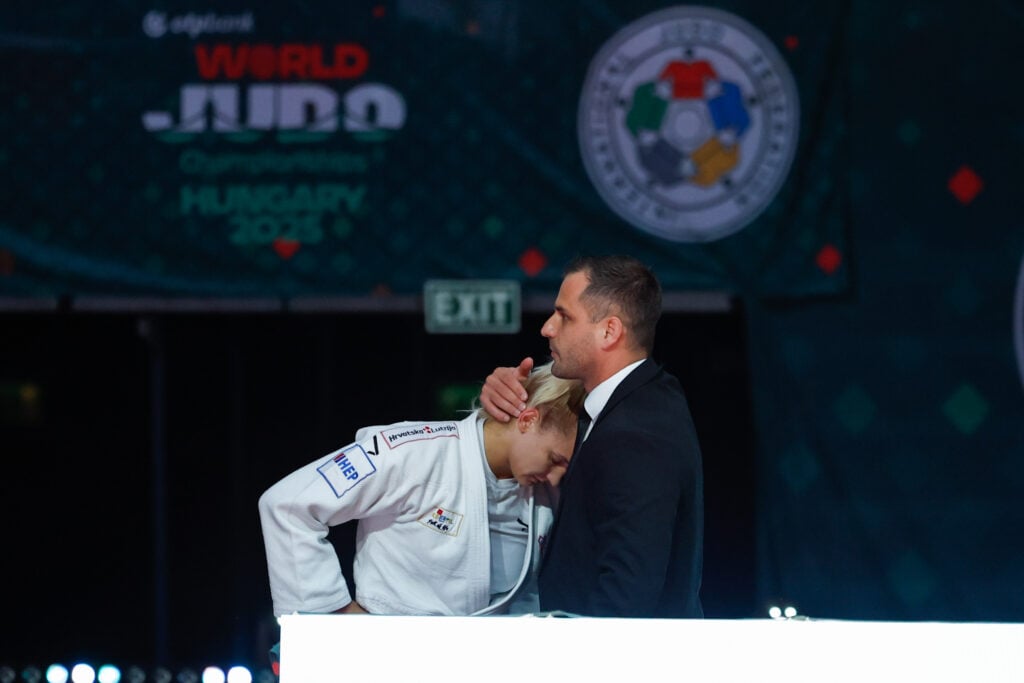
“This is my coach Dragan Crnov, and in this photo is my best friend Ana Viktorija Puljiz who is part of the reason that I moved to Solin, alongside Dragan. He helped me get to a higher level as a judoka and an athlete. From strength and conditioning to overall technique and tactics in judo, which gave me confidence that is one of the key elements for making results, in my opinion.”
“In 2021, I started working with my current coach Dragan Crnov, who is now Croatia’s team female head coach,” she says. “In 2022, I made a big decision and moved my entire life to Solin to train with him in Judo Club Solin.”
That leap of faith changed everything. “Since then, a clear progression in my results has been noticed,” she says. “And I can only owe it to him and the hard work our team has been doing in the years since.”
Her first major senior breakthrough came soon after, with gold at the 2022 Grand Prix in Portugal.
“The gold from Portugal is the first win from the IJF tour in my career,” she recalls. “It could be considered the beginning of results that I have today.”
At the time, expectations were low, especially her own. “I remember being really excited about fighting on the IJF World Tour stage and I didn’t expect to win there at all,” she says.
Consistency
Cvjetko’s medal collection across Grand Slams, Grand Prix events and World Masters competitions speaks to rare consistency. She believes the reason is simple, though far from easy.
“I strive to give everything I have into every practice, every competition and never let my guard down, no matter how good or bad things get for me,” she explains.
Celebration is allowed, comfort is not. “I take time to celebrate but never allow myself to relax or feel too good about any achievements. There are always mistakes to fix and things to work on.”
It is a mindset built for the long game. “I think the only way to achieve my dreams is to stay consistent with the hard work and the mindset I have had until now.”
A Matured Style, Still Evolving
Her judo, she feels, has grown up alongside her.
“I think my judo has matured a lot compared to how I was fighting before,” she says. “But still, it hasn’t changed drastically.”
Grip fighting has become central. “I put a lot of work and thought into my kumi-kata, since I think it’s really important at the senior level, where openings and chances of the opponent making a mistake are really small.”
She knows her own tendencies well. “I am aggressive and have the stamina to support it,” she says, “but I am not a big risk-taker when it comes to throwing, which is something I have been pushing myself into changing lately.”
Improvement, for her, is endless. “All aspects of my judo can and should be improved, which makes the journey some kind of a never-ending battle,” she smiles. “But that is part of the fun.”
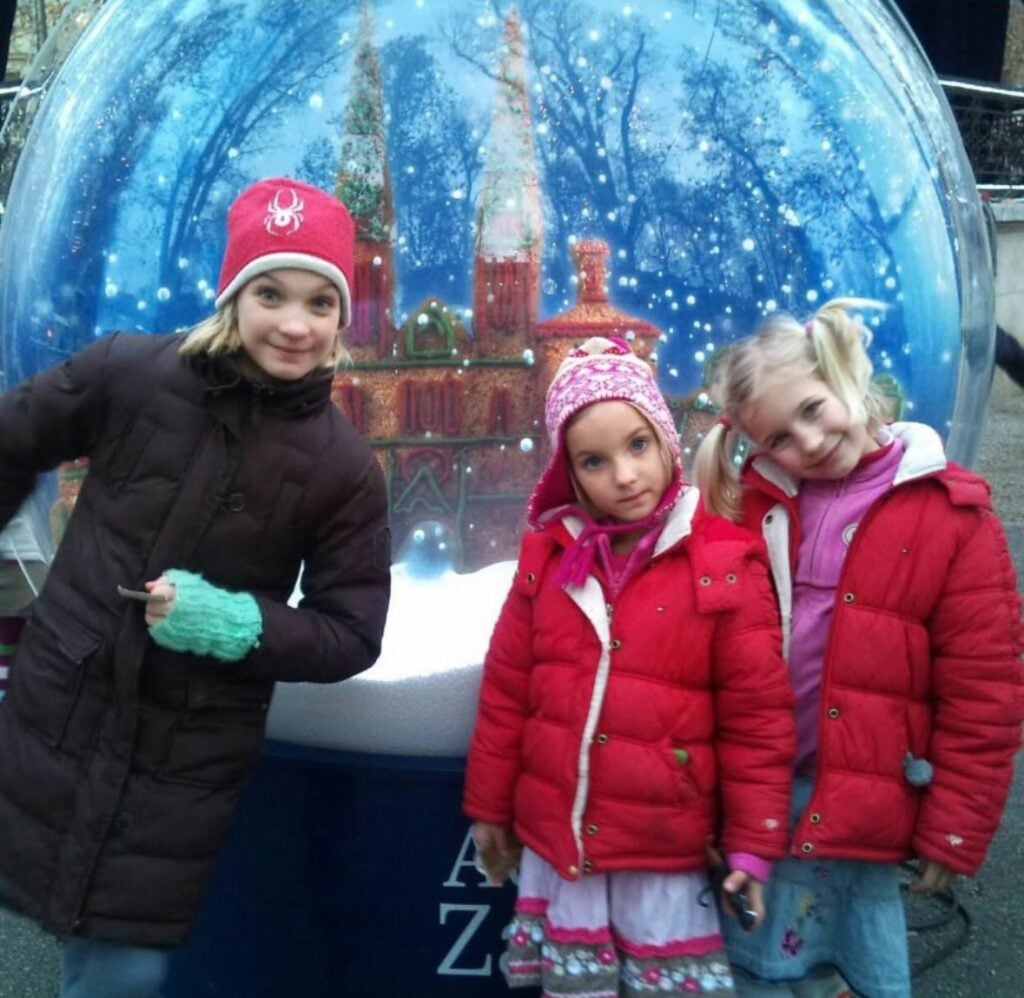
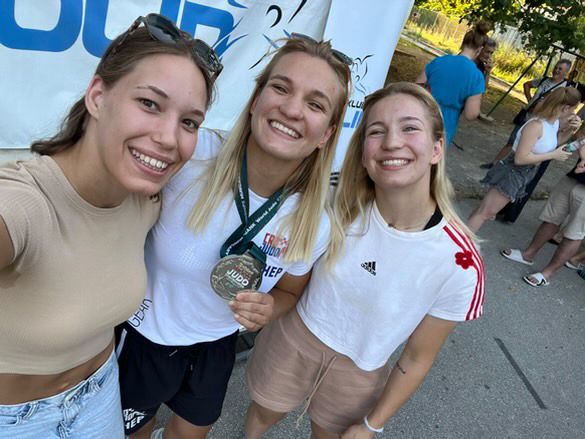
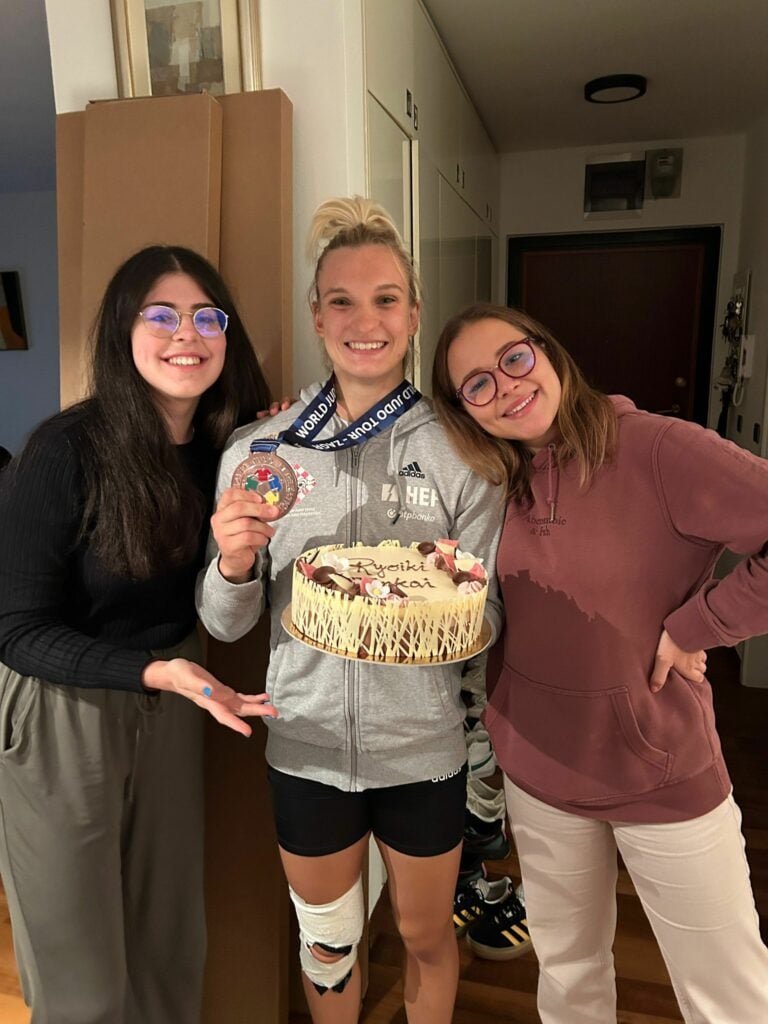
“My sisters, Nina (21) and Jana (19), are among the closest people in my life. All three of us have trained in judo from a young age, but that’s only one of the many things we have in common. I love that I grew up with the two of them, always arguing about stupid things, listening to the same music, reading the same books, and watching the same films.
My family is my biggest support, and I love that I can share judo with my sisters at such a high level. We often exchange advice and do a lot of randori together, as we compete in similar weight categories. Jana also competes at −70kg and won a junior World medal this year, while Nina fights at −63kg and has won multiple medals at EJU Cups and Opens.”
As a younger athlete, Cvjetko never imagined reaching this level so quickly.
“No, when I was younger, I couldn’t dream of achieving so many big things at this age,” she admits. “I thought it would take a lot more time to get used to judo at a senior level.”
Confidence arrived gradually. “As I slowly gained confidence, I proved to myself I could go against the bigger names in my category even as a junior.”
Setbacks, she believes, were just as important. “I have had as many setbacks as I have had successful tournaments,” she says. “Sometimes it is important to take a step back after a painful loss and regroup.”
Her response is always forward-looking. “I like to use my disappointments as fuel for the upcoming challenges,” she explains, “as I believe the reward for my hard work and sacrifice will come to me at the right time.”
Mental preparation has long been part of her routine. “I have been working with my sports psychologist since my cadet days,” she says. “He has taught me a lot of tactics to prepare for competition and balance pressure.”
Still, it is pressure that she has learned to embrace. “If there is pressure to win medals, it means that I am good and that Iv hae earned the right to be a favourite,” she says. “I don’t think about the ways that I could lose but instead about all the ways that I can beat everyone that I want to beat.”
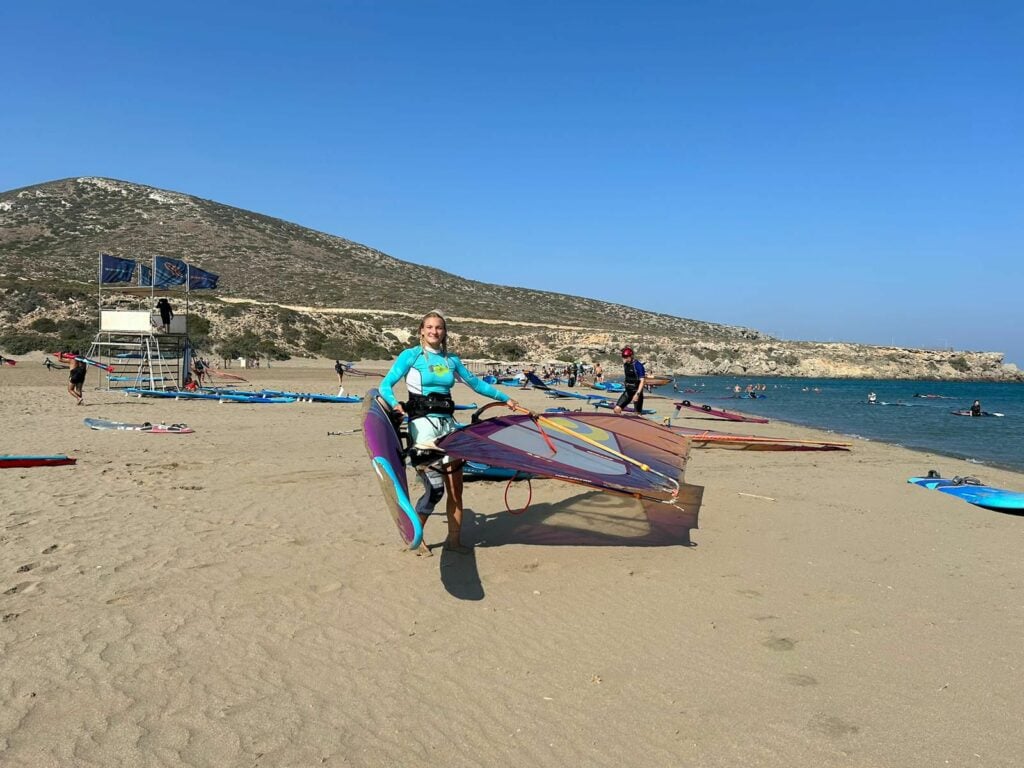
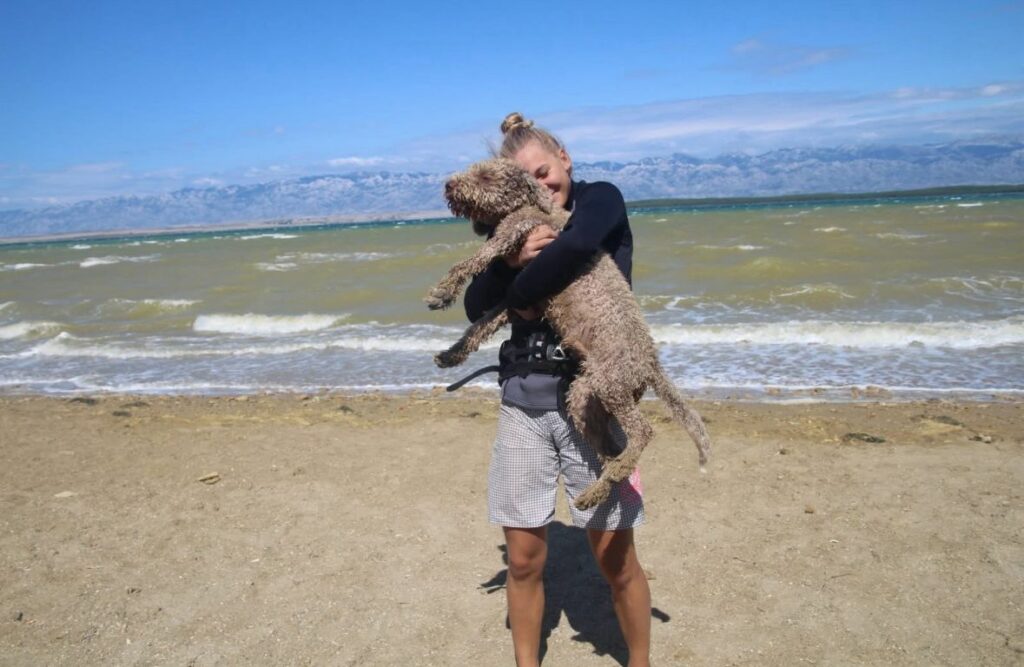
“Sep is our family dog and he just turned 10 years old. He was with me since I was a young kid and he is my best friend in the world. He is a big responsibility in a family with three judokas who constantly travel, but we love to spoil him and take him on walks in our free time.”
Still Hungry
The 2025 season tested her early. “This season hasn’t started as I had hoped it would,” she admits. “After winning bronze in Baku, I lost in the preliminaries in the two upcoming tournaments.”
Doubt followed. “I lost some confidence,” she says, “but I managed to come back mentally and win another European medal.”
That moment changed everything. “I think that was a turning point for me this season.”
What followed was proof of resilience: victory in Dushanbe and silver at the World Championships. “I don’t think anything clicked in particular,” she reflects. “I just gave it my all at every competition. Sometimes it worked out, sometimes it didn’t.”
Looking ahead, her goals are clear. “My goals for the next season are medals at European and World Championships and to pick up as many points as possible once the Olympic qualification period starts.”
Despite her status, she feels no sense of being hunted. “I don’t feel like being hunted for my WRL number one position at all,” she says. “It is not going anywhere and I can always take it back.”
Her focus is elsewhere. “I would much rather focus on achieving some other dreams I still have unfulfilled.”
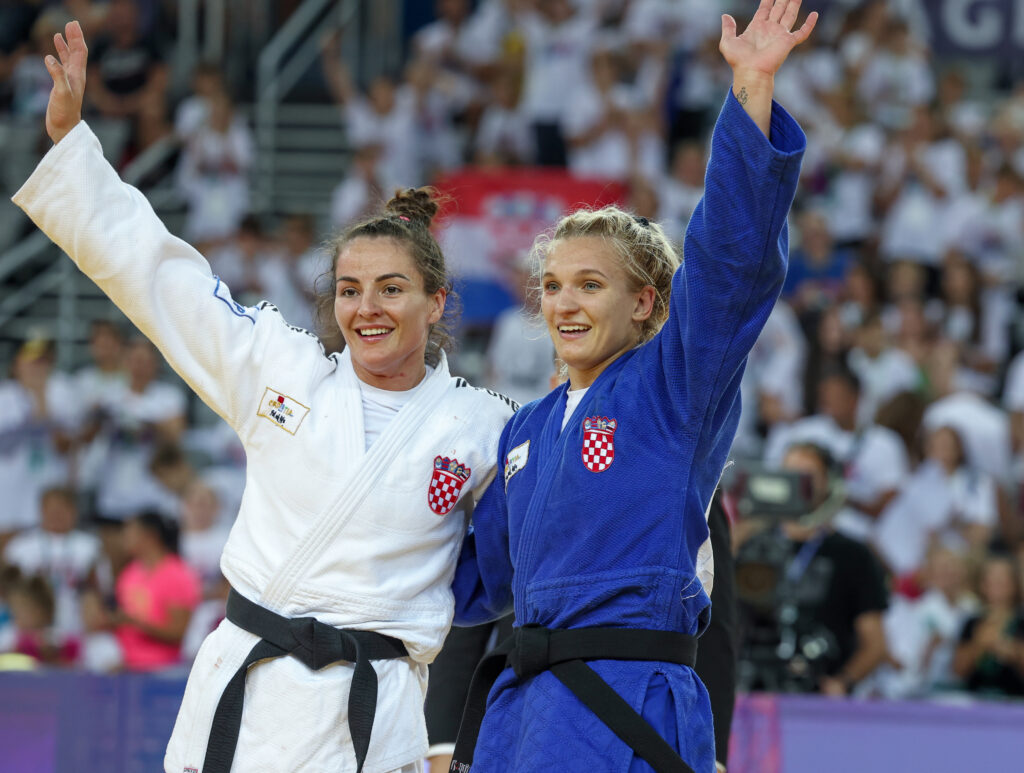
Role model in Croatia
Cvjetko did not grow up idolising champions. “I don’t remember being very much inspired by anyone when I first began judo,” she says. “I was always losing and wasn’t good to begin with.”
Instead, her motivation became deeply personal. “I just want to become the kind of person that younger me would be proud of,” she says. “So far, I think I am doing a really good job at that.”
Balancing elite sport with university life is demanding. “I don’t have a lot of free time between training and travelling,” she admits. “But my friends and family are very understanding of my goals and they are a big part of the reason I’m able to do all this.”
To young Croatian judoka watching her rise, her message is simple and heartfelt:
“Chase your dreams and believe in them,” she says. “It is possible with a lot of hard work and passion. Everything you learn from sport will make you a person you can be proud of one day.”
As for how you hope to be remembered?
“I hope people remember how happy I was to represent my country and spend all these years doing something I love,” she says. “Of course, I would like to be remembered as an Olympic medallist but that is something I am yet to achieve.”
Author: Hans Van Essen