





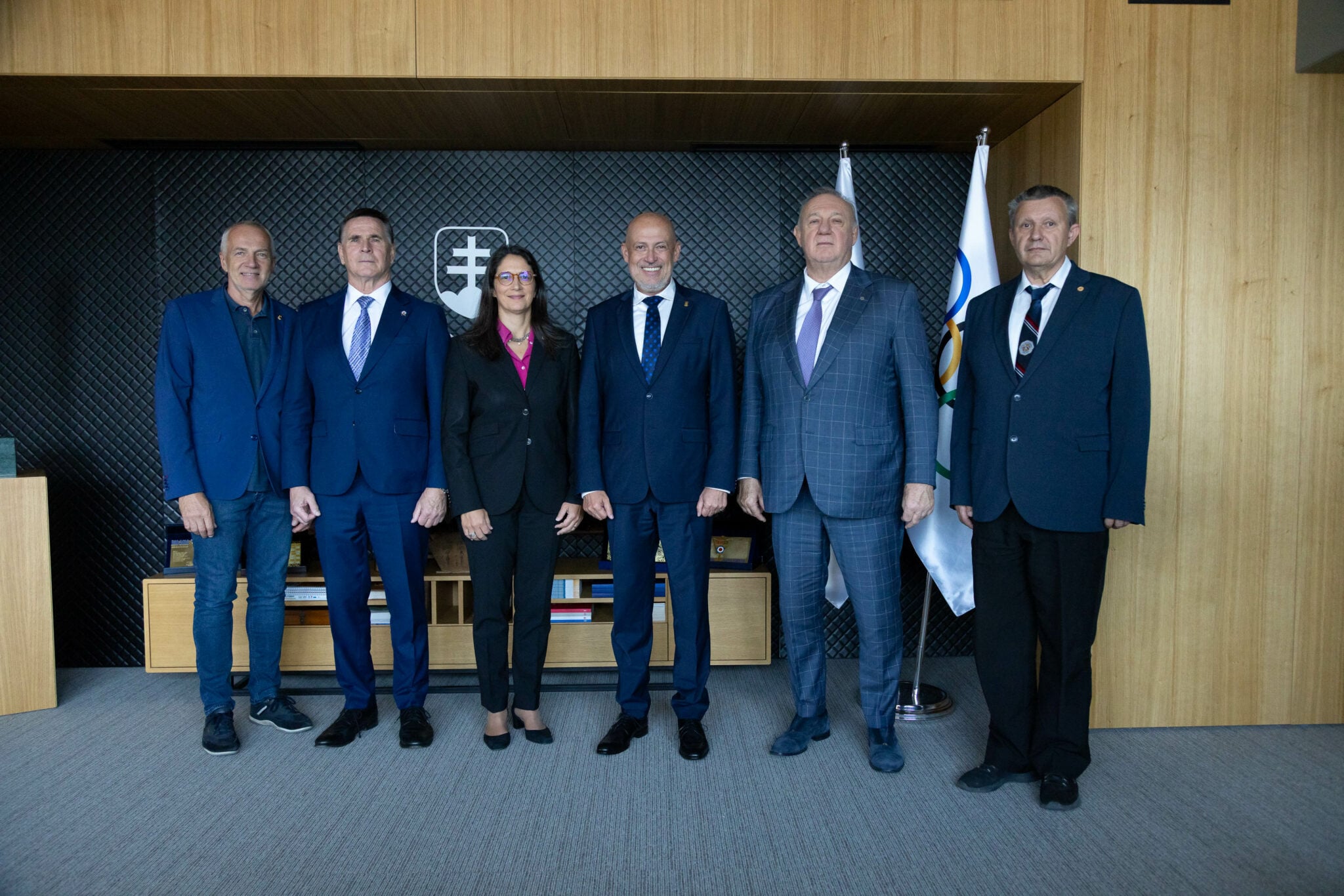
On 5 September, the National Olympic Committee of Slovakia (NOC) opened its doors to welcome distinguished delegates from the European Judo Union (EJU). Hosting the visit was Anton Siekel, President of the NOC of Slovakia, who greeted Dr. Tóth László, President of the EJU, and Catarina Rodrigues, Vice-President of the EJU. Also present was Vladimir Barta, Head Sport Director of the International Judo Federation (IJF), who was in Slovakia as part of his visit to the Junior European Championships.

Following the formal welcome, we had the opportunity to sit down with Mr. Barta, who shared his reflections on being back in Slovakia, the development of judo across Europe, and the importance of national investments in infrastructure and education for the sport’s growth.
For Barta, Slovakia carries a deep sense of familiarity.
“It’s too lovely, you know. This here, it feels like coming back home. Everybody knows it was Czechoslovakia before, and I was a coach of the Czechoslovak team. I know all the people around, it feels like some old family. I am very happy that President Toth invited me; it is a real pleasure to be here.”
His words reflect not only his professional ties but also the emotional connections built over decades in the sport.
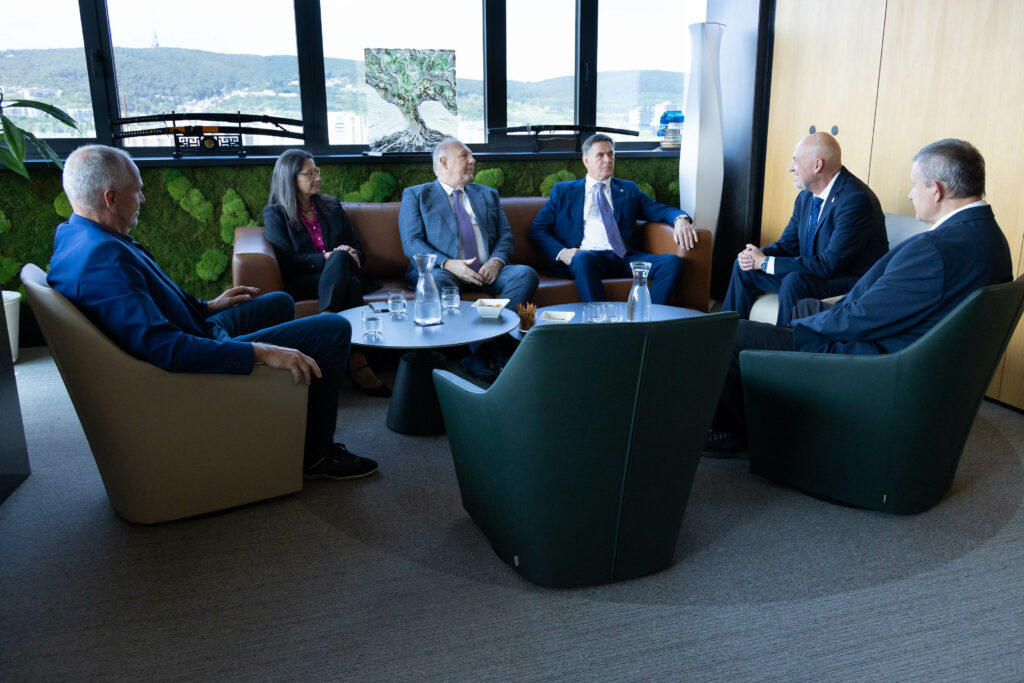
Speaking about the growth of judo across Europe, particularly at the junior level, Barta highlighted a unique advantage.
“Europe has over 50 countries and a very well-developed competition system, juniors, cadets, seniors, all with their own paths. Still, the biggest advantage is travel. In Europe, you can take a bus or a car and be in another country within hours. That proximity allows for more training camps, more exchanges, and ultimately stronger development across the continent.”
He believes this accessibility gives Europe a competitive edge in preparing judoka for global events, including the upcoming junior World Championships in Lima.
“Pan America will be at home, Asia is ready, Europe is ready. It will be a strong event, no doubt.”
The visit to the NOC of Slovakia left a strong impression on Barta, not least because of his personal connection with NOC President Anton Siekel.
“I have known Anton for years, even before he became Olympic president. Their Olympic Museum is so cozy and inspiring. They invite schools and young people, showing sports through films and exhibitions. It’s amazing. And of course, Anton is a former judoka, that’s an advantage. Once you are a judoka, you carry that family spirit, and you understand the demands of the sport.”
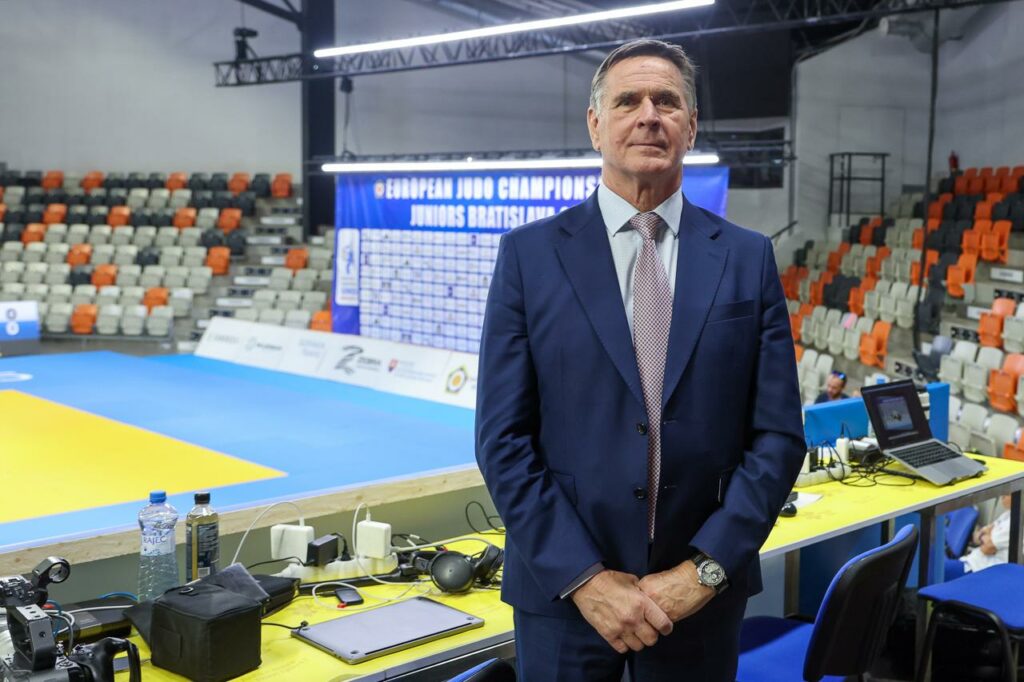
Barta was quick to recognise Slovakia’s progress in recent years, pointing to standout judoka such as Patrícia Tomanková, a double cadet world champion.
“It’s a big success. Not many judoka have two world titles at cadet level. I was lucky to follow her fights in Peru last year, and it was a pleasure to see her perform.”
He was equally impressed by the national dojo facilities in Slovakia.
“When you hear about it, you think, okay, it sounds good, but when I saw it, it was amazing. They have a big board with the name of several champions on it, right at the entrance, and every young judoka who enters wants to be on it one day. It creates inspiration and motivation. It is unique, just like the judo family. You cannot avoid becoming a judoka there.”
Barta explains that establishing a national dojo is more than just infrastructure; it is the foundation of long-term success.
“Everybody wants to have a national dojo, but not every country is lucky. A dojo gives daily training opportunities with dozens of judoka. It becomes an open door for development, whenever you want to go, you can go there. This is the base.”
Undoubtedly, Slovakia, with its investments in youth, facilities, and leadership, is carving out a meaningful role in that future.
Author: Szandra Szogedi