





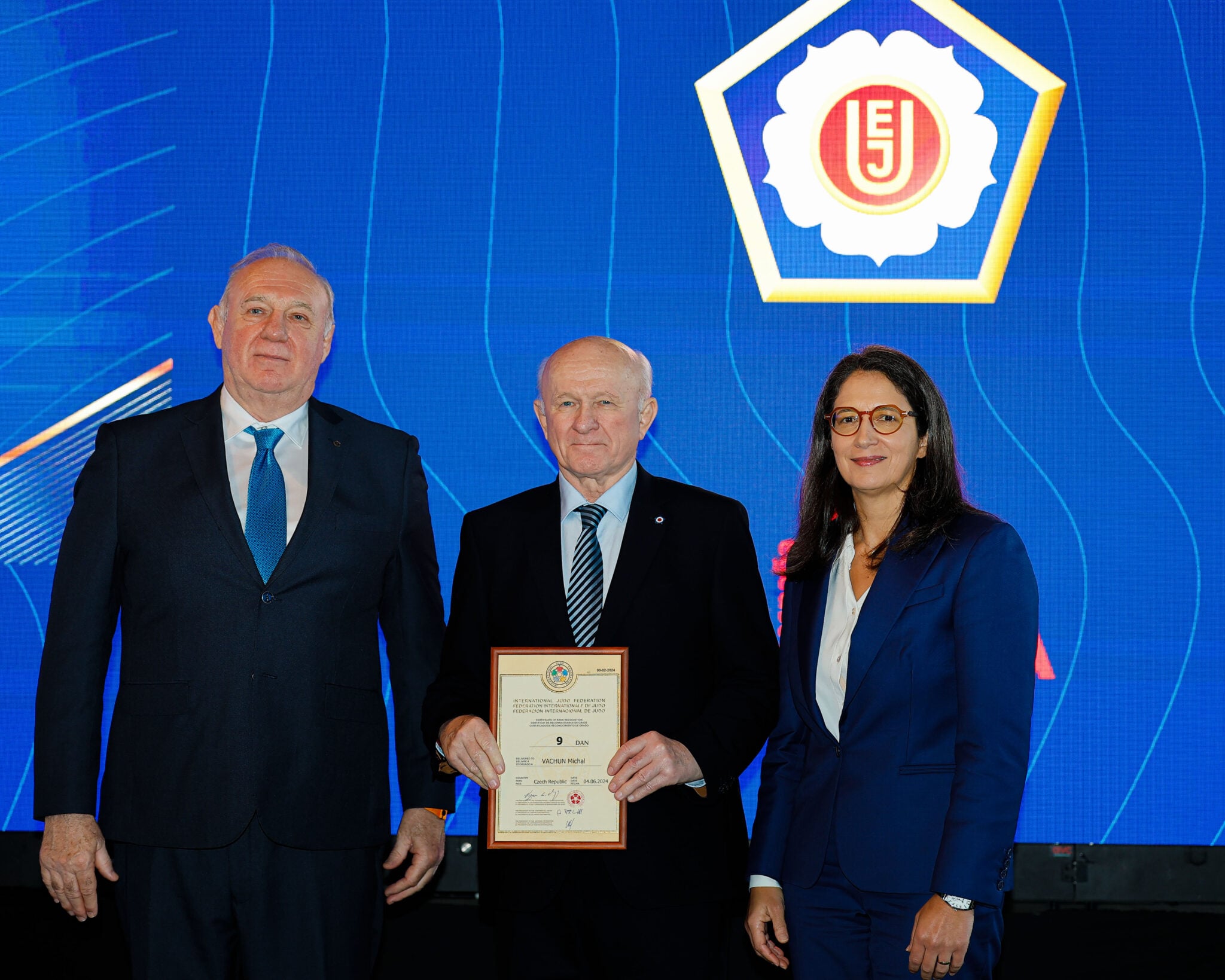
Today Michal Vachun was awarded the 9th DAN, a distinction that reflects not only technical mastery, but a lifetime defined by excellence, leadership and service to judo. Vachun is the highest-ranked judoka in the history of the Czech Republic. His awarding of the 9th Dan at the European Judo Union Congress in Gran Canaria marks a historic moment, recognising more than six decades of contribution to the sport at national, international and institutional level.

As judoka he was a five-time national champion of Czechoslovakia, Vachun earned international recognition early in his career as a bronze medallist at the 1965 European Championships in Madrid, as well as a medallist at the World University Championships. Yet while his achievements as an athlete were significant, his greatest and most lasting impact came as a coach and leader.
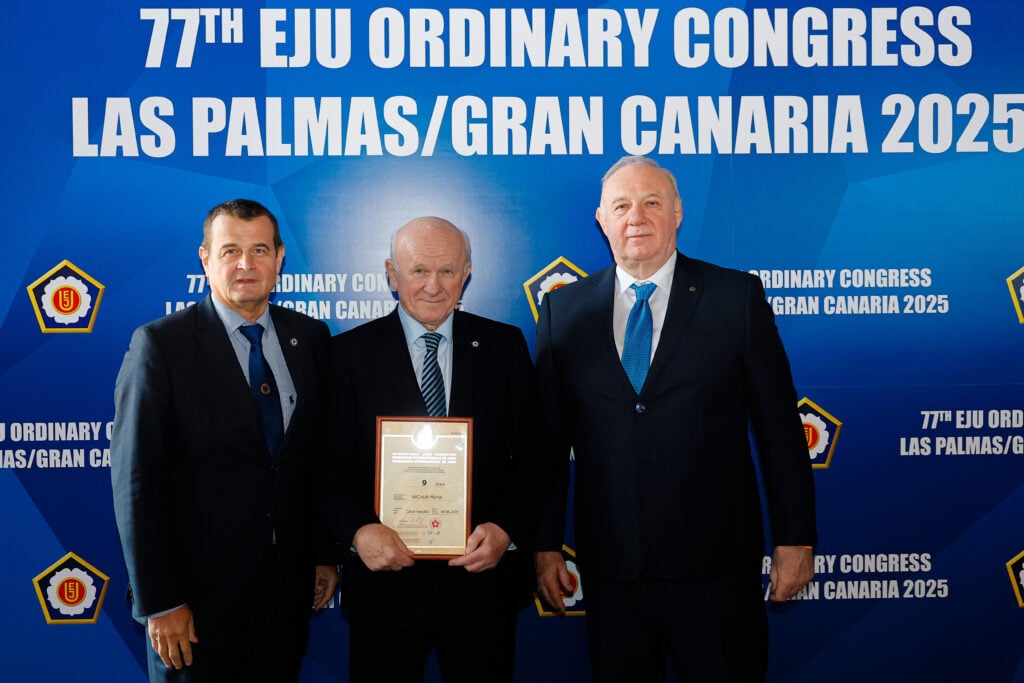
Over the longest and most influential period of his career, he guided athletes through five Olympic Games, 16 World Championships and 36 European Championships, helping shape generations of judoka and leading them to the highest levels of international success.
Beyond the tatami, Michal Vachun has also shaped the sport at its highest administrative level, serving for more than a decade as EJU Sports Director and Vice-President Sport, where his influence extended across the entire European judo landscape.
As he reflects on the honour of the 9th Dan, however, Vachun does so with humility rather than celebration.
“It’s really high, very high and special,” he says. “And I have a little doubt whether I deserve it.”
EJU: Why? You have always so modest.
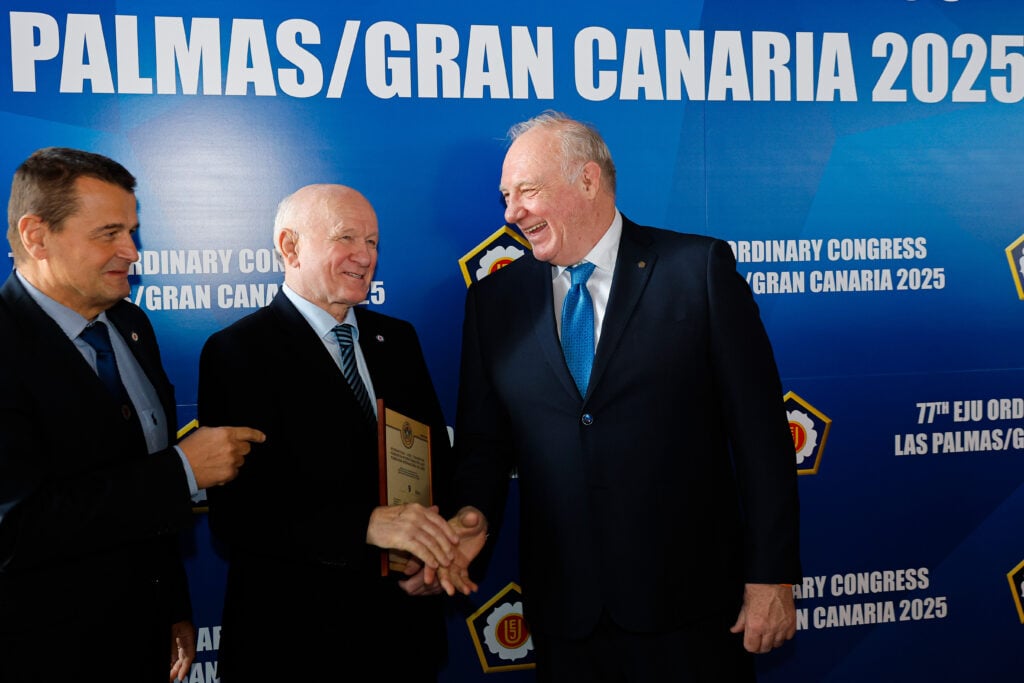
“Yes, because it is not only my 9th DAN, it is a recognition of the Judo World for me and the Czech Judo Federation, but it belongs to many people. And I have to thank the people who came up with the introduction and idea and I thank IJF President Marius Vizer to confirm the proposal and the EJU President Laszlo Toth to executive such great honour.”
Foundations on the Tatami
Raised in Czechoslovakia during a formative era for European judo, Vachun’s early years were shaped by discipline, structure and a deep respect for the values of the sport. Training conditions were demanding, and success required commitment far beyond the mat.
“Judo gave me a framework very early in life,” he reflects. “It taught me discipline, responsibility and respect, not only how to win, but how to accept defeat.”
His competitive career culminated in national dominance and international podium finishes, but even then, judo was already becoming more than competition alone.
A Coach for Generations
Transitioning from athlete to coach, Vachun embarked on what would become the most substantial chapter of his judo life. As head coach of the Czech Republic and later Iceland, he worked in contrasting environments, adapting his approach to different cultures, resources and expectations.
“You cannot coach in the same way everywhere,” he explains. “You have to understand people first. Only then can you help them develop as athletes.”
Across five Olympic cycles and dozens of major championships, his focus remained consistent: long-term development, personal responsibility and trust between coach and athlete.
“Medals matter,” he acknowledges, “but what stays with athletes is how they were guided, how they were treated, and what they learned about themselves.”
Leadership Beyond Competition
Vachun’s deep understanding of judo naturally led him into various tasks in judo and always he had to adjust to the job. As EJU Sports Director and Vice-President Sport, he played a central role in shaping competition structures, athlete pathways and strategic direction at European level during a period of significant change.
“Administration is not about power,” he says. “It is about responsibility. Every decision affects athletes, coaches and federations. I enjoy the most not a specific period in my career but the transition between all those roles and top adjust like a judoka to the needs.”
His work during this period contributed to the modernisation and professionalisation of European judo, ensuring stability while respecting the sport’s traditions. In recognition of these contributions, he was awarded the EJU Order of Merit in 2024.
The Meaning of the 9th Dan
The 9th Dan is among the rarest distinctions in judo, reserved for individuals whose influence spans generations. For Vachun, it represents not a culmination, but a reflection.
“When something like this happens, you think about all the people you worked with,” he says. “Coaches, athletes, colleagues, nothing is achieved alone.”
His hesitation to fully embrace the honour speaks volumes.
“Judo is never about one person,” he adds. “It is always a shared journey.”
Still Part of the Judo Family
Although officially retired, Michal Vachun remains a respected and welcome presence on the international judo scene. He is in the advisory board of EJU President Toth and Vachun continues to attend events, observe developments and engage in conversation with younger generations if health allows.
“I am no longer responsible for decisions,” he says with a smile, “but judo has been part of my life for too long to simply step away.”
A Legacy Defined by Service
As the European judo community gathers in Gran Canaria, the awarding of the 9th Dan recognises more than achievement. It honours continuity, dedication and service, values that have defined Michal Vachun’s life in judo.
“If people feel that I helped judo in some way,” he says simply with again a humble smile, “then that is enough.”
For a man who has served the sport at every level, few words could better capture a lifetime of commitment.
Author: Hans Van Essen