





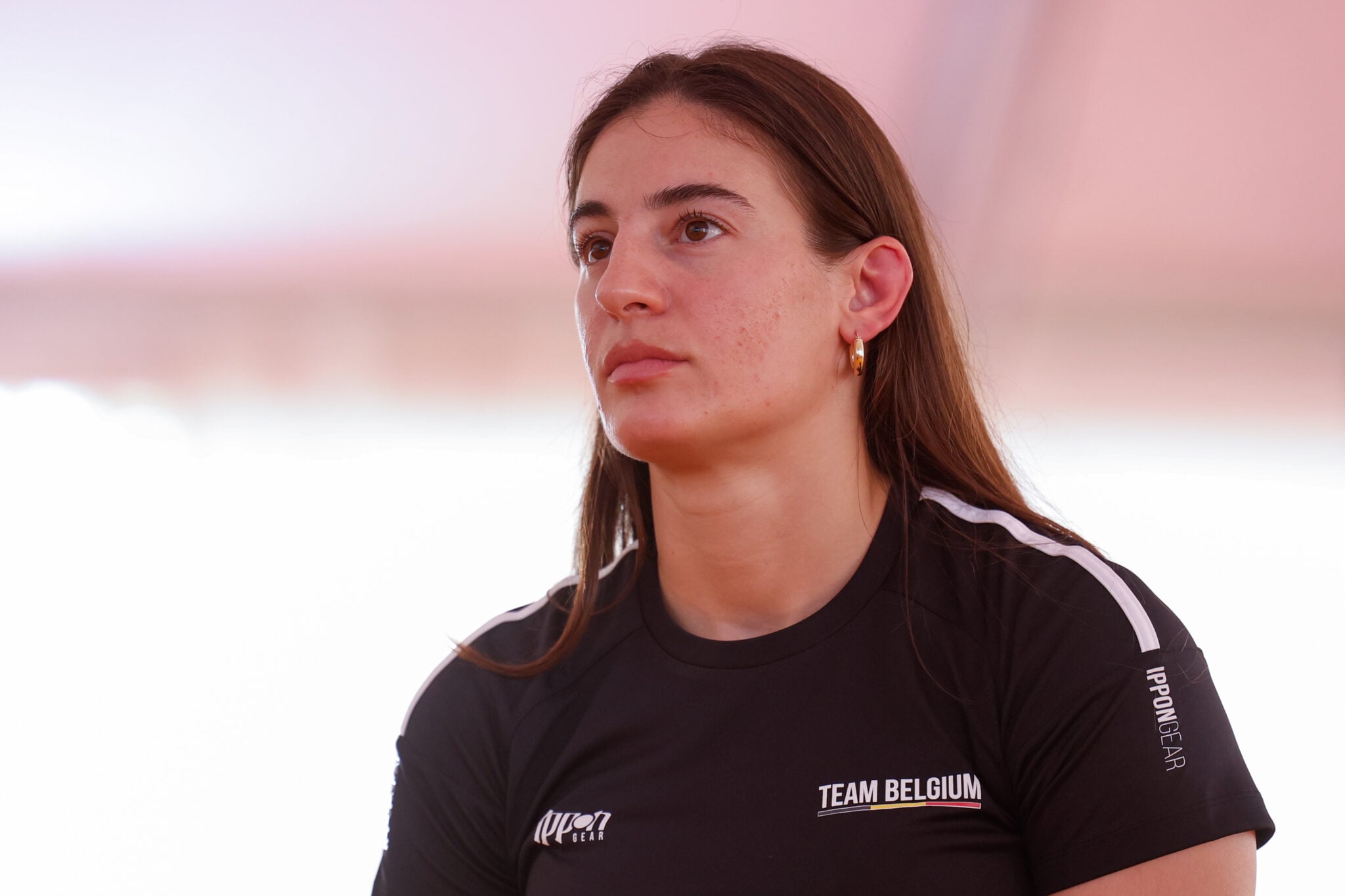
For much of her life, Nora Gjakova knew exactly who she was.

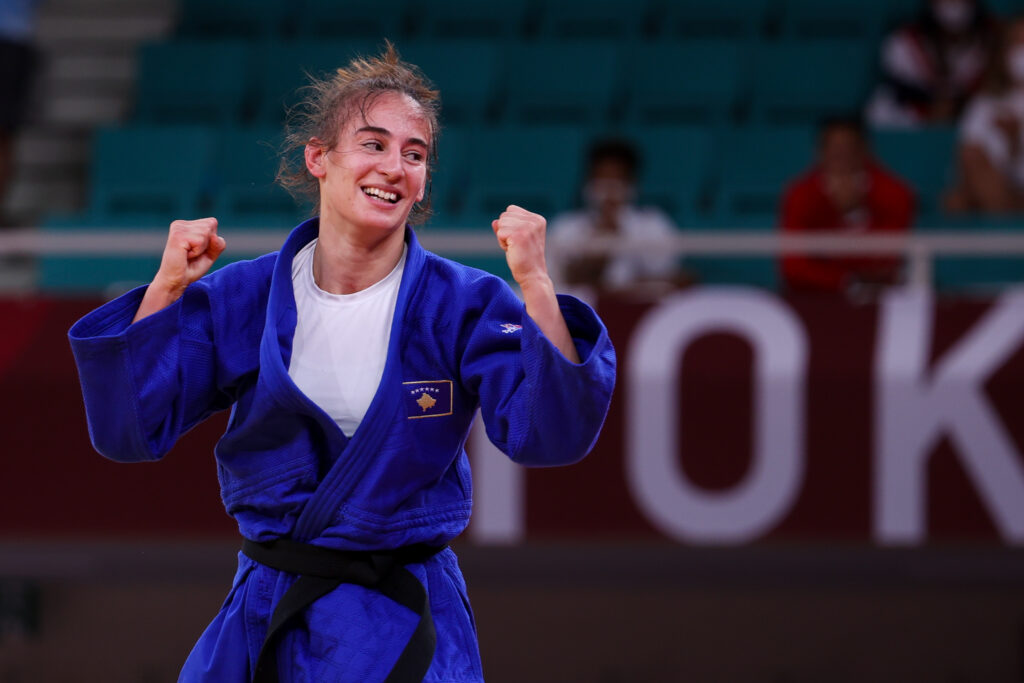
She was a world-class judoka, an Olympic champion at -57kgs, a European champion, and a fierce competitor through and through.
Then, in January, the Kosovar history maker retired.
“I loved the version of me when I was an athlete, so letting go of that part of my identity made me grieve every day,” Gjakova told the EJU.
At first, the transition seemed straightforward. She had always imagined a future in coaching and began working at Kosovo’s National Center shortly after bowing away from competition. Yet returning to the same dojo where she had spent years building her legacy proved unexpectedly difficult.
“Starting in the same place where I had memories as an athlete and where I used to be the focus of attention didn’t give me the love I needed from judo,” she says. “It was very hard to express myself.”
“It was the first time that I was faced with that much silence, and I couldn’t find a way to be comfortable in that silence and move on.”
She realised she needed distance, not from judo, but from the version of herself that had become inseparable from it.
“I knew I needed a change, otherwise, I would lose my love for coaching.”
So came the decision to move to Belgium, accepting a job as the women’s national coach for Judo Wallonie-Bruxelles. The move offered that much-needed distance from the athlete she had been and space to become the coach she wants to be.
“Now I’m part of the Belgian team, and things are going well,” she says.
The Kosovar is no stranger to success. Alongside her Olympic gold medal, she won a world bronze medal in 2021, claimed the European title in 2018, earned silver at the 2019 European Games, collected five European bronze medals, and captured three Grand Slam titles. At the Paris Olympics in 2024, she carried Kosovo’s flag alongside her brother, Akil Gjakova
Many of those same traits that carried her to Olympic gold remain central to her philosophy.
“I was always a hard worker, very disciplined and consistent. I never let myself be disappointed much by the losses or get euphoric from my wins. I always had to chase a bigger goal, and this kept my focus high.
I want the athletes I teach to see Judo as a game. The more you prepare yourself, the better your strategy is; if you win, if you lose, train harder and try again.”
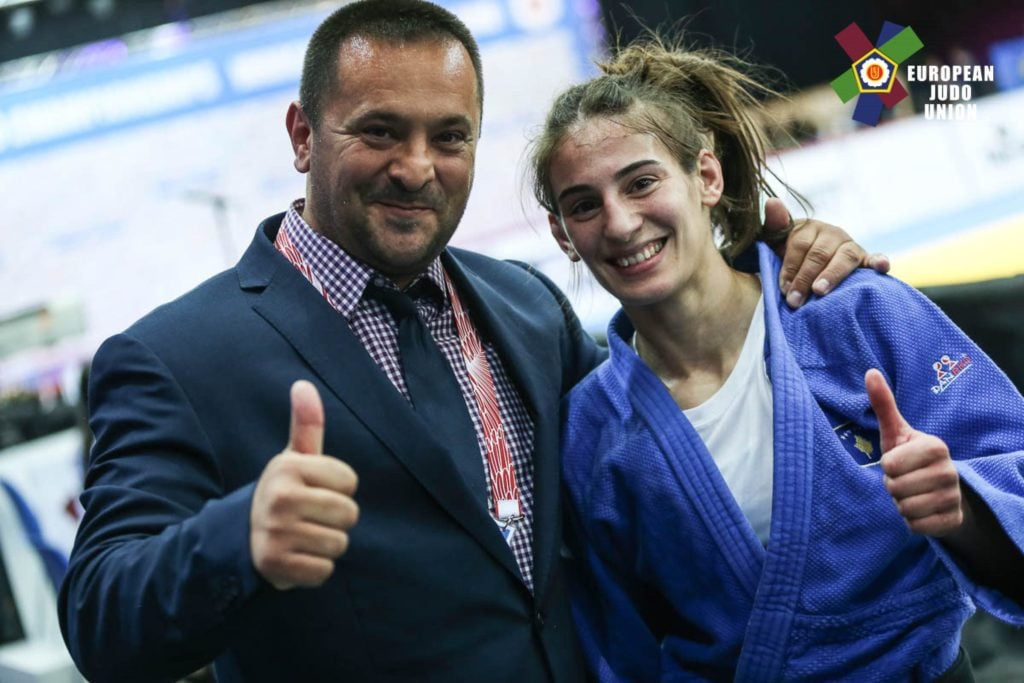
Much of that philosophy traces directly back to her own experience under Kosovo’s legendary coach, Driton Kuka.
Together, Kuka and a generation of extraordinary athletes, including Majlinda Kelmendi, Distria Krasniqi, and Gjakova herself, transformed Kosovo into one of judo’s most dominant forces. Kosovo’s first-ever Olympic champion, Kelmendi, has also stepped into the coaching chair since hanging up her competitive judo gi after Tokyo 2020.
“I talked a lot to my coach, Driton Kuka, especially before coming here. He gave me a lot of advice and supported my journey as a coach abroad. I trusted the way he trained me and he trusted how I responded. There were times when we would understand without talking, just simple advice. That’s why my confidence was always high when going into the fight.”
It is no coincidence that trust sits at the centre of her coaching philosophy today.
“The trust we built in each other with my coach Driton Kuka always peaked in the most important competitions,” she says.
“This is also my goal with the athletes I train,” she says. “To make them trust the way I train them or talk to them.”
“I want to be the kind of coach who helps athletes become independent and not depend on me for every decision. I want the athletes to develop their feelings and be confident about the way we train. But this takes time.”
Judoka
Author: Grace Goulding