





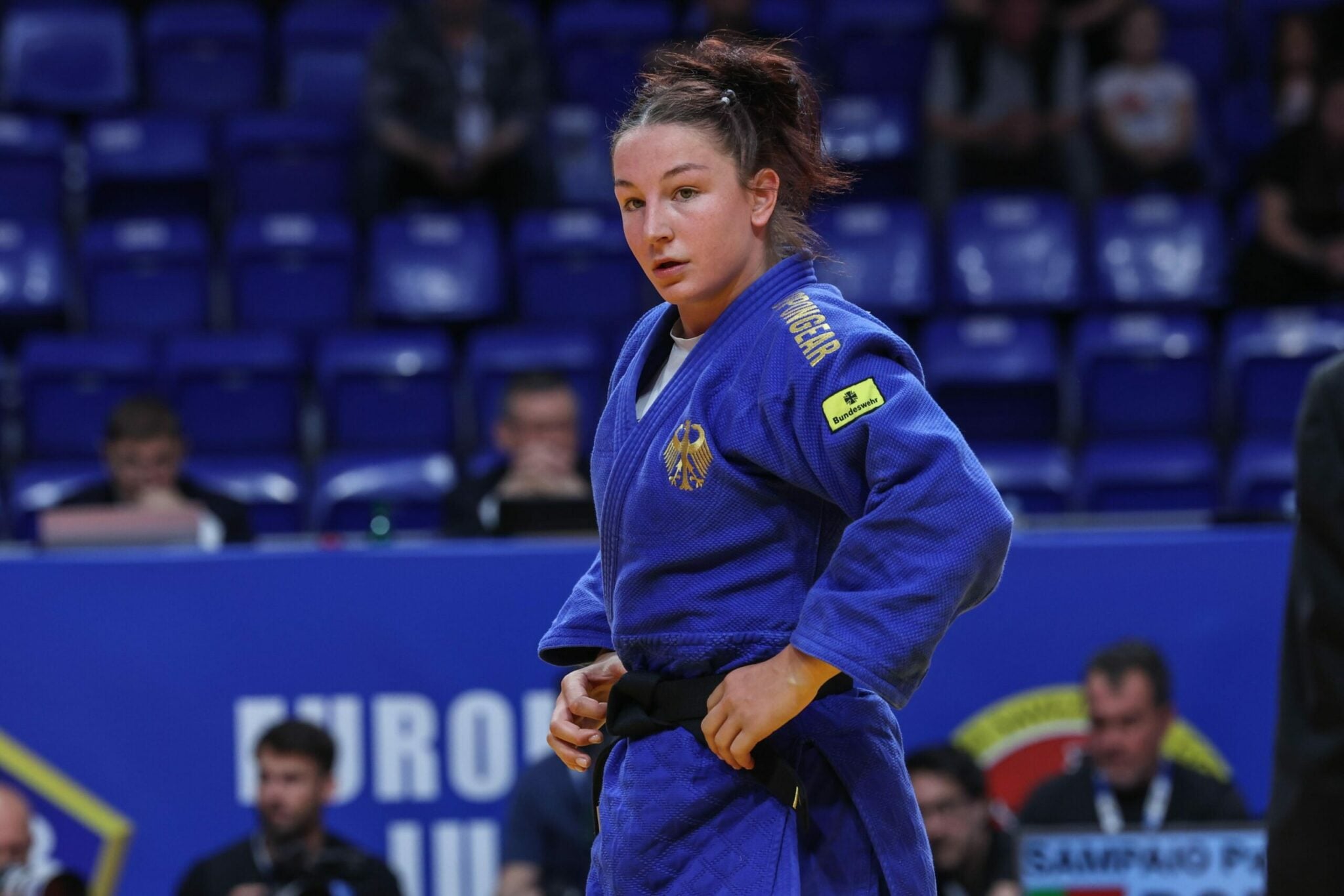
By highlighting both the core values of judo and the principle of Jita Kyoei, the European Judo Union continues its monthly journey to emphasize the relevance of these ideals beyond the tatami. The initiative aims to integrate them into everyday life, strengthening the community’s bond with judo’s philosophy. It serves as a reminder that judo is not only a sport but also a powerful educational tool. Each value is represented by a dedicated ambassador, and for the month of October the spotlight falls on TRUST. Leading the way as this month’s ambassador is 2025 world silver medallist, Anna Monta OLEK.

The German judoka shared its personal meaning for her;
“Trust in judo means everything. It begins with fair play, knowing that on tatami we treat each other with respect, complete honesty and push each other to our limits. It’s also about trusting our coaches and their experience and guidance that helps growth in athletes. It’s also about trusting the process, the long hours of training, the setbacks, the discipline, even the results may take some time. It’s also about friendship, knowing that the people you spend the better part of your time will always have your back. So trust in judo does not only help us grow as an athlete but as a person.”
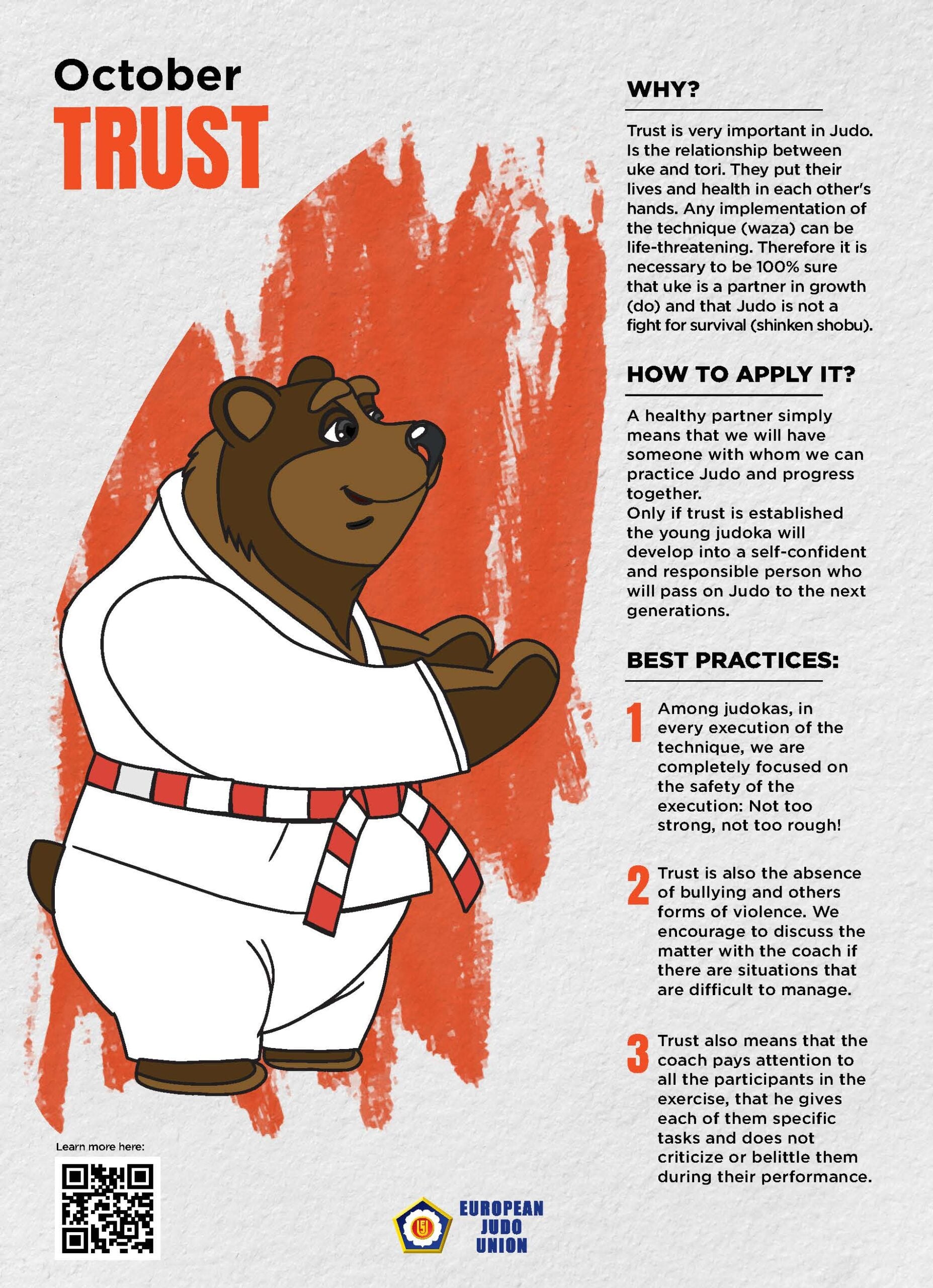
In judo, trust is not just an abstract value, it is a foundation of practice. Every training session depends on it. When judoka step onto the tatami, they place their well-being in each other’s hands. Throwing and being thrown, applying holds, or practicing submissions all require complete confidence that a partner will execute techniques with control and release when needed. Without this trust, the dojo could not function as a safe space for learning and growth.
Trust in judo extends beyond physical safety. It creates an environment where participants can be vulnerable, make mistakes, and improve. A judoka must trust their partner to challenge them honestly, without ego or malice, and in return offer the same respect. This mutual reliance builds strong bonds, transforming training partners into something closer to teammates or even family.
On a deeper level, trust in judo reflects trust in the art itself. Participants must believe in the principles of judo, that discipline, respect, and perseverance will guide them not only toward technical mastery but also toward personal development. Trust becomes a way of living: trusting one’s teacher, trusting the process, and ultimately trusting oneself. Judo is therefore, a lifelong lesson in building and honouring trust.
Author: Szandra Szogedi