





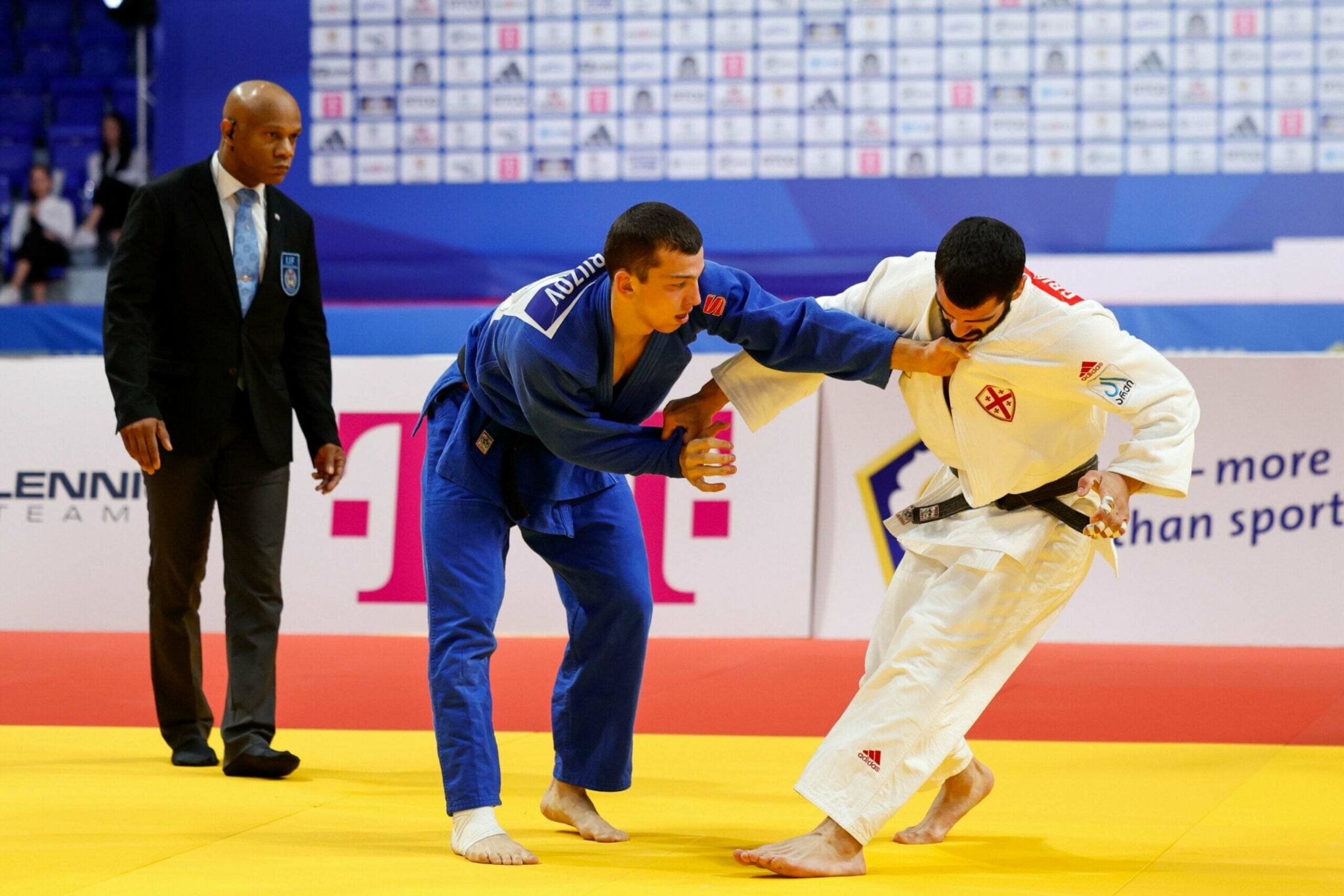
Olivier Desroses’ journey in judo began 7,074km from Paris, in French Guiana. It started in the simplest of ways, a parent making the decision. “You start judo tomorrow,” his father told him when he was 12 years old. The reply, typical of the time, was brief and unquestioning: “Yes, Dad.” That single moment set everything in motion. What followed was a scholarship to mainland France and, eventually, a personal decision to pursue something new. It was a choice that saw Desroses step into a suit he has been growing into ever since.
The French international judo referee reflects on those early steps:
“I started judo in French Guiana, where I lived until I was 16. I was 12 years old and it was not my choice. One evening, my father came home and said, ‘Tomorrow, you start judo.’ At that time (last century), there was only one possible answer: ‘Yes, Dad.’ But I started, I liked it and I stayed. I progressed.
“After four years, the regional sports director suggested that I apply for a sport-study programme in judo. At that time, I was doing judo, basketball and volleyball. I loved sport, and at school I was almost as good in scientific subjects as I was in sport.
“I didn’t even know this programme existed. It meant I would have to leave home and move to mainland France. Still, I decided to apply, knowing I had only a very small chance of being selected. Four months later (September 1991), I arrived in Orléans. That’s when my journey really began.
“After two years, I finished high school and went to university. At the beginning of my first year, I was looking for something new to try. Refereeing came to mind, I don’t know how or why. I was 18. I tried it, I liked it and I stayed, doing my best and progressing.
“To conclude, nothing was planned or calculated.”
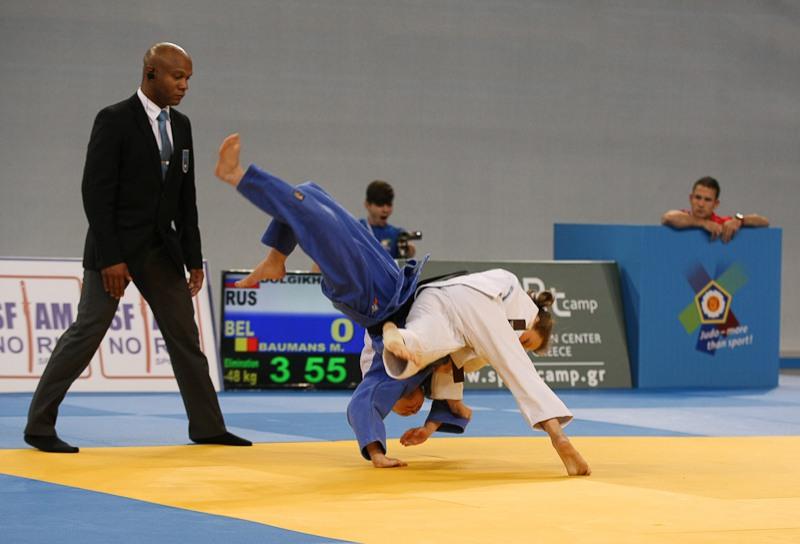
Desroses reached continental referee level in 2011 and earned his international licence in 2015. Even then, the path ahead was far from mapped out.
“I started refereeing without any real ambition; just to try. I never imagined that eight years later I would become a national referee. When I reached that level, I was one of the youngest referees. People around me believed I could go further but I didn’t. For me, it was a possibility, not something certain.
“In 2011, when I passed the continental exam, it was already a ‘wow’ moment. Even in 2015, when I obtained my A licence, I still didn’t imagine reaching the highest level. My first IJF event in 2017, the Paris Grand Slam, was already a big achievement for me. I do remember that for two months (I received the invitation in December 2016), whatever issue I would encounter, my only answer was: ‘I don’t care, I will do the Paris Tournament’; that is how much of a push that gave me.
“I realised it might be possible in May/June 2018, when I received an invitation for the Budapest Grand Prix. It included an IJF Academy session for referees beforehand. The invitation mentioned something like: “to prepare a group for Tokyo 2020…”
“That was a shock. A small voice told me, “It’s possible.” But at the same time, I had to explain to my kids that I would miss 10 days of a family holiday planned weeks earlier. That is when the voice changed to: “You have to do what it takes to make it possible.”
“That is when my ambitions truly began.”
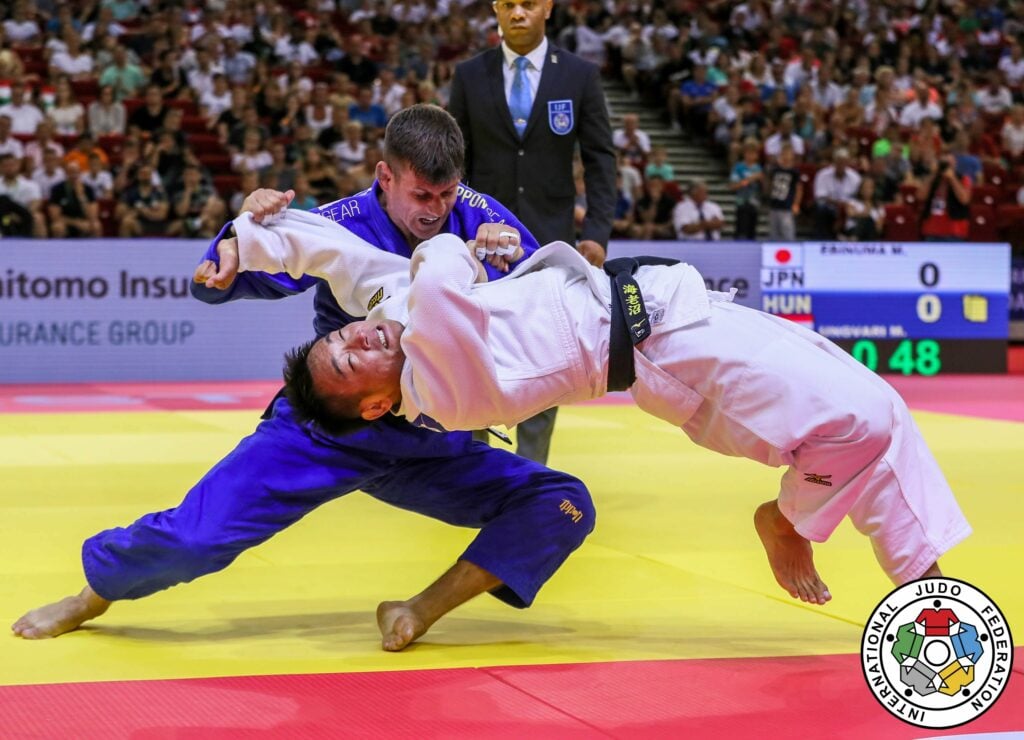
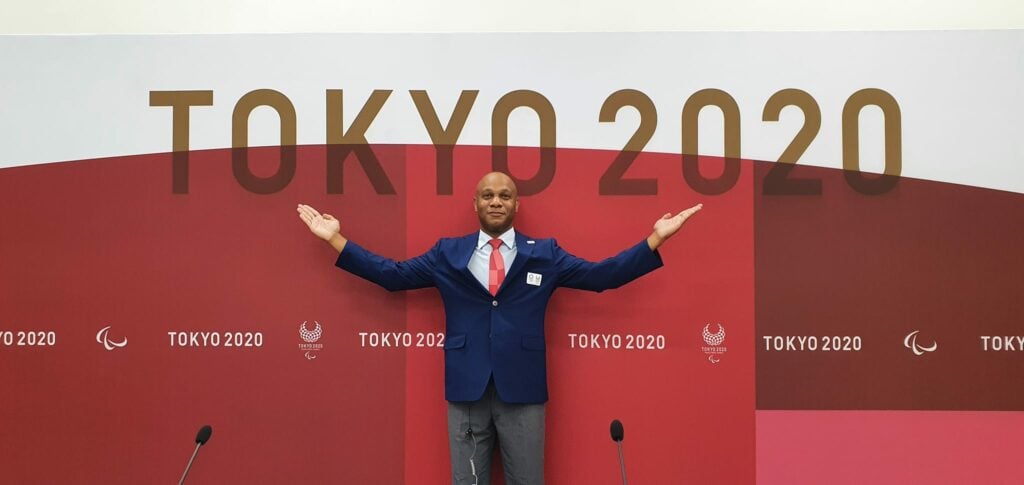
Hard work, as they say, rarely goes unnoticed. For Desroses, it led to two Paralympic cycles among the world’s leading referees, a journey he values as much for the experiences as for the milestones.
“I did two Paralympic Games, which means two cycles being part of the top referees in the world. I was lucky to share time and experience with them and that in itself was invaluable. The Games were the milestones, of course but I would emphasise the journey along the way. Valuable human and judo experiences, a lot of emotions, unforgettable memories, both personally and professionally.
“The two Games were also completely opposite. Tokyo, no spectators, the Covid period, a unique and strange atmosphere. Paris, a full house, the energy you expect from the Olympics and even more precious because I was at home, with family, friends, and colleagues sharing those unique moments with me.”
Besides the Paralympics, with appearances at Senior European Championships (2020, 2021, 2023 and 2025) and World Championships, Desroses has experienced the sport at every level and understands the subtle but significant differences.
“What strikes me most is the audience. At continental level, you are mostly in front of the judo family, people involved in the sport. At the Olympics, the reach is completely different. People outside of judo are watching, the broadcasting is global, the attention is on another level entirely.
“Then there is what these events represent. The continental championships are a milestone, an important step in the qualification process. The Olympics and Paralympics are the end goal. That changes the pressure, the emotions, the stakes for the athletes on the mat.
“Finally, of course, the level of competition. The European Championships already brings together some of the best athletes in the world, Europe being one of the strongest continents in judo but the Olympics and Paralympics gather the best from every continent.”
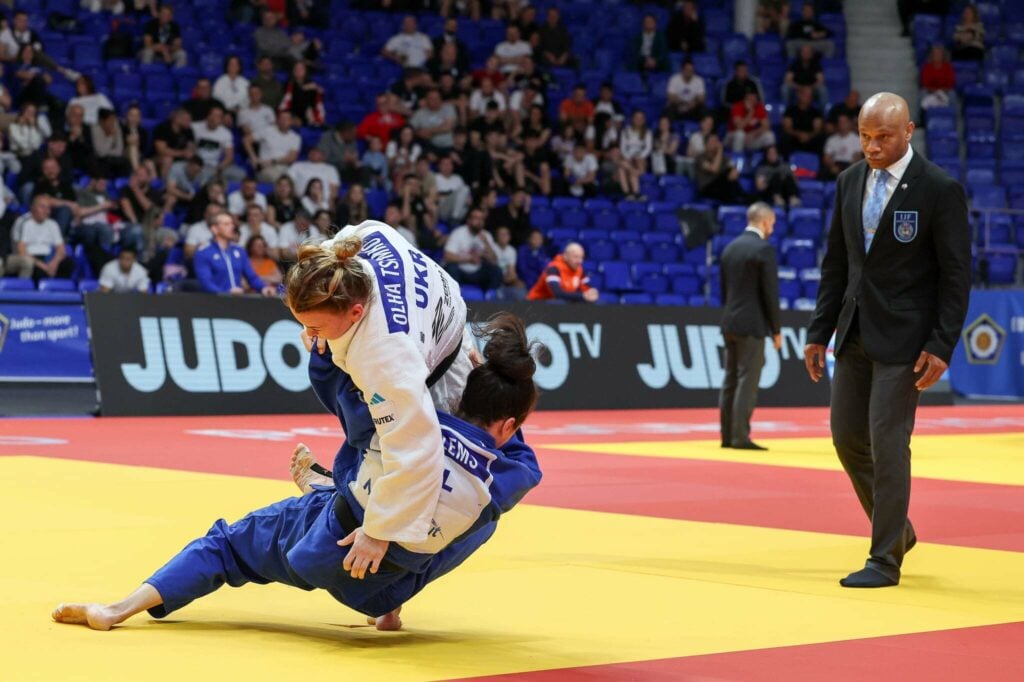
Next week, Desroses will once again take his place on the mat at the European Championships, this time in Tbilisi, an event he views as both a proving ground and a learning space.
“Like for the athletes, I see it as an important step in the preparation process towards the end goal. I have only participated four times so far, so each European Championships is also a valuable opportunity for me to learn and improve in this specific context.”
Referees, much like athletes, step into the spotlight the moment they enter the tatami. While attention often centres on the competitors, when decisions must be made, all eyes turn elsewhere.
Despite the experience, the feeling never quite disappears.
“Do I still get nervous? You mean stressed and afraid of making mistakes during a fight or competition? Yes, of course! The difference today is experience. I am no longer nervous two days before, as I used to be. Now, the nerves come when I step onto the mat for my first fight, until the first “Hajime!” During some fights, I can still feel nervous if I miss something or make a mistake. When that happens (because it happens), I try to calm myself by focusing more on the fight than on my feelings.”
Balancing authority with empathy is an invisible skill but a defining one.
“In fact, when I am on the mat I try to focus on the fighters. I try to ignore everything else, the crowd, the noise, the spectators. What matters is the fight in front of me. I have my rituals before each competition. They help me get into the right state of mind, where I can fully focus on the fight, the coaches, and the support from the central table.
“Then, during the fight, it comes down to a few things. I try to focus on what is happening, to stay calm and patient when the intensity explodes, and knowing the rules deeply and experience help. Over time, decisions become more natural, almost a reflex.
“I believe that for me the key point is respect. I must enforce the rules but I do respect the athletes, the time they have spent to reach this level, the difficulty of judo, the hopes and expectations they have, and in fact, I also have emotions, so I do respect their emotions, good or bad. So I apply the rules because I am on the mat for that but with true respect for the athletes.
“All in all, as a referee, I see myself as strict but fair with everyone. My guidance are 3 things: 1. The rules. I try to stay up to date and understand them deeply, it helps guide my decisions in difficult moments. 2. Respect. For the athletes, for the spirit and principles of judo. 3. Control. I try to control the fight, the tempo, the fighters, and the coaches, through my positioning, the way I use the mat, the precision of my gestures.”
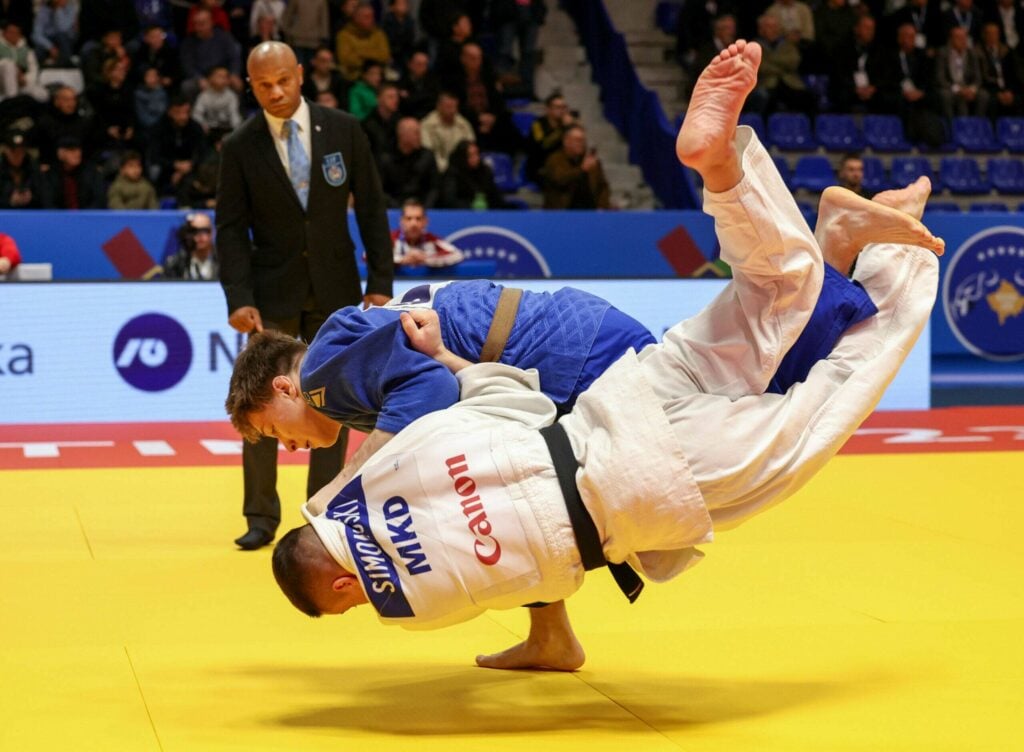
Across more than a decade at the highest level, Desroses has witnessed judo’s evolution first-hand.
“The rules have changed many times over the years, always in the same direction: making judo more spectacular for outside spectators while encouraging more active, dynamic fighting. I feel judo today reflects that well. True action is genuinely valued. Engaging, offensive judo is rewarded and passive fighting is penalised. As someone who loves this sport, that is a positive evolution.”
The beauty of judo referees is that they each carry a profession of their own. They are uniformed and united on the mat; however, away from it, they wear very different uniforms, representing their everyday lives. You never quite know who is behind that suit, a doctor? an engineer? something else entirely? We know Desroses’ journey on the mat but who is he on a daily basis?
“Olivier Desroses outside the tatami is a simple, normal person. I am 51 years old, with three grown-up children (24, 21, and 18), divorced. Professionally, I work in IT, nothing related to judo. I’m an Enterprise/Solution Architect, which means I design information systems that meet business and user needs.”
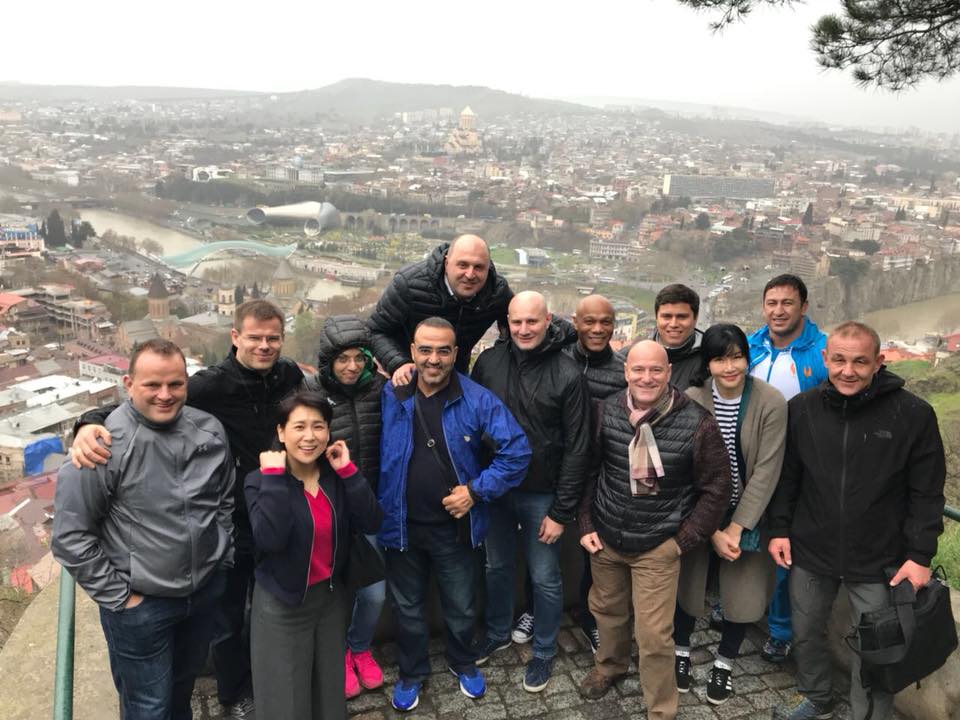
Just like athletes and coaches, referees carry both motivation and legacy.
“Several things keep me motivated. First, the pursuit of perfect refereeing. Fewer mistakes, cleaner decisions, being part of something bigger than myself: a great competition, the highest level, great fighters.
“Then the challenges over the years and my commitment to stay true to my values, and something that means a lot to me: when a coach or a fighter, winner or loser, respects me when we cross paths outside the mat. When athletes and coaches are happy to have a passionate discussion about judo with me.
“Beyond the sport and the competitions, I have also found true and lasting friendships here, in good and bad moments. That is something I deeply value.
“As for legacy, what I would like to leave is the idea that referees are part of judo, of its mentality, its spirit. We are judoka first, just as passionate about this sport as fighters and coaches and I hope to leave a standard for the next generation: stay true to your values, keep learning and always chase perfect refereeing.”
Author: Szandra Szogedi