





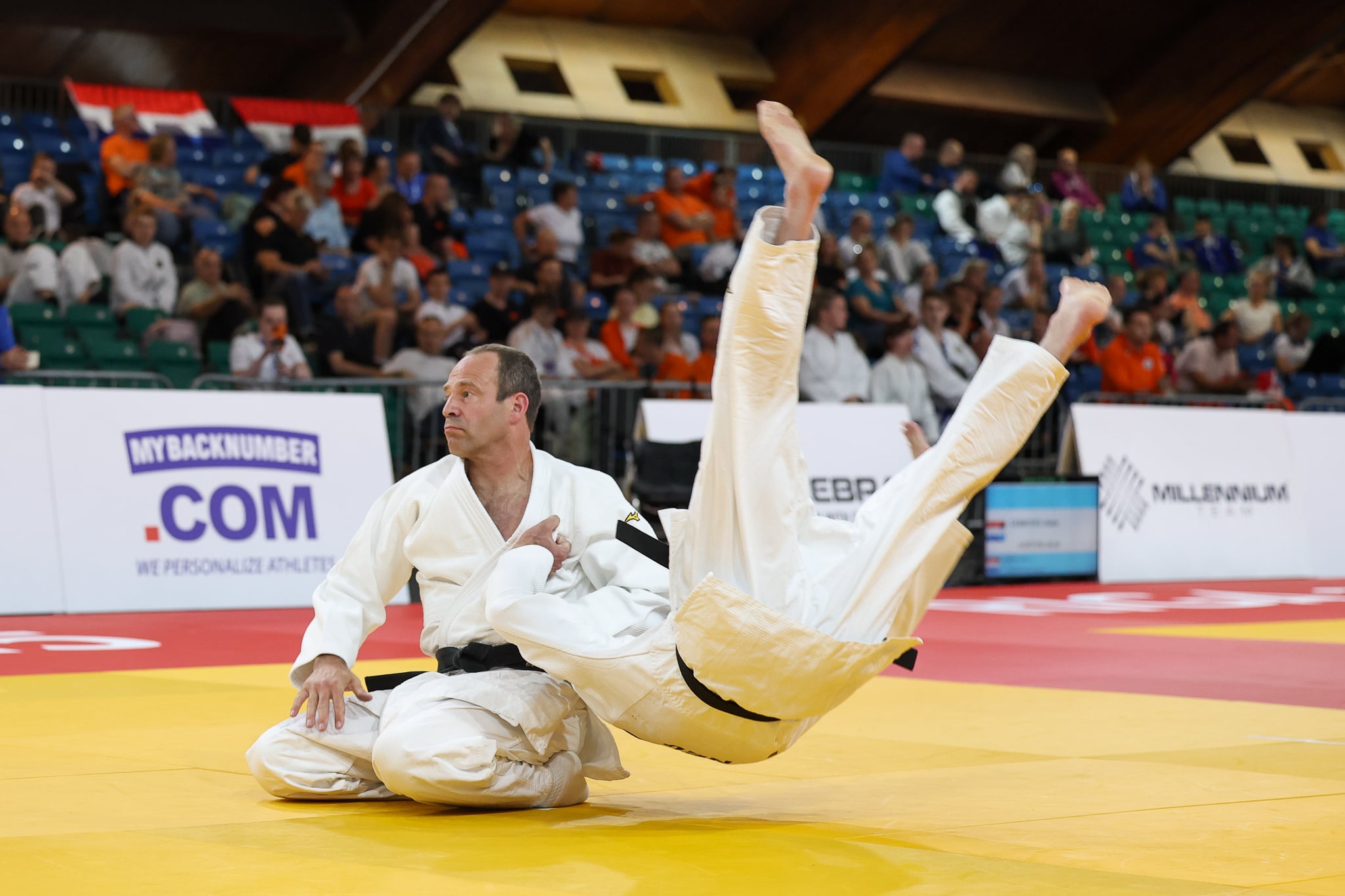
Ahead of the forthcoming European Kata Championships 2026, the European Judo Union (EJU) has implemented a series of updates to the Adapted Judo Kata regulations. These revisions focus in particular on the Adapted Nage-no-Kata categories, as well as on the list of kata eligible for participation in the European Championships, ensuring continued clarity, consistency and alignment with the programme’s development.

The most significant change concerns the former Category 1B in Adapted Nage-no-Kata. Previously, this category included pairs where Tori is an A-judoka (a judoka with a disability) and Uke is a mainstream judoka. In the updated rules, this category has now been divided into two separate groups to better reflect the functional abilities of athletes and the way the kata is performed.
The new categories are:
- Category 1B – Tachi-shisei: Tori is an A-judoka and Uke is a mainstream judoka. The kata is performed predominantly from a standing position, with necessary adaptations to accommodate the athlete’s disability (for example, athletes with Down syndrome, limb deficiencies or similar impairments).
- Category 1B – Ne-shisei: Tori is an A-judoka and Uke is a mainstream judoka. The kata is performed predominantly from a seated or kneeling position, due to the athlete’s functional limitations (for example, wheelchair users or athletes with cerebral palsy or similar conditions).
In addition to the new categorisation, the updated rules now also include a formal definition of Adapted Nage-no-Kata. This definition clarifies that Adapted Nage-no-Kata refers to a performance of Nage-no-Kata in which one or more techniques may be modified to accommodate the functional abilities of a judoka with a disability, while still preserving the fundamental principles and structure of the kata.
Another important update is related to participation in the European Kata Championships. Alongside Nage-no-Kata and Adapted Nage-no-Kata, the kata Katame-no-Kata has now also been added as an eligible kata for competition in the Adapted Judo categories.
These updates aim to further support inclusivity in kata competition and provide clearer pathways for athletes with different functional abilities to participate at the highest level of European kata events.
Author: EJU Media