





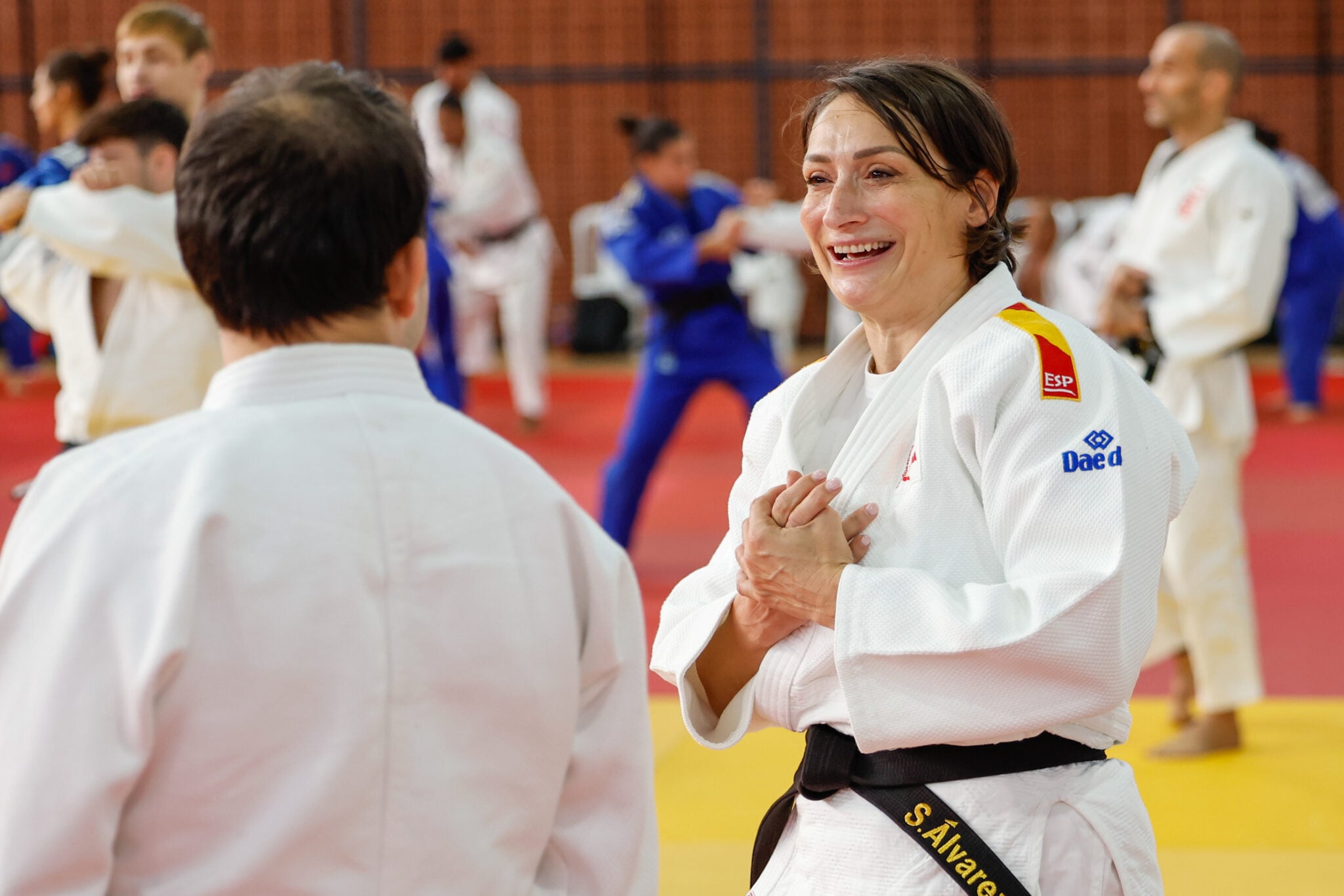
Sara Alvarez has worn many hats in the world of judo.

From Olympic athlete to coach at both cadet and senior levels, member of the EJU Coaching Commission, Sport Director for the Spanish Judo Federation, and Sport Director for IBSA Judo, it’s fair to say she has experienced almost every side of this beautiful sport.
“I think I’ve worn all the hats,” she told the EJU during a recent interview.
Now, Alvarez is preparing to add the latest chapter to that story as the European Judo Union heads to Gran Canaria for the 2026 Cadet European Championships, taking place from 29 June to 2 July.
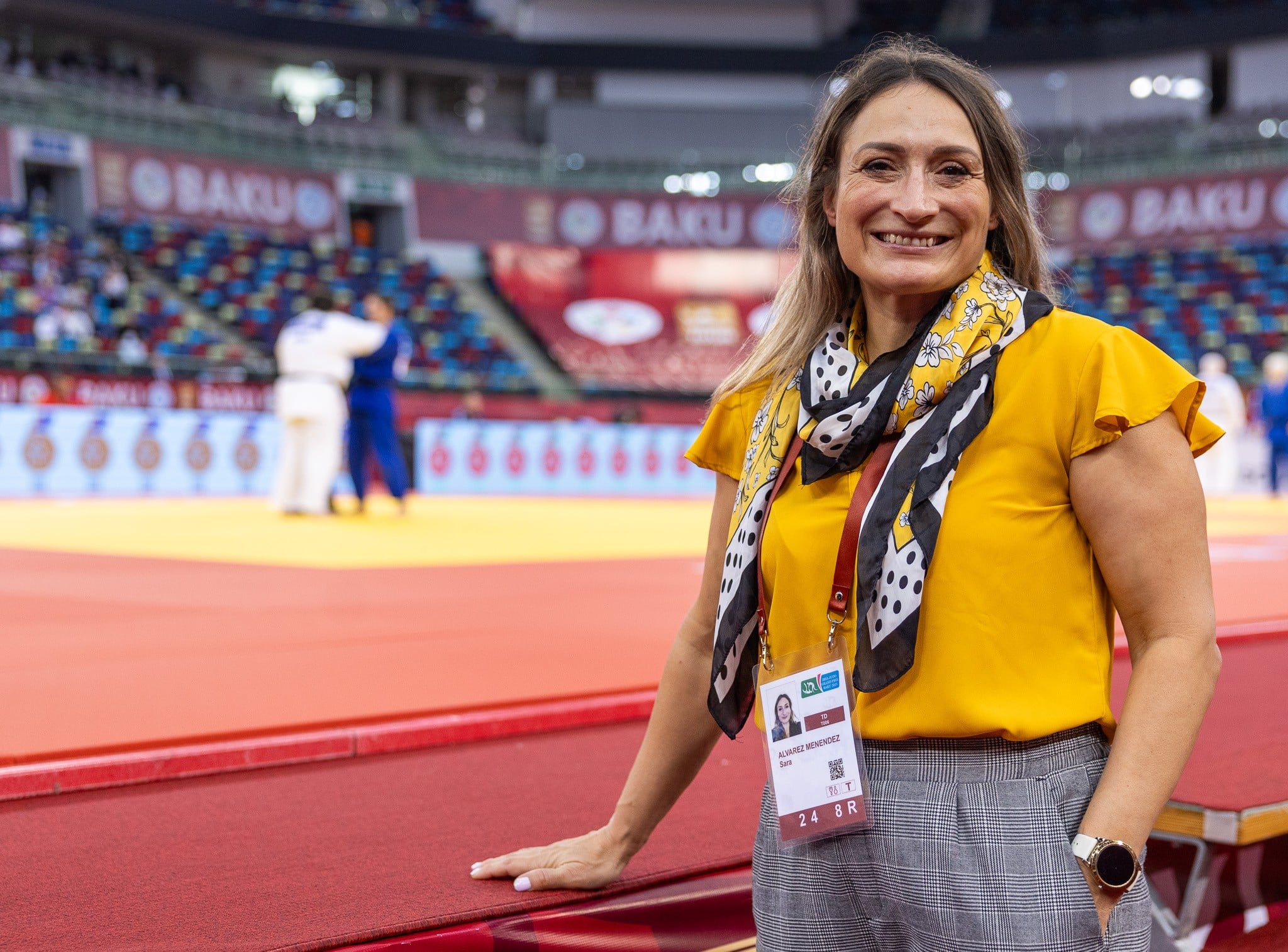
“My hat for this event is to manage a wonderful event in a huge venue on an island,” she explained.
As Sport Director of the Spanish Judo Federation, Alvarez is overseeing the planning and delivery of the championship. Her role includes coordinating logistics, managing event operations, organising the transport of equipment to the island (think: tatami shipped a boat), and working with local clubs to recruit and prepare volunteers and officials.
“It will be wonderful. The venue is very impressive, huge, modern, and equipped with big screens and two large warm-up areas. It will be an excellent setting for the championship,” she said.
Gran Canaria itself is also part of the attraction. “It has a unique character, with the flavours of Africa and Europe mixed together. It’s a beautiful place, with wonderful beaches and a great atmosphere. I think it will be incredibly exciting for the athletes.”
Judo also has a strong history in Gran Canaria, she added, with many high-level competitors hailing from the island.
Coaching cadets: “It was the time I loved the most”
Immediately after retiring from elite competition herself, Alvarez started coaching the women’s cadets in Spain.
“It was the time I loved the most,” she said. “That was the moment when I truly understood what a judo event is, and how much preparation goes into it. It was also when I began to understand not only my own judo system, but the approaches and systems used by other athletes.
“I was able to teach them because they are like a blank notebook, ready to learn and absorb new ideas.
“They are strong athletes who train hard and, in most cases, have very good technical skills. At that stage, however, they are just beginning to learn how to fight.”
As athletes get older, she said, especially at the senior level, it becomes much more difficult to change even small aspects of their technique or approach.
There are two principles Alvarez considers especially important when working with young athletes: you have to respect the athlete for who they already are, and encourage positive judo.
“Judo is wonderful because it’s a sport where you can become a better athlete in many ways. You can get stronger, faster, and develop many different techniques and abilities. But it’s also very easy to make the mistake of trying to change an athlete too much. You don’t need to change them. They are already champions in their level. You need to improve them.”
“What I love most about cadets is their spirit. The future champions are the ones who, even when they are ahead by waza-ari, still want to win by ippon. They never stop. As a coach, you must not take that away from them.”
Alvarez believes there is often a spark in cadet athletes that can indicate whether they have the potential to reach the highest levels of the sport. In fact, she noted that around 80 per cent of Olympic medallists had successful careers as cadets, describing the age group as “a good filter”.
She remembers seeing that same mentality in athletes such as Anna Pérez Box, Francisco Garrigós, Laura Martínez and Nikoloz Sherazadishvili during their younger years.
Naturally, competing at home can bring additional pressure and expectations. Ahead of the European Championships in Gran Canaria, Alvarez has a simple message for the Spanish cadets:
“You have nothing to prove. You have already demonstrated what you are capable of. We are confident in your performance because you are among the best. You have trained hard, earned your medals, and achieved success. There is nothing left to show or prove to anyone else.”
Author: Grace Goulding