





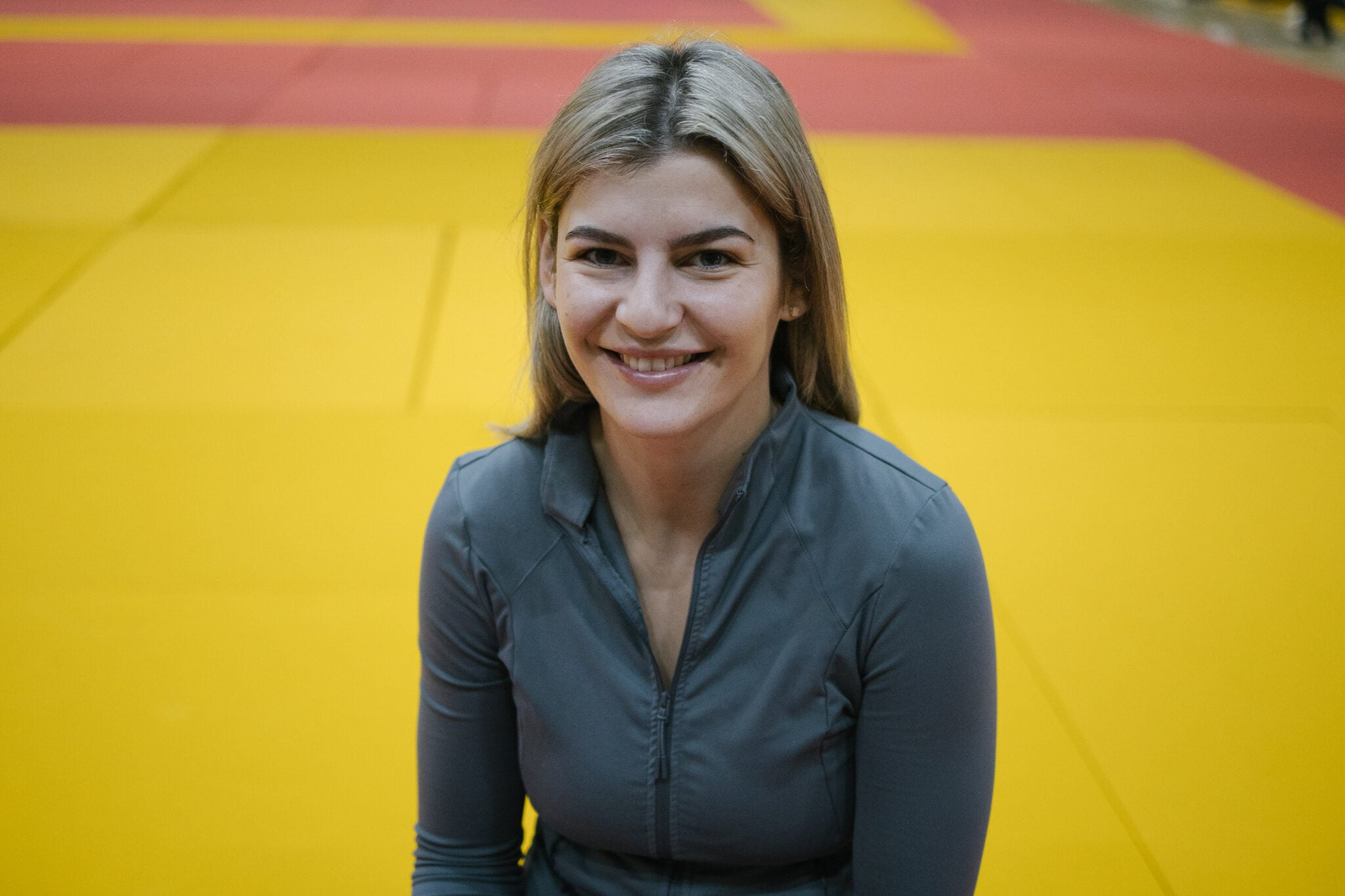
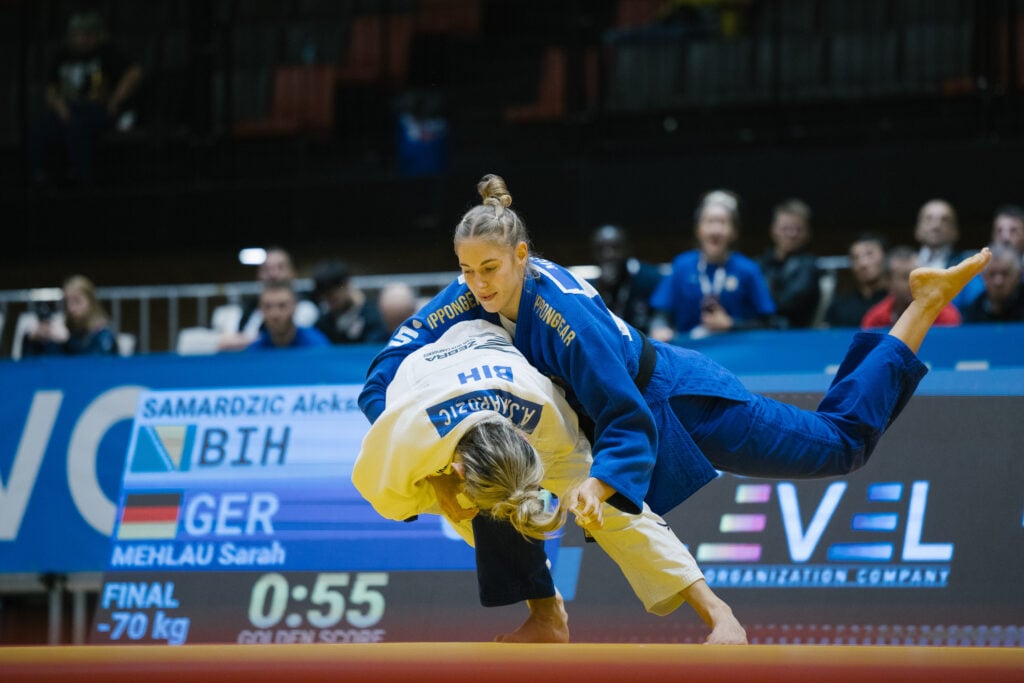
In Sarajevo’s arena, the noise was deafening as all eyes were on Aleksandra Samardzic. Every grip, every throw, every second on the mat carried the weight of hometown pride. For Bosnia’s 28-year-old judo star, this European Open was more than just another competition, it was a homecoming.

She had fought in all Sarajevo Arena’s as a teenager, dreamed of standing on its top step as a champion which she achieved last year. This time, that dream slipped away after a tough loss against Germany’s Sarah Mehlau.
Samardzic reflects on her Saturday silver performance: “It’s hard to describe what it means to fight here,” she said quietly, still flushed from the effort. “You feel every cheer, every breath, every heart beating with you. It gives you power, but it’s also pressure. You want so badly to make everyone proud, my friends, my federation, my coaches.”
The crowd knew her story; the near misses, the perseverance, the triumphs that came after heartbreak. Twice before, she had lost a European Open final. Both times she came back stronger, finally claiming gold after years of persistence. That’s why this loss cut deep, but not beyond repair.
“I’ve been here before,” she admitted. “I know what it’s like to fall short and to pick yourself up again. Judo teaches you that: the bow, the respect, the patience. You never stop learning.”
“When I fight abroad, it’s different, you’re focused, you’re alone. But here, it’s like you’re part of something bigger. You’re not just fighting for yourself, you’re fighting for everyone who came to see you. I see my friends and teammates sitting and you want to make them happy.”
Despite the disappointment, there was no bitterness, only gratitude and quiet pride. “Losing at home is tough, but I’m proud I gave everything. That’s all you can ask of yourself. I’ll remember the energy, the faces, the flags. That’s what stays with you.”
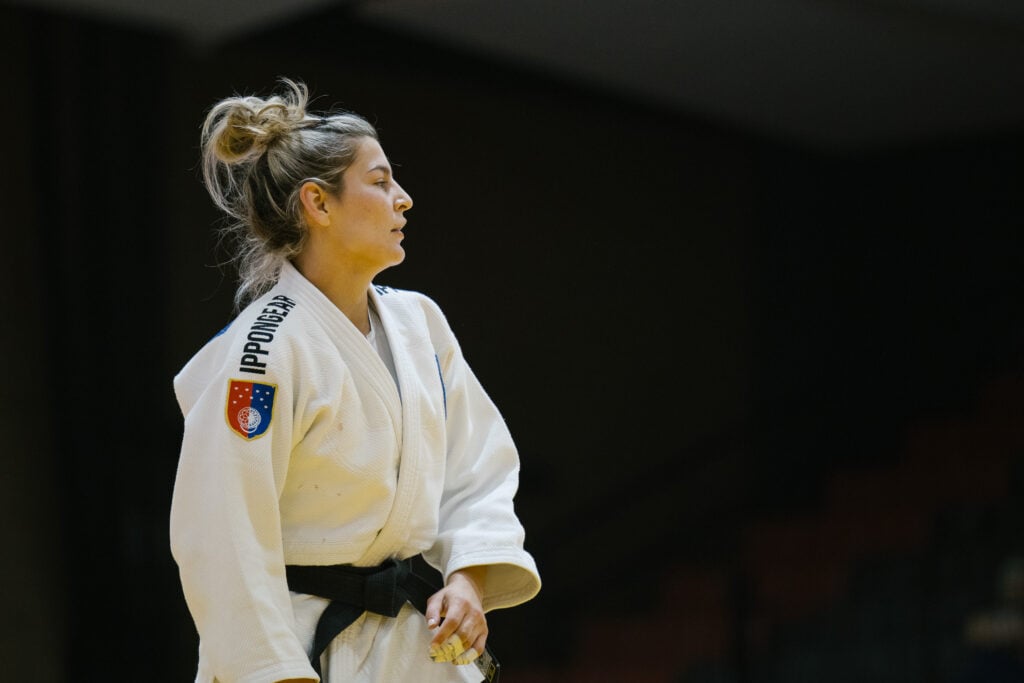
On Sunday, she will return to the same seats, not as a competitor, but as a sister. Her younger sibling, Anđjela, will take to the tatami and can become the second athlete ever to win this event twice.
“That’s going to be her day,” she said with a smile that finally softened the sting of defeat. “I’ll be her biggest fan, the loudest one in the arena. We lift each other and do the warm-up together, that’s how we’ve always been. When one of us falls, the other one keeps fighting.”
The bond between the sisters is as strong as their grip on the sport they love. In a family where judo is not just a discipline but a shared language, the victories and losses are always collective.
She knows this defeat will not define her. It will, instead, become another layer in a story built on resilience. “Judo gives you everything: the joy, the pain, the lessons. It reminds you to stay humble and to keep believing. I’ll be back, maybe stronger than ever. Because that’s what we do, we fight, we fall, we get up again.”
As the lights dimmed in the Sarajevo arena, she lingered for a moment, looking around at the crowd that still cheered her name. It wasn’t the ending she wanted, but it was a reminder of how deeply loved she is at home.
On Sunday she will test her throat and cheer for her sister. After the event, she will compete at the Grand Prix in Zagreb, maybe at the Grand Slam in Abu Dhabi and probably a training camp in Japan. Despite the 28 years, that she feels a bit, she continues her journey. It is still young enough. She was in international competitions since she was fourteen years old.
Asked how she manages the physical and mental toll after so many years on the mat, she smiled, half amused, half reflective. “People see the fights, but they don’t see what’s behind it, the injuries, the lonely training camps, the travel days when you just want to be home. You miss birthdays, weddings, normal life. But when you step on the tatami, it all makes sense again.”
Still, she admits that being an older athlete brings perspective, and inspires young athletes as she trains with young boys mainly and three times a week with clubs together. Or she goes to Croatia and the OTC’s to remain strong and competitive.
“When you’re younger, you want everything right now, every win, every medal. Now, I appreciate the journey more. I understand the people, the places, the moments. Judo has given me so much, discipline, friendships, a way to see the world.”
Normally I am in the organisation of these kind of events, for instance as an announcer. I study journalism and I want to become a journalist in this field. She’s currently pursuing her Master’s degree, balancing research, writing, and travel with a full training schedule, a challenge only a judoka would attempt with such calm determination.
“It’s not easy,” she admitted. “You go from morning training to university classes, from fighting on the mat to writing about other people’s lives. But it keeps me balanced. I think it’s important to prepare for what comes after sport. You can’t fight forever, but I want to stay involved.”
Author: Hans Van Essen