





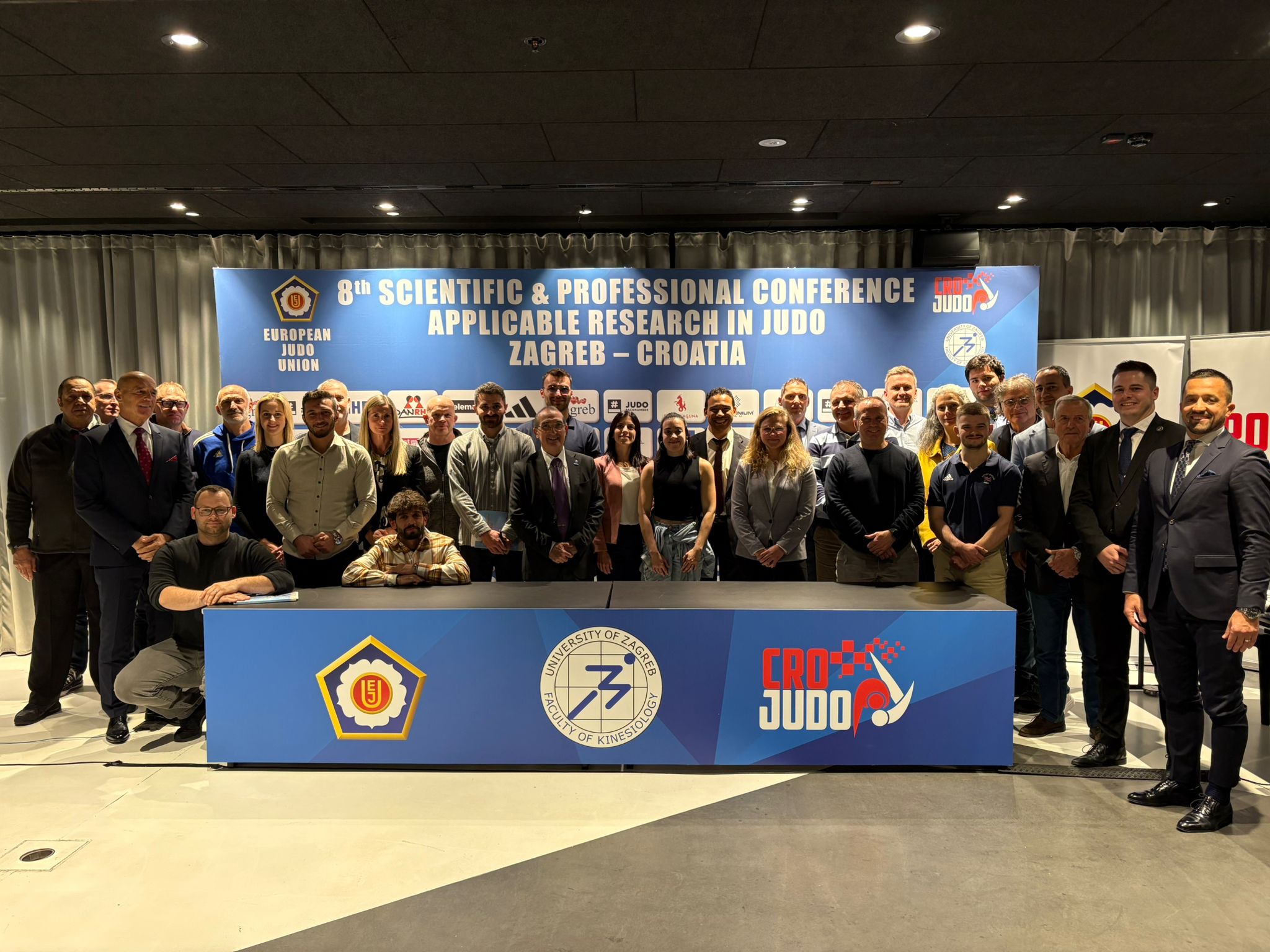
The 8th Scientific and Professional Conference of Applicable Research in Judo brought together leading researchers, coaches, and practitioners from 14 nations and three continents to share the latest insights in judo science and practice with 33 academic papers. The conference was officially opened by Professor Hrvoje Sertić, the President of the Organising Committee, who welcomed participants and emphasised the importance of evidence-based approaches in the continued development of judo.

There were welcome speeches from Dr Krešimir Šamija, Ministry of Tourism and Sport, Director of Sports Directorate and from Associate Professor Tomislav Rupčić, Dean of the University of Zagreb Faculty of Kinesiology. A total of nine VIPs attended the Opening Ceremony, demonstrating the esteem of the event.
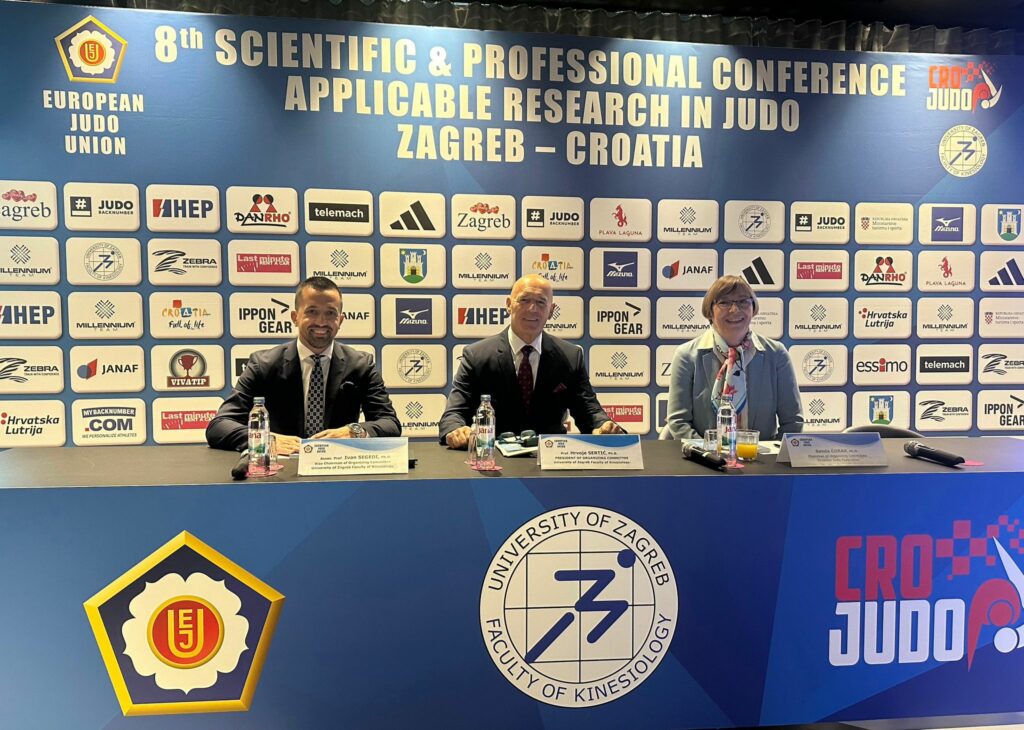
To conclude the opening ceremony Dr Sanda Čorak welcomed the participants on behalf of the European Judo Union and the Croatian Judo Federation. Reminding the audience on the contribution of this conference, she highlighted that 10 years ago, when first conference “Applicable research in judo” was organised in Zagreb, there was no scientific commission on the EJU and IJF level, therefore this conference with tradition has been keeping judo research community together and in this way helping to bridge the gap between theory, research and judo practice.
Following the opening ceremony, three invited speakers delivered thought-provoking keynote presentations, setting the tone for two days of engaging academic exchange. Professor Krstulovic from the University of Split was the first of many speakers addressing the important issue of Rapid Weight Loss (RWL) in judo. Dr Stavrinou from the University of Nicosia alerted us to the dangers of weight cycling. The third keynote speaker Professor Kons from the Federal University of Bahia presented his work on the usability of an adapted tatami for visually impaired judoka.
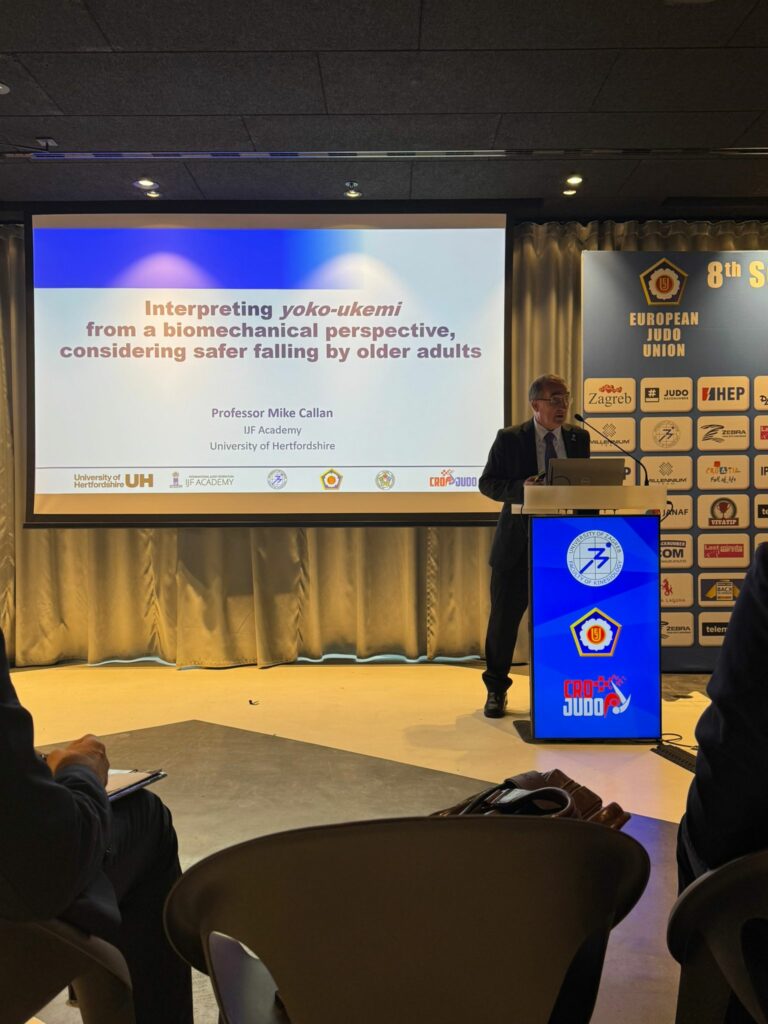
In the afternoon following networking, we heard from 18 authors who delivered oral presentations, showcasing the diverse aspects of judo research. Professor Callan from the University of Hertfordshire showcased his work among the older population, presenting on interpreting yoko-ukemi from a biomechanical perspective. After Professor Callan’s presentation, the focus went to RWL in judo, with the following four presentations addressing this important issue. First presenting on this issue was Mr Taskin from Kastamonu University, discussing body mass change and hydration status during the national championships among child judoka. Dr Simenko from University of Ljubljana was next, speaking about the Erasmus+ project, in which a guideline for safe body weight regulation methods was created. From
Lusofona University, Professor Monteiro presented his research on patterns of RWL in both male and female youth judoka of the Portuguese National Team. Rounding off these presentations on RWL, Dr Eccles of Regent College London spoke about her PhD research from St. Mary’s University, Twickenham in which she developed, disseminated and assessed the impact of a knowledge translation tool for disordered eating and body image in judo.
Dr Sist from the University of Trieste presented on a novel biomarker, bilirubin, to assess oxidative stress in judo athletes. Professor Monteiro spoke on his student’s behalf from Lusofona University, in which Mr Crisostomo researched the correlation between neuromuscular fitness and Special Judo Fitness Test (SJFT) performance in young athletes.
Following this, Mr Till from the University of Wolverhampton presented a pilot study which looked at the effects of a 4-week blood flow restriction training programme on grip performance and physiological changes in judoka. To finish this session before a break and networking, Mr Karaman demonstrated the effect of consecutive simulated judo matches on single-leg CMJ, handgrip strength, bilateral index, and interlimb asymmetry among young judoka in his presentation.
To finish off the day, we heard seven more oral presentations. First up was Associate Professor Cloak from the University of Wolverhampton, who presented his insightful research on how judo can be used for youth development in hard-to-reach communities across the UK. We then heard from Professor Kons for a second time, presenting on assessing performance of elite Brazilian judo athletes with visual impairments. Another delegate from the University of Wolverhampton, Professor Andrew Lane, addressed emotion regulation and the co-creation of Cultivating Emotional Awareness, Learning and Mastery (CALM) through judo. Ms Bakker of St. Mary’s University, Twickenham spoke about her Masters’ thesis, which assessed the dietary knowledge of training male and female judoka. Also presenting her Masters’ project was Ms Liapikou from Aalborg University of Copenhagen, whose interesting work focused on using a real-time auditory feedback system to improve fall control in older adults, specifically focusing
on mastering ushiro ukemi for safe ageing. To round off the first day, Associate Professor Salaj, from the University of Zagreb, presented on the effect of a short-term teaching program on the motor skills of young judoka.
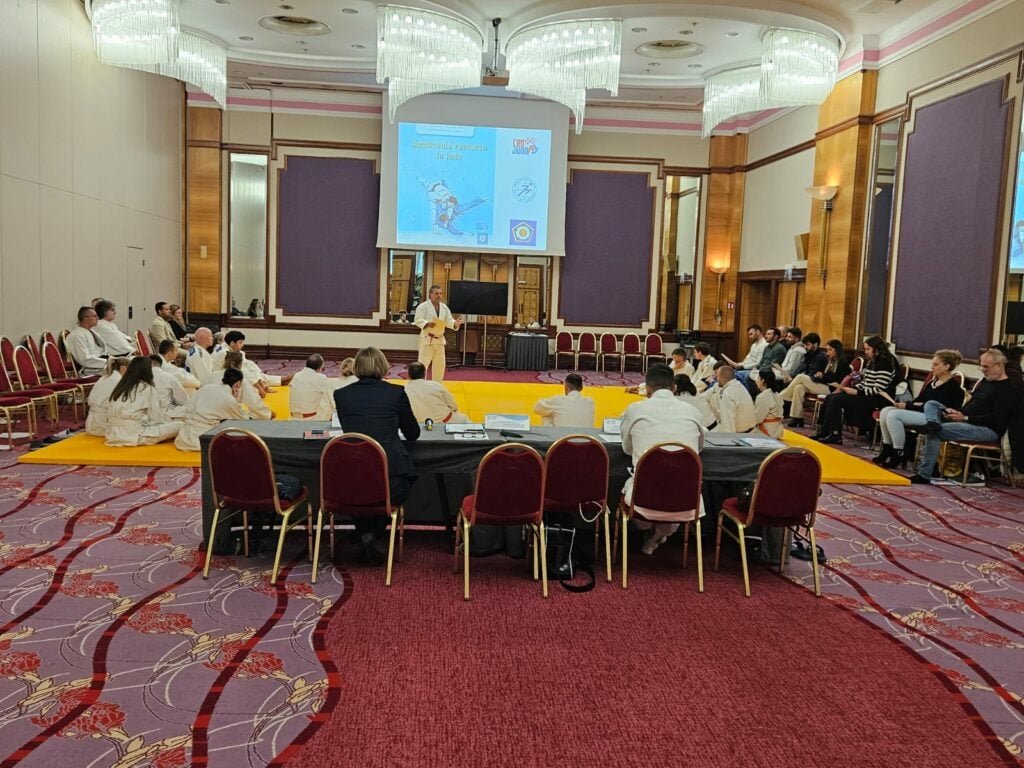
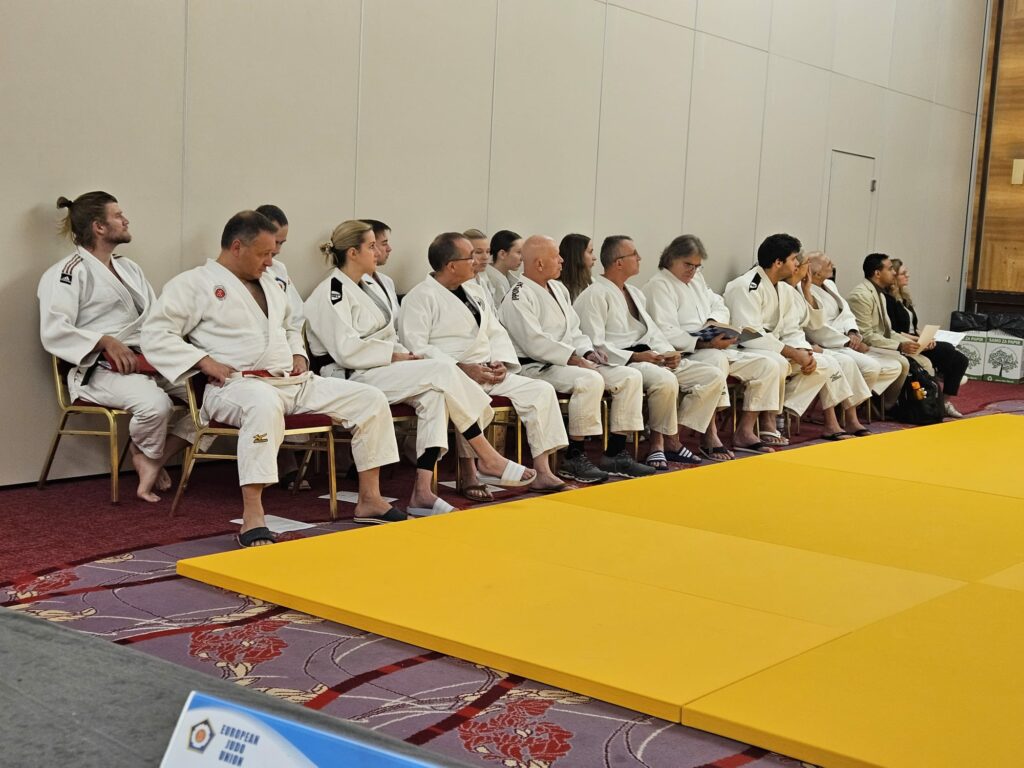
The second day kicked off with three practical presentations. The first practical presented by Mr Ozturk of Duzce University, demonstrated the practical application of ischemic preconditioning intervention on judo athletes, and its effects on exercise performance and recovery. The second practical session was presented by Mr Kovac from the Slovenian Judo Federation, who demonstrated how jita kyoei can help to bridge the gap between tradition and education in modern judo. The final practical session of the day came from Judo Klub Sokol Ljubljana, in which Dr Descamps demonstrated his work on a motor story workshop to help foster positive attitudes towards inclusion in judo.
Following a final networking break, we heard from six more oral presenters, the first of which was Associate Professor Yeste-Fabregat of Universidad Catolica San Vicente Martir, who presented on kinesiofobia and self-perception of return to play in elite judoka after an injury. Dr Prosoli from the Croatian Judo Federation presented her interesting work on emotional regulation training for judo coaches. Following this, Mr Jackson from the Irish Judo Association spoke about the causation and prevention of head dives in judo. Mr Aufieri of the University of Malta, discussed from learning to fall safely to training balance for fall prevention in helping to fight fear of falling pathology. Dr Simenko presented again on RWL, discussing the gaps in communication within the coath-athlete-parent triangle in judo, in regards to weight category decisions and RWL prior to competitions. The final presentation from Mr Wybranowski of the University of Hertfordshire, focused on a judo winner prediction model, offering a potential alternative to the IJF World Ranking List.
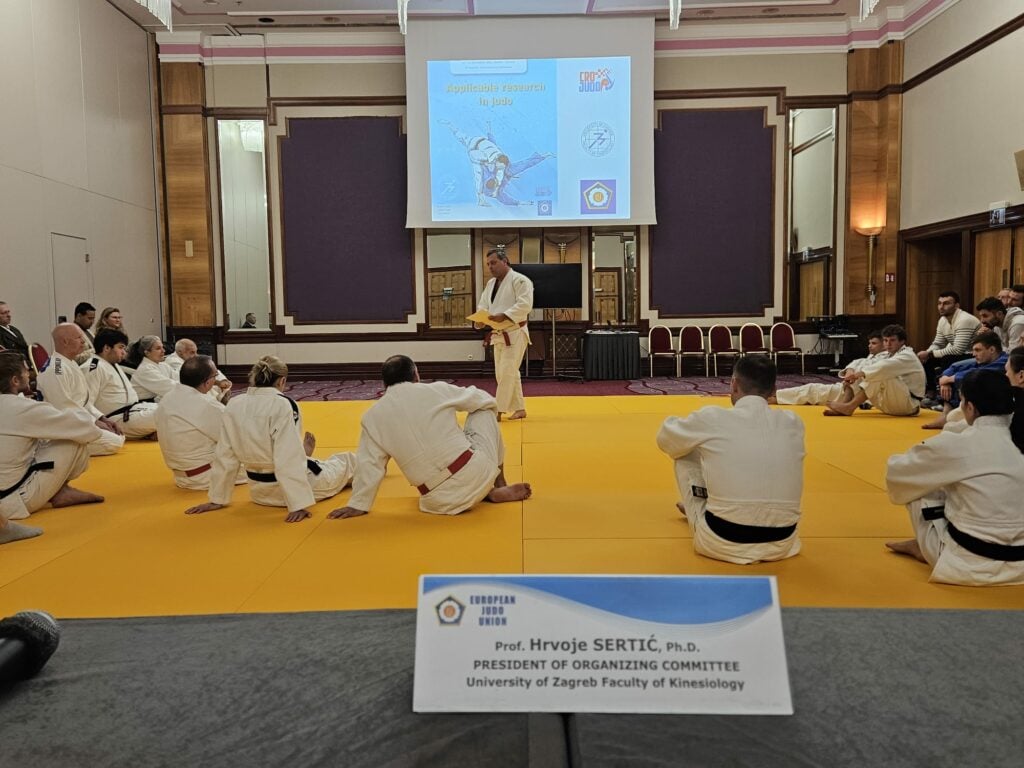
Overall, the conference was a remarkable success, which made a significant contribution to the furtherance of judo knowledge and education, showing once again that judo is more than a sport.
Author: EJU Media