





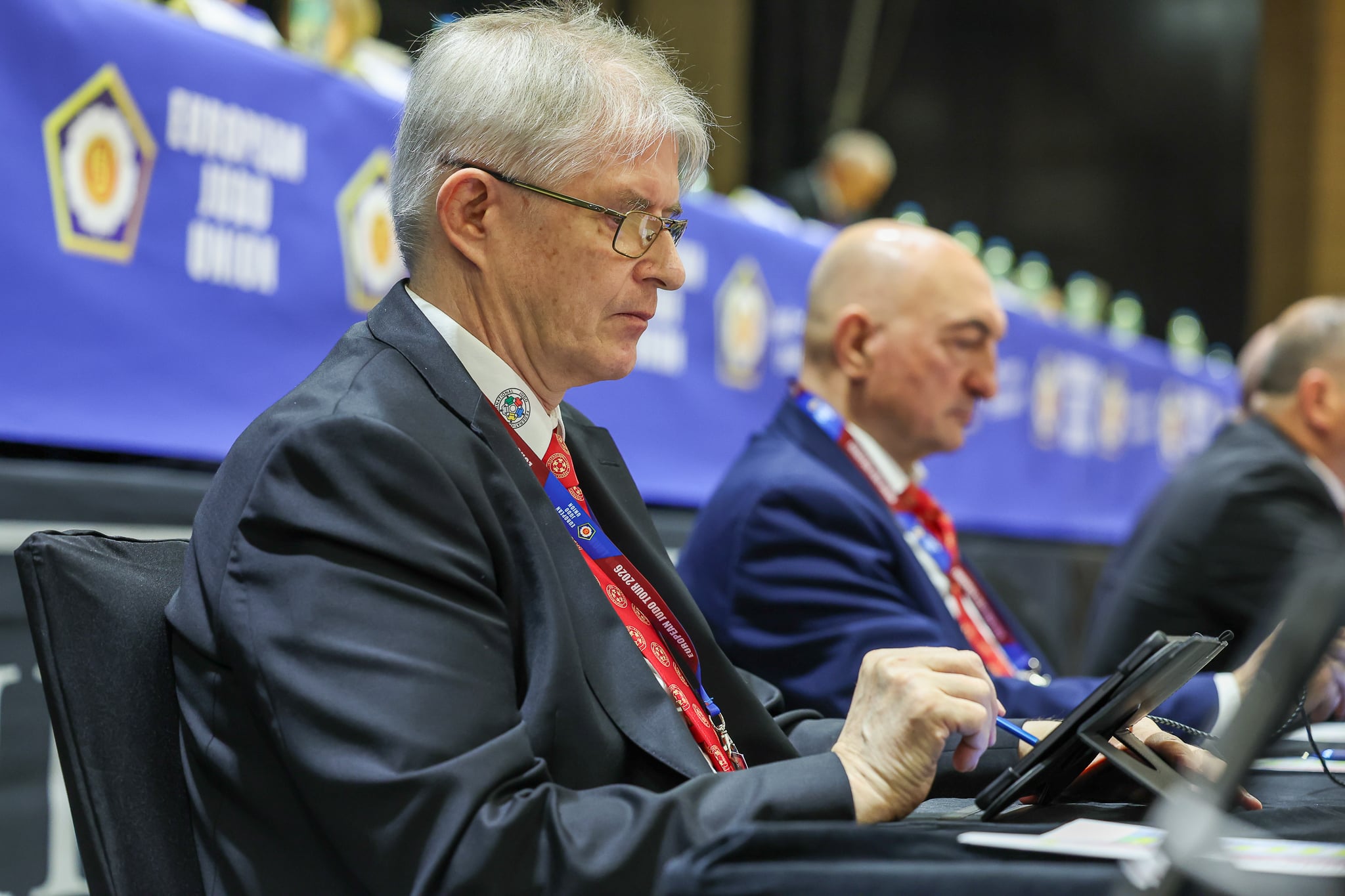
In a country where competitive judo traditionally takes centre stage, kata has often lived quietly in the background. Finland may not immediately be recognised as one of Europe’s kata powerhouses, yet one man has spent decades ensuring the discipline continues to grow, evolve and earn the respect it deserves. Today, Hannu Mustonen stands as the number two ranked kata judge in Europe, a remarkable achievement for someone who began his journey simply fascinated by the hidden details of judo.

Currently attending at the European Judo Championships Kata Sarajevo 2026, Mustonen is regarded as one of the pillars of Finnish kata. Calm, humble and deeply knowledgeable, he speaks about kata not as a separate discipline but as the soul of judo itself.
His journey began more than five decades ago.
“I started judo in the 1970s,” Mustonen recalls. “At that time, Isao Okano visited Finland and demonstrated kata. I remember especially Katame-no-Kata. It was very interesting for me because I realised I could use all the osae-komi-waza escapes and they worked. After that, I almost never lost in ne-waza.”
That early fascination slowly became a lifelong dedication. Long before kata competitions became widespread in Europe, Mustonen was already studying the principles, details and philosophy behind the movements. His curiosity gradually transformed into expertise.
“It took many years before the competition system really developed,” he explains. “I started judging first in Finland and then internationally around 2011.”
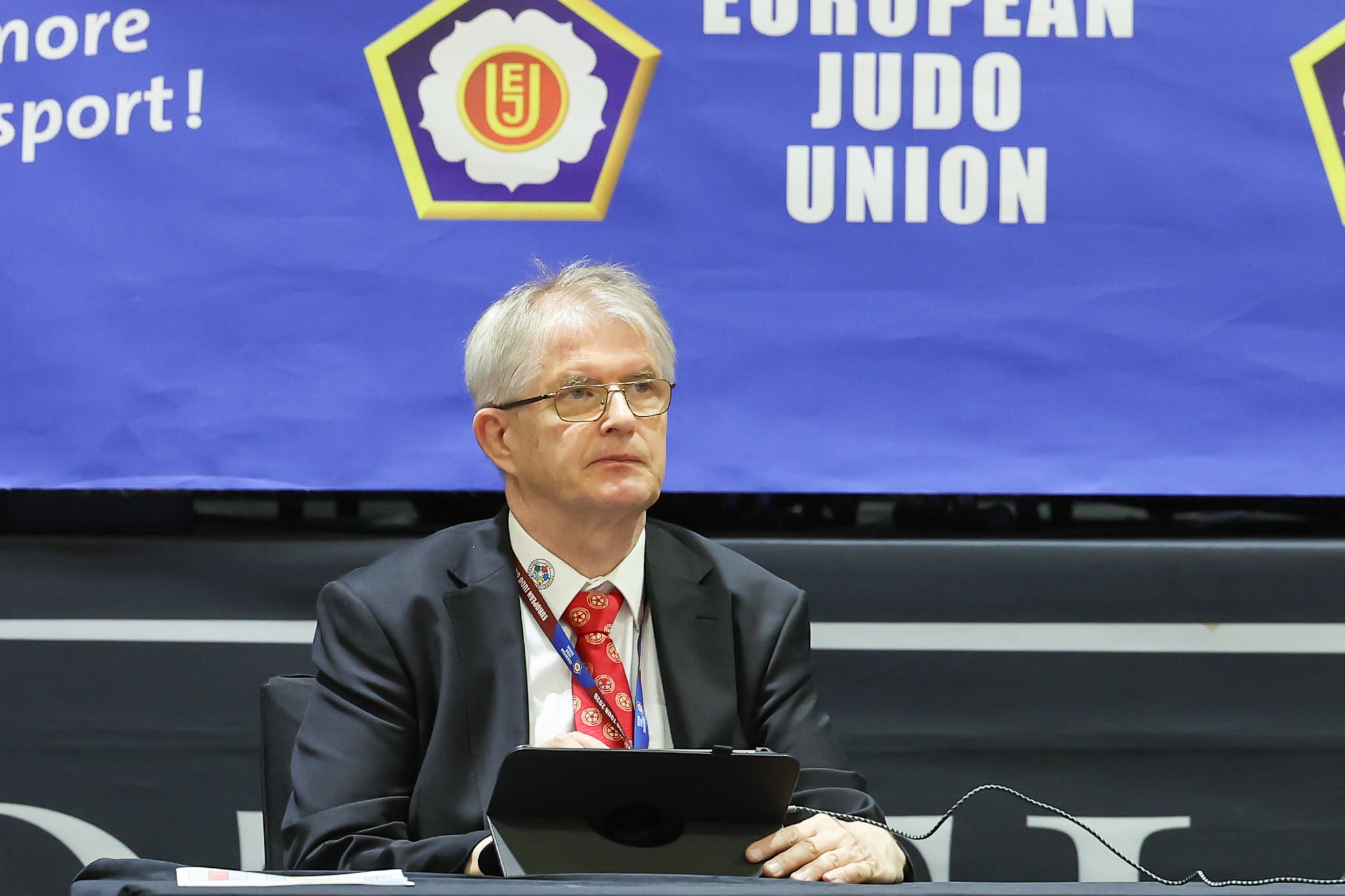
Since then, he has quietly climbed the European rankings through consistency, precision and respect earned from fellow judges and athletes alike. Yet despite holding one of the continent’s highest judging positions, Mustonen speaks far more about community than status.
“The kata group is like a big family. Everywhere in the world, people know each other. It is a very good feeling.”
Away from the tatami, Mustonen lives near Helsinki and works as an engineer, balancing professional life with his passion for judo. In many ways, the two worlds mirror one another as both demand patience, structure, analysis and attention to detail. Still, kata remains something far more for him than technical perfection alone.
“What I like most is that every day I learn more about judo,” he says. “It is unbelievable. The more you study kata, the more there is to discover.”
In Finland, kata may still be developing steadily rather than explosively but Mustonen sees clear progress. National championships continue to run, seminars attract international experts and interest is slowly growing year by year. Influential figures from the global kata community regularly visit Finland, helping inspire the next generation.
“We have activity all the time. Before, masters like Iura-sensei visited Finland and helped us a lot. Now we continue to build step by step. We organise seminars, kata events and competitions. Between 21-23 August this year, for example, we are going to host a Nordic Kata Open, where adapted judo, according to tradition now, is also included in the programme. We will also have several distinguished guests attending.”
Perhaps that perfectly reflects both Finnish culture and Mustonen himself: quiet persistence, steady development and genuine passion without the need for loud attention.
For the moment, inside the competition hall in Sarajevo, surrounded by Europe’s best kata athletes, Mustonen watches every movement carefully. After more than 50 years in judo, his fascination has never faded.
Author: Szandra Szogedi