






In the unforgiving world of heavyweight judo, where power reigns and careers are often measured in fleeting moments of glory, Inal Tasoev has carved out something altogether different, a legacy built not on expedience but on the deliberate pursuit of difficulty itself.

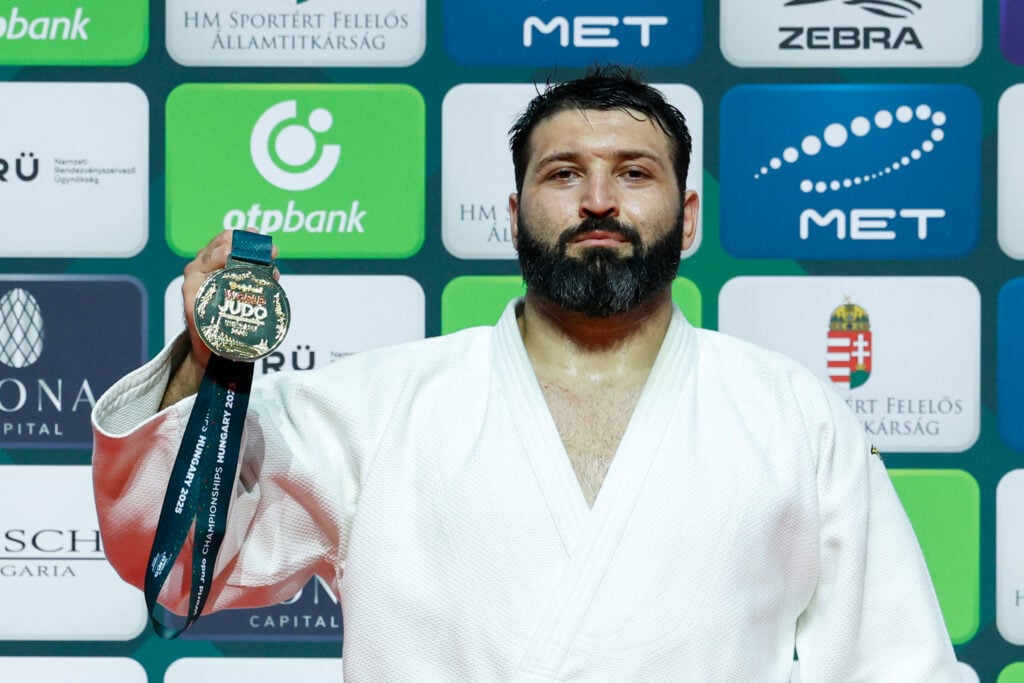
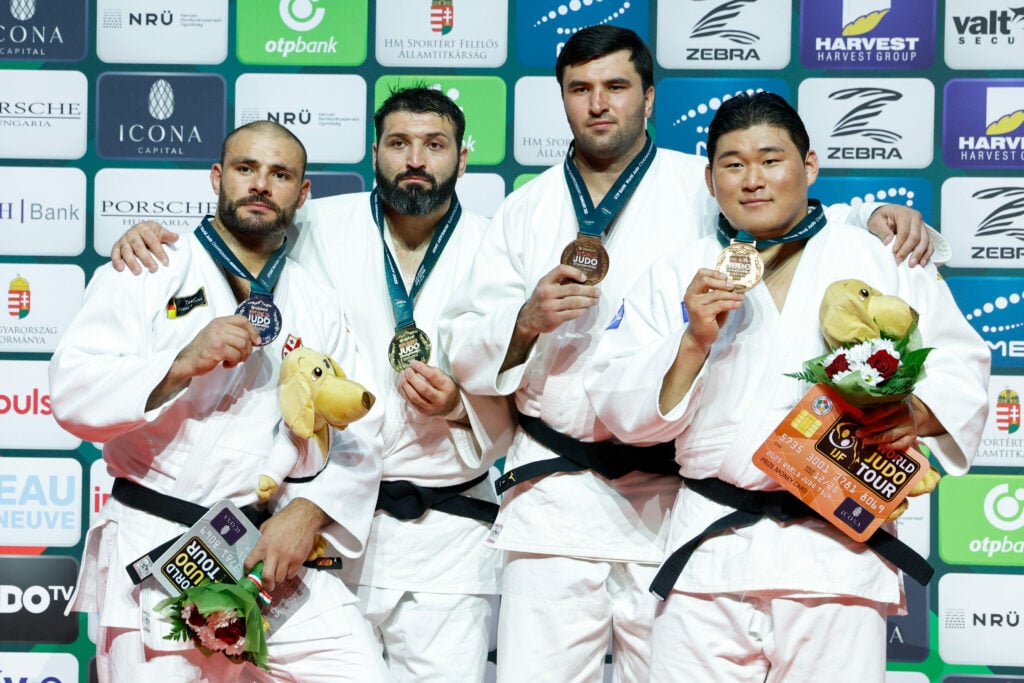
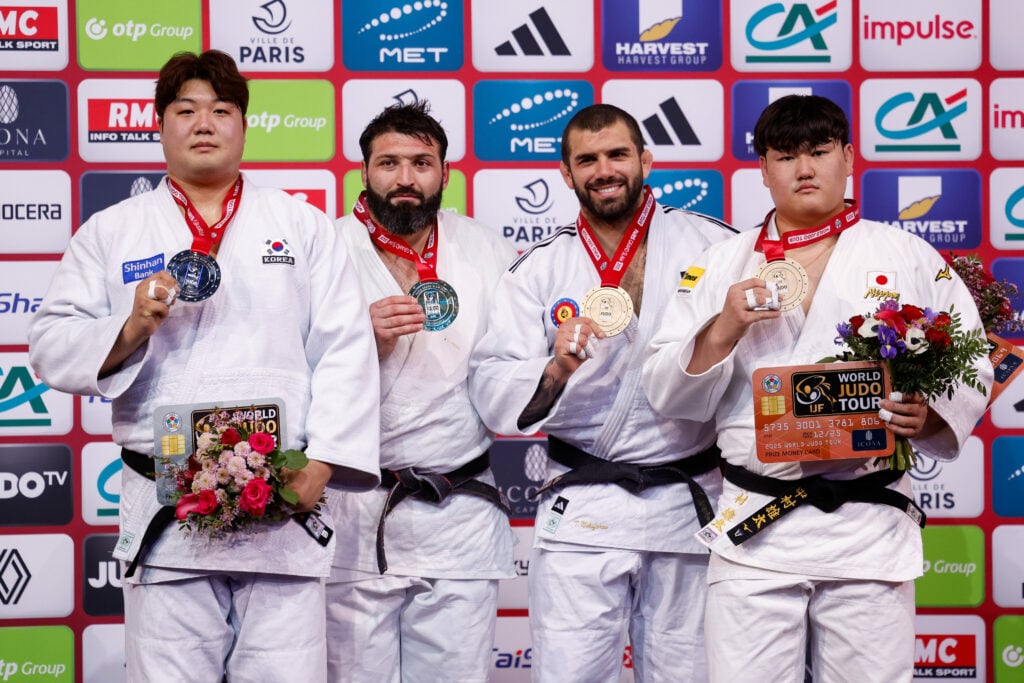
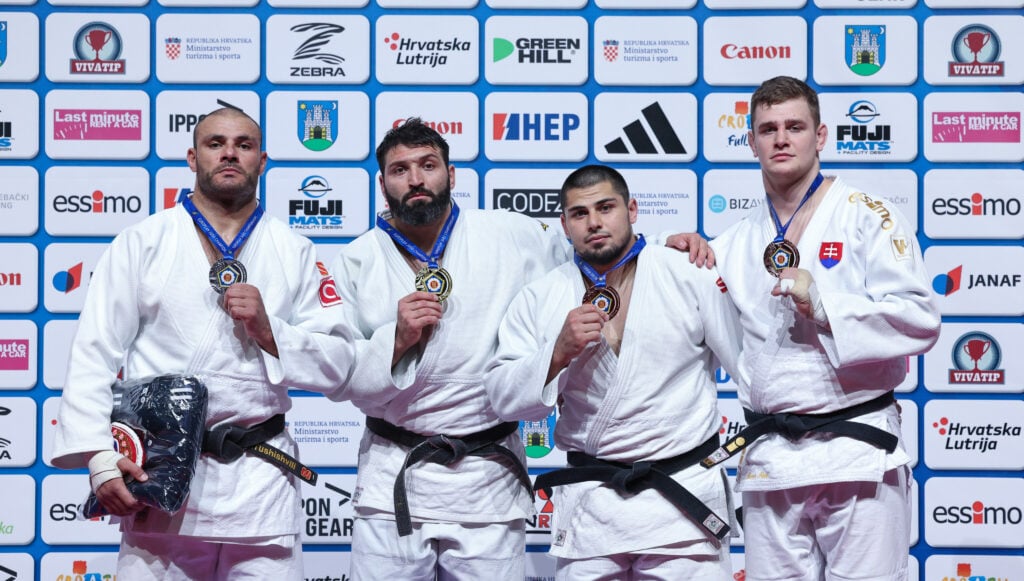
As 2025 draws to a close, Tasoev stands atop the world rankings in the +100kg category, wearing both the World Championship gold medal and the world number one ranking like hard-earned badges of a philosophy that runs counter to every instinct of self-preservation. When asked about the year’s achievements, he doesn’t speak first of medals or rankings. Instead, he recalls emotions, the intangible currency of a career spent chasing something more elusive than podium finishes.
“The most important thing for me this year was the emotions I experienced throughout the entire season,” he reflects, revealing the internal compass that has guided him through more than a decade at judo’s highest echelon.
The Weight of Redemption
The 2025 World Championships in Budapest represent more than another title for Tasoev, they mark a form of personal redemption that only he can fully comprehend. When he speaks of the gold medal as “the most important in my collection,” he isn’t diminishing his 2023 world title. Rather, he is acknowledging an internal accounting that statistics cannot capture.
“This time I truly stood on the podium where I deserved to be,” he says, a statement that reveals volumes about the standards he holds himself to. It is the voice of an athlete who measures success against his own potential, a far more demanding judge.
This mindset traces back to what Tasoev identifies as his greatest defeat and most valuable lesson: the 2019 World Championships in Tokyo. He was young then, talented enough to compete at that level but not yet forged by the experience and work ethic that would later define him. The loss didn’t break him, instead, it clarified what true preparation demanded.
“I realised that I lacked experience and that to win tournaments of this magnitude, I needed to work much harder on myself,” he recalls. It is a lesson he has carried forward with religious devotion.
The Philosophy of Difficulty
Tasoev’s approach to competition scheduling reveals a mindset that sets him apart in an era where athletes often carefully curate their paths to maximise medals whilst minimising risk. He plans his preparation a year in advance, deliberately seeking out the most challenging tournaments, such as Paris, Tbilisi, Tokyo, the European Championships and the World Championships.
“I always choose the difficult path,” he states simply, as if this were the only conceivable option. “For constant growth and for my legacy, it is important to compete at the highest-level tournaments against the strongest athletes.”
This philosophy extends beyond tournament selection. When asked about Russia’s incredibly deep heavyweight division, arguably the most competitive category in world judo, Tasoev doesn’t bemoan the internal competition. Instead, he embraces it as a forge for excellence.
“Russian super-heavyweight judo is currently the most competitive category and I think that is a good thing. Only this way can we become stronger,” he explains. “If you ever have to choose between an easy or a difficult path, choose the difficult one, the taste of victory is much sweeter.”
It is advice he offers to young judoka making the treacherous transition from junior to senior level, distilled into three words of brutal honesty: “Work and hard labour.” Then, with characteristic understatement, he adds: “Believe me, it has been proven.”
The Artist in the Arena
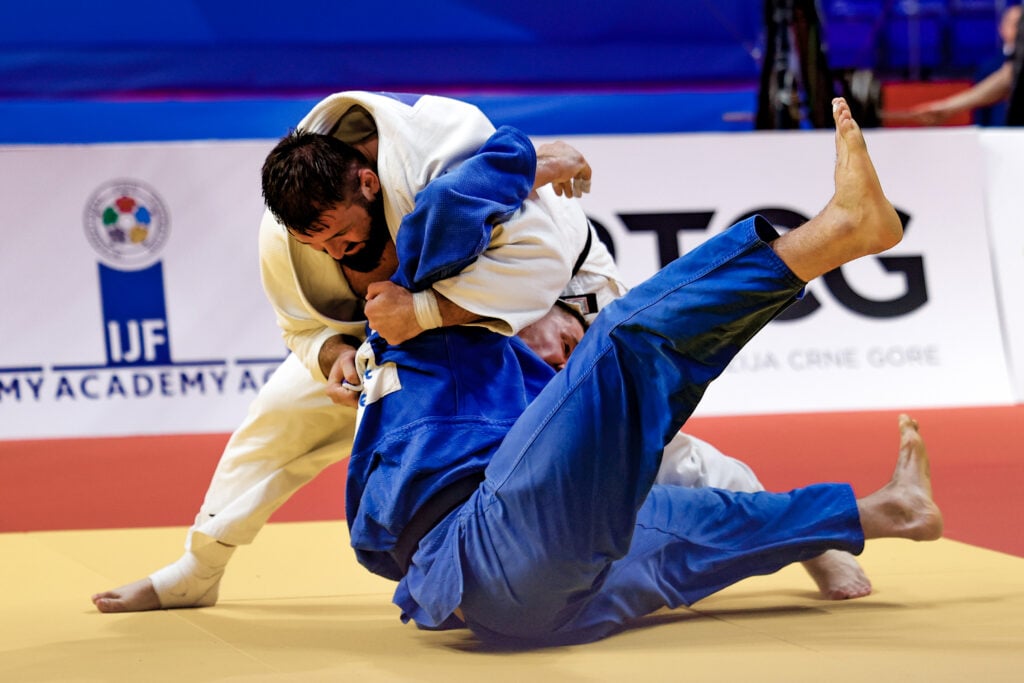
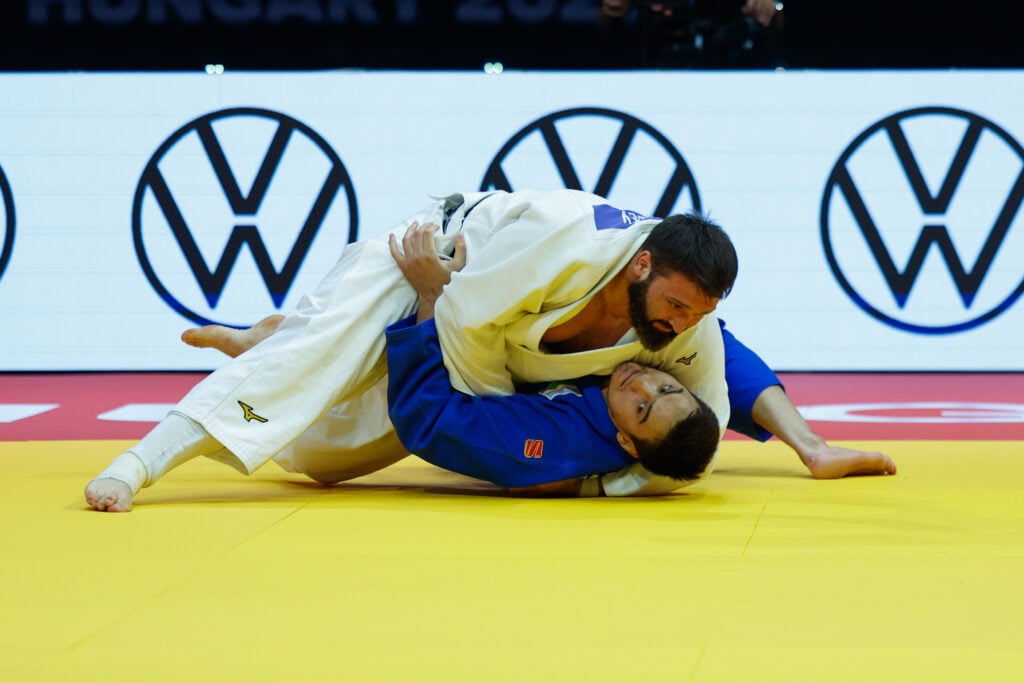
What makes Tasoev’s success particularly remarkable is that it defies heavyweight judo’s conventional wisdom. In a division where power and tactical cautiousness typically dominate, he has built his reputation on attacking, throw-oriented judo, beautiful technique that excites audiences and wins bouts in spectacular fashion.
This approach is no accident. It is the product of years of work with his coach, Irbek Viktorovich Ailarov, who “went against all the rules and stereotypes of heavyweight judo and worked with me on my overall technique.”
For Tasoev, the aesthetic dimension matters profoundly. “It is important to me to show beautiful judo and present it to the audience in the most exciting way,” he explains. “This is why people love judo all over the world and it is important to me that more people choose our noble sport.”
This isn’t merely showmanship. It is a philosophy about what sport owes to spectators and what athletes owe to their disciplines. Tasoev sees himself as a custodian of judo’s appeal, responsible for inspiring the next generation through the quality and excitement of his performances.
When the transition from junior to senior level forced him to adapt, changing tactics, style and mental approach, he made a conscious choice about what to preserve. “I changed many things but kept the most important one, my throwing technique.” The artist within the athlete refused to be sacrificed to pragmatism.
The Fire That Still Burns
Longevity in heavyweight judo is rare. The physical demands are immense, the margin for error microscopic. Yet, Tasoev has competed at the highest level for more than a decade, remaining not just competitive but dominant. His explanation reveals the infrastructure of sustained excellence.
“First of all, it is my team, who are always by my side,” he begins, crediting the collective before the individual. “Second, it is the desire and inner fire that still burns inside me. Third, it is the goal I have been pursuing for three Olympic cycles now, the Olympic Games. I must go all the way.”
That Olympic goal has been elusive, marked by setbacks that might have convinced a lesser athlete to redirect their ambitions but Tasoev speaks of these obstacles without bitterness, seeing them instead as crucibles of character development.
“I have faced many setbacks but as you can see, I did not give up or step back, I only became stronger. Again, thanks to my team and to the character I developed along this journey,” he says. “That is where my nickname, ‘The Gold Hunter,’ comes from. The hunt continues.”
It is a nickname that captures both his relentless pursuit of excellence and the predatory patience required to achieve it. The hunt isn’t frantic or desperate, it is methodical, strategic and above all, enduring.
The Mental Fortress
In a division where, as Tasoev puts it, “there are no weak opponents,” mental preparation becomes paramount. His approach is refreshingly straightforward, thorough preparation eliminates psychological weakness.
“When you are 100% prepared, there are no psychological problems or anxiety. The main thing is to sincerely believe that you have worked harder than every opponent,” he explains. “That is my mindset for every competition.”
This belief isn’t arrogance, it is earned confidence, the kind that comes from knowing you have chosen the difficult path and walked it fully. It is also strategic humility, recognising that underestimation can be weaponised.
“When someone underestimates you, it can work in your favour,” he acknowledges, “but you must never lose concentration and must respect every opponent who steps onto the tatami against you.”
This balanced mindset, confident without being dismissive, humble without being weak, extends even to his relationship with legends of the sport like Teddy Riner. Tasoev respects Riner’s contributions to global judo whilst maintaining his own competitive focus. “I respect him for what he has done for the global judo community and that must be acknowledged,” he says, before adding with characteristic warmth: “I treat him well, so much so that I would even invite him for a cup of tea.”
Roots and Character
Tasoev’s calm, modest demeanour, qualities that stand in stark contrast to the explosive power he displays on the mat, has deep roots. He credits his parents for his upbringing and judo’s philosophy for shaping these qualities but there is also something cultural at work.
“I am Ossetian, and Ossetians have always been known for their modesty, so you could say it is in my blood,” he explains, acknowledging the heritage that grounds his identity beyond sport.
This perspective informs what might be the most revealing answer in the entire conversation that is how he wishes to be remembered. Given the opportunity to claim a place among judo’s immortals, Tasoev pivots to something more fundamental.
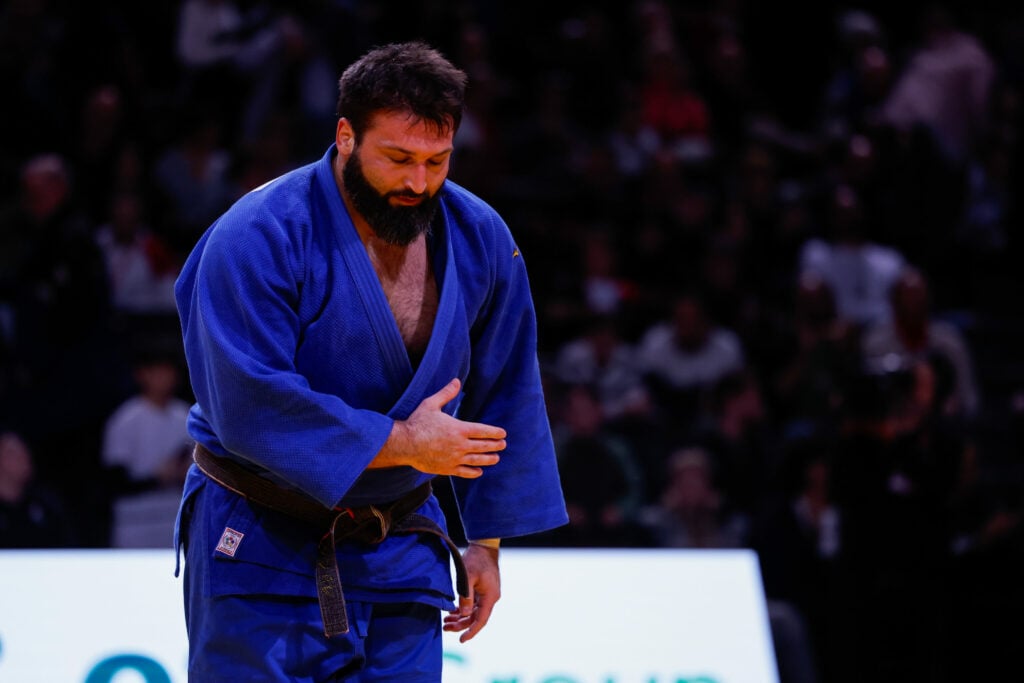
“I would like to be remembered as a good person, not as a great champion. To be remembered for good deeds, not just beautiful throws. That is far more important,” he states. “Every person’s mission is to make this world better, to help the younger generation and to set the right example. Only this way can we preserve stability, love and respect and through beautiful judo, give people unforgettable emotions. This is the code of honour of a judoka.”
The Unfinished Symphony
Despite standing atop the world rankings with a World Championship gold medal, Tasoev bristles at the notion of completion. When asked about areas he is still working to improve, he is honest about keeping his competitive advantages secret but his broader ambitions are transparent.
“There is still a lot of unfinished work and many goals yet to be achieved,” he says. His definition of a perfect 2026 season focuses on holistic improvement: “becoming stronger physically, spiritually and mentally.”
The goal, he emphasises, “is always the same, to become better and better every day and every year. Not to repeat past success but to surpass it.”
It is the mindset of someone who understands that true competition isn’t against other athletes, it is against one’s own previous best. In a sport obsessed with rankings and podium finishes, Tasoev has found a more sustainable source of motivation which focuses on the pursuit of personal evolution.
Legacy in Motion
As the judo world looks towards the next Olympic cycle, Tasoev remains its most compelling heavyweight not because he is one of the most powerful or one of the most decorated but because he represents something increasingly rare in elite sport: the complete integration of athletic excellence, aesthetic values and ethical consideration.
He has chosen the difficult path as a way of life. He has pursued beautiful judo when pragmatism might have served his medal count better. He has remained humble when success might have justified arrogance. He has kept his eyes fixed on a mission larger than himself, making judo more exciting, inspiring the next generation and being remembered as a good person rather than merely a great champion.
As he stands at the summit of heavyweight judo at the end of 2025, one senses that Tasoev’s greatest achievements may still lie ahead, not because he hasn’t already accomplished extraordinary things but because he refuses to accept that he is reached his ceiling. The fire still burns. The hunt continues and the world of judo is richer for it.
Author: Szandra Szogedi