





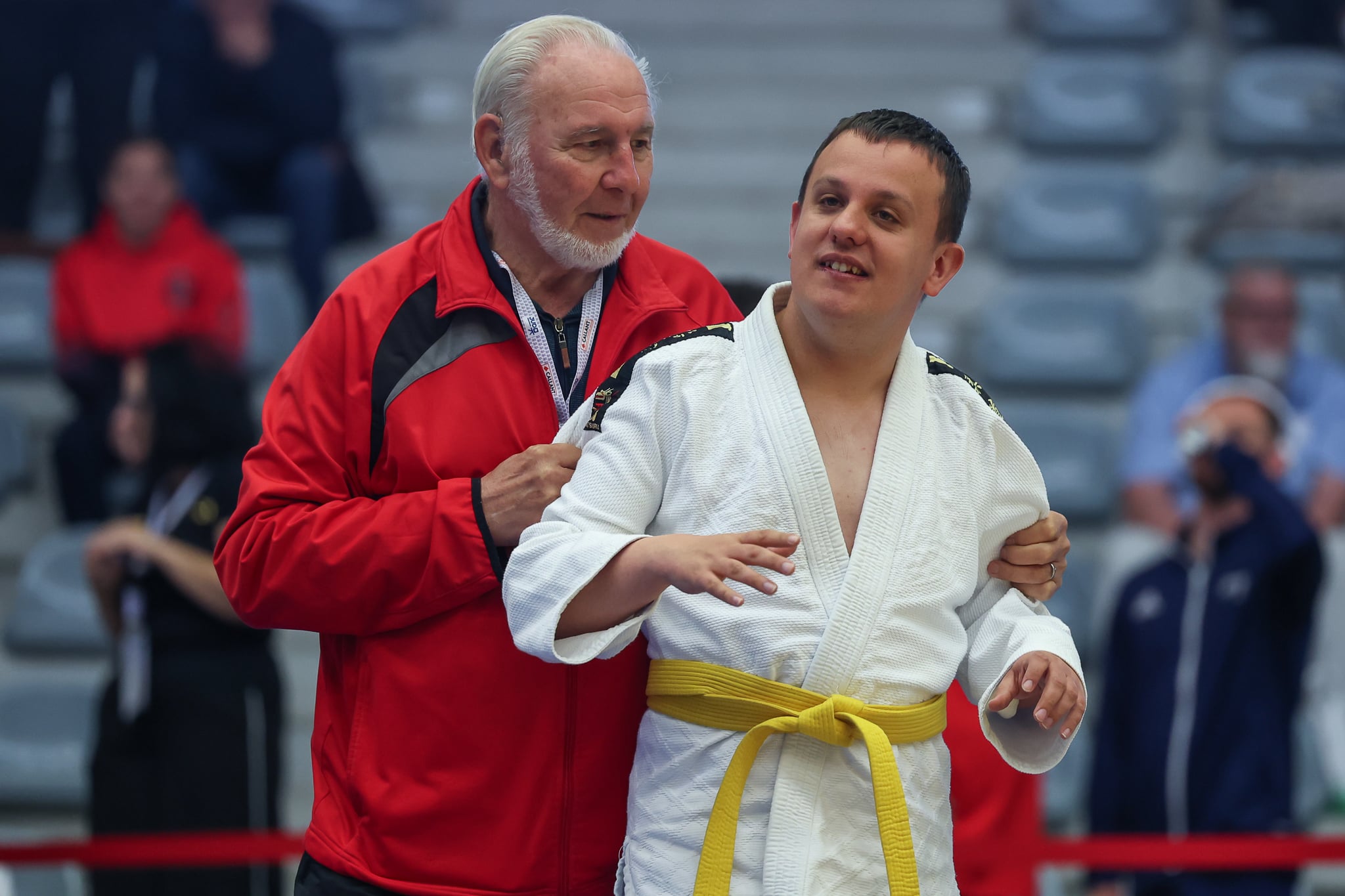
At every adapted judo event, a different kind of story unfolds, stories rarely told, yet often the ones that set the strongest example. At the Triglav Insurance Get Together Tournament Kortrijk 2026, one of the most memorable moments came from a simple gesture. Steff, a young Belgian judoka, was not quite ready to embrace full competition. Instead, he took his first steps onto the tatami [in a competition settings] through a playful exchange with the President of the Belgian Judo Federation, Peter Vermeir, who eased the pressure and selflessly created an environment in which Steff could simply enjoy judo, free from expectation. It drew smiles but beneath it lay something far more profound. Steff’s father, Wym, shared that this was never about the bout. It was about the journey.

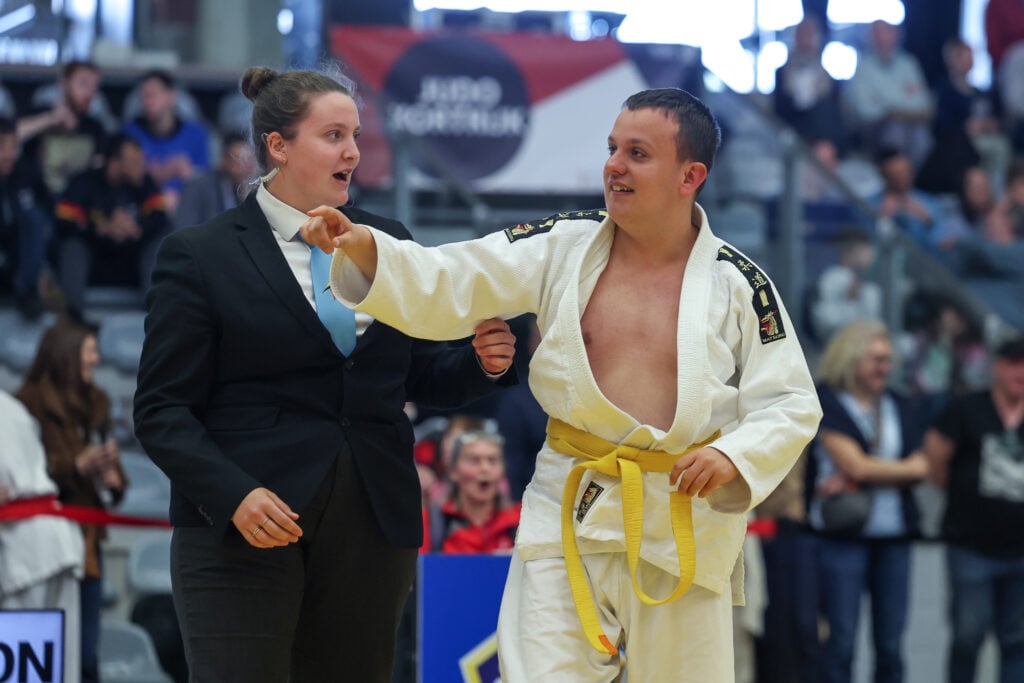
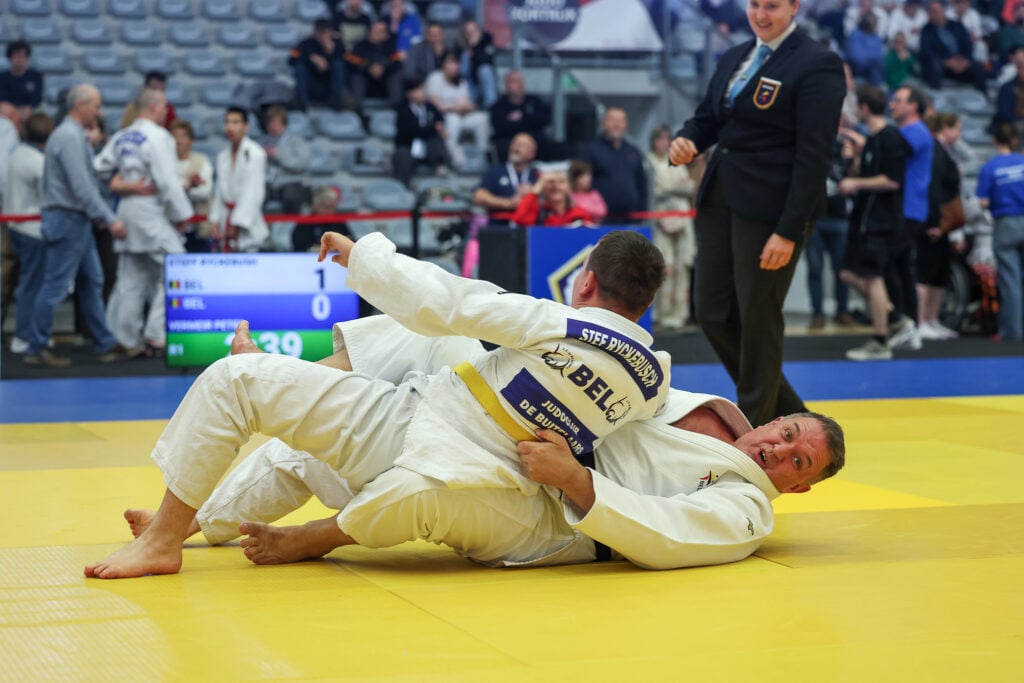
Steff is now 23. His path into judo began with uncertainty. “We knew from birth there was something not quite right,” Wym explains, speaking with clarity. It took 18 months before a diagnosis arrived: Fragile X syndrome, a genetic condition less visible than others but deeply impactful.
“There is no solution,” he says plainly. “So we had to adapt.”
That adaptation led them, eventually, to judo. Not immediately. Not easily. Through conversations with other parents facing similar realities, a suggestion emerged: try sport. Try judo. At first, it was tentative, low intensity, without expectation.
“The first sessions were important,” Wym recalls. “The coaches were very good. They understood. He [Steff] was afraid at the beginning, especially of contact, but they found a way.”
The word, contact, sits at the heart of it all. Judo became more than movement. It became connection. A structure. A rhythm. Every Saturday, without fail. In a life where unpredictability often dominates, this consistency matters.
“It is one of the few things he is always enthusiastic about,” his father says. “That is already a lot.”
Progress was never measured in medals or technique. Some weeks were good, others less so. It did not matter. In adapted judo, Wym explains, there is understanding, of moods, of limitations, of individuality. “You don’t need high skills,” he adds. “You just need to be there.”
For the family, judo created a community. A space where explanations are not required, where behaviours are understood without question. Among other parents, conversations flow naturally, built on shared experience rather than awkward curiosity.
“In normal society, there are always questions,” Wym reflects. “Here, there is none. You are relaxed.”
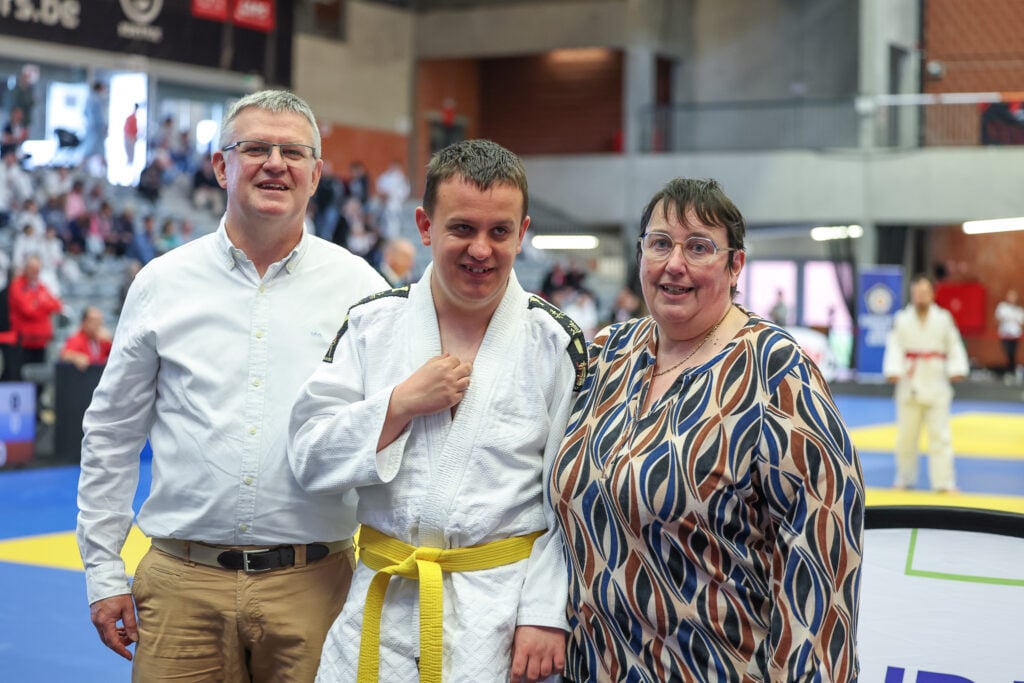
That sense of ease is not to be underestimated. Raising a child with special needs brings structure but also strain. Judo, in its own quiet way, offers both stability and relief. Even moments like Kortrijk, where schedules shift, patience is tested, and plans change, are approached differently. “If it is too much, we go home,” he says simply. “No stress. You do it your way.”
Wym is clear about one thing: initiatives like this tournament matter. Deeply. “It takes a lot of organisation,” he acknowledges, “but it is very important that there is attention from high level because without that support, without visibility, without backing, these opportunities risk remaining small, isolated.”
In Kortrijk, the Ryckebusch family felt something growing, not through results sheets but through moments like Steff standing on the tatami: engaged, included, understood. An environment was created in which no opponent was required, yet he still felt he truly belonged.
Author: Szandra Szogedi