





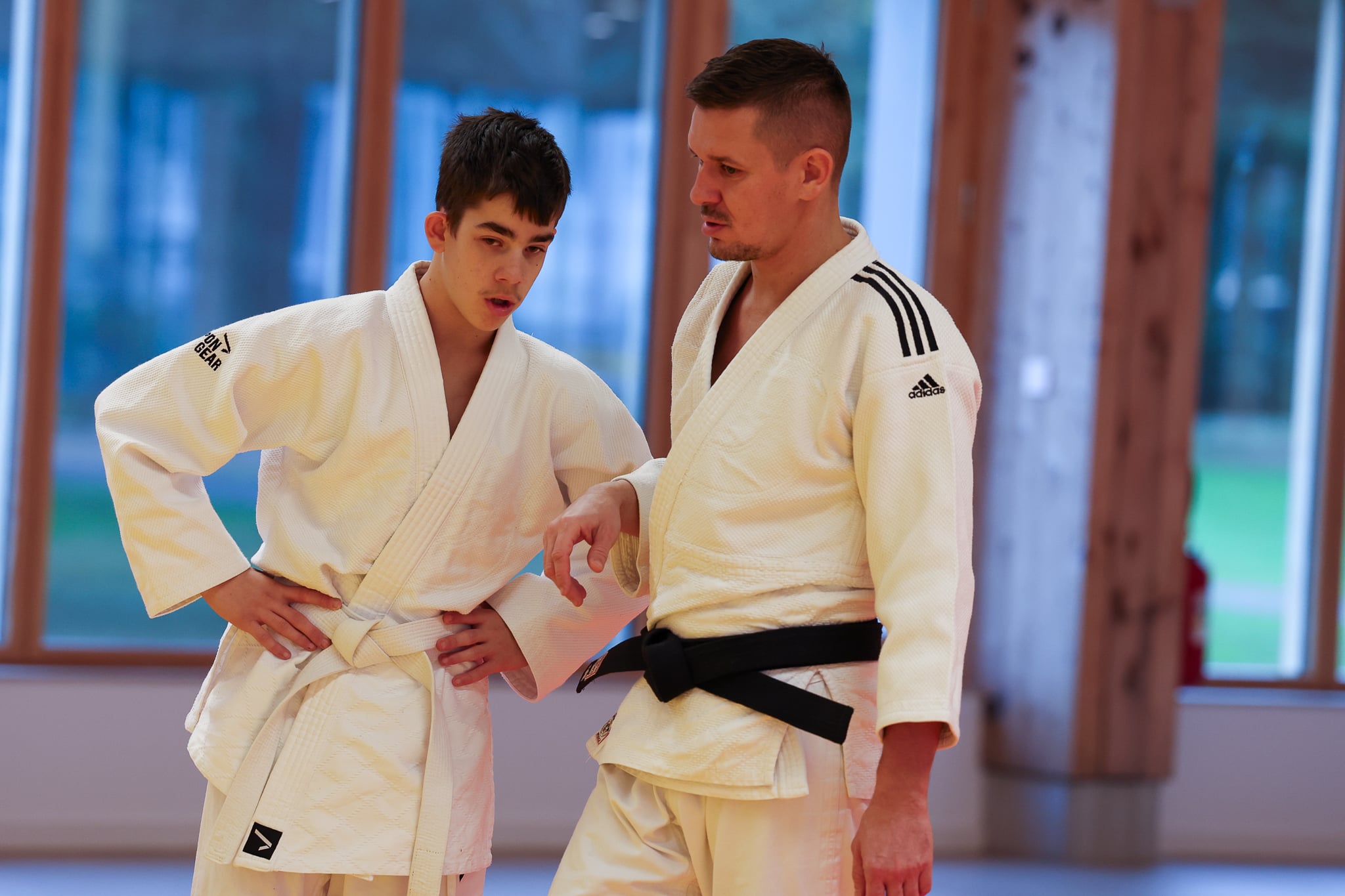
The adapted judo training camp in Houlgate began with laughter, games and movement. Playful group activities set the tone as athletes worked on balance, co-ordination and reaction speed, skills essential not only for judo but also for teamwork and social confidence.

From there, the session shifted towards fundamentals: paired ne-waza exercises, scenario-based groundwork drills and finally a series of basic ashi-waza movements. To an outside observer, everything looked strikingly similar to mainstream judo training and that is exactly the point.
Coaching adapted judo is not about studying diagnoses, it is about understanding people. It is about adjusting your coaching to the abilities, needs and potential of each judoka standing in front of you.
Few embody this philosophy more fully than Matija Frlić, coach of the Croatian cadet national team for the past four years and, since September, also leader of the junior national squad. Alongside his national roles, he has spent 12 years as head coach of Judo Club Profectus Samobor and is both president and head coach of Judo Club Ishi, a pioneering club for people with disabilities in Samobor.
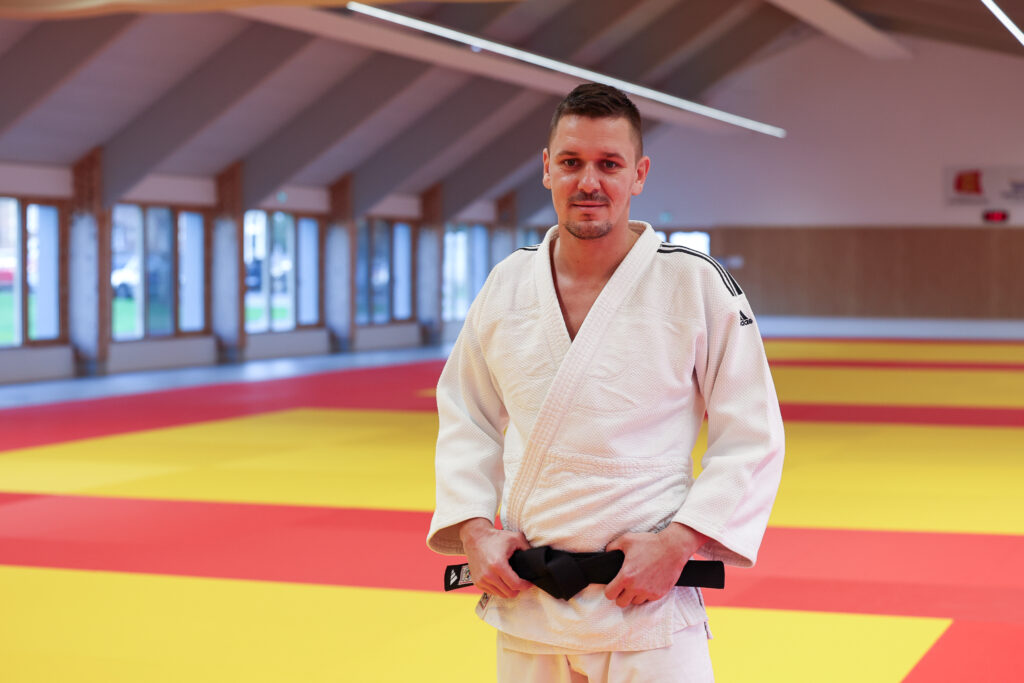
His experience straddles both the mainstream and adapted judo worlds. We took a moment to have a candid conversation about the evolution of his work, his coaching philosophy and the profound impact adapted judo has had on his life.
When did you start working with adapted judo programme in your club and how did it evolve?
Matija Frlić:
“In September 2017, I decided to launch the ‘Judo for All’ programme in our club, which until then was working exclusively with children with typical development. The idea of including children with disabilities had been simmering in my mind for years. I visited adapted judo sessions led by my friend Marina Drašković in Velika Gorica, studied everything carefully and dreamed that one day such a programme would come to life in Samobor.
“At the time, I was working as a kindergarten teacher and had a boy with autism in my group, a child with exceptional motor skills but without any opportunity to join sports activities in our city. I took that as a sign that the moment to begin had arrived. That is how my story and later our story in adapted judo began.
“The beginning was full of challenges. Interest was high from the start but my experience was limited. Year after year, we improved, bringing in assistants and new coaches, refining our methodology, and in 2021 founding the Ishi Judo Club for People with Disabilities to more strongly advocate for athletes’ rights in Croatia.
“Today, the club has around 50 members. We have received several national and local awards for our contribution to disability sport and our athletes have been active participants of the EJU Get Together Tour since its inception. The path we are on shows that we are still only at the beginning and truly, the sky is the limit.”
What is your coaching methodology for adapted judoka?
MF:
“My methodology is based on an individualised approach, where judoka with disabilities remain at the centre of everything. We focus on their abilities, not their limitations. We adapt techniques to each athlete while respecting their unique characteristics.
“This approach builds an environment of trust, safety and confidence, essential for both sporting and personal growth. My role is to provide structure, emotional support and technical adjustments so that each judoka can progress according to their own potential.”
What have you learned throughout this journey as a coach?
MF:
“I have gained many professional and personal competencies but one stands above all: a deep understanding of the individual needs of every athlete. This experience has made me not only a better coach, but a better human being.
“Adapted judo has taught me patience, adaptability and empathy. It has taught me to appreciate every small step forward. For that, I will always remain grateful.”
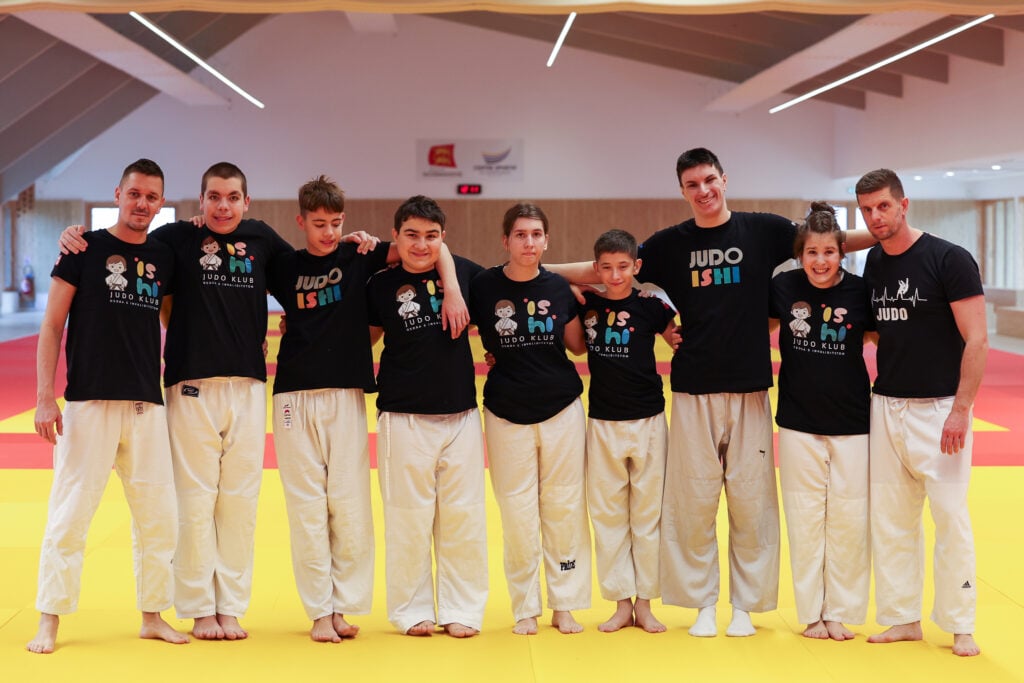
How important are adapted judo camps and workshops in your opinion?
MF:
“Camps dedicated to adapted judo are invaluable. They offer knowledge, ideas and practical solutions that coaches can immediately implement when they return home. These gatherings allow us to exchange experiences, adopt new approaches and strengthen the network of experts working across Europe.
“Still, the athletes benefit the most. Camps help develop their social and communication skills by taking them out of their usual routines, introducing them to new people and placing them in unfamiliar yet safe environments. They learn from each other, build friendships, and experience sport as a space of belonging and togetherness.”
How do you see your role as a national coach and as an adapted judo coach? How do these roles differ, if at all, and what has shaped you more deeply? What is more fulfilling?
MF:
“I am convinced that I wouldn’t be the coach I am today in mainstream judo without my experiences in adapted judo. Working with athletes with disabilities taught me the true values: patience, empathy, acceptance of differences and the understanding that real growth comes when you see someone first as a person, not merely as an athlete.
“I carry these values into all parts of my life, including my work with the young Croatian national team. In both roles, national coach and adapted judo coach, I nurture the same principles. I show athletes that they matter, I try to understand their needs, encourage positive behaviours and togetherness and insist that they make their families, clubs and communities proud through their work.
“It is difficult to choose which role fulfils me more because one complements the other but I can say that adapted judo has shaped me profoundly and permanently as a coach and even more strongly as a person. For that, I am especially grateful.”
Author: Szandra Szogedi