





Between 16-17 May, the spotlight of European cadet judo turns once again to Bielsko-Biała, where ambition, pressure and possibility will collide on the tatami. The Cadet “Millennium Team” European Cup Tour has grown into far more than another stop on the calendar; for many young athletes, it is the place where reputations are built, belief is tested and futures quietly begin to take shape.

With an extraordinary 790 judoka from 36 nations entered, the tournament stands among the strongest cadet events in Europe this season. Year after year, Bielsko-Biała has offered an early glimpse of the next generation of continental and world medallists. This edition arrives at a crucial moment in the season too, serving as one of the final major examinations ahead of the cadet European and World Championships 2026.
For the host nation, the stakes feel even more personal.
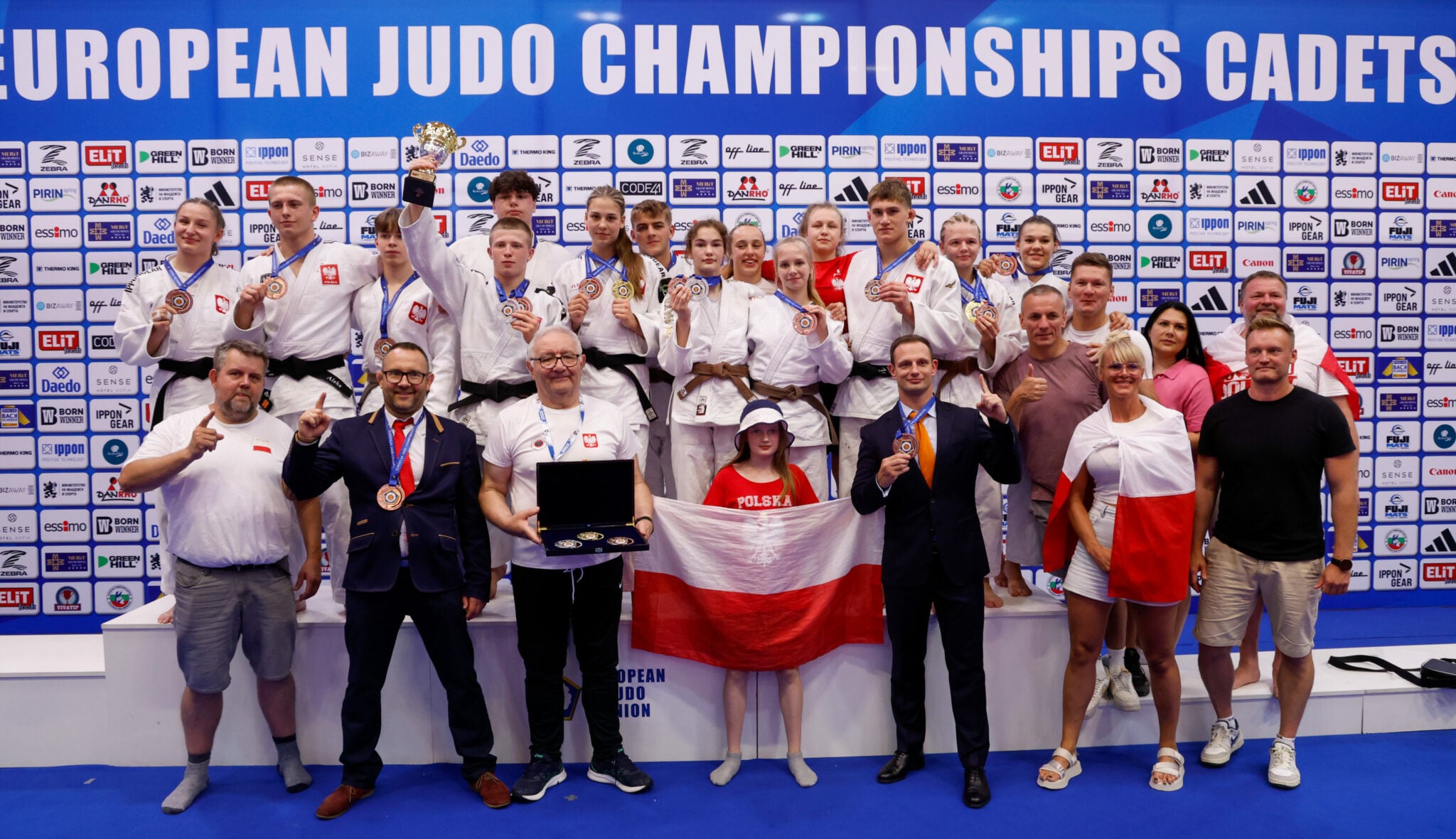
Polish cadet judo has been steadily gaining momentum in recent years, producing athletes capable of challenging the very best on the international stage. Behind the medals lies something perhaps even more significant: a growing belief within the system itself. Coaches, coordinators and former Olympians all speak with the same confidence that this generation may become one of the most important Poland has produced in years.
At the centre of that movement is a culture built on hard work, unity and trust, values repeatedly echoed by those leading the programme. Ahead of the competition, Polish Cadet National Team Coach Tomasz Jopek and Polish Judo Association Youth Groups Coordinator, Beijing 2008 Olympic fifth-place finisher Przemysław Matyjaszek, shared their thoughts on the rise of Polish youth judo, the mentality behind recent successes and why they believe the future could be even brighter.
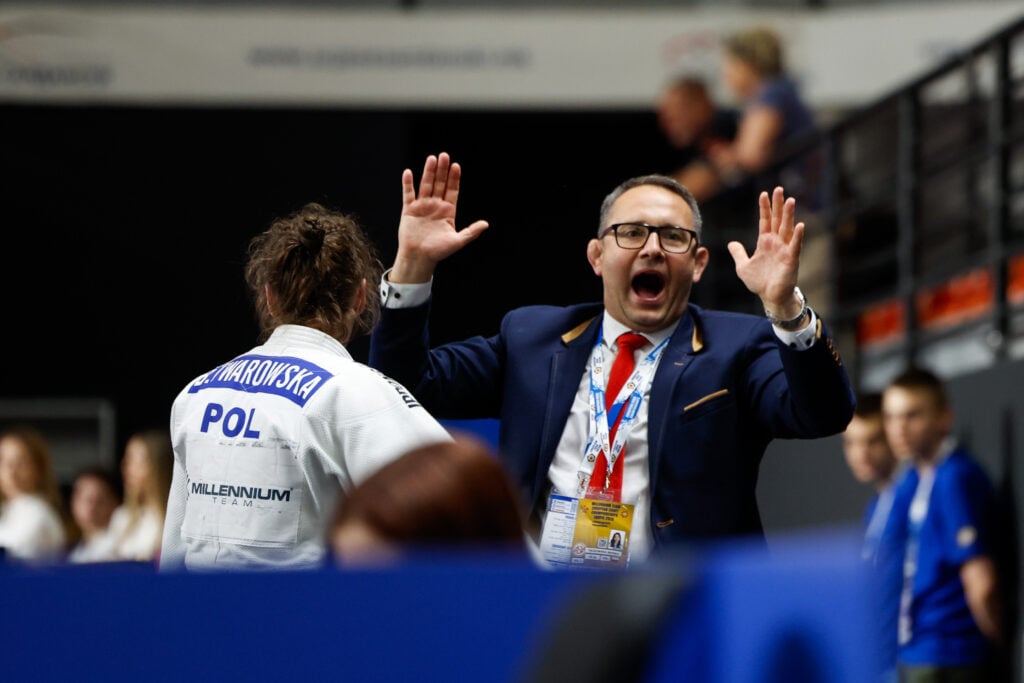
Tomasz Jopek – Polish Cadet National Team Coach
Q: The Polish cadet national team has regularly returned from major championships with medals and strong results over the past few seasons. What do you see as the greatest strength of this current generation of athletes and what makes this team stand out?
TJ: These are young athletes who are inspired by the success of their older teammates, who already showed a very high sporting level at cadet age. That motivates them and gives them confidence, so they compete without any complexes against the best athletes in the world. Since the cadet world championships in Zagreb back in 2023, Polish athletes have consistently stood on the podium at cadet European and World Championships, both individually and in team events.
The greatest strength of these athletes is their determination to achieve their goals and the motivation they receive from both their club coaches and the national team staff.
Q: The European Cup in Bielsko-Biała is one of the final major tests before the cadet European and World Championships. How important is this event in terms of building form and selection ahead of the key competitions of the season?
TJ: Looking at the entries, the tournament in Bielsko-Biała promises to be again one of the strongest European Cups both in terms of numbers and sporting level. Most of our national team athletes are already qualified for the cadet European and World Championships but every tournament has its own story.
I believe our team is capable of achieving very good results but we will know more after this competition and we will see exactly where our athletes currently stand. After the tournament we have a training camp in Wałcz, followed by the final preparation camp in Zakopane.
I am an optimist, if I wasn’t, it would be difficult to achieve success in sport. I believe in my athletes and belief can move mountains.
Q: Recent results from the cadet national team show that a very promising generation of young Polish judoka is emerging. Do you believe the experience these athletes are gaining today can also lead to success at junior and senior level in the future?
TJ: I believe these athletes are capable of achieving success in older age categories as well. Examples include Zuzanna Banaszewska and Szymon Szulik, who have already won cadet European Championship medals.
With proper guidance, these athletes, and many others such as Jakub Kurowski, Amelia Ptasińska, Jakub Muniz Acosta and Sandra Walendzik, can become the backbone of the Polish national team in the future.
Q: In recent years, Polish cadets have become increasingly competitive against the best athletes in Europe and the world. What elements of preparation, both sporting and mental, are most important today in order to maintain this level during the upcoming European and World Championships?
TJ: Hard work and belief in your own abilities are already half the success. Equally important is the atmosphere within the team, something that needs to be built over many years so every athlete feels supported by both club coaches and the national team staff.
Cooperation + Training + Atmosphere = Sporting Success. That success reflects the hard work and sacrifice these young athletes put in every single day.
As for the championship events, let’s wait until after the tournament. Today, our national team is certainly capable of repeating the strong results achieved in previous years and we should continue believing in that.
Przemysław Matyjaszek – Polish Judo Association Youth Groups Coordinator, 5th place finisher at the Beijing 2008 Olympic Games
Q: More and more people are noticing the huge potential of the current generation of young Polish judoka. From your perspective as youth coordinator, how would you describe the level of youth development in Poland today?
PM: From the perspective of the Polish Judo Association’s Youth Groups Coordinator, we currently have enormous potential within our young athletes, which is reflected in the medals won at major championships in Europe and worldwide.
This is strongly connected to the increasing number of children and young people practicing judo in Poland over recent years. That wave is now beginning to show its full potential and we are talking about hundreds of thousands of young people training judo across the country.
We can see huge interest in judo starting from preschool children taking their first steps in the sport through movement games and exercises, all the way to older teenagers who also continue to join dojo and train seriously.
One of the key youth categories is cadets, who over the last five or six years have achieved spectacular results internationally, including medals at both cadet European and World Championships.
Q: The recent results of the cadets show that the system is beginning to deliver results. What elements of youth development do you consider most important in building athletes capable of competing internationally, and what is the secret behind this success?
PM: What is the secret? If I revealed everything, it would no longer be a secret but I can share part of it.
A major factor has been building a strong coaching team led by Tomasz Jopek (National Cadet coach) and made up of specialists in judo, physical preparation and other important areas. We are also supported by legends of Polish judo such as Paweł Nastula, Rafał Kubacki, Marian Tałaj and Krzysztof Wojdan, as well as club coaches.
Everyone contributes their knowledge and experience without conflicts or lack of trust, and that is certainly part of the recipe for success that both the coaching staff and athletes are striving for.
Q: How difficult is it today to keep young athletes involved in sport during the transition from cadet to junior and senior level?
PM: I believe young athletes today have increasingly better conditions to train judo professionally. Clubs are operating at a much higher organisational level and have financial resources to support their best athletes.
The Polish Army also supports top competitors through employment opportunities that allow them to combine professional sport with financial stability. I believe this system will continue to develop further, and that more sponsors will become interested in supporting our top athletes in the future.
Q: Looking at the development of Polish youth judo in recent years, what gives you the greatest satisfaction today as Youth Coordinator of the Polish Judo Association?
PM: I am happy that we continue to grow and improve, that is the most important thing. We can clearly see progress in the organisation of training within clubs, regional structures and the Polish Judo Association itself.
Of course, Poland has been waiting several years for another Olympic medal in judo but I remain optimistic and believe it can happen very soon, perhaps even at the next Olympic Games. I believe this huge number of young people doing judo will eventually produce one or even several future Olympic champions.
With nearly 800 competitors set to step onto the tatami, Bielsko-Biała is ready for another unforgettable chapter.
Author: Ewa Kempka
Author: EJU Media