





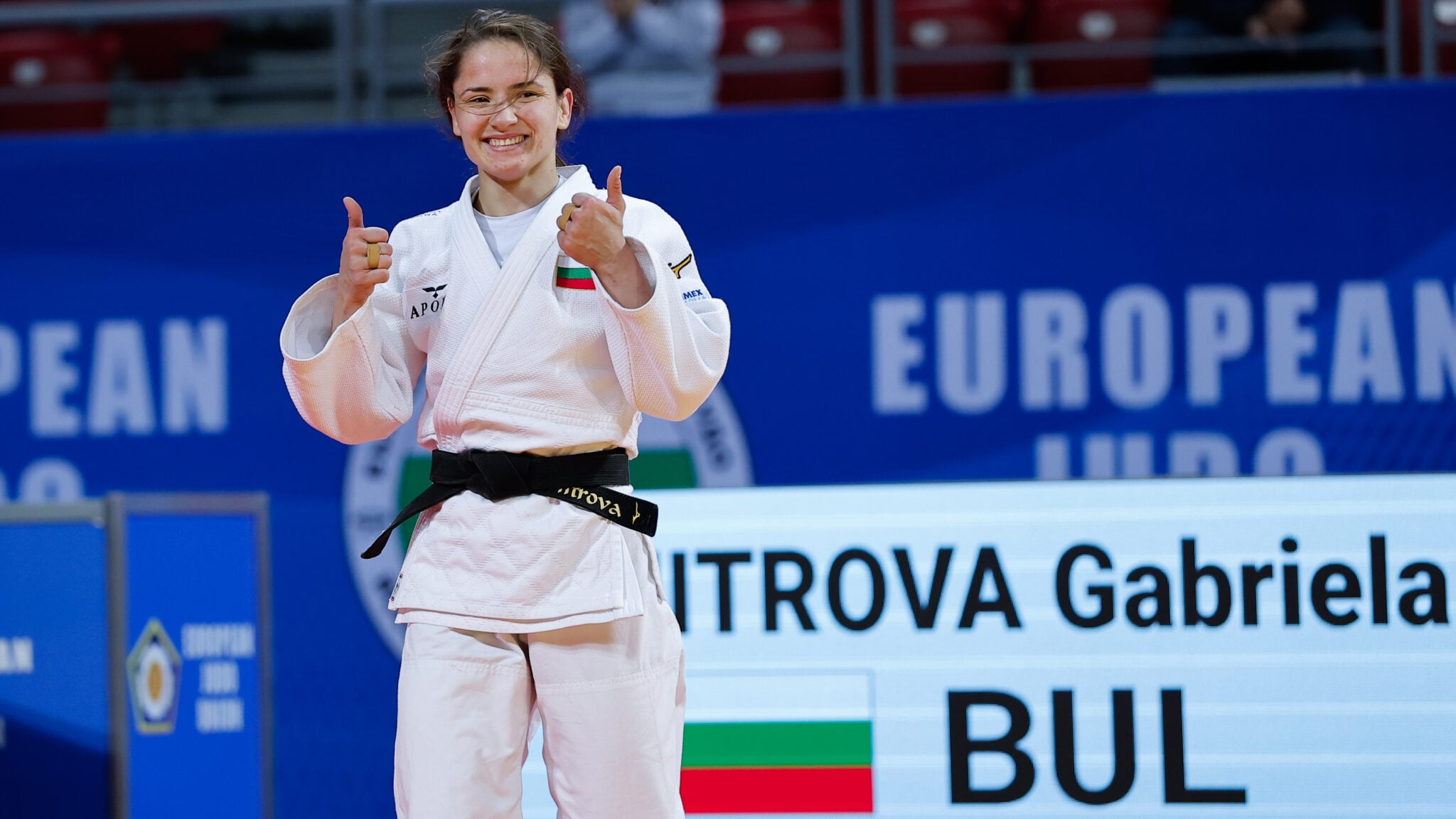
Victory has many voices. Sometimes it speaks through euphoria and celebration. Sometimes through exhaustion and relief and sometimes, as it did for Bulgaria’s two gold medallists in Sofia, it speaks through raw honesty and dedication that transcends sport entirely.

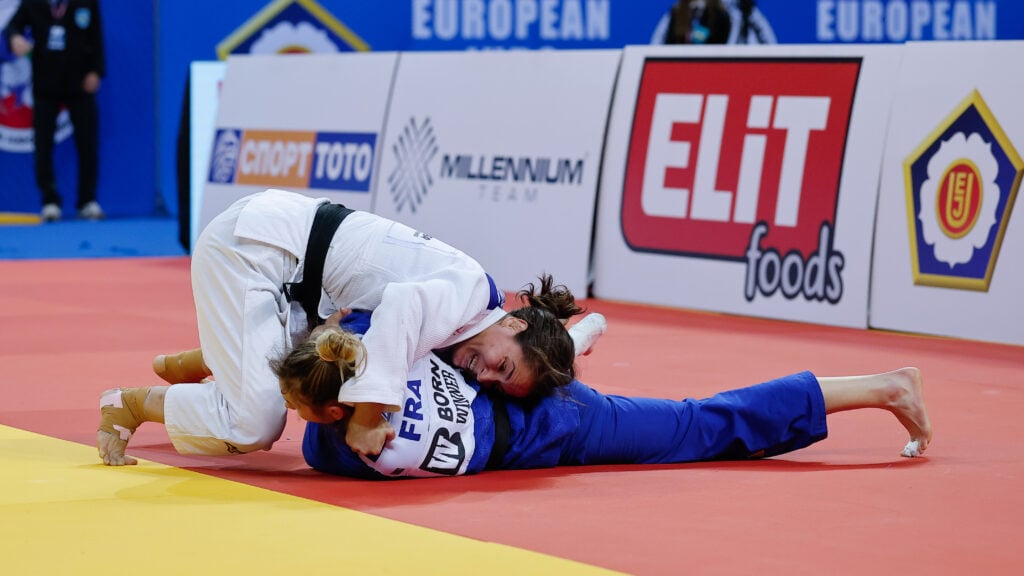
GABRIELA DIMITROVA: “Everything in competition is difficult.”
The question seems simple enough: which part of today was the hardest? Gabriela Dimitrova pauses. Thinks. Then offers the kind of honest answer athletes rarely give when microphones appear after victory. “I am not sure. Everything in the competition is difficult, you know.”
There is no false modesty here, no manufactured drama about a specific opponent or moment. Just truth. Elite judo is hard. Every round tests you. Every opponent presents problems. Reducing it to a single “difficult moment” misses the point entirely. Pressed further, she concedes: “Maybe the semi-final. It was the most difficult opponent, or something like that.”
Or something like that. The uncertainty isn’t evasiveness, it is exhaustion speaking, the mental fog that descends after hours of maximum effort. When you have dismantled the top seed in the quarter-finals, navigated a tough semi and delivered textbook morote-seoi-nage in the final, the day blurs together into one continuous battle.
Still, she did it. Gold medal. First of the day for Bulgaria. Plenty to be thankful for. “I would like to thank my coaches, all the Bulgarian people who supported me here, my family and everybody who believes in me.”
Everybody who believes. Not “believed”, present tense because belief doesn’t end when medals arrive; it continues into the next camp, the next competition, the next challenge. Paris training camp awaits. Then possibly Georgia for competition, though plans remain fluid. Sofia delivered an important milestone and what comes next will define whether it was anomaly or announcement. For now, though, the gold medal speaks clearly enough.
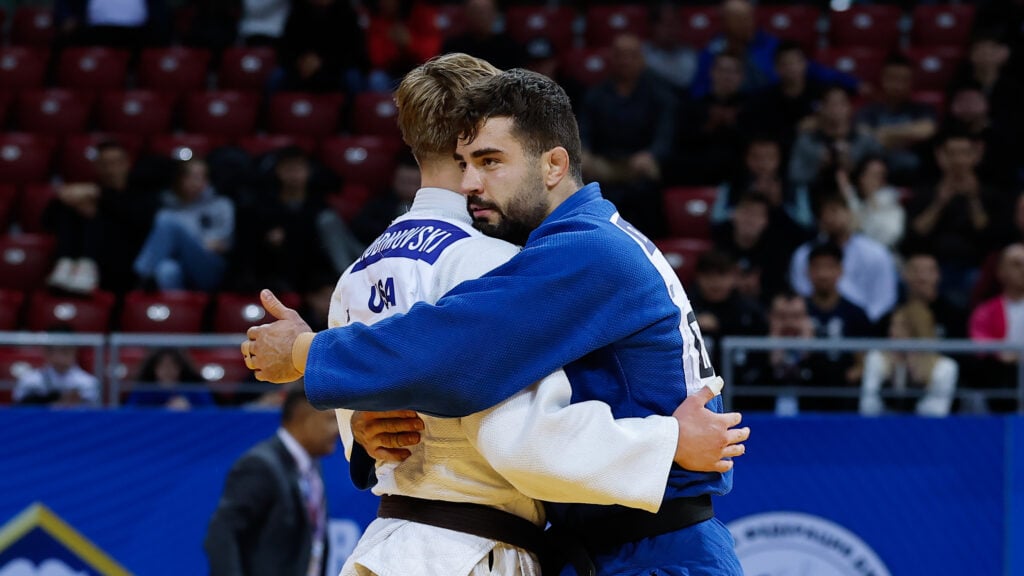
BORIS GEORGIEV: “I tried to do the same for him.”
Boris Georgiev doesn’t do simple celebration. Ask him how it feels to be champion at home and the answer travels somewhere deeper than joy. “It is great to be champion here at home again. For me, Sofia is a very special place, this is where I started on the road to the elite stage. So it is wonderful.”
Road to the elite stage. Not “my career” or “competing”, the journey from unknown to contender, from hopeful to heavyweight capable of delivering home gold when pressure peaks but when the conversation shifts to technical analysis, which part of his judo worked best today, Georgiev’s response goes somewhere unexpected.
“Today, mentally, I was really furious, because I had some problems last week.”
He stops. Recalibrates. Continues.
“This medal is really special for me because I told myself I would fight for one person who won a battle with death. He made the impossible. I tried to do the same for him.”
The room goes quiet. This isn’t post-competition euphoria or rehearsed gratitude. This is someone explaining that the gold medal around his neck represents more than athletic achievement, it is a promise kept, a debt honoured, a response to someone who faced something far harder than any opponent on a tatami. Who that person is, Georgiev doesn’t elaborate. The specifics belong to him but the dedication? That is public. That is spoken into microphones for everyone to hear.
Mission accomplished.
There is more to Georgiev’s story. He mentions it almost casually, as if discussing weather rather than career trajectory. “Usually I compete at -90kg. Last year I felt really strong there but for now, I don’t have the results yet there but it is coming. Watch out.”
A pause. Then the question was asked: “are planning to go back to -90kg?”
The answer isn’t provided in the interview fragment and for now, at least for today, it shall not be the focus point. Georgiev is a European Open champion at -100kg. The results he believes are coming will arrive in time. Sofia provided the foundation.
Two Bulgarian judoka. Two gold medals. Two very different reasons why Sofia 2026 will remain unforgettable. The crowd and their team celebrated home triumph whilst the athletes know what it cost and for whom they paid the price.
Author: Szandra Szogedi